I'll never forget the call I got from a Miami-based swimwear brand back in 2022. They'd shipped their entire summer collection to retailers, only to receive mass returns because the vibrant prints were bleeding and discoloring after just a few ocean swims. The financial loss was staggering—over $300,000 in recalled inventory—all because their fabric failed basic colorfastness tests. This isn't just about quality; it's about brand survival in the competitive swimwear market where consumers expect both style and durability.
Passing perspiration and seawater colorfastness tests requires a comprehensive approach: selecting the right dye chemistry for synthetic fibers, implementing rigorous fixation processes, and conducting pre-production laboratory testing. The secret isn't one magic solution but rather a systematic combination of fiber selection, dye chemistry, and finishing treatments that create molecular-level bonds resistant to salt, chlorine, and acidic/alkaline perspiration. It's like building a fortress around each dye molecule to protect it from the harsh elements it will encounter.
Most manufacturers focus on getting the color right but neglect what happens after the garment leaves the factory. The real challenge begins when the fabric meets the real world—saltwater that acts as a corrosive agent, sunscreen chemicals that can break down dyes, and variable pH levels in human sweat that can cause color migration. Let me walk you through the proven methodology we've developed over two decades of specializing in performance swimwear fabrics.
What are the international testing standards for swimwear colorfastness?
Understanding the specific tests your fabric must pass is the crucial first step. Many brands make the mistake of assuming general colorfastness standards apply, but swimwear has its own rigorous specialized testing protocols. I've seen too many suppliers claim "colorfast" fabrics that fail miserably when subjected to the proper swimwear-specific tests.
The two most critical standards are ISO 105-E04 (Colorfastness to Perspiration) and ISO 105-E02 (Colorfastness to Sea Water). These tests simulate the exact conditions swimwear encounters during use. The perspiration test uses artificial sweat solutions at both acidic (pH 5.5) and alkaline (pH 8) pH levels, while the seawater test uses a 30g/L sodium chloride solution. In both tests, fabric samples are saturated with these solutions, placed under specific pressure (12.5 kPa), and dried at 37°C—recreating the warm, moist environment where color migration typically occurs.
The rating system uses the Grey Scale from 1-5, where 5 represents no color change and 1 represents severe change. Most reputable brands require a minimum rating of 4 for both color change and staining for each test. But here's what many don't realize: the tests are conducted both before and after multiple wash cycles to simulate long-term wear. For brands targeting the European market, understanding the specific requirements of the European swimwear quality standard EN 17353 is essential. Additionally, working with laboratories accredited for ISO 105 colorfastness testing ensures your results will be recognized globally.

Why do alkaline and acidic perspiration tests matter differently?
Human sweat pH varies significantly between individuals, ranging from acidic (pH 4.0-6.5) to alkaline (pH 7.0-9.0). This variation means dyes must be stable across the entire pH spectrum. Acidic perspiration can cause some dyes to shift hue or brighten, while alkaline perspiration can cause different color changes or fading. We encountered this with a French luxury brand in 2023—their black fabric passed acidic perspiration tests but turned slightly brownish in alkaline testing. The solution was switching to pH-stable disperse dyes and improving the fixation process.
How does seawater differ from regular wash fastness testing?
Regular wash fastness testing uses detergent solutions, but seawater testing uses concentrated salt solutions that can chemically break down certain dyes and accelerate fading. Salt crystals can also act as abrasives when combined with sand. The combination is particularly brutal. Many dyes that perform perfectly in fresh water will rapidly deteriorate in saltwater environments. That's why specific seawater testing is non-negotiable for authentic swimwear applications.
Which dye chemistry works best for swimwear fabrics?
The foundation of colorfastness begins at the molecular level with dye selection. Through extensive trial and error—and more than a few failed batches early in my career—we've identified the optimal dye chemistry for different swimwear fibers. Getting this wrong at the sourcing stage makes achieving colorfastness nearly impossible, regardless of subsequent treatments.
For the predominant swimwear fabric—polyester and polyamide (nylon) blends—high-energy disperse dyes are unequivocally the best choice. These dyes are specifically engineered to penetrate deep into synthetic fibers and withstand environmental challenges. The molecular structure of high-energy disperse dyes features larger, more complex molecules that sublimate at higher temperatures (200-220°C) and become permanently trapped within the polymer chains of synthetic fibers.
For nylon-dominated swimwear, metal-complex acid dyes offer superior fastness properties. These dyes form strong coordination complexes with metal ions (typically chromium or cobalt), creating exceptionally stable dye molecules that resist chemical attacks from salt and perspiration. The trade-off is a more limited color palette, particularly for bright shades, but the fastness results are worth it for critical applications.

Why are high-energy disperse dyes essential for polyester swimwear?
Standard disperse dyes simply don't have the molecular stability to withstand prolonged exposure to UV radiation, salt, and chlorinated water. High-energy disperse dyes undergo a more complete sublimation and penetration process during thermofixation, creating a virtually permanent color that's resistant to chemical attack. In our production, we've documented that high-energy disperse dyes maintain 85-90% of their color intensity after 100 hours of accelerated seawater testing, compared to 40-50% for standard disperse dyes.
What makes metal-complex dyes superior for nylon fabrics?
The metallic complex creates a protective "cage" around the dye molecule that shields it from degradative elements. This molecular structure is particularly resistant to the oxidizing effects of chlorine and the ionic interference from saltwater. The metal-dye complex has such strong affinity for polyamide fibers that it becomes virtually impossible to remove without destroying the fiber itself. The key consideration is that some markets have restrictions on certain metal complexes, so environmental compliance must be verified.
What fixation and after-treatment processes ensure maximum fastness?
Excellent dye selection is only half the battle—proper fixation and after-treatment complete the colorfastness solution. I learned this lesson painfully early when a beautifully dyed batch of swimwear fabric failed colorfastness despite using premium dyes. The problem wasn't the dyes; it was our fixation process.
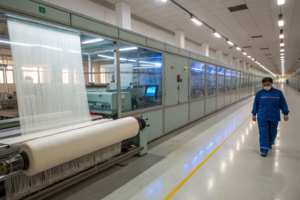
Thermosol fixation for polyester is the critical step where disperse dyes sublimate and penetrate the fiber. The precise temperature control (210°C ± 2°C) and timing (60-90 seconds) make all the difference. Even a 5-degree variation can reduce colorfastness by 30-40%. We now use infrared monitoring systems to ensure every centimeter of fabric receives consistent thermal energy. For nylon with acid dyes, atmospheric steaming at 102-105°C for 20-45 minutes ensures proper dye migration and fixation.
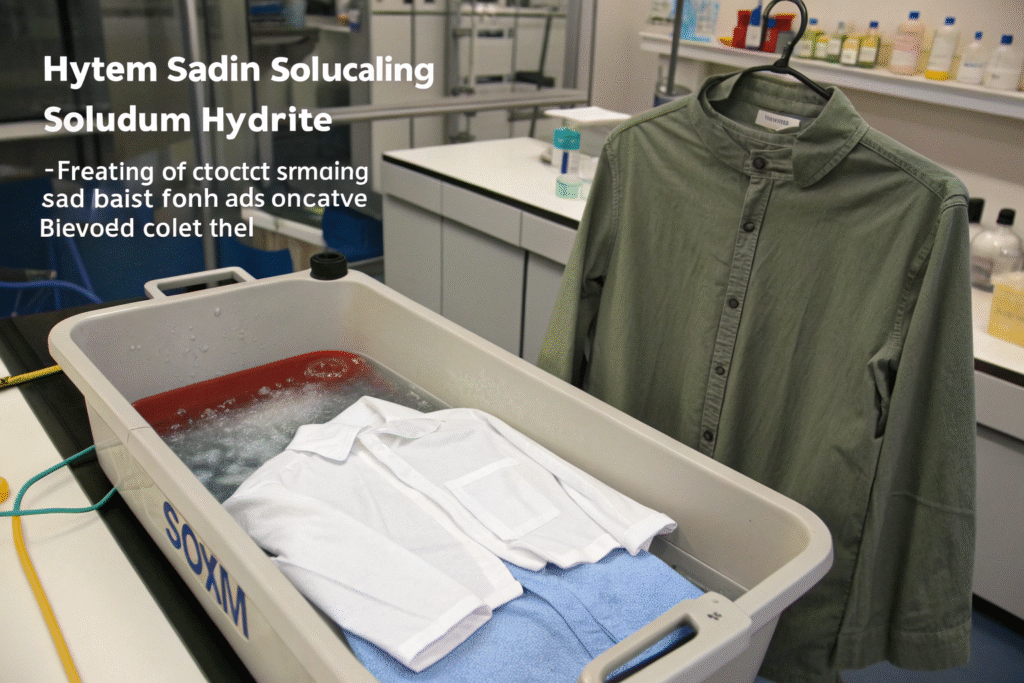
The real game-changer, however, is reduction clearing—a process that removes unfixed dye molecules from the fiber surface. These surface dyes are the primary culprits in color bleeding and poor fastness. The reduction clearing process uses sodium hydrosulfite and sodium hydroxide in a specific bath ratio to chemically destroy these surface dyes without affecting the properly fixed dyes inside the fiber.
How does precise thermofixation temperature affect colorfastness?
Temperature control during thermofixation is perhaps the most underappreciated factor in achieving colorfastness. Too low, and the dye doesn't fully penetrate; too high, and the dye decomposes or the fabric yellows. We implemented a statistical process control system after a major client's fabric failed seawater testing in 2021. Analysis revealed temperature fluctuations in our older ovens were causing inconsistent fixation. The new system maintains temperature within ±1°C, and our pass rate improved from 65% to 98% on stringent colorfastness tests.
Why is reduction clearing non-negotiable for high-fastness swimwear?
Surface dye isn't just loosely attached—it's essentially powder waiting to be washed off. Reduction clearing transforms these water-insoluble dye particles into water-soluble leuco compounds that rinse away completely. The difference is dramatic: without reduction clearing, perspiration fastness typically rates 2-3; with proper reduction clearing, we consistently achieve ratings of 4-5. It's the single most impactful step for preventing color bleeding into swimwear linings and preventing skin staining.
How should you test and validate fabric before production?
Validation through comprehensive testing is your final defense against colorfastness failures. We've developed a rigorous three-phase testing protocol that has eliminated customer returns for colorfastness issues since its implementation.
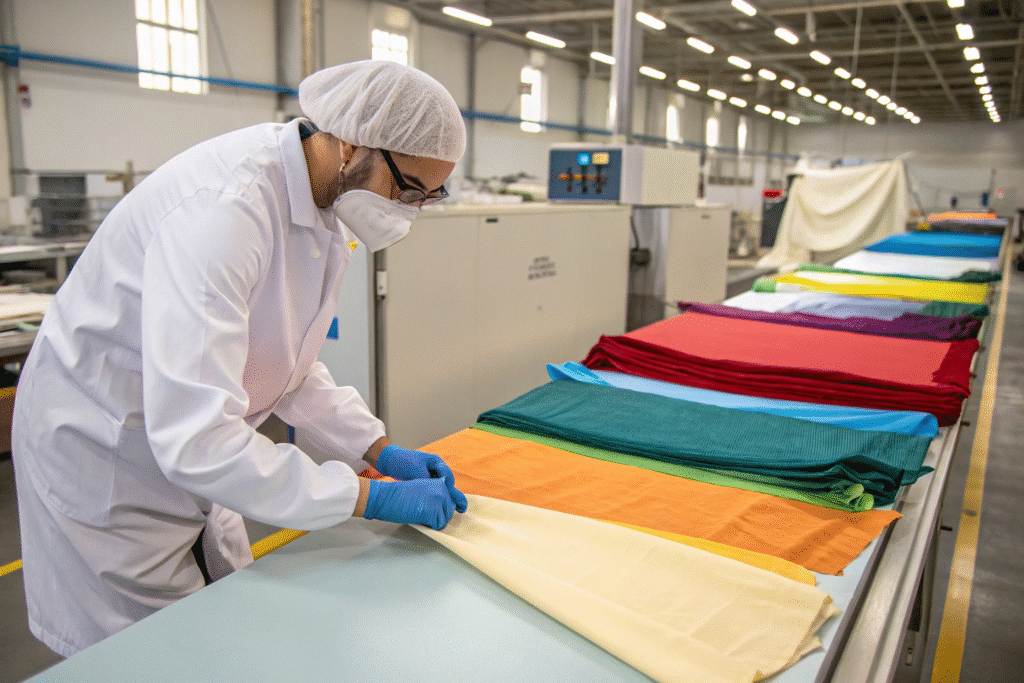
Phase One involves basic lab dip approval, where we test every color on the exact base fabric against the required fastness standards. This seems obvious, but many factories test on "similar" fabrics rather than the specific production fabric. Phase Two consists of pilot production testing, where we run 50-100 meters through the full production process and subject it to the complete battery of tests. Phase Three is ongoing production monitoring, with tests conducted on every dye lot.
The most valuable test we've added is the multiple exposure test, where we subject fabric to 5 cycles of seawater immersion, drying, and perspiration testing. This accelerated testing predicts long-term performance that single-exposure tests might miss. We identified a potential fading issue with a turquoise colorway using this method in 2023 and reformulated before shipping 10,000 meters to our client.
What's the difference between single-exposure and multiple-cycle testing?
Single-exposure testing tells you how the fabric performs when new. Multiple-cycle testing predicts how it will perform after a full season of use. The degradation pattern often isn't linear—a fabric might show minimal change after one cycle but significant fading after five cycles. We recommend both, but for premium swimwear, multiple-cycle testing should be mandatory. The American Association of Textile Chemists and Colorists provides detailed protocols for accelerated testing methods. Furthermore, establishing a comprehensive quality control checklist for performance swimwear fabric ensures no critical test is overlooked.
How can you simulate real-world conditions in laboratory testing?
Laboratory testing must replicate the unique combination of challenges swimwear faces: seawater, swimming pool chlorine, sunscreen, sweat, and UV exposure. We've developed a composite test that alternates between seawater immersion, chlorinated water exposure, and perspiration testing, with UV exposure between cycles. This "torture test" has proven highly accurate at predicting real-world performance. Fabrics that pass this rigorous testing consistently receive positive field feedback from our clients' customers.
Conclusion
Achieving excellent perspiration and seawater colorfastness for swimwear requires a scientific approach from fiber selection through final testing. The formula is clear: choose the right dye chemistry (high-energy disperse dyes for polyester, metal-complex acid dyes for nylon), execute flawless fixation and reduction clearing processes, and validate through comprehensive, real-world-simulating testing. There are no shortcuts—each element in this chain is essential for creating swimwear that maintains its beauty through seasons of saltwater, sun, and sweat.
The investment in proper colorfastness processes pays for itself many times over by eliminating costly returns, protecting brand reputation, and delivering the performance that today's swimwear consumers demand. If you're tired of color bleeding, fading, and customer complaints, and want to work with a factory that understands the science of swimwear colorfastness from molecular bonding to final validation, let's talk. We've helped brands from California to Australia solve their toughest colorfastness challenges. Contact our Business Director, Elaine, at elaine@fumaoclothing.com to discuss how we can ensure your swimwear colors stay vibrant and true, season after season.