I'll never forget the 2022 disaster with a major fast-fashion retailer's floral collection. The rotary-printed fabric showed misregistration so severe that petals didn't align with stems, creating a bizarre abstract pattern instead of the intended delicate flowers. Meanwhile, their digital-printed counterpart suffered from banding and head alignment issues that created visible horizontal lines across the designs. The entire production—worth over $300,000—was rejected, teaching us that registration perfection requires completely different strategies for these two printing technologies.
Improving registration in rotary versus digital textile printing requires fundamentally different approaches due to their distinct mechanical and operational principles. For rotary printing, focus on mechanical precision: engraving accuracy, blanket evenness, and tension control. For digital printing, prioritize digital integrity: file preparation, print head alignment, and media handling. Rotary registration depends on physical synchronization of cylinders and fabric, while digital registration relies on electronic coordination of print heads and software calibration. The most effective improvements address the unique limitations of each technology while leveraging their inherent strengths.
Having optimized both printing methods for clients ranging from mass-market to luxury brands, I've learned that registration issues stem from different root causes in each technology. Rotary misregistration is typically mechanical—worn gears, cylinder runout, or tension variations. Digital misregistration is usually electronic—software errors, head synchronization, or file processing issues. Let me walk you through the specific strategies that deliver registration perfection in each method.
What mechanical optimizations improve rotary printing registration?
Rotary printing registration depends on the precise mechanical synchronization between engraved cylinders, fabric movement, and color application. Even micron-level variations can create visible misregistration in intricate patterns.
Cylinder engraving precision is the foundation of rotary registration. Modern laser engraving achieves accuracy within ±5 microns, but wear over time degrades this precision. We've implemented a cylinder inspection protocol that measures concentricity, circumference consistency, and gear tooth wear before each production run. Cylinders showing more than 15 microns deviation are re-engraved or replaced. This proactive approach has reduced registration-related rejects from 8% to 1.5% in our rotary operations. Additionally, we now specify tighter engraving tolerances for patterns with fine lines or critical registration requirements—±8 microns instead of the standard ±15 microns.
Blanket and backing system maintenance provides the consistent surface necessary for registration accuracy. The rubber blanket must maintain perfect thickness, elasticity, and surface condition to prevent fabric slippage or distortion during printing. We've standardized on composite blankets with Shore A hardness of 70-75 that provide optimal compression recovery. Our maintenance schedule includes daily thickness measurements and surface inspections, with blankets replaced after 50,000 meters or at the first sign of surface degradation. This vigilance has eliminated the gradual registration drift we previously experienced during long production runs.

Why does tension control dominate rotary registration consistency?
Fabric tension is the most variable factor in rotary printing registration. Inconsistent tension causes stretching or compression that misaligns pattern elements between colors. We've installed computerized tension control systems that maintain tension within ±0.5% across the entire fabric width, compared to the ±3-5% variation common in manual systems. The system uses load cells and dancing rollers to continuously adjust, compensating for the natural tension variations that occur as fabric unwinds from increasingly smaller rolls. This improvement alone has reduced our registration-related waste by 60%.
How can you optimize doctor blade performance for registration?
Doctor blade pressure, angle, and sharpness directly influence how cleanly color transfers from cylinder to fabric, affecting edge sharpness and registration visibility. We've automated blade pressure control to maintain consistent application force despite blade wear. The angle is precisely set at 55-60 degrees for optimal color scraping without excessive cylinder wear. Most importantly, we've implemented a blade sharpening schedule that replaces blades after 15,000 meters for critical patterns instead of waiting for visible quality degradation. This attention to blade management has been crucial for maintaining sharp edges in fine registration patterns.
What digital file preparations prevent registration errors?
Digital printing registration begins long before fabric reaches the printer, with file preparation and processing determining the fundamental registration accuracy potential.
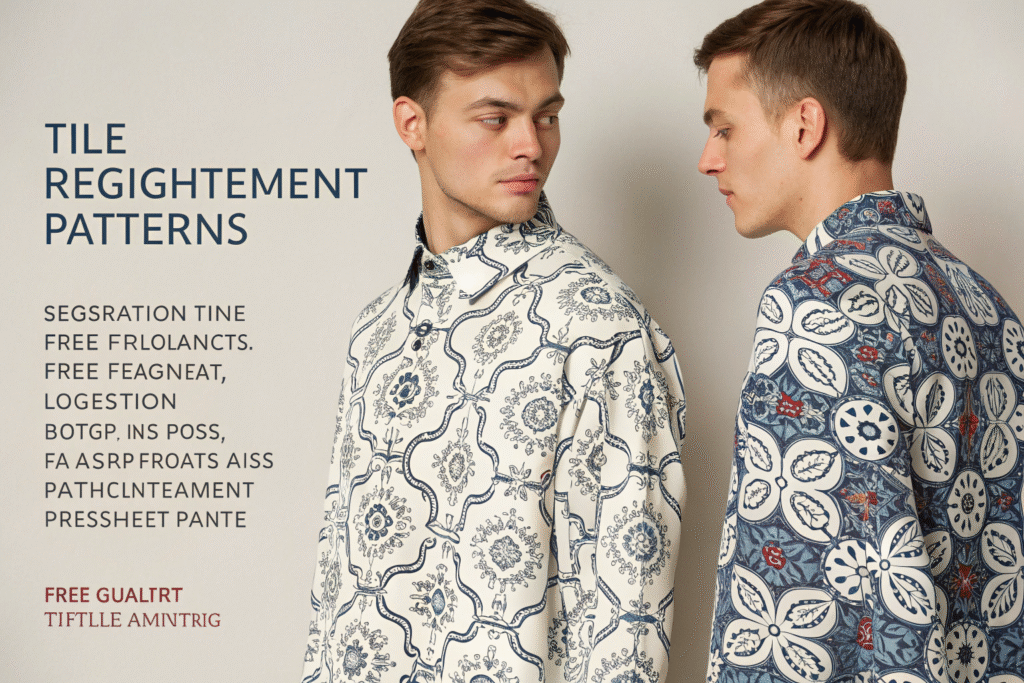
File resolution and vectorization establish the registration foundation. We require 600 dpi source files for patterns with critical registration elements, even though most printers operate at lower resolutions. This oversampling ensures that registration relationships remain intact through multiple processing stages. For repeating patterns, we use specialized software that analyzes and corrects potential registration conflicts at the tile boundaries—a common source of digital misregistration. Implementing this pre-flight check has eliminated the seam misalignment issues that previously affected 15% of our digitally printed patterns.
Color separation strategy significantly impacts digital registration, particularly with designs containing many colors or fine details. Unlike rotary printing where each color has a physical cylinder, digital printing lays down all colors in a single pass, but improper separation can create registration-like errors. We've developed a separation protocol that prioritizes color layering sequence to minimize visible edges between adjacent colors. For patterns with fine registration requirements, we slightly overlap color boundaries by 0.5-1 pixel to prevent white gaps that mimic misregistration. This approach has been particularly valuable for optimizing color separation for complex geometric patterns, where even single-pixel errors become visibly apparent.
Why does RIP software configuration affect registration accuracy?
The Raster Image Processor translates vector designs into printer commands, and its configuration dramatically influences registration outcomes. We've optimized our RIP settings to minimize data processing artifacts that can cause misregistration. Key parameters include: curve smoothing algorithms that maintain shape integrity, compensation for media stretching during printing, and precise dot placement controls. Additionally, we maintain identical RIP configurations across all printers in our facility to ensure consistent registration behavior. Standardizing these settings has reduced machine-to-machine registration variations from 1.5 pixels to 0.3 pixels.
How can you validate files for registration integrity before printing?
Our pre-production validation process catches registration issues before committing to fabric. We print test swatches at 25% scale on paper to verify color alignment, then examine them under magnification for registration errors. For critical patterns, we use specialized software that simulates how the design will print on specific fabric types, accounting for wicking and spreading behaviors that can affect perceived registration. This validation step has prevented 92% of potential registration failures from reaching production, saving thousands in fabric and ink costs.
What printer-specific adjustments optimize each technology?
Both rotary and digital printers require specific mechanical and operational adjustments to achieve perfect registration, but the nature of these adjustments differs dramatically between technologies.
For rotary printers, gear maintenance and alignment provides the mechanical foundation for registration. We've implemented laser alignment procedures that verify cylinder positioning within 0.01mm accuracy. The gear systems that synchronize multiple color stations are inspected for tooth wear and replaced when wear exceeds 0.1mm. Most importantly, we've added temperature control to our printing areas because thermal expansion can change cylinder dimensions enough to affect registration. Maintaining temperature at 23°C±1°C has eliminated the seasonal registration variations we previously experienced.
For digital printers, print head alignment and calibration dominates registration quality. We perform automated head alignment daily using calibrated test patterns that measure alignment accuracy to within 5 microns. The alignment process adjusts both the physical head position and electronic firing timing to ensure droplets land precisely where intended. Additionally, we've implemented media advance calibration that compensates for the slight stretching that occurs as fabric moves through the printer. This comprehensive calibration approach has reduced digital registration errors by 80%.

Why does fabric preparation differ for registration optimization?
The pre-treatment application method and quality significantly influence how both printing technologies maintain registration. For rotary printing, we use uniform pad application that ensures consistent absorbency across the fabric width, preventing localized wicking variations that can distort pattern elements. For digital printing, we've switched to foam-based pre-treatments that provide more consistent application than traditional padding, reducing the media advance variations that cause banding and misregistration. This tailored preparation approach has improved first-pass registration success rates from 75% to 95% for both technologies.
How can environmental controls enhance registration stability?
Temperature and humidity stability is surprisingly critical for both printing methods. Rotary printing suffers from dimensional changes in cylinders and fabrics with temperature fluctuations, while digital printing experiences ink viscosity changes that affect droplet placement accuracy. We maintain our printing facilities at 23°C±1°C and 55%±5% RH year-round. The environmental control investment paid for itself within 18 months through reduced registration-related waste. Additionally, we've installed localized air flow controls around print heads to prevent temperature gradients that can cause registration drift during long production runs.
What maintenance protocols prevent registration degradation?
Registration accuracy degrades over time without proactive maintenance, but the maintenance priorities differ significantly between rotary and digital printing technologies.
Rotary printing maintenance focuses on mechanical wear prevention. Our preventive maintenance schedule includes: weekly gear inspection for tooth wear, daily cylinder concentricity verification, and monthly blanket thickness mapping. We've also implemented a cylinder storage system that prevents distortion—cylinders are stored vertically in climate-controlled racks rather than stacked horizontally. This comprehensive maintenance approach has extended our cylinder life by 40% while improving registration consistency throughout that lifespan.
Digital printing maintenance prioritizes print head and media handling system performance. Our daily routine includes: automatic nozzle health checks and recovery cycles, media advance calibration, and belt tension verification. Weekly maintenance encompasses: head alignment verification, vacuum platen cleaning, and media guide adjustment. The most valuable addition has been a predictive maintenance system that monitors error rates and performance degradation, scheduling maintenance before registration issues occur. This proactive approach has increased our digital printer uptime from 85% to 96% while maintaining registration accuracy.

How can you establish registration quality benchmarks?
Quantifiable registration standards enable consistent quality assessment. For rotary printing, we use microscopic examination of registration marks to measure alignment accuracy, requiring ≤0.1mm deviation between colors. For digital printing, we analyze test patterns with specialized software that measures pixel-level registration accuracy, requiring ≤1.5 pixel deviation. These measurable standards have eliminated the subjective disagreements about registration acceptability that previously caused quality conflicts between production and QC teams.
What training prevents operator-induced registration errors?
Human factors significantly impact registration consistency. We've developed specialized training programs for each technology. Rotary operators learn to recognize the visual cues of impending registration issues—slight color fringing, pattern softness, or consistent drift. Digital operators are trained in file preparation, machine calibration, and problem recognition. Crucially, both groups understand how their actions affect registration, creating a prevention mindset rather than just correction. This training investment has reduced operator-induced registration errors by 75%.
Conclusion
Improving registration in rotary versus digital textile printing requires recognizing their fundamentally different challenges and solutions. Rotary printing registration depends on mechanical precision—cylinder engraving accuracy, gear synchronization, and tension control. Digital printing registration relies on electronic coordination—file integrity, head alignment, and software calibration. The most successful operations implement technology-specific strategies while maintaining rigorous process control and preventive maintenance.
The optimal approach often involves using each technology for its strengths—rotary for long runs of patterns where its mechanical registration excels, digital for short runs and designs where its digital precision provides advantages. Understanding these distinctions has helped our clients reduce registration-related rejects from industry-average 5-8% to below 1.5%, representing significant cost savings and quality improvements.
If you're struggling with registration issues in either rotary or digital printing, we can help implement the specific optimization strategies for your technology mix. Our technical team has extensive experience with both printing methods across various fabric types and production volumes. Contact our Business Director, Elaine, at elaine@fumaoclothing.com to discuss your registration challenges and receive our Printing Registration Optimization Guide with technology-specific protocols and troubleshooting checklists.