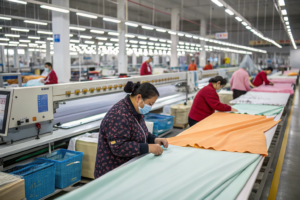
You've done it. You found the perfect factory, approved the samples, and placed your first bulk order for 5,000 pieces. Now you're lying awake at 3 AM wondering: what if they're terrible? What if 20% are defective? What if my customers return everything? This fear is normal—every successful brand has felt it. But here's the truth that separates successful brands from failures: quality control isn't something you do AT THE END. It's something you build INTO THE PROCESS from day one.
After 20 years managing production for global brands, I can tell you that 5,000 pieces is a dangerous volume. It's too small for factories to assign their best teams exclusively, but too large to ignore if something goes wrong. You're in the danger zone where problems multiply fast. But with the right system—clear standards, in-process checks, third-party verification, and contingency planning—you can sleep easier. Let me show you exactly how we handle 5,000-piece orders at Shanghai Fumao and what you need to do to protect yourself.
What quality standards should I establish before production starts?
You're excited. The sample is perfect. You want to shout "GO!" and get your goods. Stop. The single biggest mistake buyers make is assuming the factory knows what "good enough" means without you telling them. Your sample communicates the ideal. It doesn't communicate the acceptable range. And in production of 5,000 pieces, there WILL be variation. The question is: how much variation is okay?
A Chicago-based activewear brand learned this painfully in 2024. Their sample was beautiful. Production arrived with 12% of pieces having slightly crooked seams. The factory said "within acceptable tolerance." The brand said "unacceptable." But they'd never defined "acceptable tolerance" in writing. They ended up accepting the goods at a discount, but their customers noticed and returns hit 8%. All because they didn't set standards upfront.
What is AQL and why does it matter for 5000 pieces?
AQL stands for Acceptable Quality Limit. It's the industry-standard system for deciding how many defects are acceptable in a batch. For a 5,000-piece order, you're not going to inspect every piece—that would cost more than the goods. Instead, you inspect a statistically significant sample and use AQL tables to decide whether to accept or reject the whole batch.
Here's how it works in practice. For a typical women's wear order, you might set:
- Critical defects (safety issues, holes, stains that can't be removed): AQL 0% (zero tolerance, reject the whole batch if any found)
- Major defects (visible flaws, sizing errors, color variation that affects wearability): AQL 1.0-1.5% (meaning up to 1-1.5% of pieces can have these issues and still pass)
- Minor defects (small loose threads, slightly uneven stitching that doesn't affect wear): AQL 2.5-4.0%
For 5,000 pieces, using AQL 1.5 for major defects, your inspection sample size might be 200 pieces. If you find 5 or fewer major defects, the batch passes. If you find 6 or more, you reject or negotiate. A comprehensive AQL calculator and guide on the Quality Inspection International site helps you set your standards before production starts.
A Toronto-based outerwear brand sets their AQL levels in every contract now. In 2023, they rejected a 3,000-piece order because the defect count exceeded their agreed AQL. The factory couldn't argue—the standard was signed. They re-made the order at their cost.
How do I create a clear defect classification guide?
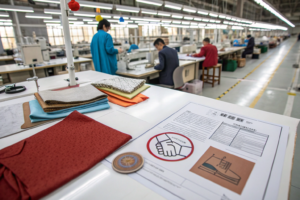
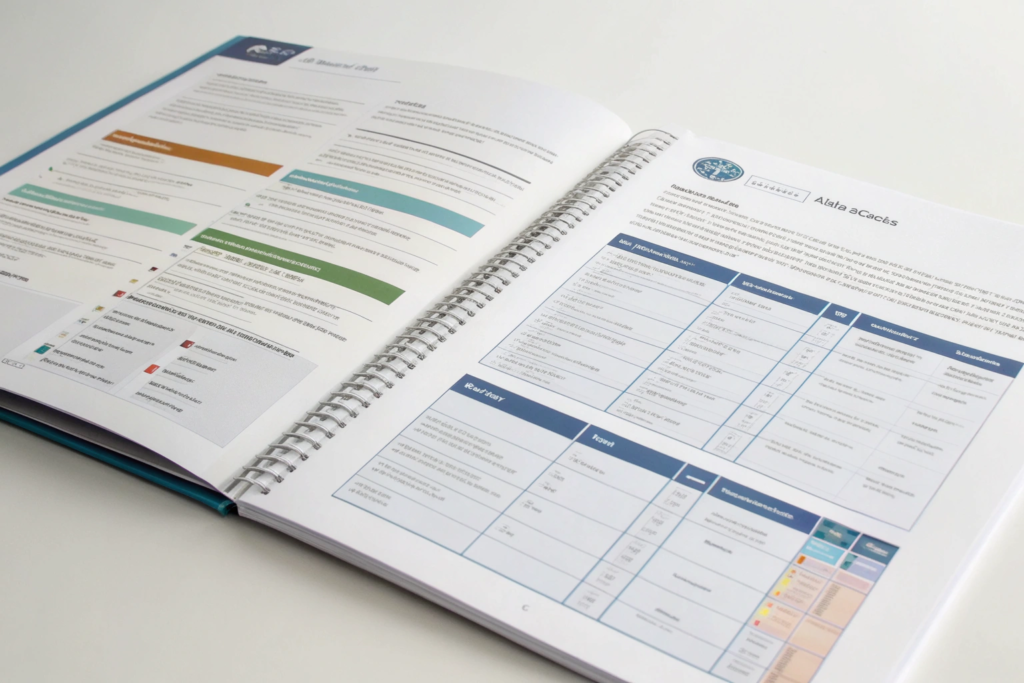
Words like "good quality" mean nothing. You need pictures. Before production starts, create a visual guide showing:
Acceptable: Photos of exactly what "good" looks like. Seam appearance, stitch density, color consistency, finish quality.
Major defects: Photos of what's NOT acceptable. Crooked seams, color variation beyond Delta E 1.0, loose threads longer than 1cm, stains, holes, incorrect measurements.
Minor defects: Photos of issues you'll tolerate. Small thread ends, slightly uneven tension that doesn't affect fit, minor shading within acceptable range.
A Melbourne-based swimwear brand sends us a 12-page visual quality guide with every new order. It includes close-up photos of acceptable and unacceptable seam finishing, elastic tension, lining attachment, and print registration. Their defect rate dropped from 7% to 2% after implementing this system. A template for creating defect classification guides on the Apparel Quality Control Hub provides a starting point you can customize.
Include measurement tolerances too. For a 5,000-piece order, not every garment will measure exactly the same. Define acceptable variation: ±0.5cm on small measurements, ±1.0cm on larger ones. When everyone agrees on the rules upfront, disputes disappear.
What testing should happen BEFORE bulk production?
Don't wait for finished goods to discover problems. For 5,000 pieces, you need pre-production testing on three fronts:
Fabric testing: Test the actual fabric that will be used for bulk production, not the sample fabric. Check shrinkage, colorfastness, strength, and any performance claims. A Denver-based brand in 2024 tested their bulk fabric and discovered shrinkage was 6% instead of the 3% in samples. They adjusted garment patterns before cutting, saving 5,000 pieces from becoming unusable.
Production sample: Before cutting all 5,000, the factory should make one complete garment using the actual bulk fabric and production methods. Inspect it thoroughly. If it's wrong, only one piece is wasted.
Line sample: When cutting starts, the first few pieces off the production line should be inspected immediately. If there's a problem, you can stop before 500 pieces are made.
A pre-production testing checklist on the SGS textile testing site shows what to test and when.
How do I inspect during production, not just at the end?
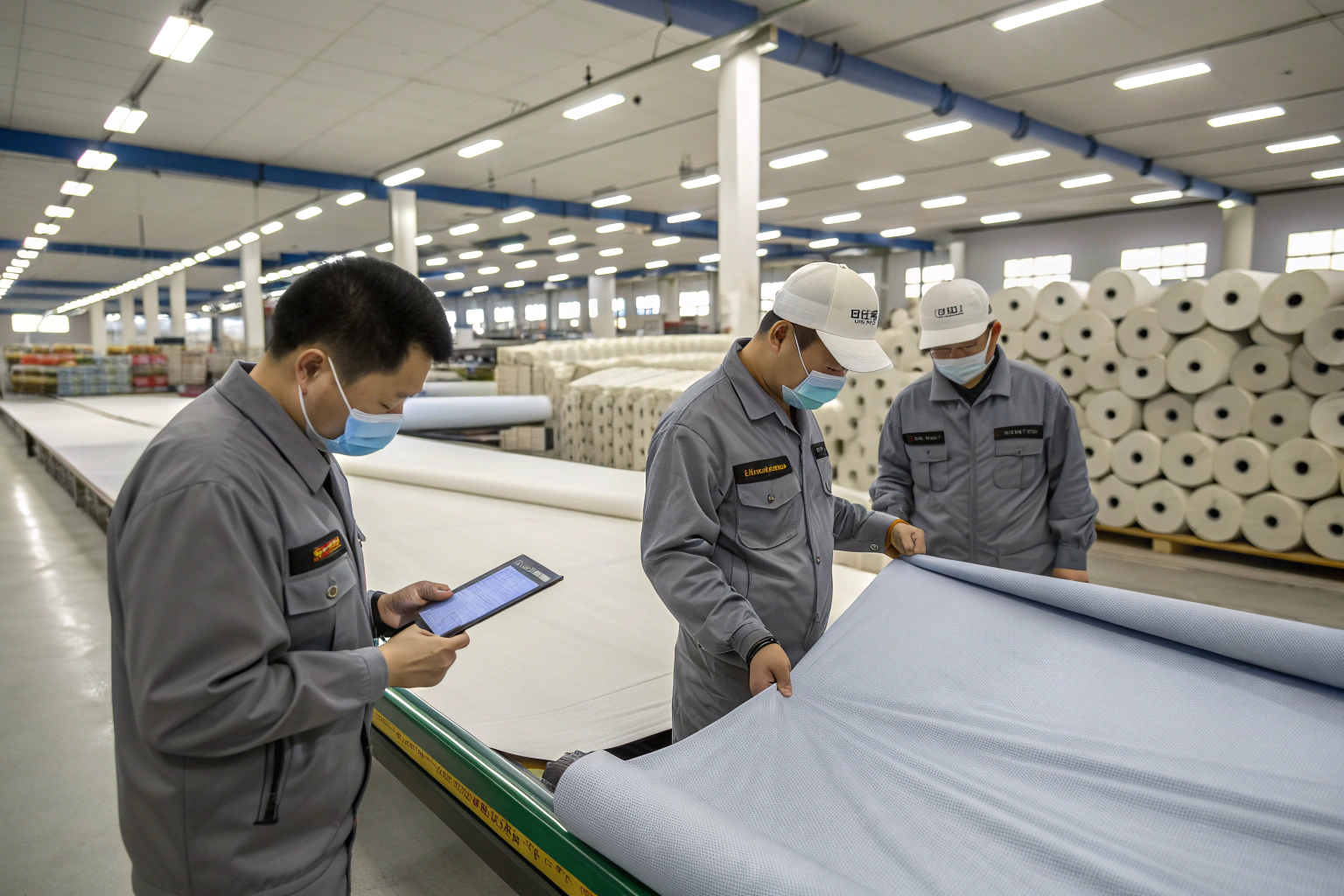
End-of-line inspection tells you what's already wrong. In-process inspection prevents things from going wrong. For 5,000 pieces, if you wait until everything's finished to inspect, you might find 1,000 defective pieces with no way to fix them without restarting completely. In-process inspection catches problems when they affect 50 pieces, not 500.
A Stockholm-based brand learned this in 2023. They did a final inspection on 4,000 pieces and found consistent color variation across 800 garments. The problem was a dye lot change midway through production that the factory hadn't flagged. If they'd inspected during production, they would have caught it after 100 pieces and could have separated the lots. Instead, the whole batch was a mess.
What in-process checkpoints actually catch problems?
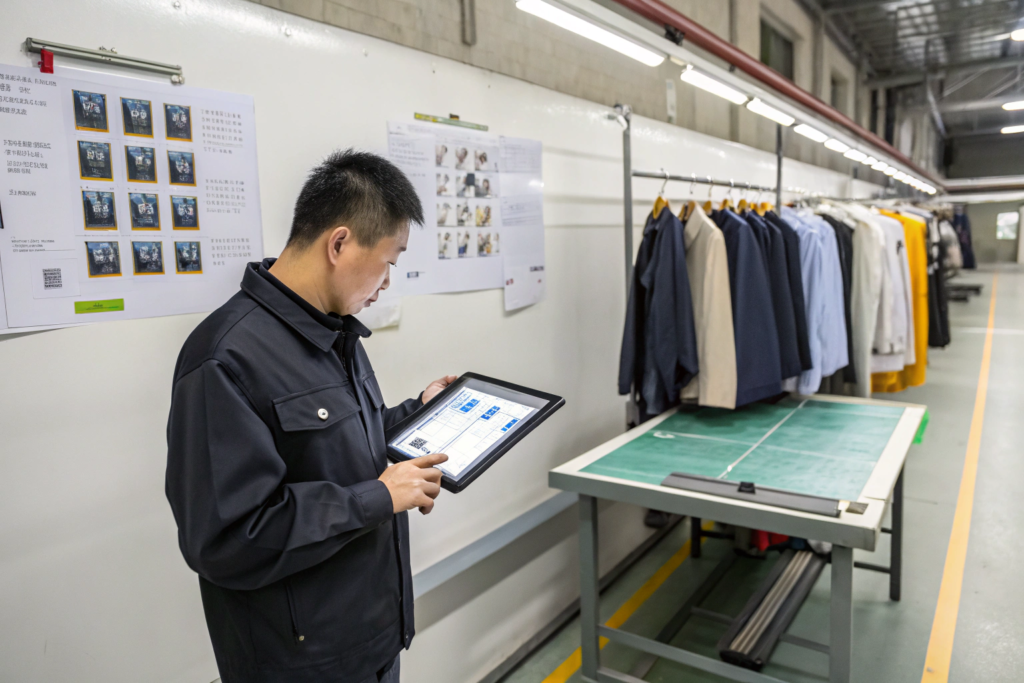
For a 5,000-piece order, these are the critical checkpoints:
Cutting inspection: Before sewing starts, check that all pattern pieces are cut correctly. Verify grain lines, notches, and marker efficiency. If cutting is wrong, everything downstream is wrong.
First piece inspection: When sewing starts, the first complete garment should be checked against the approved sample. Every measurement, every seam, every detail. A Vancouver-based brand caught a 2cm pocket placement error on their first piece in 2024. The line stopped, fixed the issue, and lost only 2 hours of production instead of 2 days.
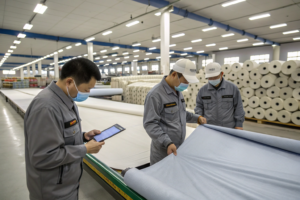
In-line inspections: During production, inspectors should check work at each stage. Seam quality before pockets are attached. Zipper installation before linings are added. Catching problems at the operation level prevents them from being buried inside finished garments.
End-of-line checks: As garments come off the line, a percentage should be checked immediately. If a problem appears, the line can be adjusted before thousands are made.
A guide to in-process quality control checkpoints on the Textile Today site provides detailed inspection schedules for different garment types.
How many pieces should I inspect during production?
For 5,000 pieces, a common approach is:
- First piece: 100% inspection of the very first garment
- In-line: Inspect 10-20 pieces per hour from each production line
- End-of-line: Inspect 5-10% of finished garments as they come off, before packing
- Pre-shipment: Final inspection of a statistically valid sample (usually 200-315 pieces based on AQL)
A London-based brand uses this exact formula. Their in-line inspectors caught a thread tension issue after 50 pieces in 2024. The line was recalibrated, and only those 50 needed rework. If they'd waited for final inspection, 500 pieces would have been affected.
The key is consistency. Random checks are better than nothing, but systematic checks at regular intervals (every hour, every 50 pieces) create data you can use. If defect rates start climbing at 3 PM, maybe workers are tired and need a break. A production inspection frequency calculator on the Quality Assurance International site helps determine optimal checkpoints.
Who should do the inspecting—me, the factory, or a third party?
Each has advantages, and the best systems use all three.
Factory self-inspection: Your factory should have its own QC team checking at every stage. This is their first line of defense. Ask for their inspection reports. A factory that can't provide documentation of their own checks is a red flag.
Your inspection: If you're on site, great. If not, consider hiring someone local. We at Shanghai Fumao have clients who hire us to perform daily inspections during their production runs. We send photos, videos, and reports every day.
Third-party inspection: Companies like SGS, QIMA, or Bureau Veritas offer independent inspections. For 5,000 pieces, a pre-shipment inspection by a third party is worth every dollar. They have no stake in passing or failing—they just report what they find.
A Seattle-based brand uses all three. The factory sends daily QC reports. We (as their fabric supplier) do random checks during production. And they hire QIMA for final inspection before shipment. In 2024, QIMA caught a labeling error that factory QC missed. The labels were fixed before 5,000 pieces shipped with wrong care instructions. A comparison of third-party inspection services on the Sourcing Journal site helps choose the right partner.
What should a pre-shipment inspection actually cover?
Your production is finished. The goods are packed and ready to ship. You have one last chance to catch problems before they cross the ocean. A proper pre-shipment inspection isn't just opening boxes and glancing inside—it's a systematic check of everything that matters. And for 5,000 pieces, it's non-negotiable.
A Boston-based brand skipped pre-shipment inspection in 2023 to save $800. The container arrived with 40% of garments having twisted legs—a problem that would have been obvious in a proper inspection. They spent $12,000 on rework and still missed their selling window. The $800 savings cost them $12,000. Don't be that brand.
What sample size do I need for a statistically valid inspection?
For 5,000 pieces, using AQL standards, here are typical sample sizes:
- General inspection level II, AQL 1.5: Sample size = 200 pieces
- If 0-5 major defects found: Pass
- If 6-7 major defects found: Marginal (may require negotiation)
- If 8+ major defects found: Fail (reject shipment)
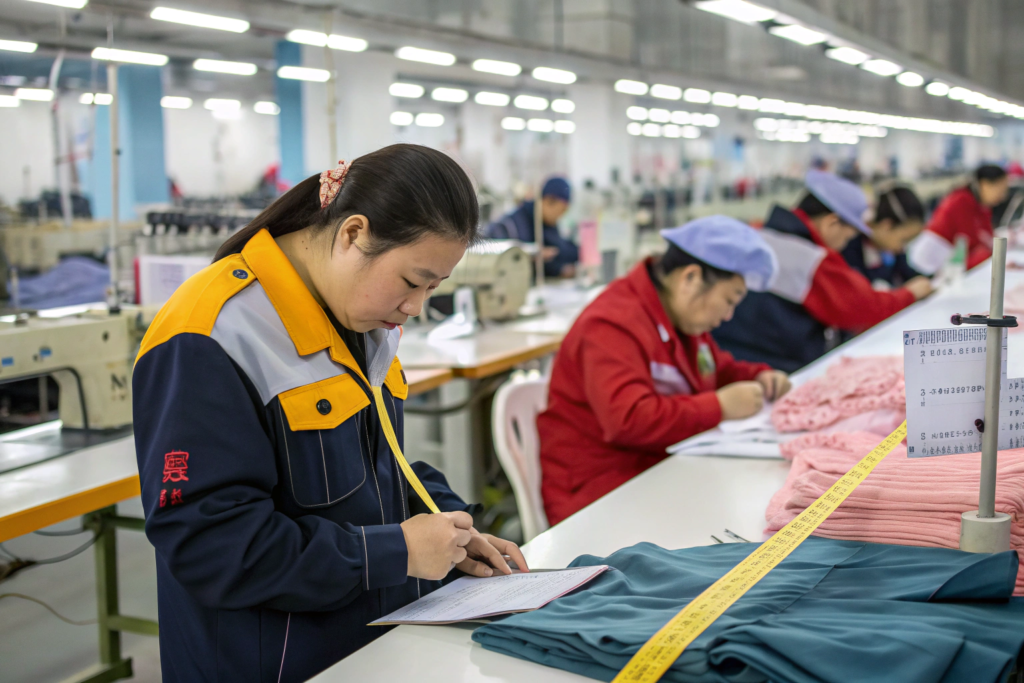
The inspector randomly selects these 200 pieces from across the shipment. They're not picking the best ones—they're truly random. A Toronto-based brand requires their inspectors to photograph the random selection process so they can verify that sampling was unbiased.
Some buyers think "I'll just look at 50 pieces" saves money. It doesn't. A sample of 50 is too small to reliably detect problems. You might miss a defect affecting 10% of production. The math is clear: for 5,000 pieces, inspect 200. A statistical sampling calculator for textile inspections on the AQL International site shows the confidence levels for different sample sizes.
What exactly should the inspector check on each piece?
A proper pre-shipment inspection covers:
Workmanship: Seam quality, stitch consistency, thread tension, loose threads, skipped stitches. The inspector checks inside and out.
Measurements: Key measurements on each piece compared to spec sheet. For 5,000 pieces, checking 200 pieces means you have data on measurement consistency across the batch.
Color: Compare to approved sample under proper lighting. Delta E readings if available. Check that pieces from different cartons match each other.
Fabric defects: Stains, holes, slubs, shading issues, finishing problems.
Trims and hardware: Buttons, zippers, snaps—are they secure and functioning?
Labels and packaging: Care labels correct? Hang tags attached? Poly bags correct size?
A Paris-based brand provides their inspectors with a 3-page checklist covering 47 checkpoints per garment. The inspector marks pass/fail for each and takes photos of any defects. The report includes defect photos and overall pass/fail by category. A downloadable pre-shipment inspection checklist on the Apparel Resources site provides a template you can adapt.
What happens when inspection finds problems?
This is where your preparation pays off. If inspection finds 10 major defects in 200 pieces (5% defect rate), that projects to 250 defective pieces in your 5,000-piece order. You have options:
Option A: Reject and re-make. If defects are severe, reject the whole batch. Factory remakes at their cost. This takes time but gets you good product.
Option B: Sort and repair. Factory sorts through all 5,000 pieces, repairs or replaces defectives, and submits for re-inspection. This is faster than re-making but requires the factory has capacity for sorting.
Option C: Accept with discount. You accept the defective rate and negotiate a discount. This works if defects are minor and you can sell them as seconds or use them in ways that hide the issues.
Option D: Partial rejection. You accept the good pieces and reject only the projected defective quantity. The factory remakes 250 pieces.
A Denver-based brand in 2024 had inspection fail with 12 major defects in 200 pieces. They chose option B—factory sorted all 5,000, found 312 defectives, repaired 280, replaced 32, and passed re-inspection in 10 days. They still hit their shipping window. A decision framework for inspection failures on the Quality Inspection Authority site helps choose the right response.
How do I handle problems when they're discovered after shipment?
Despite your best efforts, sometimes problems slip through. The container arrives, you open it, and something's wrong. Panic sets in. But panic doesn't fix anything. What matters is having a plan for post-shipment problems and knowing how to work with your factory to make things right.
A Vancouver-based brand in 2024 received 4,000 pieces with a subtle odor that made them unsellable. The smell wasn't detectable in pre-shipment inspection because it developed during transit—a reaction between fabric finishes and container conditions. They called us immediately, we identified the cause (a finishing chemical that off-gassed in heat), and worked out a solution: the factory covered the cost of airing out all garments and reimbursed the delayed sales. Because we had a relationship, we solved it together.
What documentation do I need when problems appear?
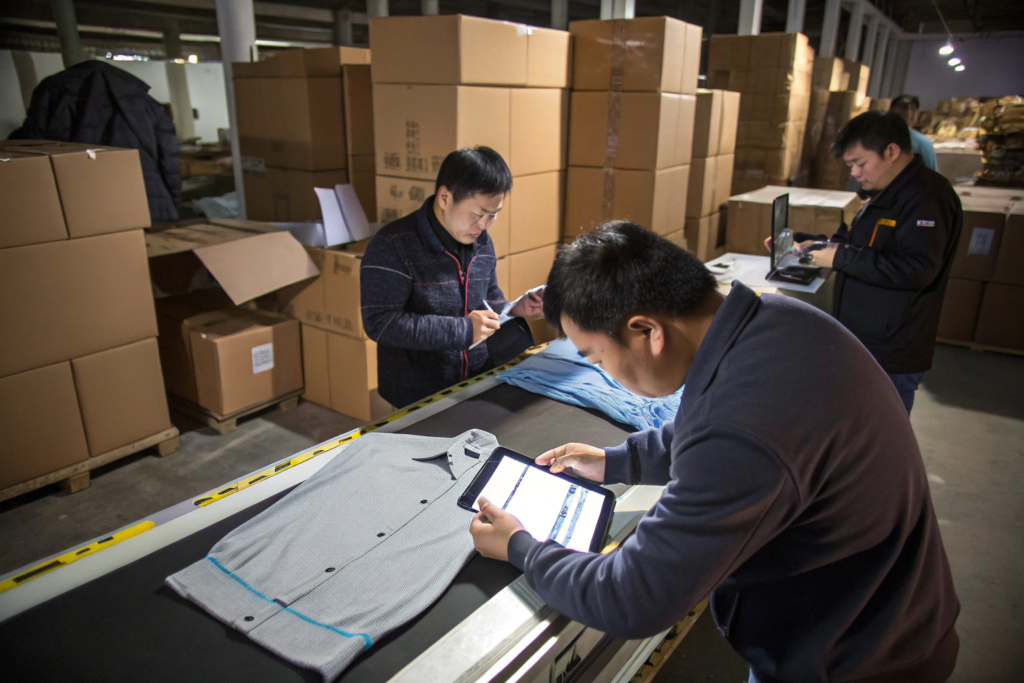
The moment you discover a problem, document everything:
Photos and video: Shoot everything. Wide shots showing the problem's scale. Close-ups showing the defect. Video of opening containers if possible.
Sample retention: Keep defective pieces as evidence. Don't destroy anything.
Inspection reports: If you had third-party inspection, their report is crucial evidence of what was or wasn't found.
Communication records: Emails, WeChat messages, contracts—anything showing what was agreed.
A Melbourne-based brand in 2023 received 3,000 pieces with wrong labels. They'd specified "machine wash cold" but labels said "dry clean only." Their contract clearly showed the correct care instruction, and their approved sample had the right label. The factory had to replace all labels at their cost. Without documentation, it would have been "he said, she said." A guide to documenting quality claims on the International Trade Centre site shows what evidence matters.
How do I negotiate with factories after shipment?
The relationship changes once goods have shipped. You have less leverage—the factory has your money (or most of it) and the goods are in your hands. But good factories still want to make things right because they value long-term relationships.
Approach the conversation as problem-solving, not blaming. "We have an issue with 300 pieces that arrived with stains. Here are photos, here's the quantity. How can we solve this together?" Factories respond better to collaborative language than accusations.
Options to discuss:
Replacement with next order: Factory credits you for defective pieces and adds replacements to your next production run.
Financial credit: Factory refunds the value of defective goods plus shipping costs.
Partial refund: You keep the goods at a discounted price and sell them as seconds.
Return and remake: Factory pays return shipping (expensive) and remakes the goods.
A Chicago-based brand in 2024 had 200 pieces with crooked seams. They sent photos, documented the defect rate, and asked the factory to credit them on their next order. The factory agreed to a 15% credit on the next invoice. The relationship continued, and the next order was perfect. A negotiation framework for post-shipment quality issues on the Sourcing Law site provides scripts and strategies.
How do I decide whether to keep working with a factory after problems?
One problem doesn't necessarily mean a bad factory. How they respond matters more than the problem itself. Ask yourself:
Did they own the issue or make excuses? A factory that immediately says "we'll fix it" is better than one that blames shipping, your inspection, or "circumstances beyond our control."
Did they fix it fast? Speed of response matters. A factory that takes weeks to address problems will take weeks to fix them.
Was it a one-time issue or pattern? If every order has problems, move on. If one order had a specific issue they've addressed, consider giving them another chance.
A London-based brand had a major quality failure in 2023—40% of an order had sizing inconsistencies. The factory investigated, discovered a pattern grading error, re-made the entire order in 4 weeks at their cost, and paid for air freight. The brand continued working with them and hasn't had another issue. The factory's response proved their commitment. A supplier evaluation framework on the Better Buying Institute site helps make objective decisions.
Conclusion
Handling quality control for 5,000 pieces isn't about being perfect—it's about being prepared. The brands who succeed don't cross their fingers and hope. They set clear standards upfront, inspect during production, verify before shipment, and have plans for when things go wrong. They understand that quality isn't something you check at the end—it's something you build throughout the entire process.
The system works: define your AQL levels and defect classifications before production starts. Test your bulk fabric before cutting. Inspect at cutting, first piece, in-line, and end-of-line stages. Conduct a proper pre-shipment inspection with statistically valid sampling. Document everything. And when problems happen—because they will happen sometimes—approach them collaboratively with your factory, using evidence and clear communication to find solutions.
At Shanghai Fumao, we've built our entire operation around helping clients succeed with bulk orders. Our in-process quality checks catch problems early. Our CNAS-accredited lab verifies fabric performance before production starts. Our inspection team documents every stage. And when something goes wrong—because we're human and fabric is complex—we own it and fix it. We've been doing this for 20 years because our clients know they can trust us with their 5,000-piece orders.
If you're planning a bulk order and want to sleep better at night, let's talk. Elaine, our Business Director, has helped hundreds of brands navigate the complexities of bulk production quality control. She can review your current approach, identify gaps in your quality system, and show you how we build quality into every order. Contact Elaine at elaine@fumaoclothing.com to start a conversation about making your next bulk order your best yet. Let's build something great together, with quality you can count on.