As someone who's been in the fabric business for over two decades here in Keqiao, I've seen this question stump even seasoned buyers. You're investing in premium shirting, and the weave choice can make or break the final product. It's not just about aesthetics; it's about how the shirt feels, performs, and lasts. The decision between sateen, twill, and poplin is fundamental, and getting it wrong is a costly mistake I see too many brands make.
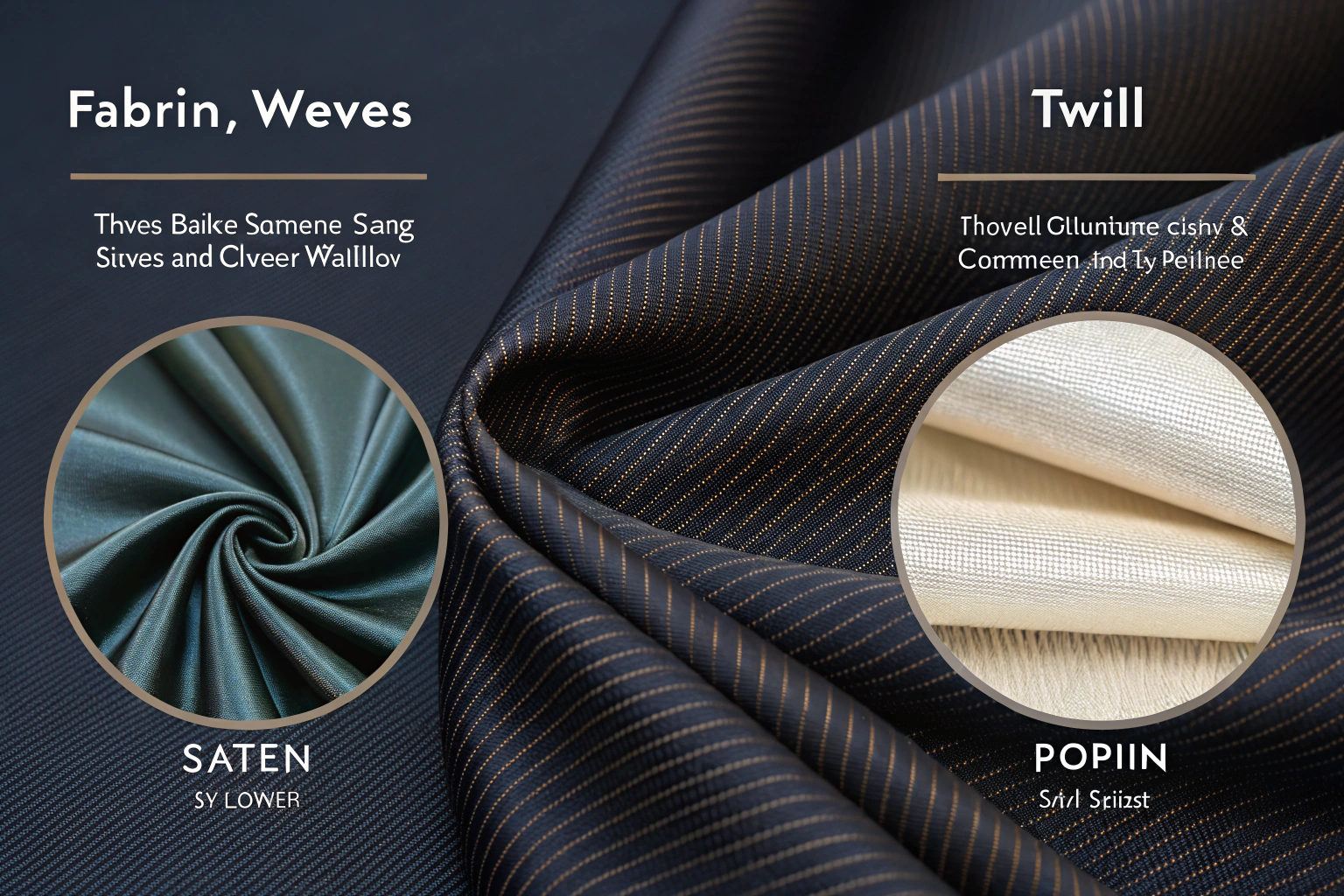
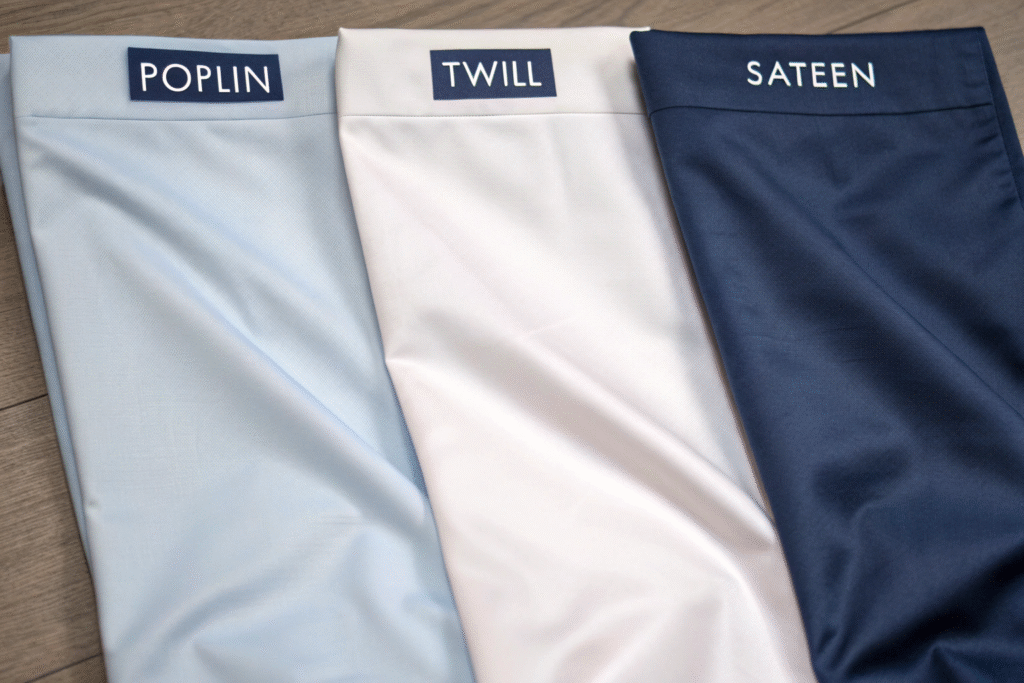
So, which weave should you choose for your premium shirts? For a crisp, clean, and breathable everyday shirt, poplin is your champion. For a softer, heavier shirt with a subtle sheen and luxurious drape, sateen wins. For a durable, rugged-yet-refined shirt that hides stains well and has a distinctive diagonal pattern, twill is the answer. Each weave has a unique personality, and the "best" one depends entirely on the story you want your brand to tell.
Let's move beyond the basic descriptions. I'll break down the practical realities of each weave from a manufacturer's perspective—how they behave on the cutting table, their performance in the hands of consumers, and the cost implications that really matter for your bottom line. Understanding these nuances is what separates amateur buyers from professional product developers.
What are the fundamental weave structure differences?
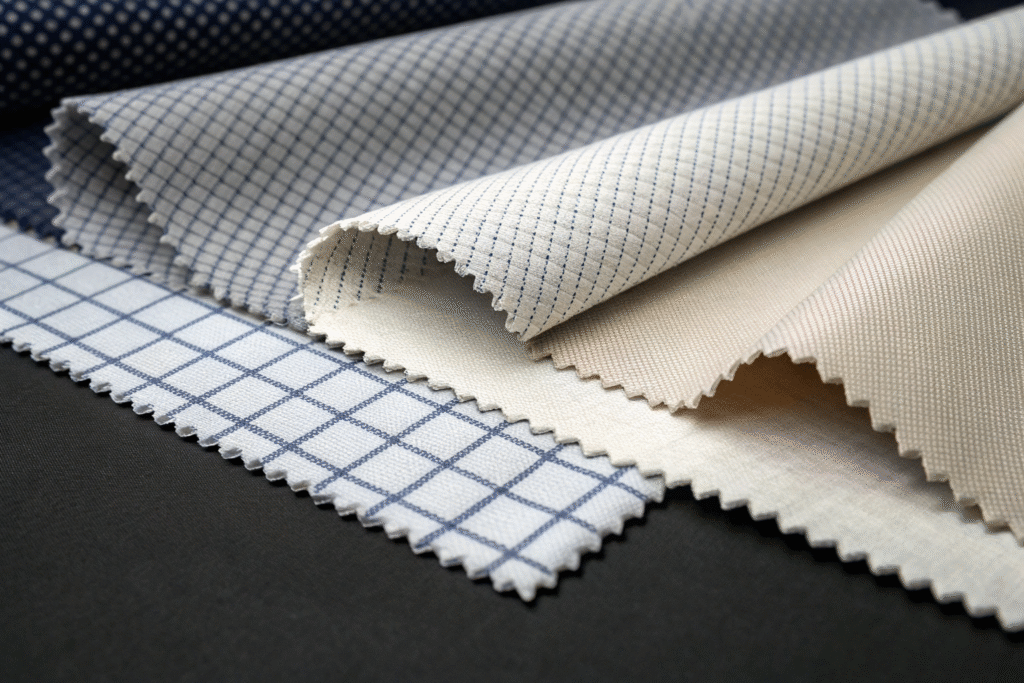
At its heart, fabric weave is about the pattern in which the warp (vertical) and weft (horizontal) threads interlace. This pattern dictates everything: the fabric's hand-feel, its drape, its durability, and even how it reacts to light. Poplin uses a simple, strong one-over-one-under pattern. Twill creates a diagonal line through a step-like pattern, like a two-over-one-under. Sateen, the most complex of the three, uses a pattern where the weft threads "float" over multiple warp threads, creating an unbroken surface.
These aren't just technical drawings; they are blueprints for performance. A sateen's float gives it that signature silky feel but can also make it more prone to snagging. A poplin's tight interlacement makes it incredibly resilient but can limit its softness. A twill's diagonal structure gives it inherent stretch and wrinkle resistance compared to the others. When you understand the structure, you can predict how the fabric will behave in production and on the consumer. For those developing detailed tech packs, understanding how to specify fabric weave in technical designs is a crucial skill.
How does the weave pattern affect fabric durability?
Durability isn't a single number; it's about resistance to abrasion, pilling, and tearing. Let's talk real-world performance:
- Poplin: The simple, tight plain weave makes it a workhorse. It has the highest resistance to snagging and pulling because there are no long, exposed thread floats. It's why you'll find poplin in high-turnover uniform shirts. In our quality control tests, a 100% Egyptian cotton poplin consistently outperforms sateen of the same origin in Martindale abrasion tests.
- Twill: The diagonal weave is dense and strong. The yarns are packed tightly together, making it resistant to tearing and very durable for daily wear. However, the raised cord can be susceptible to abrasion over a long period.
- Sateen: This is the most delicate of the three. Those long, beautiful floats that create the sheen are vulnerable. They can be caught by rings or rough surfaces, leading to snags. We always advise clients that sateen is for luxury, not hard labor. Its durability is its Achilles' heel.
The choice here is straightforward: for maximum everyday durability, choose poplin. For a balance of durability and sophistication, choose twill. For luxury that requires more care, choose sateen.
What is the impact of weave on weight and drape?
The weave structure directly influences how much yarn can be packed into a square inch and how the fabric falls.
- Poplin: Typically a lighter-weight fabric with a crisp, structured drape. It "stands away" from the body, which is excellent for ventilation in warm climates but can look boxy if not tailored well.
- Twill: Has a medium to heavy weight and a fluid, soft drape that conforms gracefully to the body. This is a key reason for its popularity in high-end denim and chinos.
- Sateen: Generally the heaviest of the three for a given thread count, and it has a beautiful, heavy drape that feels luxurious and hangs without stiffness. The floats allow for a denser packing of yarns, increasing the weight.
Think of it like this: poplin is like paper, twill is like a soft leather, and sateen is like heavy silk. Your garment's intended silhouette should guide you. A structured, clean shirt? Poplin. A soft, body-conscious shirt? Twill or Sateen.
How does each fabric's surface aesthetics influence brand perception?
The face of your fabric communicates your brand's values before a single word is read. Sateen whispers luxury and refinement with its subtle luster. Poplin shouts crisp professionalism and reliability. Twill bridges the gap, offering a rugged, heritage feel that's still polished. Getting this wrong can create a disconnect between your marketing and your product.
I worked with a UK-based startup in 2023 that was launching a "business casual" line. They initially chose a high-grade sateen, thinking "premium" meant "shiny." The shirts were beautiful but felt too formal and delicate for their target audience, who wanted something they could wear from the office to a pub. We switched them to a two-ply Egyptian cotton poplin with a softer finish. The result? A 25% increase in repeat purchases because the fabric's crisp-yet-comfortable aesthetic perfectly matched their brand's "effortless" positioning. The fabric became their identity.

Why is sateen associated with luxury and sheen?
Sateen's luxury reputation isn't an accident; it's physics. The long weft floats on the fabric's surface create a larger, uninterrupted area to reflect light. Unlike the sharp reflection off a satin, sateen's cotton fibers create a soft, matte luster. This is often enhanced by a mercerization process, where the yarns are treated under tension with caustic soda, which increases their strength and ability to accept dye, resulting in richer colors and added sheen.
It's this combination—the sateen weave plus mercerized yarns—that creates the quintessential luxury shirting fabric. When you see a shirt that has a deep, almost liquid color and a soft glow, you're almost certainly looking at a mercerized cotton sateen. This is a key differentiator for brands targeting a high-end market. For designers, exploring the history and application of sateen in luxury fashion provides valuable context for collection development.
How do poplin and twill create distinct visual textures?
Their visual identity is all about texture created by shadow and light:
- Poplin: Has a very flat, uniform, and slightly textured surface. It's the "blank canvas" of shirting fabrics. Its visual interest comes from its crispness and the sharpness of its colors, which appear vibrant due to the tight weave. It's a clean, modern, and honest look.
- Twill: The diagonal line (or wale) is its defining characteristic. This texture adds visual depth and helps to hide wrinkles and minor stains, making it look fresher for longer throughout the day. This tactile, visual texture gives it a classic, time-tested appeal.
Poplin is a high-definition screen; twill is a finely brushed canvas. One isn't better, but they serve vastly different aesthetic purposes.
What are the performance and practical care differences?
Beyond looks, how do these weaves hold up to sweat, washing, and ironing? This is where your customer's lifestyle meets your fabric choice. A fabric that pills, wrinkles excessively, or is difficult to care for will generate returns, no matter how beautiful it is.
Poplin is the low-maintenance option. It wrinkles but irons out easily due to its tight weave. Twill is the wrinkle-resistant champion; its diagonal structure allows the fabric to flex and recover without creasing deeply. Sateen is the high-maintenance partner; it can develop permanent shiny patches from ironing and requires more careful laundering to preserve its surface. (Here's a tip from our QC team: always iron sateen inside-out on a medium heat to avoid scorching that beautiful surface.)
| Care Aspect | Poplin | Twill | Sateen |
|---|---|---|---|
| Wrinkle Resistance | Low | High | Medium |
| Ease of Ironing | High (crisp results) | Medium | Low (requires care) |
| Pilling Tendency | Very Low | Low | Medium-High |
| Breathability | Very High | High | Medium |
Which weave is most breathable for warm climates?
If your customer is in a hot or humid environment, this is the most important question. Breathability is about how well air can pass through the fabric.
- Poplin: The winner. Its simple one-over-one-under weave can be made very tightly without sacrificing the tiny gaps that allow for air circulation. It's the go-to for tropical business shirts.
- Twill: Good breathability. The dense weave can sometimes trap more air than poplin, but its drape often keeps it away from the skin, promoting ventilation.
- Sateen: The least breathable. The dense structure and floating threads create a barrier that limits air flow. It's a warmer fabric, better suited for cooler climates or air-conditioned environments.
For a recent order for a Singapore-based client, we recommended a 100% cotton poplin with a compact yarn structure. The feedback was that it was the "most wearable shirt in the humid season" they had ever sourced.
How does each fabric respond to washing and ironing?
This is where theory meets the laundry room. The wrong choice here leads to customer complaints.
- Poplin: Washes and irons beautifully. It holds its shape and the crisp press is easy to achieve. It's forgiving.
- Twill: Also washes well. Its wrinkle resistance means it often comes out of the dryer needing only a light ironing, if any. The diagonal texture is hard to press out completely, which is part of its charm.
- Sateen: Requires attention. The floats can shift during aggressive washing, leading to distortion. High heat can damage the fibers and melt the sheen. It often requires steaming rather than ironing to maintain its luster. Understanding proper techniques for ironing delicate woven fabrics is essential for brands that include care instructions.
How do cost and sourcing considerations vary?
Let's talk money and logistics. The cost difference isn't just about the raw material; it's about the complexity of weaving, finishing, and the yield. As a manufacturer, I see the entire cost stack, and it's crucial for you to understand it too.
Sateen is typically the most expensive. The loom must run slower to create the complex weave pattern, reducing production output. It also often uses finer, longer-staple cotton (like Egyptian or Supima) to maximize the luxury effect and ensure the long floats don't break. Twill is mid-range. It's a robust and efficient weave to produce. Poplin can be the most cost-effective, but a high-thread-count, two-ply poplin can easily surpass a basic twill in price. Don't just think "weave = price." Think "weave + material + finish = final cost."
We had a client from Germany who was fixated on a 120s sateen for their entire line. The cost was straining their margins. We showed them a 100/2 (two-ply) poplin at a lower cost that had a superior hand-feel and durability. They switched 60% of their line to the poplin, saved 18% on fabric costs, and their customers loved the new, crisper fabric. It was a win-win.

What are the typical price brackets for each weave?
It's impossible to give exact numbers, but here are the realistic brackets for quality, premium shirting fabrics from a Chinese manufacturer like us, per meter:
- Basic Poplin (80s-100s): $X - $Y. The value leader for high-volume orders.
- Basic Twill (80s-100s): $X+1 - $Y+1. Slightly more due to the denser weave.
- Basic Sateen (80s-100s): $X+2 - $Y+2. The premium entry point.
- Luxury Two-Ply Poplin (120s-200s): Can exceed basic sateen, reaching $Z. Proving that poplin isn't always the cheap option.
- Luxury Sateen (120s-200s+): Tops the chart, easily reaching $Z+ and beyond for the finest Egyptian or Sea Island cotton.
The key is to discuss your budget openly with your supplier. We can often suggest a weave and cotton blend that achieves your desired aesthetic at a price point that protects your margin.
What are the minimum order quantity (MOQ) implications?
This is a practical reality that impacts startups most. In general, the more basic the fabric, the lower the MOQ.
- Poplin: Standard whites and blues often have the lowest MOQs, sometimes as low as 500 meters per color, as they are produced constantly for stock.
- Twill: Similar to poplin for standard colors. Custom colors will have higher MOQs.
- Sateen: Often has a higher MOQ. Because it's a more specialized weave and often uses more expensive yarns, mills are less inclined to run small batches. Expect MOQs for custom colors to start at 1000-2000 meters.
(Here I have to add: our integrated supply chain allows us to be more flexible with MOQs, especially for clients who show potential for long-term growth. We really can work with you.) Don't let a high MOQ for a sateen derail your launch. Start with a poplin or twill, build your brand, and then expand into more complex weaves.
Conclusion
Choosing between sateen, twill, and poplin is about aligning the fabric's inherent personality with your brand's identity and your customer's lifestyle. Sateen is your fabric for uncompromising luxury and a soft, heavy drape. Twill is the durable, rugged-yet-refined choice with excellent wrinkle resistance. Poplin is the crisp, breathable, and professional workhorse that excels in warm climates and offers incredible versatility.
There is no single "best" weave, only the best weave for your specific application. The most successful brands we work with understand this deeply and curate their collections accordingly, using fabric choice as a key part of their product storytelling.
If you're ready to move beyond theory and develop a shirting line that stands out through intelligent fabric selection, let's have a conversation. We can provide you with swatch bundles, technical data, and production quotes to make an informed decision. For a direct conversation about sourcing the right premium shirting fabrics for your next collection, please reach out to our Business Director, Elaine, at elaine@fumaoclothing.com. Let's weave your success story together.