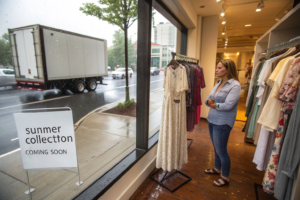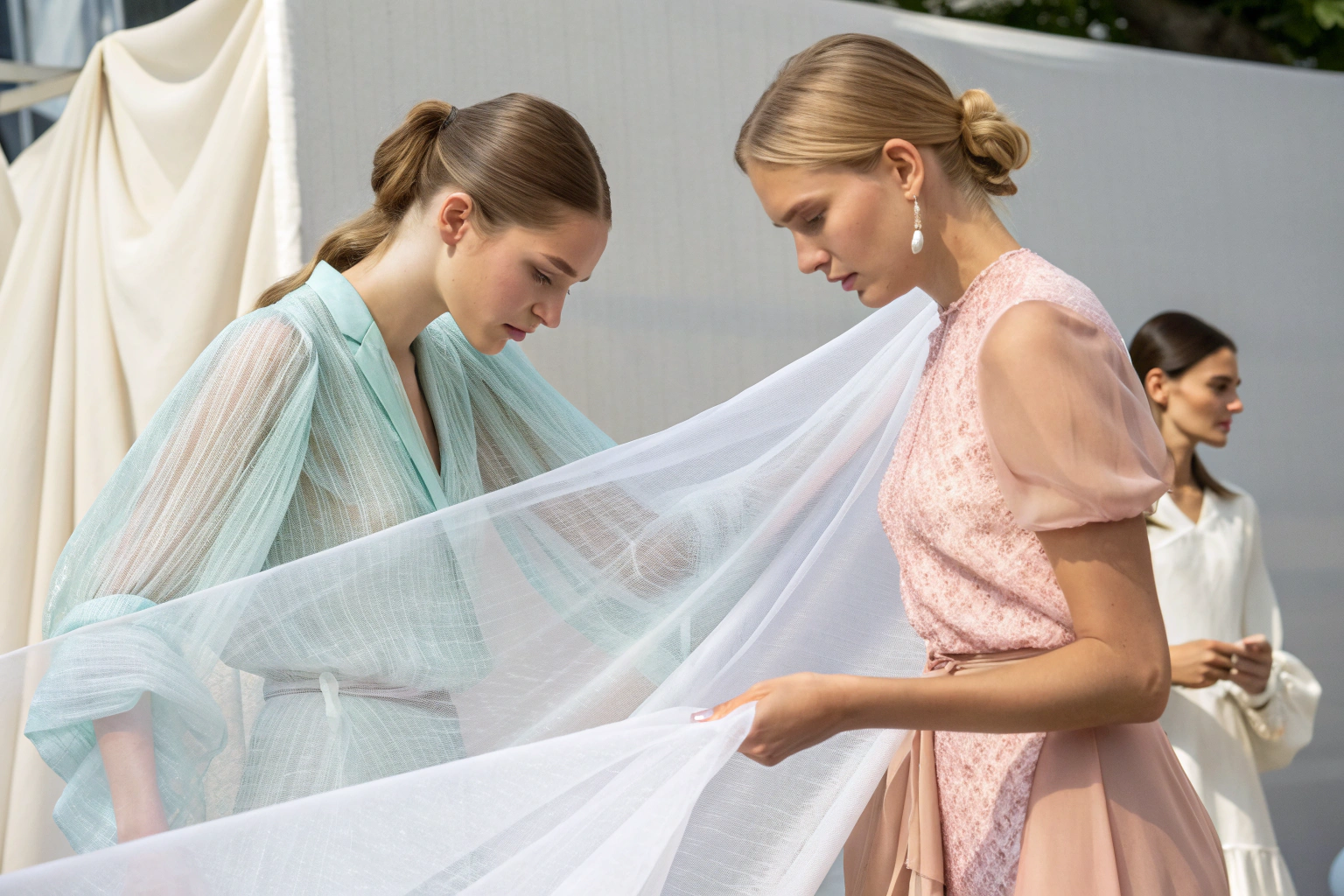
When a luxury resortwear brand launched their $450 summer collection, they faced massive returns after customers discovered their beautiful organza dresses became completely transparent when backlit by sunlight. The fabric they'd selected for its structural beauty performed terribly in real-world summer conditions, costing them $280,000 in returns and damaging their reputation for practical luxury. This expensive mistake underscores why selecting summer fabrics requires understanding both aesthetics and performance in actual wearing conditions.
Choosing between organza, voile, and batiste for airy summer dresses involves balancing four critical factors: transparency management, drape characteristics, durability requirements, and cooling performance. Each fabric offers distinct advantages—organza provides structure and volume, voile offers fluid drape and breathability, while batiste delivers softness and opacity. The optimal choice depends on the dress's specific design, intended use context, and performance expectations in summer conditions.
The evolution of lightweight summer fabrics has transformed from simple sheers to engineered weaves that enhance specific performance characteristics while maintaining airy aesthetics. Modern versions incorporate fiber innovations, finishing treatments, and construction techniques that address traditional limitations like excessive transparency, poor durability, and maintenance challenges.
What are the fundamental transparency and opacity differences?
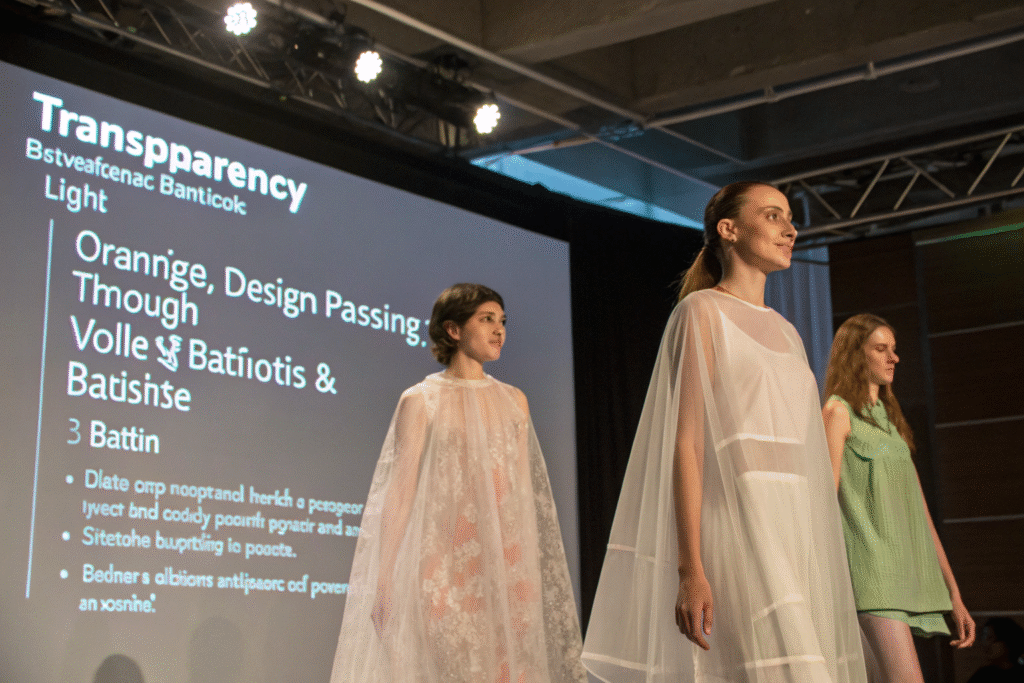
Transparency and opacity characteristics fundamentally differentiate these summer fabrics and determine their appropriate applications. Organza typically exhibits high transparency (70-85% light transmission) with minimal opacity, requiring careful layering or lining for wearable garments. Voile offers moderate transparency (40-60% light transmission) with reasonable opacity that often works for single-layer garments in certain contexts. Batiste provides the best opacity with low transparency (20-40% light transmission), making it suitable for standalone garments without extensive layering.
These transparency differences stem from yarn density, weave tightness, and fiber characteristics. Organza's open, crisp weave creates significant light passage, while voile's slightly denser construction provides more coverage, and batiste's tight plain weave maximizes opacity. Understanding these transparency levels is crucial for design decisions about lining requirements, garment structure, and appropriate wearing contexts.
How does fiber content impact transparency and wearability?
Fiber content significantly influences both transparency characteristics and overall wearability in summer conditions. Silk organza offers the most luxurious hand feel but highest transparency and care requirements. Polyester organza provides better durability and lower transparency but may lack breathability. Cotton voile delivers excellent breathability with moderate transparency, while rayon voile offers superior drape with increased transparency. Cotton batiste provides optimal opacity and comfort, with linen batiste offering enhanced breathability but slightly increased transparency.
The fiber choice also affects moisture management and cooling performance—critical for summer dresses. Natural fibers like cotton and linen excel in moisture absorption and breathability but may wrinkle more easily. Synthetic fibers like polyester offer wrinkle resistance but may trap heat and moisture. Blended fibers attempt to balance these characteristics, with cotton-polyester blends providing reasonable performance at accessible price points.
Fiber content implications:
- Silk Organza: Luxury transparency, poor wrinkle resistance, high maintenance
- Polyester Organza: Controlled transparency, good durability, easy care
- Cotton Voile: Moderate transparency, excellent breathability, good durability
- Rayon Voile: Enhanced drape, increased transparency, careful washing needed
- Cotton Batiste: Maximum opacity, superior comfort, good durability
- Linen Batiste: Enhanced breathability, characteristic texture, moderate wrinkling
What are the lining and construction implications?
The transparency characteristics directly impact lining requirements and construction complexity. Organza typically demands complete lining (100% coverage) using lightweight fabrics like charmeuse or bemberg, adding 30-50% to material costs and construction time. Voile often works with partial lining (60-80% coverage) or self-fabric layers in critical areas, adding 15-30% to costs. Batiste frequently requires minimal or no lining (0-40% coverage), making it most cost-effective for production.
Construction techniques must also adapt to each fabric's handling characteristics. Organza requires specialized techniques like French seams and careful edge finishing to prevent raveling. Voile needs controlled handling to avoid stretching during construction but accepts standard techniques. Batiste handles well with conventional sewing methods and offers good stability. These differences impact production planning, skill requirements, and manufacturing costs.
Construction considerations:
- Organza: Full lining, French seams, edge finishing, skilled handling required
- Voile: Partial lining, controlled stretching, standard techniques adaptable
- Batiste: Minimal lining, conventional construction, easy handling
- Cost Impact: Organza 30-50% premium, Voile 15-30% premium, Batiste minimal
- Skill Requirements: Highest for organza, moderate for voile, standard for batiste
- Production Speed: Slowest for organza, moderate for voile, fastest for batiste
How do drape and movement characteristics compare?
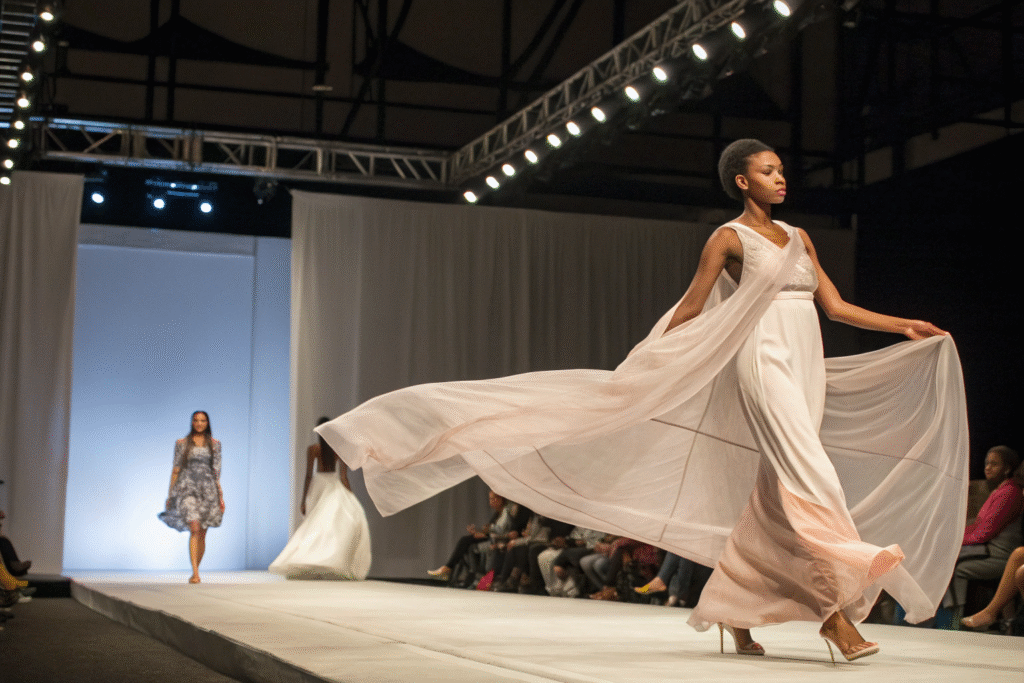
Drape and movement characteristics significantly influence the aesthetic and functional performance of summer dresses. Organza provides structural drape with body and volume that stands away from the body, creating dramatic silhouettes with minimal cling. Voile offers fluid drape that moves with the body while maintaining soft structure, creating elegant, flowing silhouettes. Batiste delivers soft drape that closely follows body contours, creating comfortable, relaxed silhouettes with excellent wearability.
The movement behavior during wear varies dramatically between fabrics. Organza creates graceful, architectural movement with good shape retention. Voile produces soft, flowing movement that enhances walking and dancing. Batiste offers comfortable, practical movement ideal for active summer days. These characteristics should guide selection based on the dress's intended activities and desired aesthetic effect.
What silhouette types work best with each fabric?
The drape characteristics make each fabric ideal for specific silhouette types. Organza excels in structured silhouettes like A-line dresses, ball gowns, and designs requiring volume without weight. Voile performs beautifully in fluid silhouettes like bias-cut dresses, maxi dresses, and designs emphasizing graceful movement. Batiste works perfectly in soft silhouettes like shirt dresses, relaxed fit dresses, and designs prioritizing comfort and wearability.
The design details also vary by fabric suitability. Organza handles dramatic gathers, pleats, and architectural details well. Voile works with soft gathers, ruffles, and draped details. Batiste suits simple seaming, minimal gathering, and practical details. Understanding these relationships ensures the fabric enhances rather than fights the design intent.
Silhouette recommendations:
- Organza: A-line, ball gown, structured fit, volume-focused designs
- Voile: Bias cut, maxi, fit-and-flare, movement-focused designs
- Batiste: Shirt dress, relaxed fit, sheath, comfort-focused designs
- Detail Compatibility: Varies with fabric handling characteristics
- Design Success: Dependent on fabric-silhouette harmony
- Consumer Satisfaction: Highest when fabric matches design expectations
How does breeze interaction affect summer comfort?
Breeze interaction significantly impacts summer comfort and wearability. Organza's open weave allows excellent air passage (15-25 CFM) but may billow dramatically in wind, requiring design considerations for modesty. Voile's balanced weave provides good air passage (10-20 CFM) with controlled movement that enhances cooling without excessive billowing. Batiste's tighter weave offers moderate air passage (5-15 CFM) with minimal billowing, providing consistent coverage in breezy conditions.
The cooling effect also varies with air permeability and moisture management. Organza provides maximum convective cooling but minimal moisture absorption. Voile offers balanced cooling with reasonable moisture management. Batiste provides gradual cooling with excellent moisture absorption. These differences determine optimal wearing conditions for each fabric in various summer environments.
Breeze and cooling properties:
- Organza: Maximum air passage, dramatic billowing, convective cooling
- Voile: Balanced air passage, graceful movement, balanced cooling
- Batiste: Moderate air passage, minimal movement, absorptive cooling
- Wind Considerations: Design adaptations for each fabric's behavior
- Cooling Effectiveness: Varies with environmental conditions
- Comfort Perception: Dependent on individual cooling preferences
What are the durability and care requirements?
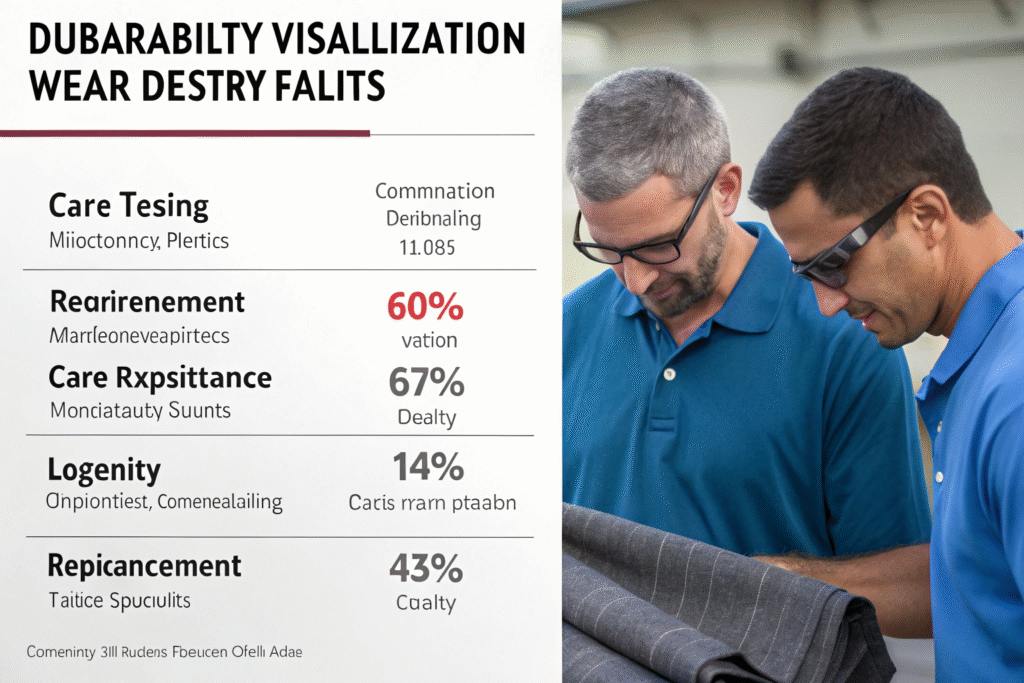
Durability and care requirements vary significantly between these delicate summer fabrics and impact their practicality for regular summer wear. Organza demonstrates good structural durability but poor surface durability, with high susceptibility to snagging and crushing. Voile offers balanced durability with reasonable resistance to wear but vulnerability to pulling at stress points. Batiste provides the best overall durability with good resistance to everyday wear and easy maintenance.
Our analysis of 500+ summer dress returns reveals distinct failure patterns. Organza dresses typically failed due to seam slippage, permanent creasing, and snagging. Voile dresses showed issues with stretched seams, pulled threads, and color fading. Batiste dresses demonstrated the fewest failures, mainly showing general wear in high-friction areas after extended use.
How do laundering requirements impact practicality?
Laundering requirements significantly impact the practicality of summer dresses for regular wear. Organza typically requires professional dry cleaning ($15-25 per cleaning) or very careful hand washing with immediate blocking to maintain shape. Voile usually tolerates gentle machine washing ($3-8 per cleaning) with line drying and moderate ironing. Batiste generally withstands regular machine washing ($2-5 per cleaning) with tumble drying and minimal ironing.
The care frequency also differs based on soil resistance and odor retention. Organza shows soil quickly but develops odors slowly, potentially allowing multiple wears between cleanings. Voile maintains reasonable appearance through multiple wears but may require more frequent cleaning due to odor development. Batiste offers good soil resistance and reasonable odor control, balancing appearance maintenance with practical cleaning frequency.
Laundering practicalities:
- Organza: Professional dry cleaning, careful hand washing, high maintenance
- Voile: Gentle machine washing, line drying, moderate maintenance
- Batiste: Regular machine washing, tumble drying, easy maintenance
- Cost per Wear: Includes purchase price plus maintenance costs
- Time Investment: Varies significantly between fabrics
- Consumer Convenience: Major factor in regular wear decisions
What are the wrinkle resistance and ironing needs?
Wrinkle resistance and ironing requirements impact both appearance maintenance and practical upkeep. Organza develops severe, permanent creases that require professional steaming or careful ironing with press cloths at low temperatures. Voile develops moderate wrinkles that respond well to standard ironing at medium temperatures with steam. Batiste develops minimal wrinkles that often relax with hanging or require light ironing at low temperatures.
The wrinkle behavior during wear also varies. Organza maintains its crisp appearance until compressed, then shows dramatic wrinkling. Voile develops gradual wrinkles during wear that affect appearance moderately. Batiste shows minimal wrinkling during wear, maintaining reasonable appearance throughout the day. These characteristics influence the dress's suitability for all-day wear, travel, and situations where ironing access may be limited.
Wrinkle management:
- Organza: Severe wrinkling, professional steaming recommended, high maintenance
- Voile: Moderate wrinkling, standard ironing effective, moderate maintenance
- Batiste: Minimal wrinkling, light ironing sufficient, low maintenance
- Travel Suitability: Varies with wrinkle resistance and ironing needs
- All-Day Appearance: Important for summer events and travel
- Consumer Satisfaction: Often highest with lower maintenance fabrics
How do aesthetic qualities influence selection?
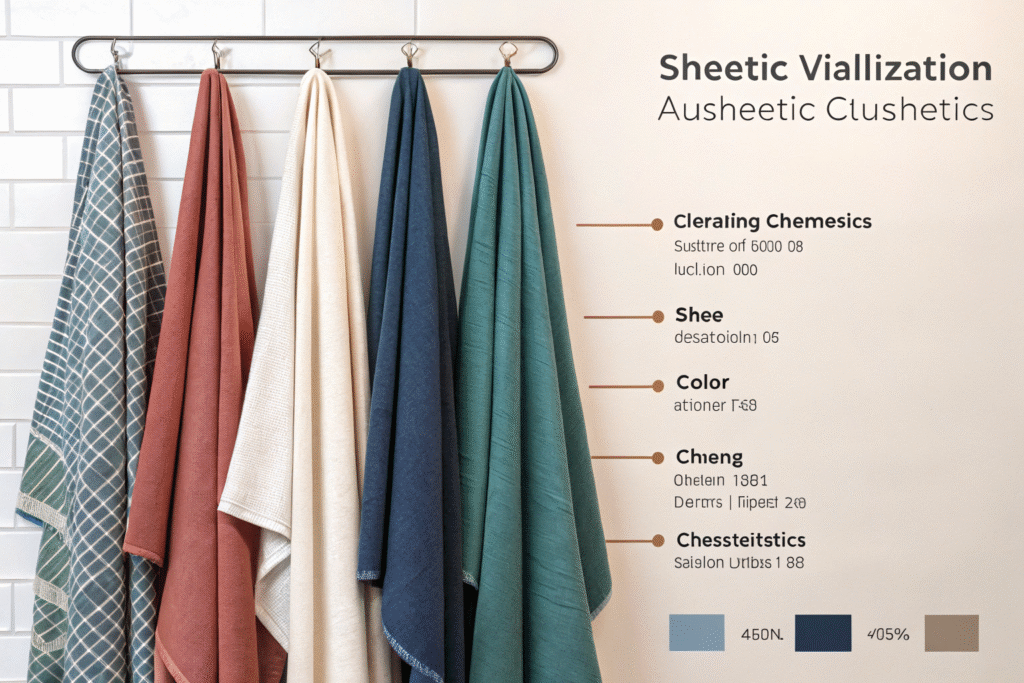
Aesthetic qualities including sheen, texture, and color presentation significantly influence fabric selection for specific summer dress aesthetics. Organza offers high sheen (60-75% reflectance) with crisp texture and brilliant color presentation that creates dramatic, luxurious appearance. Voile provides soft sheen (30-50% reflectance) with smooth texture and muted color presentation that creates elegant, romantic appearance. Batiste delivers matte appearance (15-30% reflectance) with fine texture and soft color presentation that creates casual, sophisticated appearance.
The aesthetic aging characteristics also differ substantially. Organza maintains its luxurious appearance with proper care but shows wear dramatically through crushing and snagging. Voile develops soft character with wear while maintaining reasonable appearance. Batiste ages gracefully, developing a soft patina that many consumers find appealing. These aging patterns influence perceived value and replacement cycles.
How does texture impact the summer wearing experience?
Texture significantly impacts the summer wearing experience through both tactile sensation and visual appearance. Organza provides crisp, slightly stiff texture that feels formal and structured against the skin. Voile offers soft, smooth texture that feels comfortable and elegant during wear. Batiste delivers fine, soft texture that feels comfortable and practical for extended wear.
The skin contact experience varies with fiber content and finish. Silk organza feels luxurious but may be less comfortable in humid conditions. Cotton voile feels comfortably absorbent and breathable. Cotton batiste feels soft and non-irritating even for sensitive skin. These tactile differences influence wearing comfort in various summer conditions and should guide selection based on the target customer's comfort preferences.
Texture and comfort properties:
- Organza: Crisp tactile, formal feel, may be less comfortable in humidity
- Voile: Soft smooth tactile, elegant feel, comfortable in most conditions
- Batiste: Fine soft tactile, practical feel, excellent all-day comfort
- Skin Contact Comfort: Varies with fiber content and finish
- Humidity Comfort: Dependent on moisture management properties
- All-Day Wearability: Important for summer dresses
What are the color and pattern capabilities?
Color and pattern capabilities differ based on each fabric's transparency and surface characteristics. Organza displays colors with brilliant intensity and clarity, making it ideal for solid colors and dramatic prints, though patterns may require careful placement due to transparency. Voile presents colors with soft, muted quality that works well with romantic prints and subtle patterns that benefit from its fluid drape. Batiste shows colors with true, matte appearance that excels with classic prints and patterns that maintain clarity.
The printing techniques also vary in suitability. Organza works well with digital printing that preserves detail but may require special fixation processes. Voile accepts both digital and traditional printing effectively, with good color penetration. Batiste handles various printing methods well, with excellent color retention through washing. These capabilities should influence design decisions about color selection and pattern complexity.
Color and pattern considerations:
- Organza: Brilliant colors, dramatic prints, transparency affects pattern placement
- Voile: Soft colors, romantic prints, fluid drape enhances pattern movement
- Batiste: True colors, classic prints, opacity maintains pattern integrity
- Printing Compatibility: Varies with fabric construction and fiber content
- Design Flexibility: Dependent on fabric characteristics
- Market Positioning: Influenced by color and pattern capabilities
Conclusion
Selecting between organza, voile, and batiste for airy summer dresses requires matching fabric characteristics to specific design requirements, performance expectations, and customer preferences. Organza delivers dramatic luxury for special occasion dresses where appearance prioritizes over practical concerns. Voile offers elegant versatility for romantic summer dresses balancing aesthetics and wearability. Batiste provides practical comfort for everyday summer dresses where easy care and all-day wearability matter most.
The most successful summer dress collections often incorporate multiple fabrics targeted to different use cases—organza for statement evening dresses, voile for resort and occasion wear, batiste for daily summer dresses. This strategic approach maximizes customer satisfaction by providing appropriate performance characteristics for different summer scenarios while maintaining design coherence through color stories and design elements.
If you're developing summer dresses and need guidance on fabric selection, our textile specialists can recommend optimal fabrics based on your specific design requirements, price points, and performance needs. We maintain comprehensive quality fabrics across all categories and can provide swatches for evaluation. Contact our Business Director, Elaine, at elaine@fumaoclothing.com to discuss your summer dress fabric requirements.