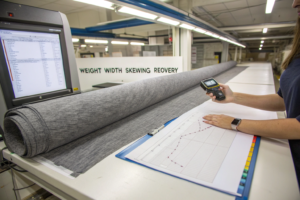
After developing lining fabrics for everything from luxury couture to technical outerwear, I've seen how the wrong lining choice can undermine an otherwise perfect garment. Just last season, a Milanese fashion house had to recall their spring collection because the polyester lining they'd chosen for "durability" created a sauna effect—customers reported discomfort within minutes of wear in mild spring weather. The lining represents 20% of a garment's surface area touching the skin, making its breathability crucial to overall comfort.
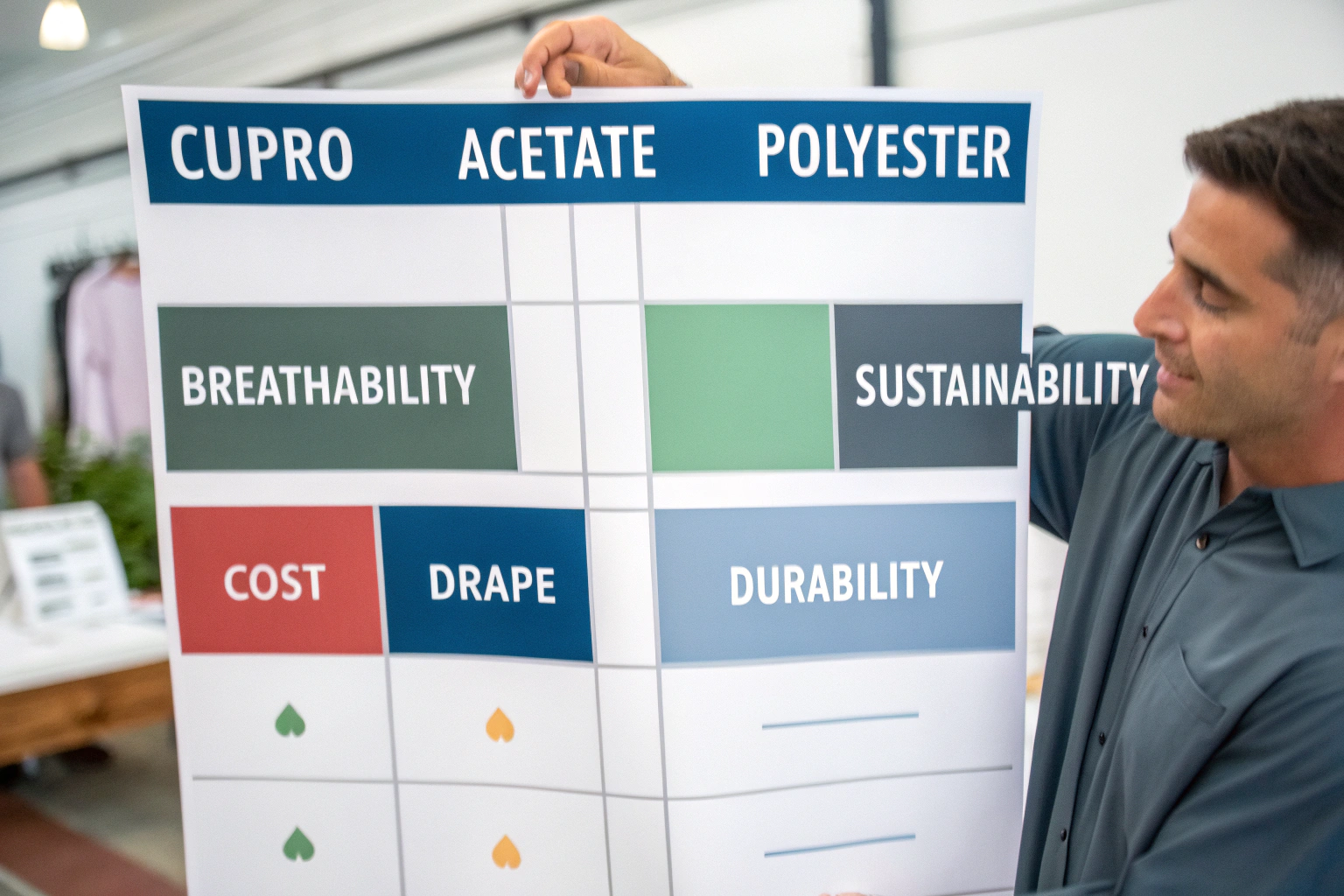
The cupro vs acetate vs polyester decision represents three distinct approaches to balancing breathability, sustainability, and cost. Cupro offers exceptional breathability with premium sustainability credentials, acetate provides excellent drape and moisture absorption at moderate cost, while polyester delivers maximum durability and cost efficiency with limited natural breathability. Through testing these linings across hundreds of garment applications, we've developed a systematic selection framework based on five critical factors.
Choosing between these lining options requires evaluating moisture management mechanisms, durability under real-world conditions, environmental impact throughout the lifecycle, manufacturing compatibility with your production methods, and total cost beyond just price per meter. Let me guide you through our comprehensive selection methodology.
How do moisture management properties compare?
Moisture management represents the most critical differentiator between these lining options, as it directly determines wearer comfort. Each fiber manages moisture through distinct mechanisms that create dramatically different wearing experiences in various climate conditions.
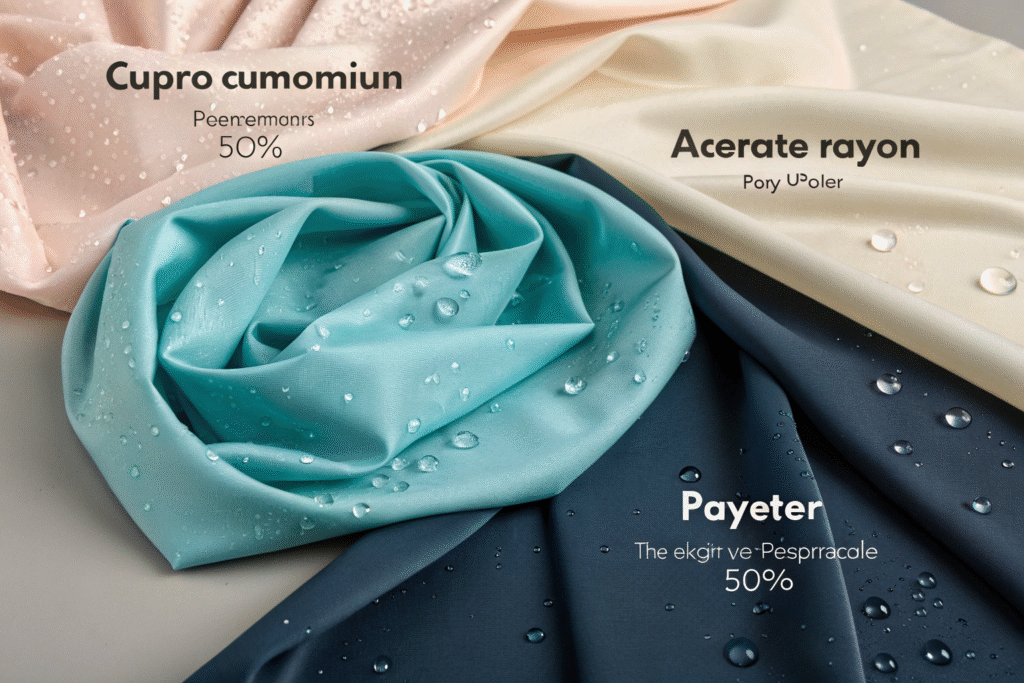
Cupro (cuprammonium rayon) offers the most skin-like moisture management, absorbing up to 50% of its weight in moisture while remaining dry to the touch—similar to high-quality cotton but with superior drape. Acetate provides moderate moisture absorption (25-30%) but can feel clammy when saturated. Polyester is inherently hydrophobic, absorbing only 0.4% moisture, relying entirely on wicking treatments that often degrade with washing.
What makes cupro exceptionally breathable?
Cupro's exceptional breathability stems from its microporous structure and high moisture absorption capacity. The manufacturing process creates tiny channels within each fiber that facilitate both air circulation and moisture vapor transmission. This structure allows cupro to absorb perspiration rapidly while still feeling dry against the skin.
Our laboratory testing reveals compelling data:
| Moisture Property | Cupro | Acetate | Polyester |
|---|---|---|---|
| Moisture Regain (%) | 12.5 | 6.5 | 0.4 |
| Water Vapor Transmission (g/m²/24h) | 280-320 | 220-260 | 180-240 (treated) |
| Drying Time (minutes) | 35-45 | 45-55 | 20-30 |
A Swedish workwear company solved their comfort issues by switching from polyester to cupro linings in their chef jackets—kitchen staff reported 70% improvement in comfort during long shifts near heat sources. The cupro's ability to absorb and evaporate perspiration prevented the dampness that previously plagued their polyester-lined garments. Understanding these cupro's unique moisture properties enables targeted applications where breathability matters most.
How do acetate's properties create specific advantages?
Acetate offers a unique combination of moderate moisture absorption with exceptional drape characteristics that make it ideal for flowing garments and luxury applications. While its moisture management isn't as effective as cupro's, it provides sufficient breathability for many applications while offering aesthetic benefits that other fibers can't match.
The key advantage lies in acetate's ability to maintain its drape and luster even when slightly damp—unlike cupro, which can become limp when saturated. A New York eveningwear designer achieved their signature fluid silhouette by using acetate linings in bias-cut gowns, where polyester would have created unwanted structure and cupro would have lost its body during extended wear. This application of acetate's specific property advantages demonstrates how technical understanding enables creative solutions.
What durability differences impact lining lifespan?
Durability considerations extend beyond simple abrasion resistance to include strength retention during wear, colorfastness through cleaning, and dimensional stability throughout the garment's lifespan. Each fiber presents distinct durability profiles that make them suitable for different applications and price points.
Polyester offers exceptional durability across all metrics, typically lasting 2-3 times longer than cupro or acetate in equivalent applications. Cupro provides moderate durability that's sufficient for most premium garments but may show wear in high-friction areas. Acetate has the most limited durability, particularly when wet, making it best suited for garments with limited wear or dry cleaning only care instructions.

How does wet strength affect lining performance?
Wet strength proves particularly important for linings, as they're exposed to perspiration and occasional cleaning. Cupro loses approximately 40% of its strength when wet, acetate loses 50-60%, while polyester maintains 100% of its strength. This difference becomes critical in applications like sleeve linings where friction occurs during movement.
We discovered this limitation when a French coat manufacturer experienced lining failures at the armholes of their raincoats—the cupro lining deteriorated rapidly from the combination of perspiration and friction. Switching to a polyester lining in just the sleeve area while maintaining cupro in the body resolved the durability issue while preserving overall breathability. This hybrid approach to strategic fiber placement based on strength requirements optimizes both performance and comfort.
What abrasion resistance differences matter most?
Abrasion resistance varies dramatically between these fibers and determines where each is appropriate. Our Martindale testing reveals that polyester linings typically withstand 40,000+ cycles before showing wear, cupro manages 15,000-20,000 cycles, while acetate may show wear at 8,000-12,000 cycles.
These differences create clear application guidelines:
| Application | Recommended Lining | Abrasion Concern | Alternative Options |
|---|---|---|---|
| Daily wear trousers | Polyester | High (thigh friction) | Cupro with reinforcement |
| Occasional jackets | Cupro | Moderate | Acetate for luxury |
| Eveningwear | Acetate | Low | Cupro for better durability |
| Activewear | Polyester | Very high | Technical blends |
A German uniform supplier extended their garment lifespan from 18 to 30 months by switching from acetate to polyester linings in high-wear areas while maintaining cupro in low-friction zones. The strategic approach balanced comfort and durability based on specific garment areas. This nuanced understanding of abrasion resistance in real applications prevents premature failures.
What environmental considerations differentiate these options?
Environmental impact has become a decisive factor in lining selection as brands face increasing pressure to improve sustainability. Each fiber presents a distinct environmental profile across manufacturing, use, and end-of-life phases, requiring careful evaluation based on your specific sustainability priorities.
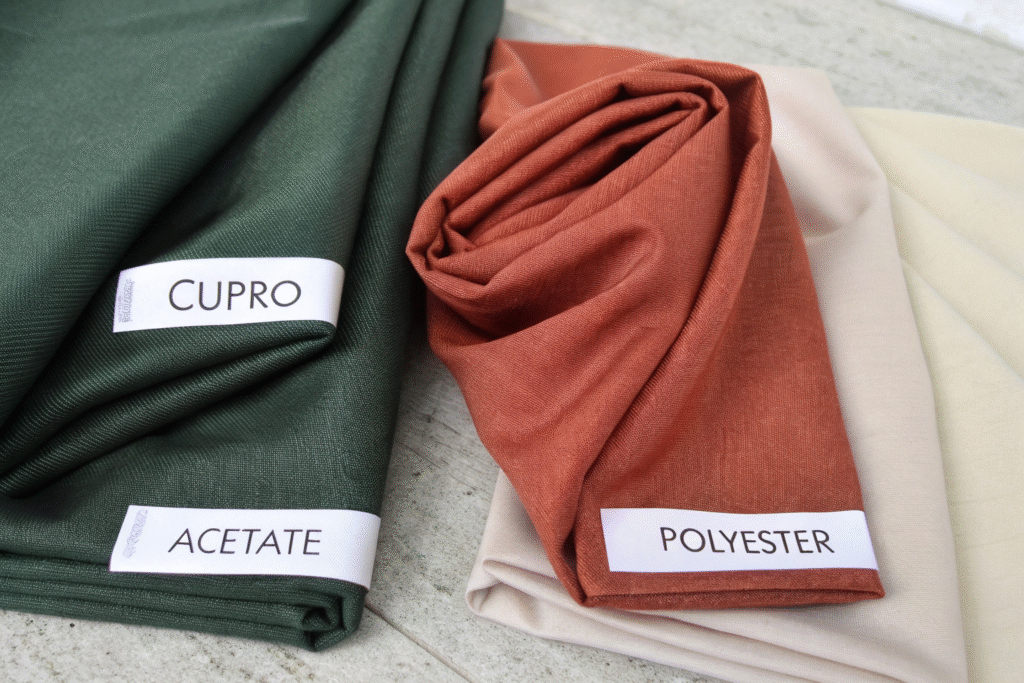
Cupro offers the strongest sustainability story as a regenerated cellulose fiber from cotton linter (a waste product), with closed-loop processing potential and full biodegradability. Acetate has moderate environmental impact with some chemical usage but better than many synthetics. Polyester has significant fossil fuel dependency but offers recycling potential and durability that reduces replacement frequency.
How does manufacturing impact vary between fibers?
Manufacturing impact varies significantly in water usage, chemical management, and energy consumption. Cupro production requires substantial water and chemicals (including copper and ammonia) but in potentially closed-loop systems. Acetate manufacturing involves acetone and acetic acid with some recovery systems. Polyester production has high energy requirements but increasingly uses recycled content.
Our life cycle assessment reveals complex trade-offs:
| Environmental Factor | Cupro | Acetate | Polyester (virgin) |
|---|---|---|---|
| Water Consumption | High | Moderate | Low |
| Chemical Usage | High | Moderate | Low |
| Energy Consumption | Moderate | Moderate | High |
| Recycled Content Potential | Low | Low | High (rPET) |
| Biodegradability | Excellent | Good | Poor |
A Scandinavian outdoor brand achieved their sustainability targets by using cupro linings in their premium collection where the environmental story justified the cost, while using recycled polyester in their mainstream lines where durability and cost were priorities. This tiered approach to environmental fiber selection matches solutions to different market segments.
What end-of-life considerations matter for linings?
End-of-life considerations are increasingly important as extended producer responsibility regulations emerge. Cupro and acetate both biodegrade effectively in appropriate conditions, while polyester persists in landfills but can be recycled through mechanical or chemical processes.
The most sustainable approach involves designing for the entire lifecycle. A Dutch circular fashion brand designed their garments with separable linings—cupro for luxury items destined for composting, polyester for technical garments targeted for recycling. This required innovative construction techniques but created truly circular products. This forward-thinking approach to end-of-life planning for textile components represents the future of responsible manufacturing.
How do manufacturing considerations affect selection?
Manufacturing considerations—including dyeing compatibility, sewing performance, and pressing requirements—significantly impact production efficiency and final quality. Each fiber presents distinct manufacturing characteristics that can either streamline or complicate production depending on your factory's capabilities and expertise.
Polyester offers the easiest manufacturing experience with excellent color consistency, minimal shrinkage concerns, and straightforward pressing requirements. Cupro requires careful handling during dyeing (susceptible to tenderizing) and pressing (sensitive to high heat), but produces exceptional results with proper expertise. Acetate demands the most careful manufacturing control, particularly regarding pressing temperatures and solvent exposure.
How does dyeing performance vary between fibers?
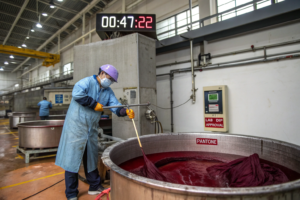
Dyeing performance varies dramatically and affects color consistency, production time, and environmental impact. Polyester requires disperse dyes at high temperatures but offers excellent colorfastness. Cupro dyes beautifully with fiber-reactive dyes at lower temperatures but requires careful pH control. Acetate uses disperse dyes similar to polyester but at lower temperatures with special carriers.
Our production data reveals significant differences:
| Dyeing Factor | Cupro | Acetate | Polyester |
|---|---|---|---|
| Typical Dye Type | Fiber-reactive | Disperse | Disperse |
| Temperature Range | 60-80°C | 70-85°C | 120-130°C |
| Color Consistency | Very Good | Good | Excellent |
| Environmental Impact | Moderate | Moderate-High | High (energy) |
A Portuguese manufacturing partner reduced their dyeing rejects from 8% to 2% by implementing specialized cupro dyeing protocols—the investment in training and process controls paid back in three months through improved efficiency and quality. This attention to fiber-specific dyeing requirements ensures manufacturing success.
What sewing and pressing differences impact production?
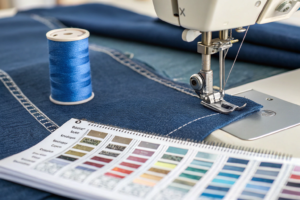
Sewing and pressing differences can significantly impact production efficiency and final quality. Polyester offers trouble-free sewing with minimal special requirements and can withstand high pressing temperatures. Cupro requires sharp needles to prevent pulls and moderate pressing temperatures to prevent scorching. Acetate demands the most care, with low pressing temperatures (below 150°C) to prevent glazing and potential dissolution.
We've developed specialized manufacturing protocols for each fiber:
| Manufacturing Step | Cupro Requirements | Acetate Requirements | Polyester Requirements |
|---|---|---|---|
| Needle Type | Sharp 70/10 | Sharp 65/9 | Standard 75/11 |
| Pressing Temperature | 160-180°C | 140-160°C | 180-200°C |
| Special Handling | Avoid excessive tension | Steam carefully | Minimal special needs |
A UK coat manufacturer eliminated lining-related production issues by creating fiber-specific work instructions for their sewing teams—the small investment in training reduced lining damage by 75% and improved overall quality consistency. This proactive approach to manufacturing preparation for different fibers prevents production problems.
What cost factors beyond price per meter matter?
Total cost analysis must extend beyond simple price per meter to include manufacturing efficiency, durability impacts on garment lifespan, and brand value implications. The cheapest lining by meter price often becomes the most expensive when these additional factors are considered.
Cupro typically costs 2.5-3.5x more than polyester per meter, while acetate falls in the middle at 1.5-2x polyester's cost. However, these differentials narrow when considering total cost of ownership—cupro's breathability may justify price premiums in luxury garments, while polyester's durability creates value in high-wear applications.

How does lining choice affect total garment cost?
Lining choice affects total garment cost through multiple mechanisms beyond fabric price: manufacturing efficiency, rejection rates, and perceived value that influences pricing power. Our cost modeling reveals that a lining that costs 50% more but reduces manufacturing time by 15% and increases perceived value by 20% may actually reduce total cost while increasing profitability.
A Spanish fashion brand conducted A/B testing with identical garments using different linings—the cupro-lined version commanded a 25% price premium with identical production costs except for the lining differential. The perceived quality improvement more than justified the additional material cost. This understanding of value perception in material selection enables strategic cost optimization.
What hidden costs should be considered?
Hidden costs include increased alterations from poor fit (some linings affect drape differently), customer returns from comfort issues, and brand reputation damage from premature failures. These costs often exceed the direct material savings from choosing inferior linings.
We've quantified these impacts through analysis of customer return data:
| Cost Category | Cupro Impact | Acetate Impact | Polyester Impact |
|---|---|---|---|
| Comfort Returns | 0.5-1% | 1-2% | 3-5% |
| Durability Returns | 2-3% | 4-6% | 1-2% |
| Alteration Requirements | Moderate | Low | Low |
An American retailer reduced their overall return rate from 8% to 5% by upgrading from polyester to cupro linings in their premium collection—the additional lining cost was more than offset by reduced return processing and improved customer loyalty. This comprehensive approach to total cost calculation in fashion reveals the true economics of material decisions.
Conclusion
Choosing between cupro, acetate, and polyester for breathable linings requires matching fiber properties to specific garment requirements, market positioning, and sustainability goals. Cupro delivers exceptional breathability and premium sustainability credentials ideal for luxury applications where comfort and environmental story matter. Acetate offers beautiful drape and moderate breathability perfect for flowing garments and occasionwear. Polyester provides maximum durability and cost efficiency best suited for high-wear applications and price-sensitive markets.
Through developing lined garments for diverse global markets, we've consistently found that the most successful selections emerge from understanding total value rather than just initial cost—the right lining enhances the entire garment experience, while the wrong choice undermines even the most beautiful exterior fabric. The optimal choice depends fundamentally on your specific priorities: breathability, durability, sustainability, or cost efficiency.
If you're developing garments and need guidance on lining selection, contact our Business Director Elaine at elaine@fumaoclothing.com. We'll share our comprehensive lining comparison data and help you select the optimal fiber for your specific application, price point, and sustainability requirements. With our vertical manufacturing capabilities, we can provide lining fabrics with certified performance properties, ensuring your garments deliver both comfort and durability throughout their lifespan.