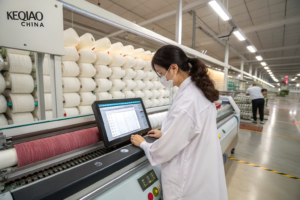
After twenty years of sourcing fabrics across China and Southeast Asia, I've learned the hard way that a mill's quality control system tells you more about your eventual product quality than any sample ever could. Just last quarter, an American sportswear brand avoided a $400,000 disaster because our audit revealed their chosen mill's testing equipment hadn't been calibrated in fourteen months—the lab looked impressive, but the data was worthless. Auditing isn't about checking boxes; it's about understanding whether a supplier's systems will protect your interests when problems inevitably arise.
A proper mill audit examines both the technical capabilities and the cultural commitment to quality. The most beautiful factories can produce inconsistent results if their QC operates as an afterthought, while modest facilities with rigorous systems often deliver exceptional consistency. Through conducting over 200 mill audits for brands ranging from fast fashion to luxury, we've developed a methodology that reveals the truth behind the factory tour and the glossy brochures.
Conducting a comprehensive fabric mill QC audit requires investigating four critical systems: raw material verification and traceability protocols, in-process control points and corrective action processes, finished goods testing methodologies and equipment calibration, and documentation systems that ensure accountability. Let me walk you through how we structure these audits to protect our clients' interests before committing to bulk production.
What raw material controls prevent quality issues at source?
Raw material quality determines the ceiling for final fabric quality—no amount of processing can transform inferior fibers into premium fabric. The most effective mills implement rigorous raw material verification that begins before materials even enter their facilities, with clear specifications, approved supplier lists, and incoming inspection protocols.
During audits, we specifically examine whether mills maintain fiber and yarn specifications that include acceptable tolerance ranges rather than just target values. The best mills we work with require certificates of analysis with every raw material shipment and conduct their own verification testing on a statistical sampling basis. A German automotive textile manufacturer we audited last year maintained a remarkable practice of "gold standard" reference samples for all raw materials—any shipment that deviated more than 5% from the reference was rejected immediately, regardless of certificate status.

How do yarn verification systems work?
Yarn verification represents the first critical control point in fabric production. Comprehensive systems test for count variation, twist level, strength, elongation, and evenness—parameters that directly influence fabric appearance and performance. During audits, we observe whether testing occurs on every batch or uses statistical sampling, and whether results trigger automatic rejection or require manual review.
The most revealing finding often comes from examining how mills handle borderline results. A Portuguese knitwear mill we audited maintained a "conditional acceptance" protocol for yarns that failed one parameter but passed others—these materials were segregated and used only for less critical product lines. This nuanced approach demonstrated deeper quality understanding than simple pass/fail systems. Understanding these raw material traceability systems helps auditors distinguish between procedural compliance and genuine quality commitment.
What documentation ensures raw material traceability?
Traceability documentation enables problem resolution when quality issues emerge later in production. The most effective systems maintain lot-specific records that follow materials through every processing stage. During audits, we specifically look for whether mills can identify exactly which raw material lots were used in specific fabric rolls—a capability that becomes crucial when facing consistency complaints from cutting rooms.
A Thai dyeing mill we evaluated implemented a barcode system that tracked yarn lots through warping, dyeing, and weaving. When a color consistency issue emerged six months after production, they could immediately identify that the problem originated from two specific dye lots and proactively notify all affected customers. This level of textile traceability implementation demonstrates maturity beyond basic quality checking.
What in-process controls catch defects early?
In-process controls represent the nervous system of an effective QC operation—they detect deviations while correction remains possible and cost-effective. The most sophisticated mills implement control points at each process stage, with clear acceptance criteria and authority for operators to stop production when parameters drift beyond tolerances.
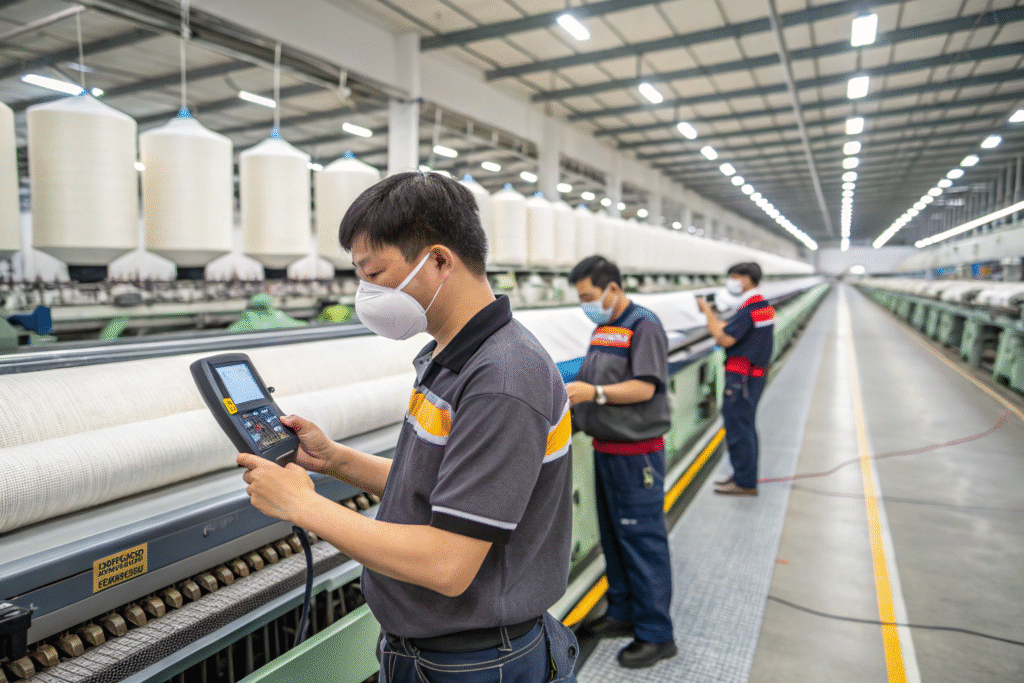
During our audits, we map the entire production process and identify where measurements occur, what instruments are used, how data is recorded, and what actions result from out-of-spec findings. A Malaysian weaving facility we audited last quarter maintained real-time monitoring of loom efficiency and stop causes, with automatic alerts to supervisors when defect rates exceeded 2%—this proactive approach prevented thousands of meters of substandard fabric from progressing to finishing.
How effective are weaving and knitting monitoring systems?
Weaving and knitting monitoring systems provide the first line of defense against defects that become expensive to rectify later. Modern mills employ electronic monitoring that detects and marks defects in real-time, while maintaining efficiency data that reveals equipment or material problems. During audits, we compare the mill's defect records against our own examination of finished fabrics to assess detection effectiveness.
The gap between detected and actual defects often reveals systemic issues. A Chinese denim mill showed impressive electronic monitoring reports during our audit, but our physical inspection revealed consistently missed selvedge defects. Further investigation revealed the monitoring sensors hadn't been recalibrated after a style change—the fabric width variation put defects outside the sensor range. This finding highlighted the importance of comprehensive weaving quality systems that include equipment verification.
What dyeing and finishing parameters require strictest control?
Dyeing and finishing parameters determine color consistency, hand feel, and performance properties—the characteristics customers notice immediately. The best mills maintain rigorous control over liquor ratios, temperature profiles, chemical concentrations, and mechanical settings, with documentation that enables batch-to-batch reproducibility.
Our audit approach includes reviewing process control charts for key parameters like pH, temperature, and add-on percentages. A Korean functional fabric manufacturer maintained such precise control that their coefficient of variation for water repellency finish application was under 3%—remarkable consistency for a chemical process. This level of control demonstrated understanding of dyeing and finishing quality critical parameters that separates exceptional mills from adequate ones.
How comprehensive is finished goods testing?
Finished goods testing provides the final quality verification before fabrics ship to customers. Comprehensive testing should validate both aesthetic qualities (color, appearance, defects) and performance properties (strength, shrinkage, colorfastness). During audits, we assess whether testing protocols match the fabric's end-use requirements and whether equipment is properly maintained and calibrated.
The most revealing aspect of finished goods testing evaluation often comes from examining how mills handle non-conforming products. A Vietnamese mill we audited maintained a segregated area for questionable fabrics, with clear disposition procedures—some materials underwent re-processing, others were downgraded, and the worst were destroyed. This systematic approach to non-conformance demonstrated mature quality thinking.
What equipment calibration ensures accurate results?
Testing equipment calibration forms the foundation of reliable quality data. During audits, we examine calibration certificates, maintenance logs, and verification protocols for all critical testing equipment. The most concerning finding we encounter is equipment that appears functional but produces inaccurate data due to improper calibration.
A recent audit for a Spanish fashion brand revealed that a mill's Martindale abrasion tester hadn't been calibrated in 18 months—the actual cycles being applied were 23% higher than indicated, creating falsely optimistic durability data. This discovery prevented the approval of a fabric that would have failed prematurely in use. Understanding textile testing equipment calibration requirements is essential for audit effectiveness.
How does testing frequency match risk levels?
Testing frequency should reflect the criticality of quality parameters and the process stability. High-risk characteristics or unstable processes require more frequent verification than well-established parameters. During audits, we examine whether mills apply risk-based thinking to their testing regimens or simply follow fixed schedules.
The most sophisticated approach we've encountered was at a Japanese mill producing technical fabrics for protective applications. They employed statistical process control to dynamically adjust testing frequency—when process capability indices exceeded certain thresholds, testing intervals extended automatically. This intelligent approach to risk-based quality testing optimized resource allocation while maintaining quality assurance.
What documentation systems ensure accountability?
Documentation systems transform quality activities from isolated actions into an accountable system. Effective documentation enables problem tracing, trend analysis, and continuous improvement. During audits, we examine whether records are complete, accessible, and actually used for decision-making rather than simply maintained for customer presentations.
The most impressive documentation system we've encountered was at a Swiss mill producing medical textiles. Their electronic system automatically linked customer complaints to production records, enabling root cause analysis that often identified issues before they affected multiple customers. This proactive approach demonstrated how documentation should function as a living system rather than an archival exercise.

How effective are corrective action systems?
Corrective action systems reveal how mills respond to quality failures—the true test of their commitment to improvement. During audits, we examine completed corrective action reports to assess whether root causes were properly identified, effective actions implemented, and recurrence prevented. Superficial responses like "operator retrained" without systemic changes indicate immature quality systems.
A Taiwanese mill we audited maintained a remarkable practice of quantifying the effectiveness of corrective actions by monitoring relevant metrics for six months after implementation. This data-driven approach ensured that solutions actually worked rather than simply looking good on paper. This demonstrated advanced understanding of effective corrective action methodologies that deliver lasting improvements.
What customer feedback integration demonstrates responsiveness?
Customer feedback integration completes the quality cycle by ensuring that issues identified during garment manufacturing inform fabric production improvements. The best mills systematically collect, analyze, and respond to customer quality feedback rather than treating complaints as isolated incidents.
During a recent audit for an American retailer, we discovered that a Chinese mill had implemented 17 process improvements based on customer feedback over the previous year. Each improvement was documented with before-and-after data showing measurable quality enhancement. This responsive approach demonstrated that the mill viewed quality as a partnership rather than just a compliance requirement. Understanding customer feedback integration in textile manufacturing separates customer-focused suppliers from transaction-oriented ones.
Conclusion
Auditing a fabric mill's QC system requires looking beyond the impressive facilities and modern equipment to understand the underlying systems, culture, and commitment to quality. The most valuable audits examine how mills handle deviations, respond to failures, and continuously improve—not just whether they can produce good samples under ideal conditions. Through conducting hundreds of these assessments, we've found that the most reliable suppliers share common characteristics: rigorous raw material control, comprehensive in-process monitoring, validated finished goods testing, and transparent documentation systems.
The relationship between audit findings and eventual product quality is remarkably consistent—mills with mature, systematic approaches to quality control consistently deliver better results than those with impressive facilities but fragmented systems. The investment in thorough pre-approval audits typically returns 10-20x in avoided quality issues, production delays, and customer dissatisfaction.
If you're preparing to audit fabric mills for your next bulk order, contact our Business Director Elaine at elaine@fumaoclothing.com. We'll share our comprehensive mill audit checklist and help you interpret the findings to make informed sourcing decisions. With our two decades of manufacturing experience, we can typically identify potential quality risks that conventional audits might miss, potentially saving your organization from costly quality failures down the production line.