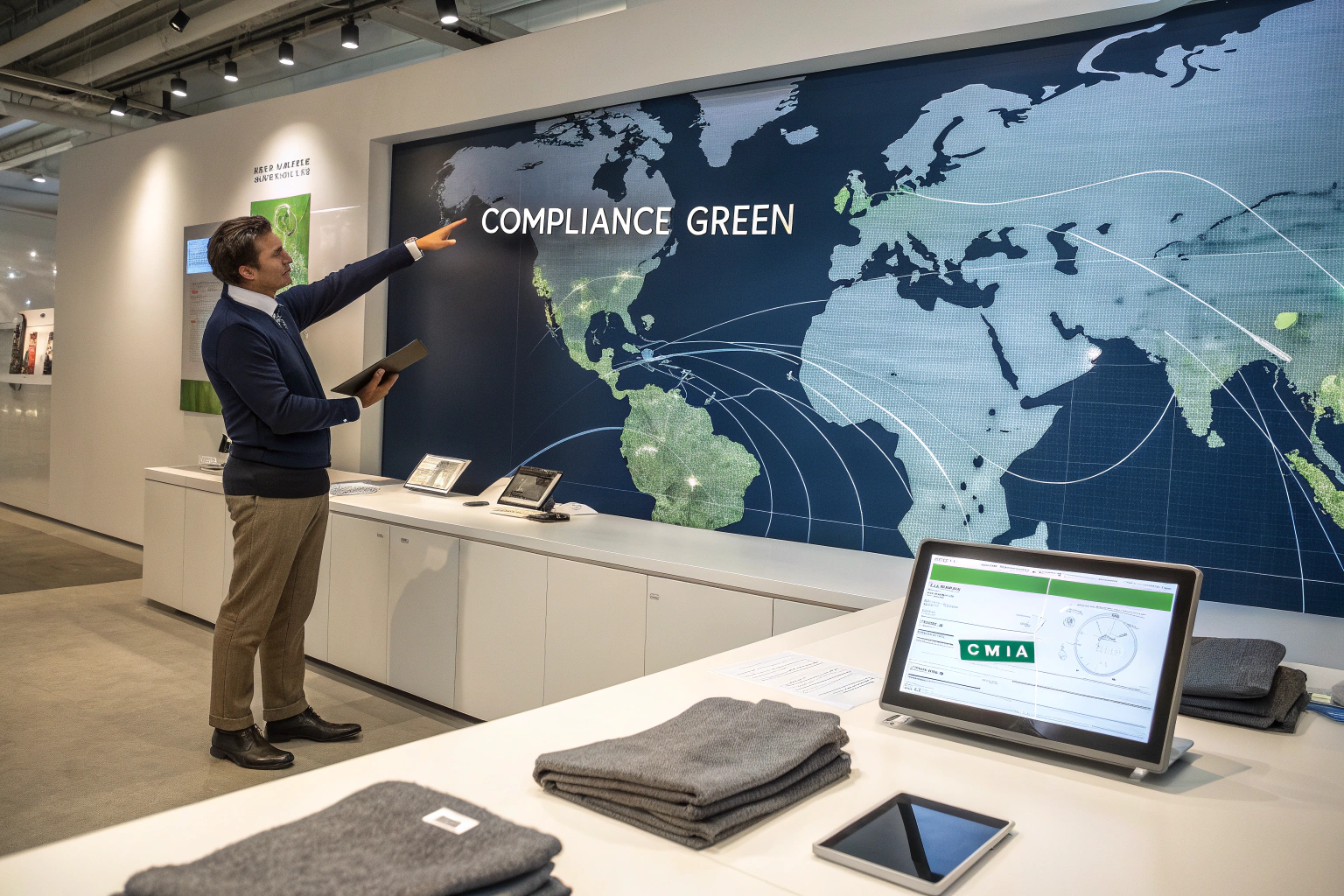
In the apparel industry, “future-proofing” is often a buzzword thrown around during strategy meetings. But when supply chains are tightening, regulations are evolving daily, and consumer trust is more fragile than ever, what does it actually mean? For smart brands, it means building resilience against disruptions you can see coming and shocks you can’t. It’s about turning compliance from a reactive cost into a proactive competitive moat. This is where China’s CMIA certification, often viewed as a market-access formality, reveals its true strategic power.
CMIA certification does more than just prove your fabrics are safe today. It establishes a verifiable, auditable system of quality and chemical management that prepares your business for the next five years of challenges: from escalating trade regulations and savvy retailer demands to the looming reality of AI-driven supply chain transparency. At Shanghai Fumao, we’ve seen clients who treat CMIA as a checkbox struggle with constant fire drills, while those who embrace it as a framework operate with calm efficiency and scalable growth. Let’s decode how this specific certification builds a foundation that protects and propels your business forward.
How Does CMIA Build a Scalable, Audit-Ready Supply Chain?
Scalability isn’t just about producing more; it’s about producing more with consistent quality and fewer managerial headaches. A scalable supply chain is an auditable one. CMIA certification forces a level of documentation and process standardization that becomes the bedrock for seamless growth.
The core of CMIA is traceability. To achieve certification, a supplier must document the exact “recipe” for a fabric: fiber sources, dye codes, chemical auxiliaries, and precise finishing parameters. At Shanghai Fumao, this isn’t a one-time exercise. This recipe is digitized and linked to a unique batch ID for every production run. For you, the buyer, this means that reordering a best-selling organic cotton jersey in Season 3 is not a gamble. You’re guaranteed the same safety and performance profile as in Season 1 because the production is locked to a certified standard. This eliminates the “quality fade” that often plagues growing brands when factories quietly substitute materials to cut costs.
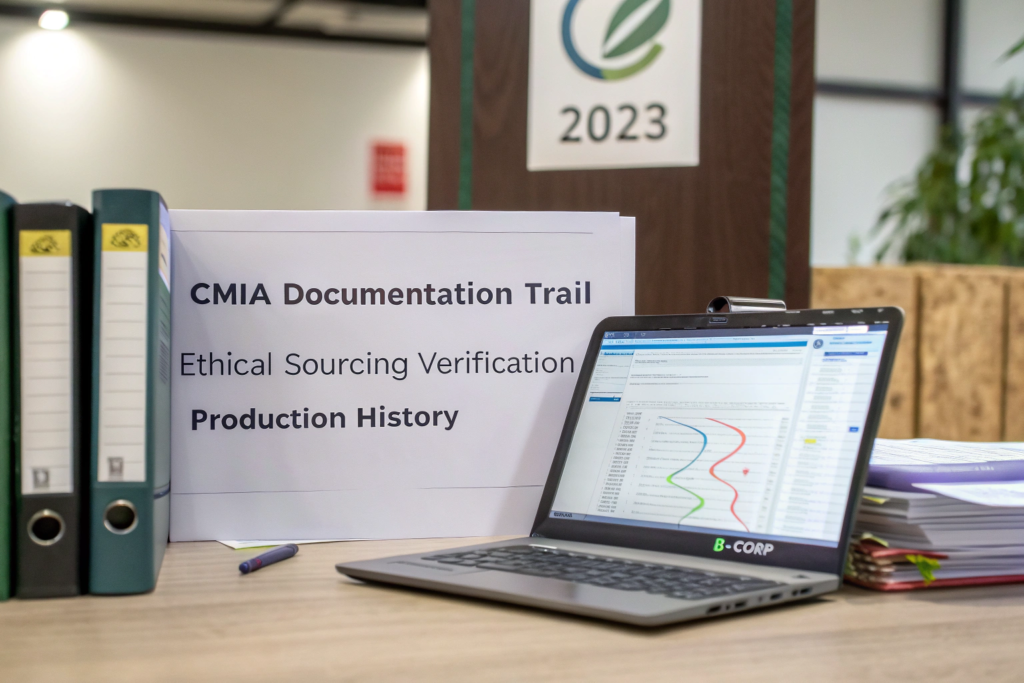
Furthermore, this documentation is your shield during audits. Whether from a major retailer like Target or Amazon, a sustainability certifier, or an investor conducting due diligence, you can provide more than a certificate. You can provide a digitized production history for ethical sourcing verification. We assisted a UK-based DTC brand in 2023 during a B-Corp audit. By providing our CMIA documentation trail that mapped back to clean chemical inventories, they satisfied over 30% of the “Environmental Stewardship” criteria instantly. The certification moved from a cost to a value-driver.
How Does This System Mitigate “Supply Chain Surprises”?
From Black Box to Glass Box.
The traditional sourcing model is a black box: you send a tech pack, wait, and hope the product matches the sample. CMIA compliance shatters that model. It requires transparent communication about materials from the start. When you work with a CMIA-focused partner like us, you’re brought into the process. You approve the chemical list, you see the pre-test results. This transparency prevents the catastrophic surprises that derail seasons: a shipment held at customs, a last-minute test failure, or a recall. You’re not just buying a product; you’re buying a predictable, documented process. This is the essence of building a resilient fashion supply chain.
What is the “Multi-Market Gateway” Advantage?
One Foundation, Multiple Market Entries.
CMIA’s standards, particularly for infant and children’s wear (GB 31701), are rigorous and align closely with the baseline requirements of many Western markets. By securing CMIA certification, you are not just preparing for China. You are creating a product that already clears high hurdles for safety. This makes adapting to other certifications like OEKO-TEX STANDARD 100 or GOTS significantly faster and cheaper, as the core chemical management is already in place. It’s like building a house on a reinforced concrete foundation—adding rooms (new market certifications) later is straightforward and stable.
How Does CMIA Compliance Anticipate Regulatory Evolution?
Regulations don’t stand still. REACH expands its list of SVHCs (Substances of Very High Concern) twice a year. States like California pass laws like Proposition 65. The EU’s Green Deal is reshaping product requirements. Trying to react to each new rule as it drops is a exhausting, expensive game of whack-a-mole. CMIA compliance installs an early-warning and adaptation system.
A factory operating to CMIA standards isn’t just following a static rulebook. It is maintaining a living chemical inventory management system. Every substance entering the production floor is logged, approved, and linked to a safety data sheet. When a new substance is restricted globally, our R&D and compliance team can run a cross-reference against this inventory in hours, not weeks. We can immediately identify which of your active fabrics might be affected and proactively suggest alternative recipes. For example, when new PFAS (forever chemicals) restrictions began emerging, we had already phased them out of our water-repellent finish formulations for all CMIA-certified fabrics, protecting our clients from future bans.
This proactive stance turns regulatory change from a threat into an opportunity. While competitors scramble to reformulate, your products continue to flow. Your brand becomes known to retailers as “low-risk,” which can translate to preferred shelf space or faster onboarding.
How Does This Prepare You for Digital Product Passports (DPPs)?
Data Readiness for the Coming Revolution.
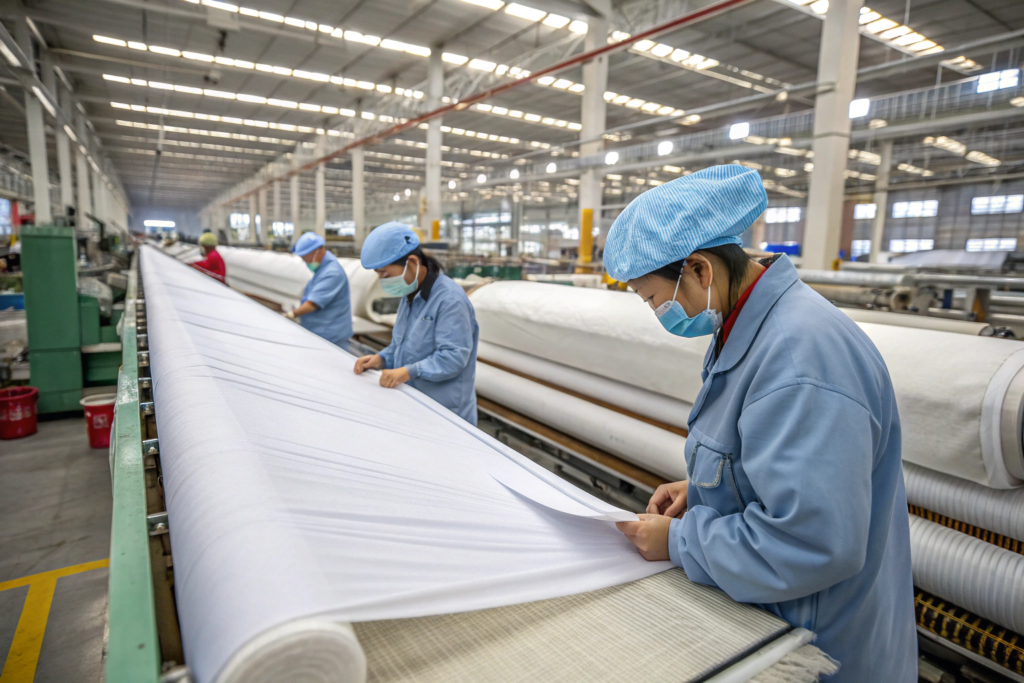
The EU’s Digital Product Passport (DPP) initiative is not a distant future concept—it’s on the horizon. DPPs will require a verifiable digital record of a product’s composition, environmental impact, and supply chain journey. The data architecture required for CMIA compliance—batch IDs, material compositions, test reports—is the foundational layer for a DPP. Brands working with CMIA-certified suppliers are already collecting 80% of the necessary data. When DPPs become mandatory, you won’t be starting from zero; you’ll be leveraging an existing system. This is a monumental head start. Investing in understanding the impact of Digital Product Passports on fashion is crucial, and starting with CMIA is the first practical step.
Can CMIA Help Navigate Geo-Political Trade Shifts?
Creating Optionality in Your Sourcing.
Trade tensions and tariffs are a reality. A brand solely dependent on a single non-diversified supply chain is vulnerable. CMIA certification, as a key to the Chinese market, gives you optionality. If you need to pivot and sell overstock or a specific line into the Chinese market, the product is already compliant. This flexibility is a powerful risk-management tool. It turns China from just a manufacturing origin into a potential sales destination, diversifying your market risk without additional R&D cost.
How Does Investing in CMIA Enhance Brand Equity and Consumer Trust?
Today’s consumers, especially Gen Z and Millennials, don’t just buy products; they buy beliefs and proof. They use apps to scan for sustainability claims and dig into brand ethics. “Greenwashing” is a lethal accusation. CMIA certification provides a government-verified, non-negotiable claim you can build upon: Safety.
You can communicate, with hard evidence, that your products meet stringent safety standards for harmful substances. This is a powerful starting point for trust, especially in categories like children’s wear, activewear, and next-to-skin apparel. It answers the most fundamental consumer question: “Is this safe for me and my family?” From this foundation of proven safety, you can layer on narratives about sustainability, ethics, and innovation with greater credibility.

How Does This Translate to B2B and Investor Relations?
De-risking Your Business on Paper.
Brand equity isn’t just consumer-facing. It’s about how your business is valued by retailers, distributors, and investors. A robust, documented compliance program centered around standards like CMIA makes your business a more attractive and lower-risk partner. It reduces the liability risk for retailers, making them more likely to carry your brand. For investors, it demonstrates operational maturity and forward-thinking risk management. It shows you have control over your supply chain, which is a key valuation driver in today’s market. It’s a tangible asset in your business plan for scaling an apparel brand.
What is the “Cost of Non-Compliance” in the Long Term?
Avoiding the Silent Profit Drain.
Many brands view certification as a line-item cost. The future-proof perspective sees the cost of non-compliance as the true expense. This cost includes:
- Recall Costs: Logistics, destruction, refunds, PR crisis management.
- Lost Sales: Stockouts due to held shipments, missed seasonal windows.
- Reputational Damage: Erosion of consumer trust that takes years to rebuild.
- Legal & Penalty Fees: Fines from regulatory bodies.
Investing in CMIA is an insurance policy against these catastrophic, business-threatening costs. It protects your margin and your market share over the long term.
Conclusion
Future-proofing your apparel business isn’t about predicting the future perfectly. It’s about building an organization that is adaptable, transparent, and resilient enough to handle whatever the future brings. CMIA certification, when implemented deeply with a partner like Shanghai Fumao, is not a product certificate. It is the manifestation of a quality management system that delivers this resilience.
It provides the scalability through documentation, anticipates regulation through chemical intelligence, builds trust through verifiable claims, and ultimately creates a more valuable, defensible business. In the coming era of radical transparency and ethical consumption, the brands that will thrive are those that can prove their promises. CMIA is a powerful, foundational tool to start building that proof today.
Stop viewing compliance as a barrier. Start leveraging it as the framework for your next stage of growth.
Ready to build a supply chain that’s prepared for tomorrow? Let’s discuss how our CMIA-integrated development and production system can become the foundation of your brand’s future.
Contact our Business Director Elaine at elaine@fumaoclothing.com to begin a strategic partnership focused on resilience and growth.