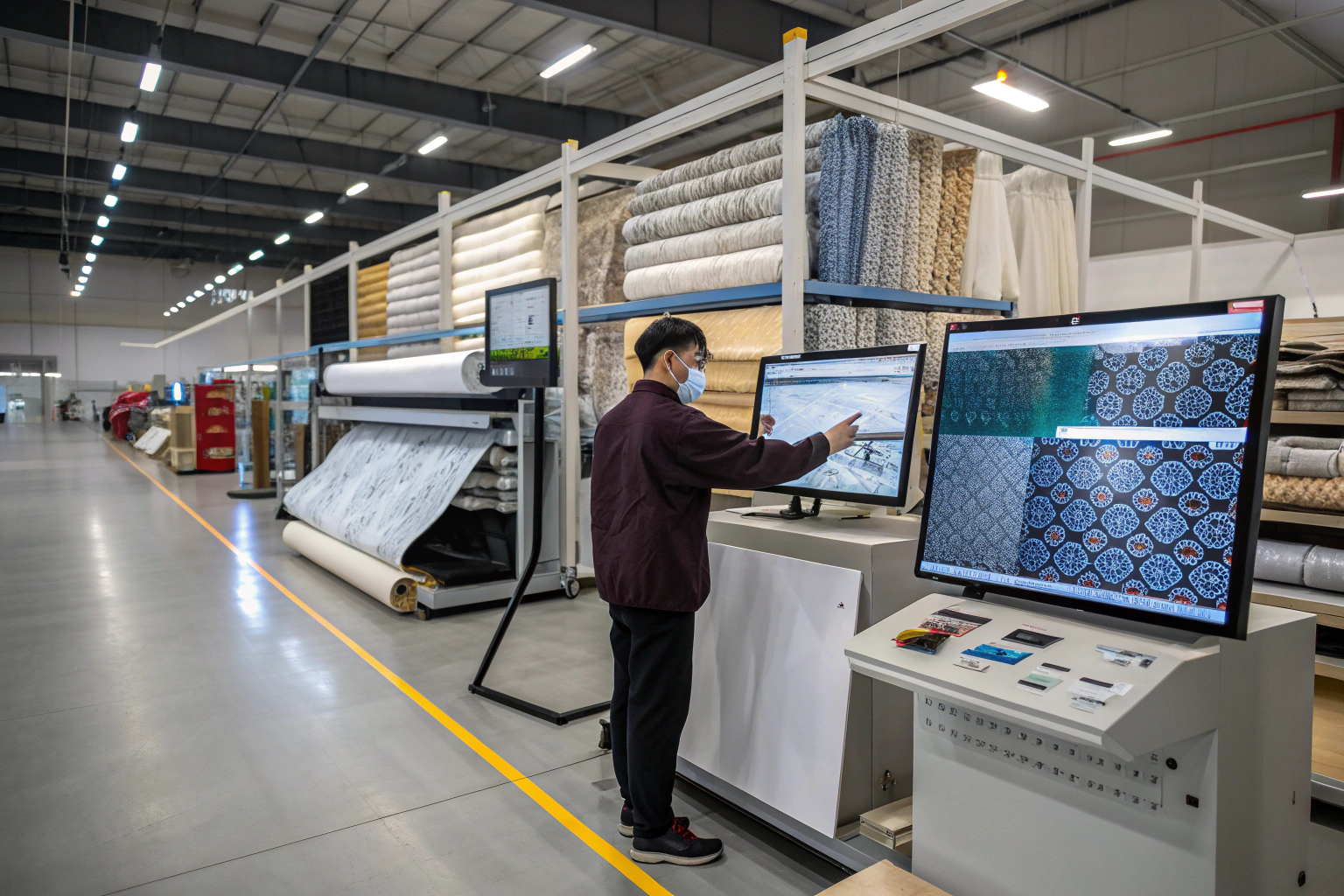
Let's be honest. Sourcing fabric from halfway across the world can feel like a leap of faith. You see swatches, maybe get a few lab dips, but committing to a bulk order for a new season's collection without feeling the drape, seeing the true color under different lights, or understanding the texture is nerve-wracking. Missed deadlines and quality mismatches are the nightmares of every apparel buyer and brand owner.
What if you could walk through a warehouse in Keqiao, interact with a fabric developer, and test material properties without ever booking a flight? This isn't a future concept; it's the present reality with virtual showrooms. They are transforming how global brands, from startups in Los Angeles to established names in London, de-risk their sourcing process, accelerate development, and make confident remote decisions.
For busy professionals like you, managing timelines around Chinese production cycles is crucial. Aligning your fabric selection and approval phase with the slower periods in China (like June-July) can give you a significant head start. A virtual showroom is the tool that makes this strategic alignment not just possible, but efficient. It compresses weeks of physical sampling and courier delays into a few interactive online sessions.
What Exactly is a Textile Virtual Showroom?
Gone are the days when a virtual tour meant a grainy, 360-degree photo. Today's textile virtual showrooms are immersive, interactive digital platforms. They allow you to explore a supplier's fabric library in high detail, often in 3D, from anywhere. Think of it as a hybrid between a detailed e-commerce catalog and a FaceTime call with your supplier's showroom manager. It's a dedicated digital space designed for decision-making.
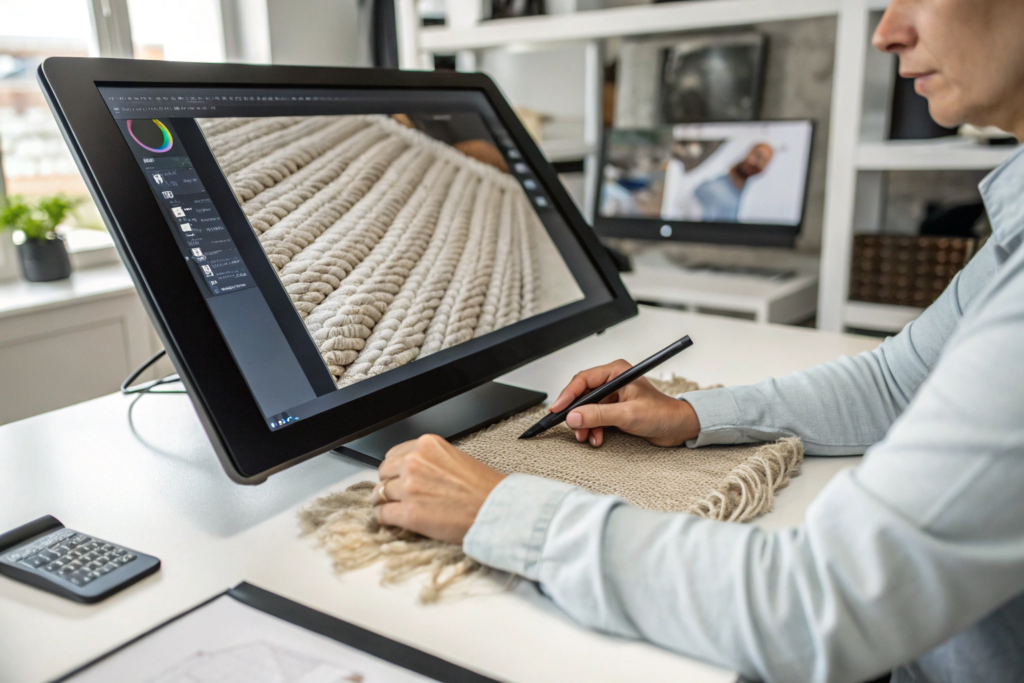
The core function is to provide a remote sensory experience as close to physical handling as possible. This goes beyond static photos. We're talking about zoomable images where you can see the yarn twist, videos that show the fabric's drape and movement, and detailed technical data accessible with a click. For brands concerned about quality control and certification, having this data embedded and visible immediately is a game-changer. It builds trust before a single meter is shipped.
The best platforms integrate directly with a supplier's inventory and ERP systems. This means what you see is what is actually available or can be produced. For our partners at Shanghai Fumao, this integration is key. When you view a recycled polyester twill in our virtual space, you're not just seeing a sample; you're seeing a live link to our stock levels, leading times, and even the EU eco-certifications documentation. This transparency tackles a major pain point: inefficient back-and-forth on availability and pricing.

How do I interact with fabrics in a virtual space?
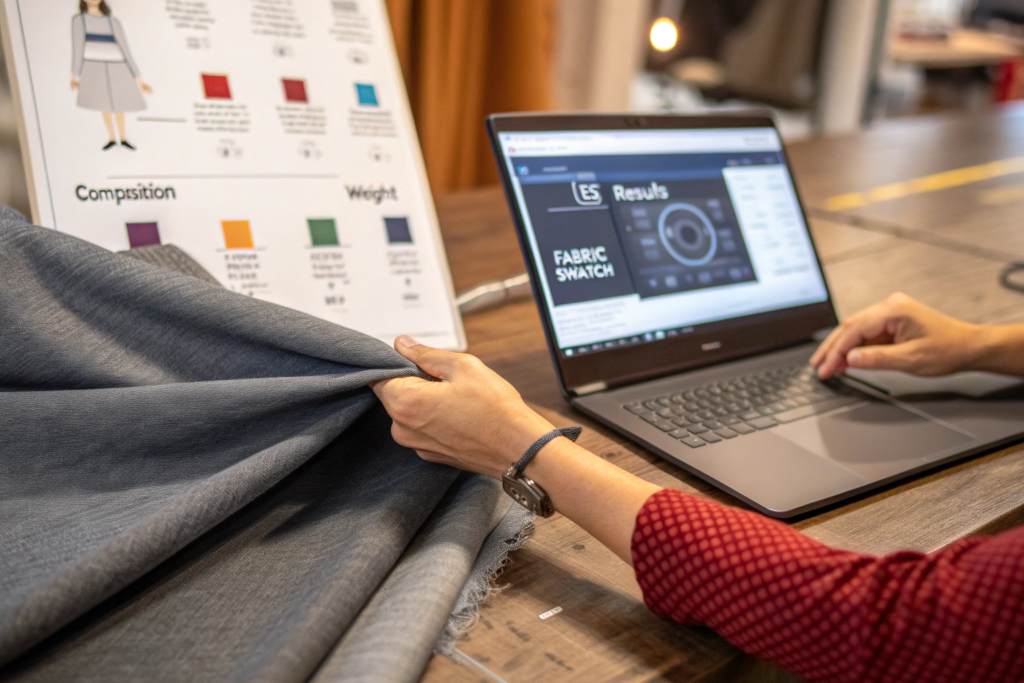
Interaction happens in several layers. First, visual inspection: you can zoom in at extreme levels to examine weave density, printing precision, or the finish of a brushed fabric. Second, data access: clicking on a fabric tile can reveal its entire "digital passport"—composition, weight, width, colorfastness ratings, stretch percentage, and test reports from our CNAS lab. Third, simulation: advanced showrooms use AI-driven trend analysis and fabric physics engines to drape the digital fabric on basic garment forms, giving you a preliminary idea of how it might hang as a skirt or a shirt.
The process is collaborative. You can highlight areas, ask questions via integrated chat, and even request a specific physical sample to be sent to you with one click. This targeted sampling saves enormous time and cost. I recall a case in November 2022 with a sportswear client from Germany. They were developing a line of moisture-wicking, UV-resistant athletic tops. Instead of mailing 20 different fabric prototypes, we hosted a virtual session. They narrowed it down to 3 options digitally, we expressed the physical swatches, and they confirmed the order within 10 days—a process that typically took 4-5 weeks.
What are the technical requirements for me as a buyer?
Practically none, and that's the beauty. If you can stream a high-definition video, you can use a virtual showroom. Most run on standard web browsers like Chrome or Safari without needing special software. A stable internet connection and a decent screen (laptop, tablet, or even a smartphone) are all you need. Some suppliers offer app-based versions or even VR/AR experiences for a deeper dive, but the core platform is web-based for maximum accessibility.
The real "requirement" is on the supplier's side. They need a robust digital infrastructure. This includes high-resolution fabric scanning, organized digital asset management, and often a dedicated staff member to host live sessions. At our operation, we've trained several team members as "digital fabric consultants." They don't just operate the platform; they can answer technical questions about woven fabric construction or knitted fabric elasticity on the spot during a tour. This combination of tech and human expertise is what makes it work.
What Are the Concrete Benefits for My Business Timeline?
Time is the ultimate currency in fashion. Virtual showrooms directly address the chronic pain points of sailing schedules and timeliness. By collapsing the initial discovery and shortlisting phase from weeks into days, they give you a buffer against unforeseen delays and allow you to plan proactively around Chinese factory schedules.
The most significant benefit is the compression of the pre-production timeline. Consider this: A European brand targeting the Chinese New Year production window must have everything ready for factories to start immediately after the holiday. With traditional methods, fabric selection alone could eat up 3-4 weeks of that precious pre-holiday period. A virtual showroom can reduce that to 5-7 working days. This means you can finalize your fabric choices 6 weeks before the shutdown, not 8, giving you more time for pattern making and other prep work.
Furthermore, they mitigate risk during peak production periods (Mar-May, Aug-Oct). When factories are swamped, communication slows down. Having already built a clear, visual understanding of your selected fabrics with your supplier digitally means there's less room for error when placing the rush order. You've both literally been looking at the same thing.
How does this speed up sample development?
The link between virtual selection and physical sampling is direct. When you "favorite" or request a sample from a digital swatch, the system automatically generates a workflow ticket for our sampling department with all the specifications pre-populated. No more handwritten notes or misread email threads. In our experience, this cuts sample production time by at least 30%.
For instance, in March 2023, a US-based entrepreneur launching a sustainable kids' wear line needed organic cotton jersey with a custom print. Through our virtual showroom, she selected the base fabric from our GOTS-certified range and discussed print placement live with our designer using annotation tools. We developed the first print strike-off in 72 hours instead of the usual 10 days. Her feedback was immediate via the same platform, leading to a perfect second strike-off. The entire development cycle was under two weeks, allowing her to catch a May production slot.
Can it help me avoid costly mistakes?
Absolutely, and this is a financial benefit that's often overlooked. Selecting the wrong fabric is expensive—not just in material costs, but in missed market windows. Virtual showrooms reduce this risk by providing more context. Seeing a fabric in a curated "collection" alongside similar weights and structures helps you make comparative judgments. The integrated technical data prevents misunderstandings about performance.
A common mistake is ordering a fabric that doesn't have the required stretch or recovery for a specific garment type. In a virtual room, you can filter fabrics by elastic textiles properties and immediately see the technical specs for elongation. You can also quickly cross-reference with recommended applications. It's like having a knowledgeable salesperson and a technical manual right there, ensuring your choice aligns with your garment tech pack requirements from the start.
How Do I Evaluate Fabrics for Quality Remotely?
Trusting digital representations of physical goods requires a new set of evaluation criteria. It's not about replacing physical sampling entirely, but about being so confident in your digital pre-selection that the physical sample becomes a final confirmation, not an initial exploration.
The first pillar is data transparency. A reputable supplier's virtual showroom will have key test data upfront. Look for information on colorfastness to washing and light, pilling resistance, shrinkage rates, and breaking strength. At Shanghai Fumao, we embed QR codes in our digital fabric cards. Scanning them with a phone pulls up the full test report from our CNAS-accredited lab. This level of detail is what you should expect when learning how to verify fabric quality certificates from Asian suppliers.
The second pillar is visual fidelity. Pay attention to the quality of the imagery. Can you see the texture? Are there videos showing the fabric's hand-feel and drape? Be wary of overly rendered or CGI-looking images that might mask imperfections. We use high-resolution macro photography under consistent lighting to show every detail, warts and all. This honesty builds long-term partnerships.

What visual cues should I look for in digital swatches?
Don't just look at the fabric; learn to "read" it digitally. Here’s a quick guide:
| Visual Cue | What It Tells You | Red Flag |
|---|---|---|
| Weave/Zoom Clarity | The regularity of the weave or knit. Zoom in. The threads should be consistent, not fuzzy or blurry. | Blurry zoom suggests low-quality image or potentially uneven yarn. |
| Color Representation | Look for multiple images under different light (daylight, indoor). Ask for a Pantone reference if color-critical. | A single, overly saturated image. Always request a physical lab dip for final color. |
| Drape Video | Shows how the fabric falls and moves. Stiff drape vs. fluid drape is immediately apparent. | No video, only a flat image. Fabric is inherently about movement. |
| Surface Detail | Can you see brushing, peach fuzz, wax coating, or a subtle sheen? | Perfectly matte, featureless surface in images might be hiding something. |
How are physical samples integrated into the process?
The virtual showroom should make ordering physical samples effortless. The system should let you request A4 swatches or meter-length samples of your shortlisted options with a single click. The best platforms provide tracking for these sample shipments.
The strategy is to use the virtual room for the "broad search" and initial down-selection, then use targeted physical sampling for the final 2-3 contenders. This approach slashes sampling costs and time. For example, instead of airmailing 10 heavy denim or wool swatches globally, you review 20 digitally, pick 3, and only receive those. This is not just faster; it's more sustainable. It also gives you a tangible item for final hand-feel assessment and some simple at-home tests, like a crush test for wrinkle resistance.
What's the Future of Virtual Sourcing and Collaboration?
The virtual showroom is just the beginning. We are moving toward a fully integrated digital product creation (DPC) pipeline. The fabric data from your virtual selection will flow directly into 3D garment design software like CLO or Browzwear, allowing you to see your chosen fabric made up into your specific style, on a digital avatar, before you even cut a single piece.
This next step is revolutionary for co-create value relationships between brands and suppliers. It enables true collaboration on innovation. Imagine tweaking the composition of a performance fabric blend—adding more recycled content or adjusting moisture-wicking properties—and seeing the simulated performance data and cost impact in real-time during a virtual meeting. This is where we are heading.
The integration will also extend to logistics. Selecting a fabric in the virtual space could instantly generate shipping estimates and customs clearance documentation previews, directly addressing pain points around tariff costs and logistics uncertainty. For partners working with Shanghai Fumao, this means the journey from inspiration to delivery becomes a seamless digital thread.
Will AI replace the need for human fabric experts?
No, it will augment them. AI is fantastic for tasks like AI-driven trend analysis, sorting through thousands of fabrics based on your past preferences, or suggesting alternatives if your first choice is out of stock. However, the nuanced understanding of how a specific linen blend will behave after garment dyeing, or how to solve a potential puckering issue in a satin weave, requires human experience.
At our company, we see AI as a powerful tool that frees up our experts to do what they do best: solve complex problems and provide strategic advice. The future is a hybrid model: you use an AI-powered search to find 10 potential fabrics, then a human expert from Shanghai Fumao joins you in the virtual room to discuss the pros and cons of each for your specific application. (Here I have to interject, this human-AI combo is where the real magic happens for nailing quality.)
How can I get started with a supplier's virtual showroom?
The barrier to entry is low. Start by asking your current or potential suppliers if they offer this service. Most forward-thinking factories and large trading companies in China now do. Request a demo or a guided tour. Treat the first session like a physical meeting: come prepared with a brief—target garment, key properties needed, budget range, and sustainability goals like needing GOTS certified organic cotton.
Use the session to test not just the technology, but the supplier's responsiveness and expertise. Are they able to answer your technical questions live? Can they navigate their digital inventory efficiently? This is a great proxy for their overall operational competence. It's a low-commitment way to vet a new partner before placing any order.
Conclusion
Navigating global fabric sourcing requires a blend of strategic timing and smart tools. Understanding China's manufacturing cycles—planning around holiday shutdowns and leveraging slower periods—is foundational knowledge. Virtual showrooms are the powerful tool that allows you to act on this knowledge with speed and precision. They transform remote sourcing from a risky necessity into a strategic advantage, enabling detailed quality evaluation, compressing development timelines, and fostering closer collaboration with your supply chain partners.
The future of textile sourcing is digital, interactive, and data-rich. It empowers brands of all sizes to make informed decisions faster, reduce costly errors, and bring better products to market more efficiently. The tactile experience will always be part of our industry, but the journey to get there is becoming infinitely smoother.
If you're ready to experience how a seamless, digital-first sourcing approach can benefit your next collection, we invite you to connect with us. Shanghai Fumao has built its virtual showroom platform specifically to address the exact pain points of overseas buyers like you—focusing on clarity, quality data, and real human expertise behind the screen. Reach out to our Business Director, Elaine, to schedule a personalized virtual tour of our fabric collections and see the difference for yourself. She can help you map your development timeline to the production calendar for optimal results. Contact Elaine at elaine@fumaoclothing.com to begin.