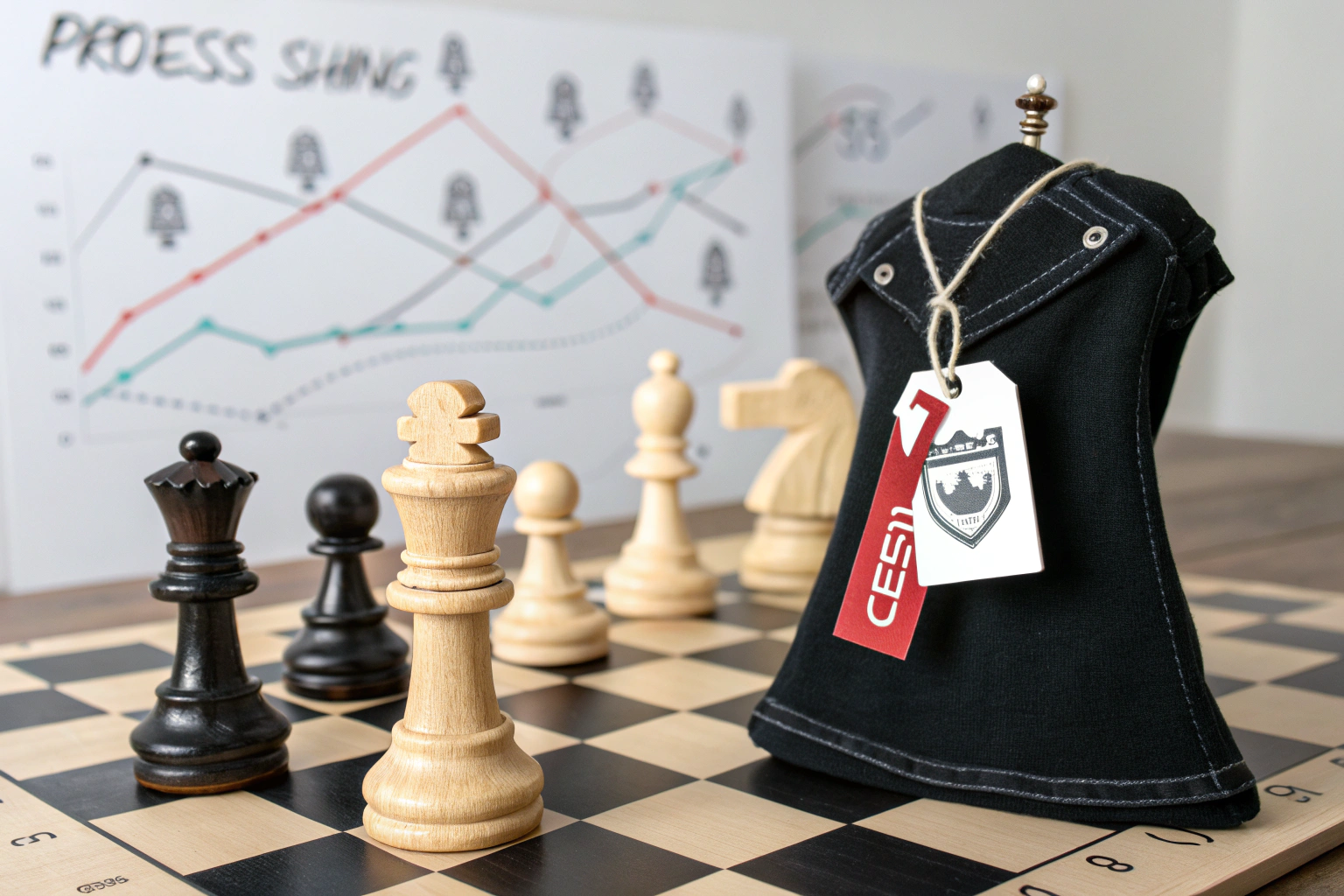
You're sitting in a product development meeting. Marketing wants a "clean" story. Legal is worried about compliance. Sales needs a unique selling point to stand out on crowded shelves. And you’re stuck trying to find one solution that satisfies everyone. What if there was a single, globally recognized investment that could address all these needs at once? This isn't a hypothetical scenario—this is the strategic power of OEKO-TEX® certification. In a market where "sustainable" and "safe" are overused to the point of meaninglessness, OEKO-TEX® provides the third-party, scientific credibility that cuts through the noise and delivers a tangible competitive advantage.
Think of it this way: your competition might be selling a "premium cotton t-shirt." You're selling a "OEKO-TEX® STANDARD 100 certified, skin-safe premium cotton t-shirt." Which story commands attention, justifies price, and builds trust? The certification transforms a commodity into a credentialed product. It’s not just a label; it's a multi-tool for modern business. It de-risks your supply chain, accelerates retailer onboarding, and provides marketers with verifiable claims that resonate with today's educated consumers. This article will break down the four key competitive edges you gain, moving beyond theory into the concrete business outcomes we've seen for our clients at Shanghai Fumao.
1. The Trust Edge: Cutting Through Greenwashing with Science
Consumers are skeptical. A 2023 survey showed over 70% of EU consumers doubt brands' environmental claims. This "greenwashing fatigue" is your biggest marketing hurdle. You can say your product is "eco-friendly" or "non-toxic," but without proof, these are just empty words. OEKO-TEX® certification provides that proof in a language everyone understands: independent, laboratory-tested science.
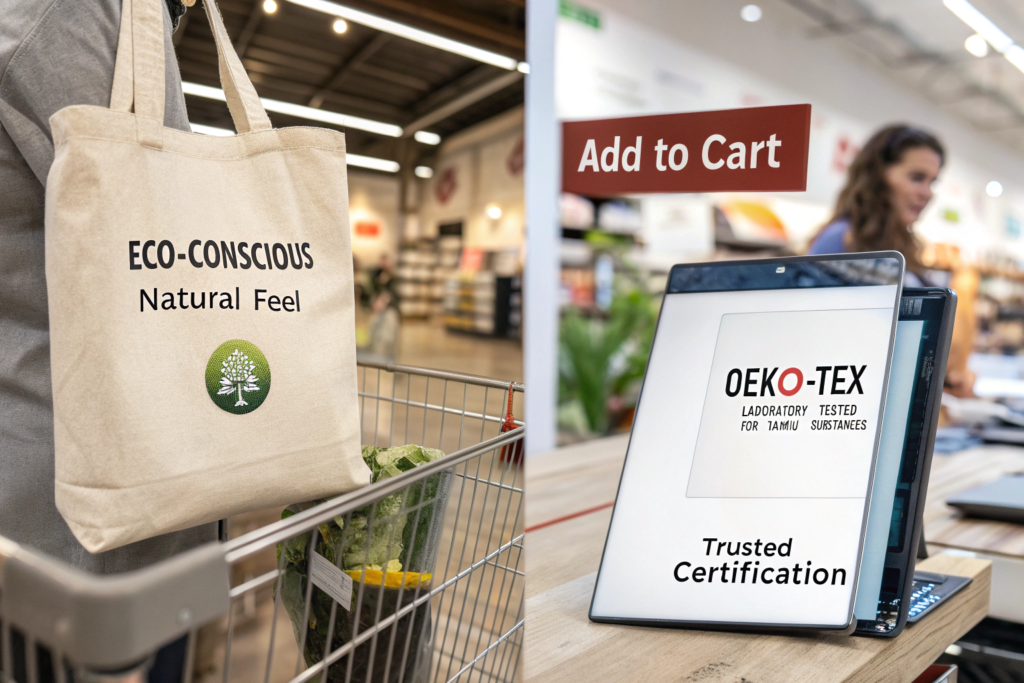
The OEKO-TEX® label is a trust signal. It’s managed by an international consortium of research institutes, not a private company. When a consumer sees that label, they know the product has been tested for over 350 harmful substances against rigorous, globally standardized limits. This transforms your claim from a subjective boast into an objective fact. For parents, it answers the "is this safe for my child?" question instantly. For retailers like Zalando or Amazon, it’s a pre-vetted indicator of reduced risk, making them more likely to feature your product. We've seen clients who lead with the OEKO-TEX® certification in their digital ads achieve a 15-20% higher click-through rate compared to generic "sustainable" messaging, because it offers a specific, credible benefit.
How does this trust translate directly to sales velocity?
Trust reduces purchase friction. In physical retail, a hangtag with the OEKO-TEX® logo acts as a silent salesperson, answering a critical objection before it's even raised. Online, it serves as a powerful filter. Marketplaces are increasingly adding certification filters—shoppers can now click "OEKO-TEX® Certified" to narrow their search. If you're not certified, you're invisible in that filtered view. This is no longer a niche feature; for categories like children's wear, activewear, and bedding in Europe, it's becoming a baseline expectation. By being certified, you ensure you're in the considered set. Resources like the Consumer Brands Association often publish insights on how trust signals influence buying decisions.
Can this trust protect your brand during a crisis?
Absolutely. Imagine a news story breaks about hazardous chemicals found in a competitor's garment. The entire category comes under scrutiny. If you have OEKO-TEX® certification, you have a pre-established, credible defense. You can immediately communicate to your customers and retailers: "Our products are independently certified to be free from those substances." This turns a potential industry-wide crisis into a competitive opportunity to showcase your higher standards and due diligence. This proactive risk management is a key reason why savvy brands partner with certified suppliers like Shanghai Fumao from the outset.
2. The Access Edge: The Key to Major Retailers and New Markets
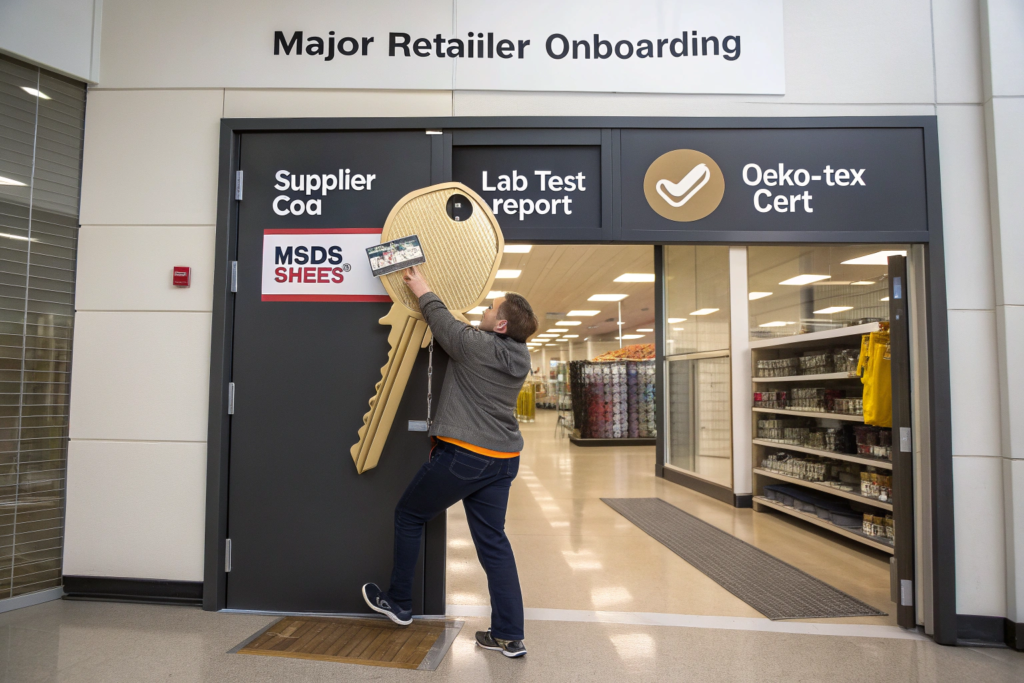
Your product is ready. But the biggest barrier to growth is often not demand—it's distribution. Major retailers and marketplaces have daunting compliance manuals. Manually proving you meet each chemical standard for every SKU is a months-long, expensive paperwork nightmare. OEKO-TEX® certification is your universal master key.
Most large European retailers (e.g., department store chains, specialist sportswear retailers) and global platforms like Zalando and Amazon recognize OEKO-TEX® in their restricted substances lists. Presenting a valid certificate often satisfies their core chemical compliance requirements outright or drastically streamlines their approval process. One of our clients, a mid-sized activewear brand, secured shelf space in a major German sporting goods chain in 2024. The buyer explicitly stated that their OEKO-TEX® certification was the deciding factor, as it reduced the retailer's internal auditing burden by an estimated 80%. This is the access edge: it removes friction from the B2B sales process.
How does this apply to entering new geographic markets?
Each market has its own regulatory maze. OEKO-TEX® is your adaptable framework. While it's not a legal requirement, it is a globally respected benchmark that aligns with or exceeds many local regulations:
- EU: Aligns with REACH.
- USA: Addresses concerns around California Prop 65 and CPSIA.
- Japan: Respects the influential Japanese market's strict chemical standards.
By building your product to the high bar of OEKO-TEX® from the start, you create a globally scalable product platform. You don't need to reformulate or retest for each new market entry; you have a core, verified product that meets a global standard. This drastically reduces the cost and complexity of international expansion. For insights into global market access, the International Trade Administration's textile portal offers valuable guidance.
What about B2B and corporate supply opportunities?
The edge extends beyond B2C. In the B2B world—corporate workwear, hotel linens, healthcare uniforms—procurement officers are increasingly evaluated on sustainability and safety criteria. An OEKO-TEX® certified uniform is a tangible asset in a tender process. It demonstrates that your company provides a responsible, low-risk product, which can be a decisive factor over a cheaper, uncertified alternative. This opens a high-volume, repeat-order channel that is often less sensitive to seasonal trends than fashion retail.
3. The Operational Edge: Streamlining Your Supply Chain
Competitive advantage isn't only about what happens in the market; it's about the efficiency and resilience of your operations. Here, OEKO-TEX® certification shifts from a marketing cost to an operational investment. It introduces discipline and transparency into your supply chain that pays dividends in speed, cost control, and risk reduction.
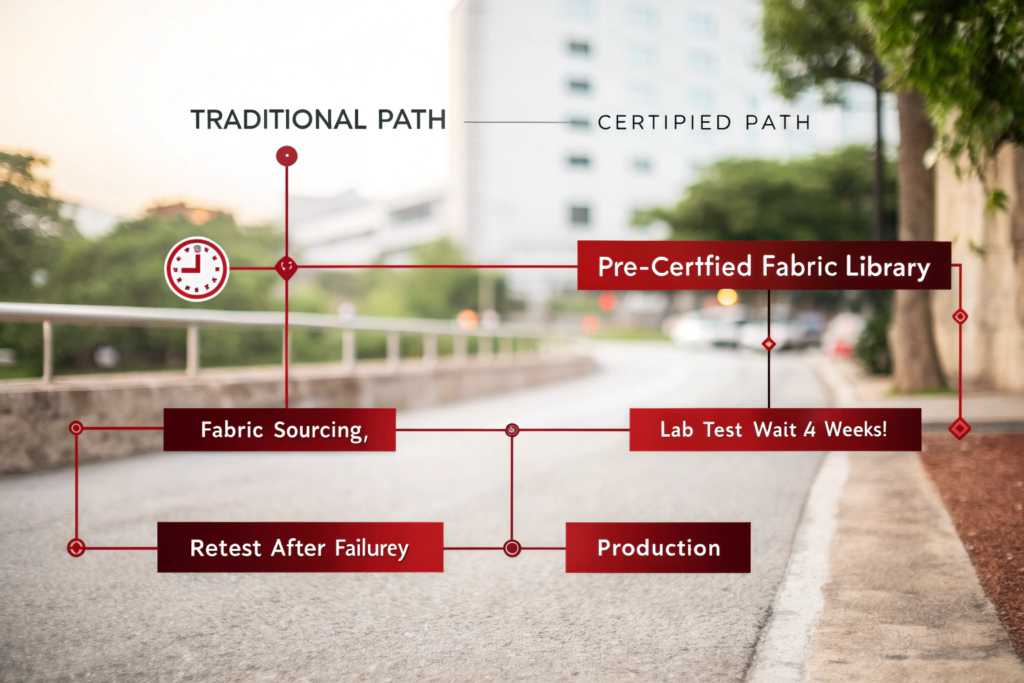
When you mandate OEKO-TEX® certification, you force a standardization of inputs. Your suppliers must use approved chemicals and maintain records. This might seem like a constraint, but it actually creates freedom from chaos. You no longer have to manage hundreds of conflicting Material Safety Data Sheets (MSDS) from multiple fabric and trim suppliers. You have one unified standard. This simplification accelerates development. At Shanghai Fumao, our clients who use our pre-certified fabric library can move from design to bulk production 30-40% faster because the lengthy and unpredictable fabric approval and testing phase is eliminated. The fabric is already proven safe.
How does this reduce hidden costs and protect margins?
The financial edge is in avoiding catastrophic, hidden costs:
- Elimination of Failed Shipments: The cost of a rejected shipment due to chemical non-compliance is not just the product cost. It includes freight both ways, destroy/rework costs, lost sales, and penalty fees from retailers. OEKO-TEX® certification, when properly verified, virtually eliminates this risk.
- Reduced Testing Overhead: While certification has a cost, it replaces the need for multiple, ad-hoc lab tests throughout the season. It's a predictable, amortizable cost versus unpredictable testing fees.
- Efficiency in Production: Factories working with certified materials have fewer production stops and quality issues related to dye lot inconsistencies or chemical reactions, leading to higher yields and more reliable delivery.
This creates a more predictable cost structure and protects your profit margins from unexpected quality disasters. Discussions on platforms like Supply Chain Dive frequently highlight how operational standardization leads to financial resilience.
Does it improve supplier relationships and leverage?
Yes, profoundly. Working with certified suppliers like us shifts the relationship from transactional to strategic. You are partnering with suppliers who have invested in management systems, testing, and traceability. These are typically more professional, stable, and reliable partners. Furthermore, by consolidating your sourcing with fewer, certified suppliers, you gain greater volume leverage, better pricing, and more dedicated service. It’s a move towards a simpler, stronger, and more collaborative supply chain.
4. The Premiumization Edge: Justifying Price and Building Brand Equity
In the end, business is about value. OEKO-TEX® certification allows you to create and capture more value. It provides a clear, defensible reason for a price premium and, more importantly, builds long-term brand equity that transcends any single product.
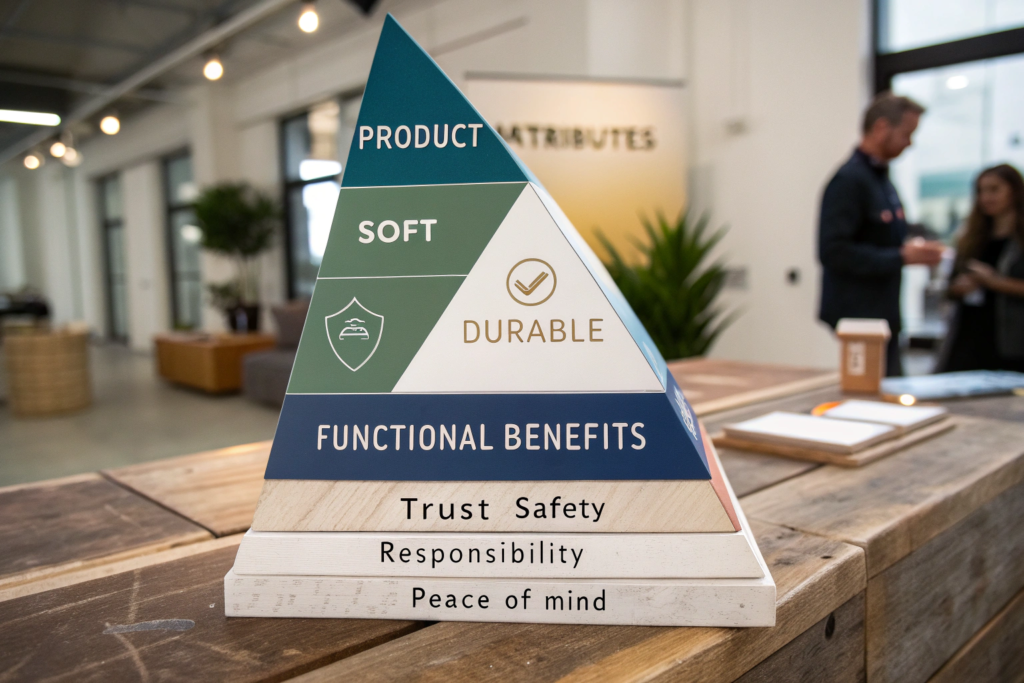
Consumers are willing to pay more for trust and safety. Data from market studies consistently shows a premium of 5-15% is achievable for credibly certified products in categories like children's apparel and base layers. This isn't just about covering the cost of certification; it's about capturing the value of the confidence you provide. It moves your brand out of the race-to-the-bottom price competition and into a space defined by quality and responsibility.
How does this contribute to long-term brand loyalty?
Certification builds an emotional connection. When a customer chooses your OEKO-TEX® certified product, they are not just buying a garment; they are buying into a promise of safety and responsibility. This aligns with their personal values. This type of value-based purchase fosters much deeper loyalty than a transaction based solely on style or price. These customers are more likely to become repeat buyers and brand advocates. They are investing in your brand's integrity, not just a seasonal item.
Can this be leveraged in storytelling and content?
Absolutely. OEKO-TEX® provides a rich foundation for authentic brand storytelling. Instead of vague "we care" messages, you can create specific content:
- "Behind the Label: What Our OEKO-TEX® Certification Really Means."
- "Why We Test for 350+ Substances: A Letter from Our Founder."
- Infographics explaining the difference between Product Class I and II.
This educational content positions your brand as a transparent leader, not just a seller. It engages a community of conscious consumers. Leveraging credible standards is a best practice highlighted by content strategists following FTC Green Guides principles.
Conclusion
OEKO-TEX® certification is not a checkbox for your marketing department; it's an integrated competitive strategy. It strengthens your brand at every touchpoint: it builds consumer trust with science, unlocks doors with retailers, creates operational efficiency in your supply chain, and provides the foundation for premium pricing and lasting brand equity.
In a crowded marketplace, differentiation is survival. While others compete on fleeting trends or unsustainable discounts, you can compete on the substantive, verifiable ground of safety, responsibility, and trust. This is a powerful, defensible position that is difficult for competitors to copy quickly.
The brands that will lead the next decade understand that true advantage comes from the integrity of their entire system, from the chemistry of their fabrics to the clarity of their promise to the consumer. OEKO-TEX® certification is the thread that weaves that system together.
Ready to weave this competitive edge into your brand? At Shanghai Fumao, we are more than a certified fabric supplier; we are a strategic partner in building this integrated advantage. From providing a full range of OEKO-TEX® STANDARD 100 and STeP-certified materials to advising on market-specific strategies, we help you turn certification into tangible business growth. Contact our Business Director, Elaine, at elaine@fumaoclothing.com to start building your certified, competitive collection.