For years, my global clients, especially those in the U.S. like Ron, have faced the same frustrating “black box” problem. You place a fabric order, make the payment, and then… silence. Weeks pass with only vague “in production” or “shipped” updates. This uncertainty cripples your planning for your own production lines. The traditional way of tracking—sporadic emails and endless WeChat follow-ups—is broken. It’s inefficient and eats away at your confidence. We were determined to fix this.
The answer is a fully transparent, digital, and real-time tracking system that gives you a window into every critical stage of your order’s journey, from the first yarn spun to the moment the container is gated in at the port. At Shanghai Fumao Fabric, we’ve moved beyond promises. We’ve built our entire operational flow around this visibility, transforming order tracking from a source of anxiety into a tool for proactive management and trust.
This evolution didn’t happen overnight. It came from deep within Keqiao’s textile ecosystem and our own pain points in managing complex supply chains for giants and startups alike. I’ll show you not just the “what” of real-time tracking, but the “how” and “why” it fundamentally changes your partnership with a leading wholesale fabric manufacturing supplier in Asia. Let’s pull back the curtain.
What Technology Enables Real-Time Fabric Order Tracking?
Gone are the days of relying on a factory manager’s memory or a single overwhelmed salesperson for updates. Modern real-time tracking is powered by a marriage of Industrial Internet of Things (IIoT) sensors and cloud-based software platforms. Think of it as a fitness tracker for your fabric roll. At each stage—weaving, dyeing, finishing, inspection—key data points are captured and fed into a central system you can access.
The core technology stack involves QR codes or RFID tags assigned to each production batch. These are scanned at every checkpoint. This data, combined with GPS for logistics, updates a secure online portal or even integrates directly into your own ERP system via API. For you, the buyer, it means logging into a dashboard and seeing a visual timeline, much like tracking a premium package, but with infinitely more detail about the product’s quality and status.

How do QR codes and factory scans work together?
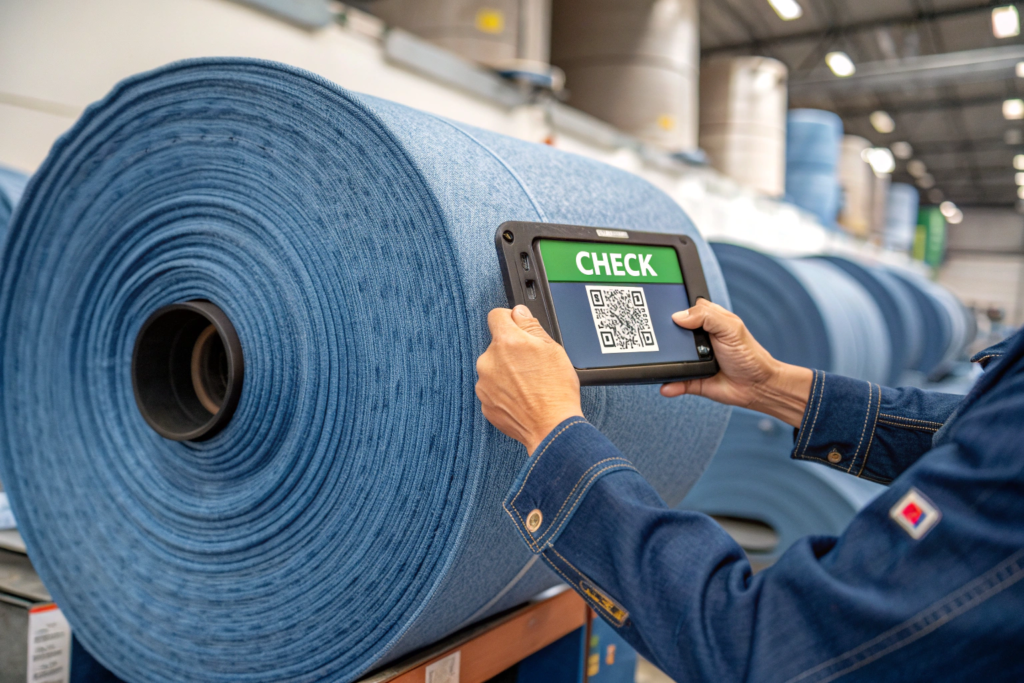
Each order at Shanghai Fumao Fabric is assigned a unique digital ID from the moment the purchase order is confirmed. When the grey fabric leaves our weaving facility, it gets a physical QR code tag. As it moves to our partner dyeing factory, the foreman scans the code upon arrival, triggering a status update: “Fabric Delivered to Dyeing Plant.” After dyeing, a scan marks it as “Dyed, Awaiting Quality Check.” Our QC team then scans it, and the report—including photos of any issues—is attached to that digital record. This isn’t theoretical. In 2023, we implemented this for a major European sportswear brand sourcing our high-performance moisture-wicking fabrics. They reduced their status inquiry emails by over 70% because their production team in Portugal could just check the portal.
Can I see more than just location updates?
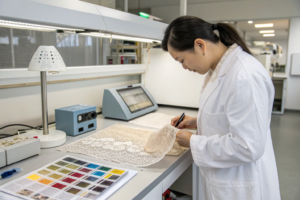
Absolutely. Real-time tracking’s power is in its depth. Beyond “where,” you see “how well.” For instance, during final inspection at our dedicated QC facility, the inspector uses a tablet to scan the batch code and input results for critical parameters: color fastness, shrinkage percentage, GSM weight. These results are instantly uploaded. You’re not just seeing “Inspected,” you’re seeing “Passed: Shrinkage <3%, Color Deviation Delta-E <0.8.” This level of detail is crucial for technical buyers. We learned this from a client in New York who was sourcing organic cotton twill. Their main pain point was inconsistency in shrinkage. Our system allowed them to review the pre-shipment test data online, giving them the confidence to approve shipment immediately, cutting two weeks off their usual verification process. For more on industry quality benchmarks, the Textile Exchange forum often has deep discussions on practical quality parameters for sustainable fabric sourcing.
What Are the Key Checkpoints in the Fabric Production Journey?
Understanding the tracking map means knowing the milestones. The journey of a fabric order, especially with a vertical supplier like us, is more complex than “make and ship.” It’s a carefully choreographed dance across specialized facilities. Real-time tracking illuminates each of these stages, turning a mysterious process into a predictable timeline.
The key phases are: Pre-Production (sample approval, lab dips), Raw Material & Weaving/Knitting, Wet Processing (dyeing, printing, washing), Finishing (coating, embroidery, etc.), Final Inspection & Packaging, and finally, Logistics & Customs. Each phase has its own sub-checkpoints. For example, during our agile fabric development cycle, the “Sample Sent” and “Client Feedback Received” are critical tracking points that prevent timeline drift early on.
Why is tracking the pre-production phase so critical?
The most costly delays happen before bulk production even starts. That’s why our system tracks development milestones. When you approve a lab dip or a handloom sample, that approval is logged in the system. This officially triggers the next step and alerts the relevant team. I recall a case from a Miami-based startup in August 2022. They were developing a custom jacquard for swimwear cover-ups. They approved the third lab dip online through our portal. The system automatically notified our yarn sourcing and loom scheduling teams, shaving off 5 days of internal communication lag. This granular visibility during development is a game-changer for brands on tight seasons. For insights into managing this phase, the Fashion Incubator blog has excellent resources on navigating the fabric sampling process with overseas suppliers.
What happens during the “wet processing” stage?
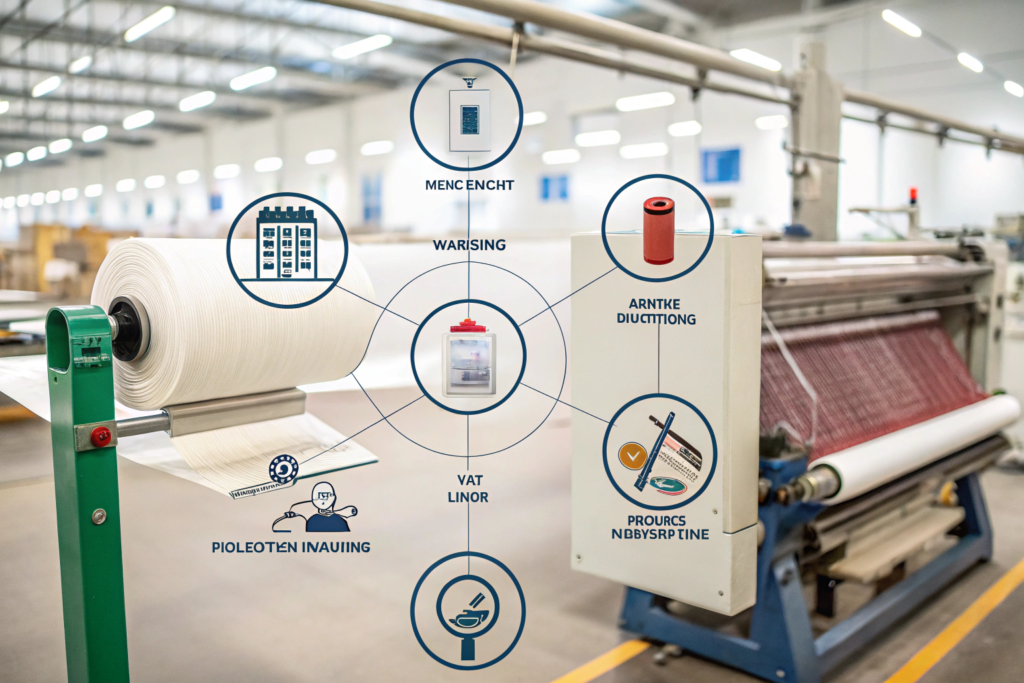
This is often the most variable stage due to technical complexities. Tracking here goes beyond location; it’s about process parameters. When your fabric is at the dyeing factory, a scan might update the status to “In Dyeing Vat #5, Temperature 130°C.” Afterward, it moves to “Post-Dyeing Washing” and then “Stentering for Width Setting.” This transparency demystifies the process. For a client from Los Angeles ordering our GOTS-certified bamboo silk, seeing that their fabric had completed dyeing with eco-friendly pigments and moved to softening gave them tangible peace of mind. They could align their cutting schedule weeks in advance. (Here’s a pro tip: always ask your supplier if their tracking includes these sub-process updates—it separates the advanced players from the rest).
How Does Real-Time Data Help Mitigate Shipping and Holiday Delays?
Information is the best antidote to uncertainty, especially with the volatile factors of global logistics and China’s pronounced production cycles. Real-time tracking doesn’t prevent the Chinese New Year shutdown, but it arms you with the data to plan around it brilliantly. It turns reactive panic into proactive strategy.
By seeing exactly where your order is in the production flow weeks before a holiday, you can make informed decisions. Is the fabric in finishing? If yes, you can push for pre-holiday shipment. Is it still in weaving? Then you can discuss a post-holiday completion plan immediately. This was the exact strategy our European fashion brand client used. Their pre-production was complete 6 weeks before Chinese New Year, and because they could see via our portal that bulk fabric was already in the coating phase, they worked with us to schedule trucking to the port for the last week before the holiday, ensuring their container sailed out just in time.
Can tracking help navigate peak production seasons?
Absolutely. During peak periods (Mar-May, Aug-Oct), factory queues get longer. Our tracking system provides estimated dates for each checkpoint based on real-time factory load. If you see your “Dyeing Start” is delayed by 4 days due to peak season backlog, you immediately know the downstream impact on your final shipping date. This allows for early conversations. In May 2023, a client in Chicago ordering recycled polyester fleece saw a bottleneck at the embroidery stage. Because they saw the delay in real-time, we jointly decided to split the order—ship the plain fabric first and air-freight the embroidered portion later—saving their main production line from stalling. This kind of collaborative problem-solving is only possible with shared visibility.
How does it protect against logistics surprises?
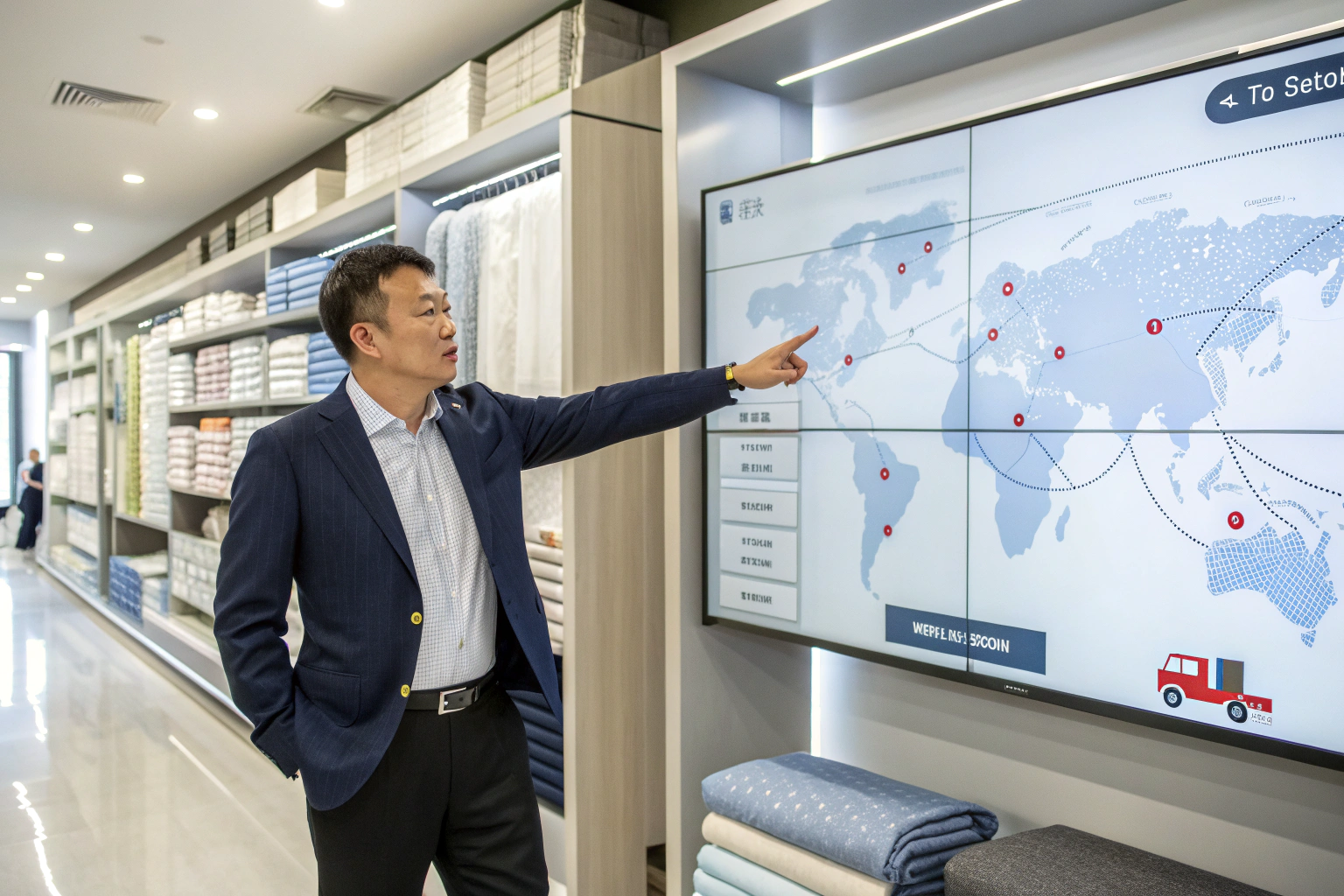
From our warehouse to the port, GPS-tracked trucks provide real-time location data. The most critical scan is the “Container Gated-In” at the port. This scan confirms your goods have made it onto the vessel’s sailing schedule. Before this system, a common pain point was trucks getting delayed due to domestic traffic or port congestion, missing the intended vessel. Now, you see that delay as it happens. For a Russian client importing our heavy velvets in November, a truck delay was immediately visible. We were able to coordinate with our forwarder to switch to a later vessel from Ningbo instead of Shanghai, minimizing the overall shipping delay. Understanding these logistics intricacies is vital, and platforms like Shipping and Freight Resource offer great real-world insights into ocean freight dynamics.
What Are the Tangible Business Benefits of End-to-End Visibility?
Moving beyond “nice to have,” real-time tracking delivers hard ROI. It transforms your supply chain from a cost center into a strategic asset. The benefits cascade from your sourcing manager all the way to your finance department, impacting cash flow, planning accuracy, and brand reputation.
The clearest benefits are: 1) Drastically Reduced Communication Overhead – No more daily “where is my order?” emails. 2) Predictable Cash Flow – You know exactly when to expect goods and can plan payments and sales accordingly. 3) Enhanced Risk Management – Early warning of delays allows for contingency plans. 4) Stronger Supplier Partnership – Transparency builds trust, moving the relationship from transactional to collaborative. At Shanghai Fumao Fabric, we’ve seen clients who use our portal actively become our most loyal and high-volume partners because we’ve eliminated a major source of business stress.

How does it improve inventory and production planning?
When you know your fabric will arrive at your factory on October 25th, not “sometime in late October,” you can schedule your cutting and sewing lines with precision. This reduces idle time and costly rush fees. A practical example: an e-commerce brand in the UK selling linen dresses uses our projected timeline to schedule their photo shoots and marketing campaigns for the new collection launch. The certainty allows them to operate with lower safety stock, improving their capital efficiency. This level of supply chain integration is what allows small brands to compete with giants. For businesses looking to optimize this, the Supply Chain Dive editorial often covers strategies for improving inventory turnover with better visibility.
Does transparency directly impact product quality?
Indirectly, but powerfully. A transparent process is an accountable process. When every team—from our weavers to our inspectors—knows that each action is logged and visible to the client, it instills a greater sense of responsibility. Furthermore, when quality test results are digitally attached to the order, it creates an immutable record. If a dispute arises, we have shared data to resolve it fairly, not he-said-she-said arguments. This documented history is invaluable. For instance, we had a case involving a shipment of anti-bacterial polyester to a US medical scrubs company. A minor shade deviation was flagged at their end. Because they could pull up the original inspection report from our portal showing the approved delta-E range, and compare it with their own lab report, we resolved the issue with a partial credit in 48 hours, preserving the relationship.
Conclusion
Real-time tracking is no longer a luxury in the fabric sourcing world; it’s the new baseline for professional, reliable, and partnership-driven business. It’s the tool that turns the inherent complexities of global manufacturing—peak seasons, holiday closures, logistical hurdles—from insurmountable obstacles into manageable variables. By demanding and utilizing this level of transparency, you gain control, reduce risk, and ultimately build a faster, more responsive fashion business.
The journey from a roll of yarn on a spinning frame in Keqiao to a finished garment on a retail rack in America is long. It shouldn’t be a journey in the dark. With the right technology and a committed partner, every step can be illuminated, giving you the confidence and data to make smarter decisions.
Ready to experience supply chain transparency that truly empowers your brand? Let Shanghai Fumao be your guide and guarantor. We don’t just sell fabrics; we provide the visibility and peace of mind you need to grow. Contact our Business Director, Elaine, today to discuss how we can integrate real-time tracking for your next fabric order. Start the conversation at elaine@fumaoclothing.com and weave certainty into your supply chain.