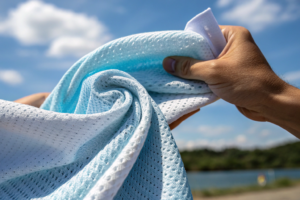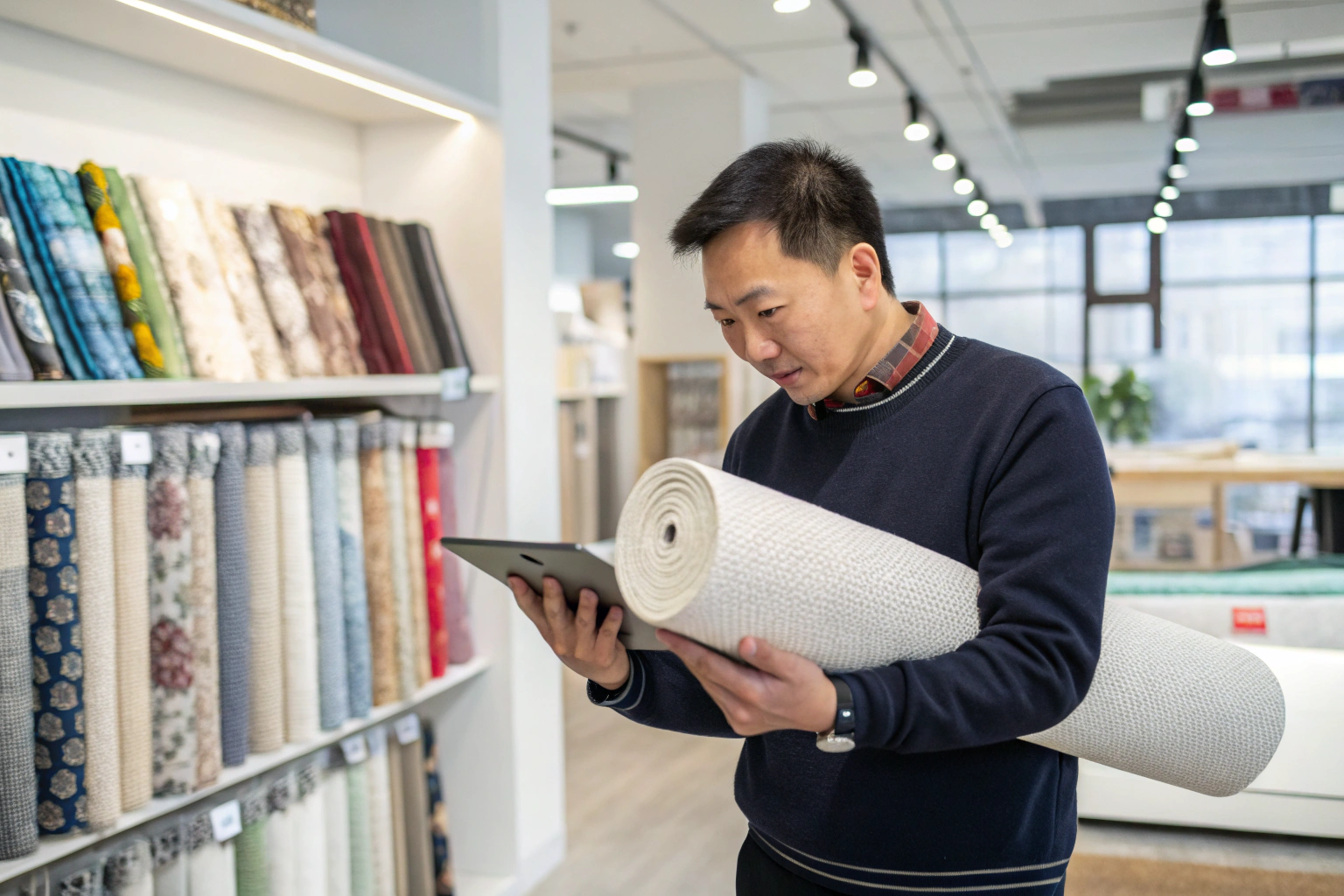
Let me tell you about a conversation I had last month with a startup owner from Texas. She was launching a premium athleisure line and she said something that stuck with me. “I don’t just want my logo on a label sewn into the back. I want it in the fabric itself. I want people to see it, feel it, know it’s mine.” I get that. A custom logo on knitted fabric isn’t just branding. It’s ownership. It’s the difference between looking like you bought off the rack and looking like you built something of your own. But here’s the problem she ran into. She tried ordering from a small supplier who promised custom logo jacquard, and what she got was a mess. The logo was misaligned. The fabric quality was inconsistent. And when she tried to reorder, the supplier couldn’t reproduce the same result twice.
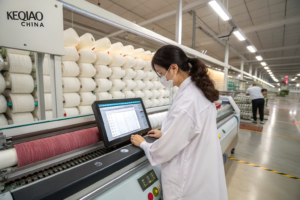
At Shanghai Fumao, we’ve been doing custom logo work on knitted fabrics for over a decade. We offer three main methods: jacquard weaving (where the logo is knitted directly into the fabric structure), embroidery (where the logo is stitched onto the finished fabric), and screen or digital printing (where the logo is applied as a print). We own our weaving factory, two embroidery factories, and work closely with printing partners, so we control the entire process. Whether you need a subtle tone-on-tone logo in a performance jersey, a bold embroidered logo on a hoodie fleece, or a high-definition printed logo on a lightweight mesh, we can do it. And we can reproduce it consistently, order after order.
Now, I know the idea of custom logo fabric can sound complicated. There are technical questions. Minimum quantities. Set-up costs. But honestly? It’s simpler than most buyers think. You just need a partner who knows what they’re doing. Let me walk you through exactly how we do it—step by step—so you know what to expect, what to prepare, and how to get the result you want.
What Methods Can You Use to Put a Custom Logo on Knitted Fabric?
Here’s the first decision you need to make. How do you want your logo to appear on the fabric? And I don’t mean just the design. I mean how it’s physically constructed. Each method gives you a different look, a different feel, and a different cost structure. I’ve seen clients pick the wrong method because they didn’t understand the trade-offs, and end up with a fabric that doesn’t work for their garment. So let’s get clear on the options.
We offer three primary methods for custom logos on knitted fabrics. First, jacquard knitting. This is the most integrated option. The logo is knitted directly into the fabric structure using a jacquard loom. The result is permanent—it won’t wash off, peel, or fade. It works best for bold logos or patterns, and it can be done tone-on-tone or in contrasting colors. Second, embroidery. This method stitches the logo onto the finished fabric using our embroidery factory. It gives a textured, premium feel and works well for smaller logos, logos on heavy fabrics, or when you want a raised, dimensional effect. Third, screen or digital printing. This applies the logo as ink on the surface. It’s ideal for complex, multi-color logos, photo-realistic designs, or when you need a soft hand feel with no texture. We use eco-friendly water-based inks and digital printing for fine detail.
Each method has its sweet spot. I’ll give you a real example. In early 2024, a California-based streetwear brand approached us. They had a complex, graffiti-style logo with five colors and fine detail. They initially wanted jacquard. We showed them a sample. Because jacquard requires yarn changes, the fine detail was lost and the fabric had floats on the back that affected the hand feel. We recommended digital printing instead. We printed their logo onto a 240gsm cotton fleece, and the result was crisp, soft, and exactly what they wanted. They placed a 15,000-meter order. That’s the value of choosing the right method.
What Is Jacquard Knitting and When Should You Use It?
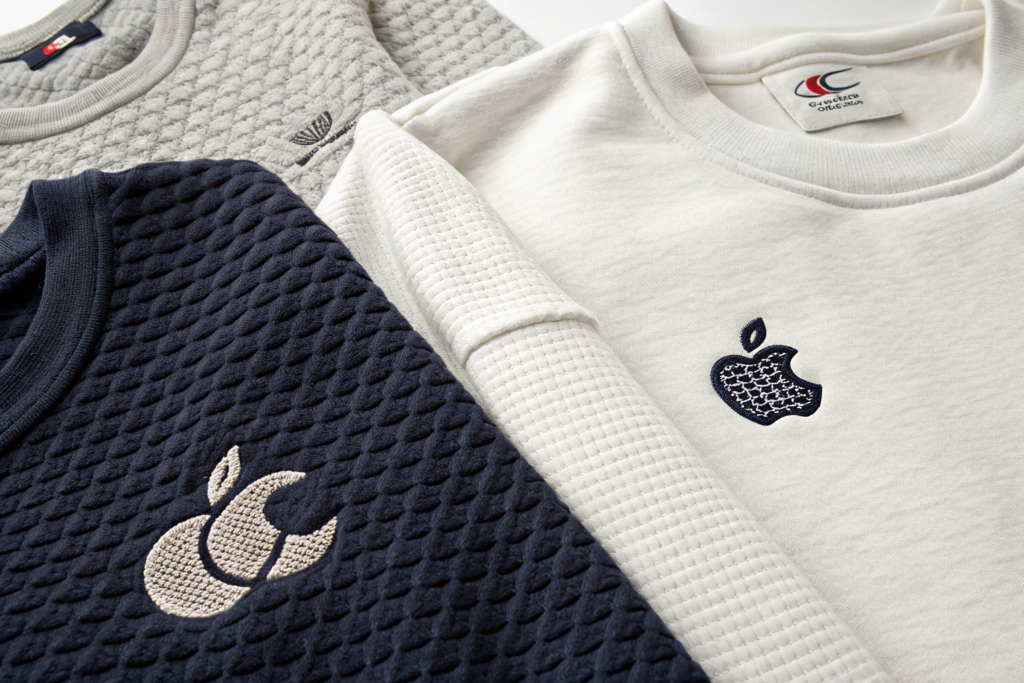
Jacquard knitting is named after Joseph Marie Jacquard, who invented a loom that could control individual yarns to create patterns. In modern terms, it’s a technique where the knitting machine can select each needle individually, allowing you to knit a pattern—like a logo—directly into the fabric. The logo is part of the fabric’s structure. It won’t peel, fade, or wash off. We use jacquard knitting in our weaving factory for custom logo work on jerseys, rib knits, and interlock fabrics. It’s best when you want a subtle, integrated look—like a tone-on-tone logo in a polo shirt collar or a pattern that runs across the entire garment. The limitations? It works best for bold, simple logos. Fine details can get lost because each “pixel” of the design is actually a stitch. And there’s typically a higher minimum quantity because we need to set up the machine with your specific pattern. For clients looking to understand the technical difference between jacquard and other knitting methods, it’s the most permanent option available.
What Are the Advantages of Embroidery for Custom Logos?
Embroidery is the classic choice for a reason. It’s durable, it’s textured, and it communicates quality. We have two embroidery factories that can handle everything from small logo runs to large-scale production. We use multi-head embroidery machines that can stitch dozens of logos simultaneously. The process is simple: we take your logo digitized into an embroidery file, and our machines stitch it onto the finished knitted fabric. The advantages? First, durability. Embroidery is incredibly resistant to washing and abrasion. Second, texture. A well-embroidered logo has a dimensional, premium feel that customers associate with quality. Third, flexibility. We can embroider on almost any knitted fabric—from lightweight jerseys to heavy fleeces. The trade-offs? It adds weight to the fabric, and it can stiffen the area behind the logo if we use too much backing. We always test to find the right balance. In 2023, a Japanese streetwear brand ordered 30,000 hoodies with a small chest logo. We embroidered the logo onto a 320gsm fleece using a 12-needle machine. The result was clean, durable, and the brand reported zero returns related to embroidery quality. If you’re considering how to get custom embroidered logos on knitwear, the key is choosing the right stitch density and backing material.
What Do You Need to Prepare Before Ordering Custom Logo Fabric?
Here’s where things get real. I can’t tell you how many times a client has come to me with a great idea for a custom logo, but they don’t have the technical details ready. They send me a blurry JPEG from their website and say “just make it work.” And look, I want to help. But if you want the logo to come out right—crisp, accurate, repeatable—you need to prepare a few things before we start. It’s not complicated. But it matters.
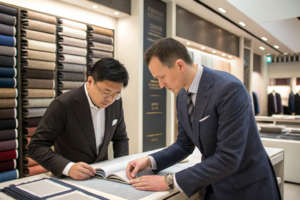
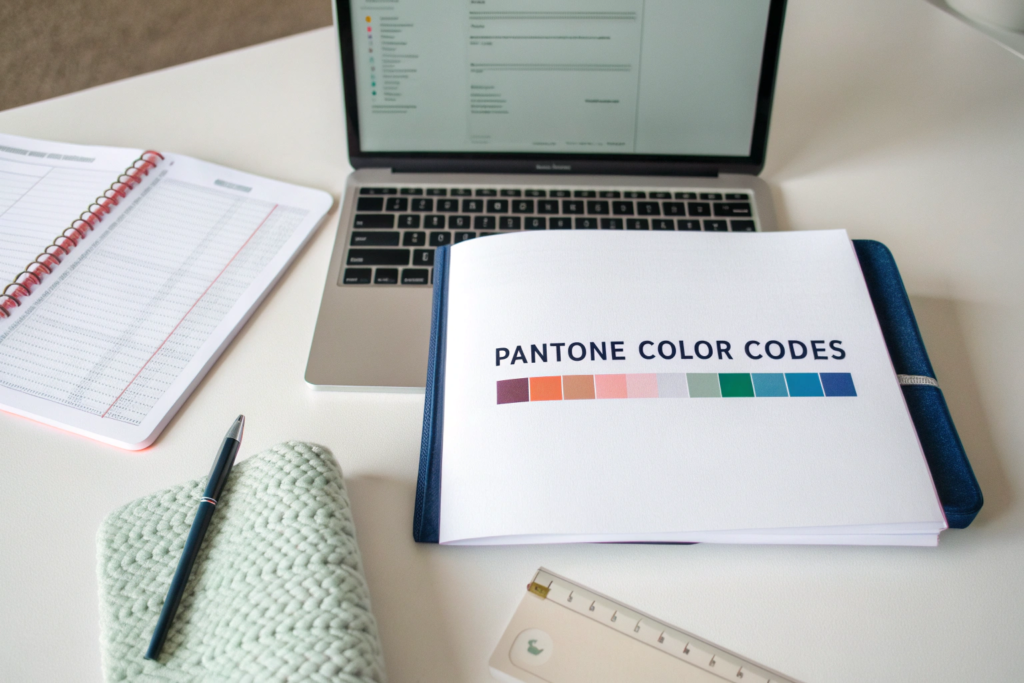
To start a custom logo project with us, you need three things. First, a vector file of your logo. Vector files—like .AI, .EPS, or .CDR—use mathematical lines and curves rather than pixels. They scale infinitely without losing quality. A JPEG or PNG pixel file can work, but it’s much harder to guarantee sharpness, especially for jacquard or embroidery. Second, Pantone color codes. Tell us the exact colors you want the logo to be. We use the Pantone Matching System (PMS) to match colors in yarn, thread, or ink. Third, the fabric base. Know what knitted fabric you want the logo on—jersey, rib, fleece, pique, etc. If you’re not sure, we can help you select based on your garment type and season.
Let me give you a real-world example. In late 2023, a Canadian outdoor brand wanted a custom jacquard logo on a performance jersey for their base layer collection. They sent us a high-resolution PNG of their logo, but no vector file. The logo had a small, detailed mountain icon inside the text. When we tried to convert it to a jacquard file, the mountain detail was lost. We asked for a vector file. They went back to their designer, got the .AI file, and we were able to recreate the logo perfectly. The extra two days of back-and-forth saved them from receiving 10,000 meters of fabric with a blurry logo. Preparation saves time.
Why Is a Vector File Critical for Jacquard and Embroidery?
Let me explain this in simple terms. A pixel file—like a JPEG—is made of tiny squares. When you enlarge it, those squares become visible, and the image looks blurry or pixelated. A vector file is made of mathematical paths. It can be scaled to any size without losing sharpness. For jacquard knitting, we need to convert your logo into a machine-readable file that tells each needle whether to knit or not. If the source file is blurry, the jacquard pattern will be blurry. For embroidery, we need to digitize the logo—convert it into stitch instructions. A vector file gives us clean outlines to work with. The best formats are .AI (Adobe Illustrator), .EPS (Encapsulated PostScript), and .CDR (CorelDRAW). If you don’t have a vector file, we can sometimes recreate it from a high-resolution image, but it adds time and cost. For clients who need help converting logo files for textile production, we’ve worked with design agencies that specialize in this.
How Do Pantone Colors Ensure Accuracy Across Different Methods?
Color matching is one of the hardest parts of custom logo work. The color you see on your screen is not the color that will come out in yarn, thread, or ink. That’s why we use the Pantone Matching System. Pantone is a standardized color system. Each color has a number—like Pantone 186 C for a rich red. When you give us a Pantone number, we can match it across different materials. For jacquard, we dye yarn to that Pantone color. For embroidery, we source thread in that Pantone color. For printing, we mix ink to that Pantone color. Without Pantone numbers, we’re guessing. And guessing leads to mismatched logos between production runs. In early 2024, a UK-based fashion brand ordered a custom embroidered logo on a cotton fleece. They gave us Pantone numbers. We matched the thread. The logo came out exactly as they expected. They told me it was the first time in three years that their logo color was consistent across a full production run. If you want to learn more about how to use Pantone colors for textile branding, it’s the industry standard for a reason.
What Are the Minimum Order Quantities and Costs for Custom Logo Knits?
I’ll be honest. This is the question that makes some buyers nervous. They hear “custom logo” and they think it’s only for big brands with massive budgets. But that’s not true. Yes, custom work has minimums. But we work with everyone—from startups ordering 500 meters to global brands ordering 50,000 meters. The key is understanding how the costs break down and what drives the minimums.
Minimum order quantities (MOQs) for custom logo knitted fabrics depend on the method. For jacquard knitting, our MOQ is typically 1,000 meters per color. Why? Because we need to set up the machine with your pattern, and the pattern cylinders or electronic jacquard settings take time. For embroidery, we can work with much smaller quantities—sometimes as low as 500 pieces or 200 meters of fabric, because we’re adding the logo after the fabric is made. For digital printing, we can go even lower, with MOQs as low as 300 meters for a custom print design. The cost structure includes setup fees (which cover pattern development, machine setup, and sampling) and the per-meter or per-piece cost. We’re transparent about both.
Let me break down a real cost example from 2023. A Dutch sportswear brand wanted a custom jacquard logo on a polyester performance jersey. They needed 3,000 meters. The setup fee was $500, which covered the jacquard pattern development and machine setup. The fabric cost was $8.50 per meter for the base fabric with the logo knitted in. Total landed cost was around $26,000. They compared that to ordering blank fabric and having a local embroiderer add the logo later. The embroidered option would have cost $3.00 per garment extra, and with 6,000 garments (assuming 0.5 meters per garment), that was $18,000 in embroidery alone. Plus they would have had to manage two supply chains. The jacquard option was more expensive upfront but saved them logistics complexity and gave them a premium, integrated look. They went with the jacquard.
Why Does Jacquard Knitting Have Higher Minimums Than Printing?
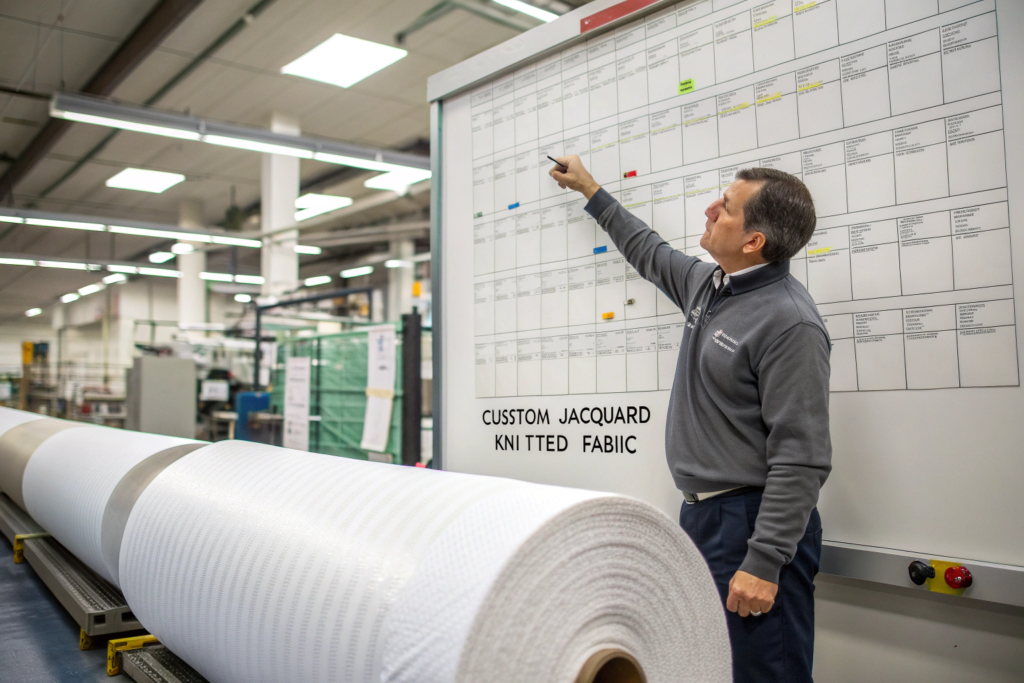
The answer is in the machinery. A jacquard knitting machine—whether it’s a circular knit for jersey or a flat knit for collars—requires a setup that’s specific to your pattern. For electronic jacquard machines, we load your pattern into the machine’s computer. For mechanical jacquard, we may need to change pattern cylinders. Either way, there’s a time cost to setting up. Once the machine is running, it’s efficient. So the minimum exists to make that setup cost worthwhile. That’s why jacquard works best for clients who are ordering a full roll quantity—1,000 meters or more. If your order is smaller, embroidery or printing is usually a better fit. In 2024, we’ve started offering a “small-run jacquard” service for clients needing 500 meters, but the setup fee is proportionally higher. For anyone trying to decide between jacquard and print for custom logos, think about your order quantity and your desired durability.
How Do We Calculate Setup Fees and Per-Unit Costs?
We’re transparent about costs because we want long-term partnerships. Setup fees cover non-recurring costs: pattern digitization, machine setup, sampling, and testing. Once we’ve done the setup, repeat orders usually don’t incur the setup fee again, because we keep your pattern on file. The per-unit cost is driven by three things: the base fabric, the complexity of the logo, and the production method. For jacquard, more colors in the logo mean more yarn carriers and higher cost. For embroidery, larger logos or higher stitch density increase cost. For printing, more colors or larger print areas increase cost. We always provide a detailed quote breakdown before we start. In Q4 of 2023, a US-based startup ordered a custom printed logo on 800 meters of cotton jersey. The setup fee was $200, and the fabric cost was $6.20 per meter. They told me they appreciated that we didn’t try to hide the setup fee in the fabric price—it made the math clear for their investors. That’s how we do business. If you’re looking for guidance on custom textile production budgeting, we’re happy to walk you through the numbers.
How Do We Ensure Your Custom Logo Looks Perfect on Every Meter?
This is the part that separates the professionals from the amateurs. Anyone can promise a custom logo. But can they deliver it consistently across 10,000 meters? Can they make sure that the logo on meter 1 looks exactly like the logo on meter 10,000? I’ve seen clients burned by suppliers who nailed the sample but couldn’t repeat it in production. We built our quality system specifically to prevent that.
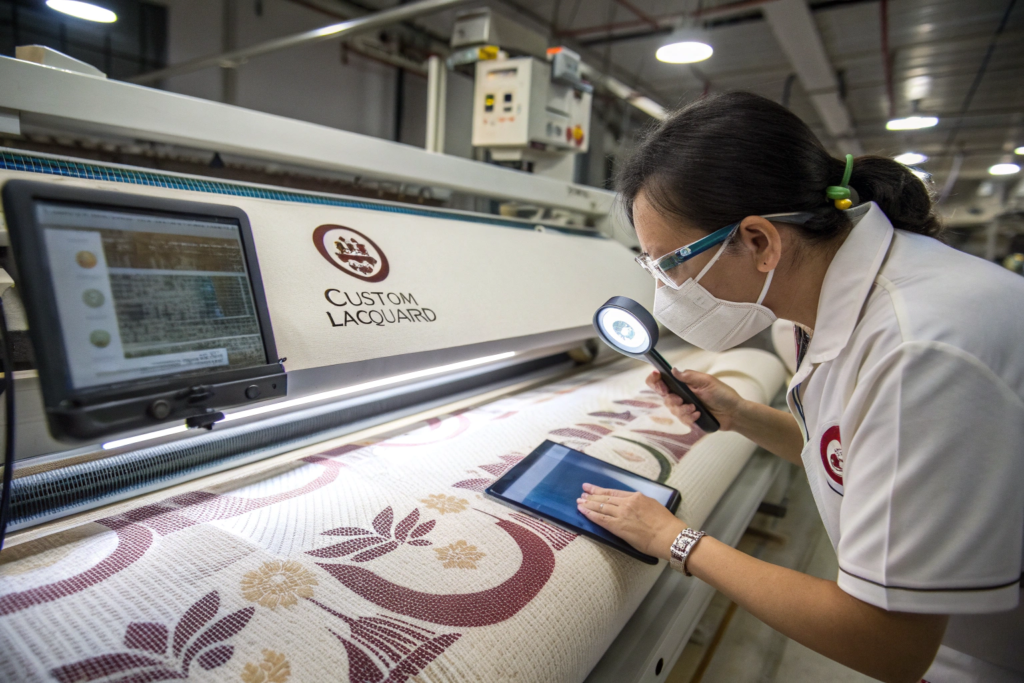
We ensure logo consistency through a combination of pre-production sampling, in-line inspection, and final QC with QR code tracking. Every custom logo order starts with a pre-production sample—a physical piece of fabric with your logo that we send for approval. You sign off on the placement, color, size, and quality. Then we move to production. During production, our QC team inspects the fabric at multiple stages. For jacquard, we check the pattern alignment and yarn tension. For embroidery, we check thread tension, backing, and stitch quality. For printing, we check color registration and ink penetration. Every roll goes through the 4-point inspection system, and we reject any roll where the logo doesn’t meet the approved standard.
Let me give you a specific example from our own production. In early 2024, we were running a custom jacquard logo on a cotton-spandex jersey for a US athleisure brand. The logo was a large back panel design—about 30cm wide—that needed to be perfectly centered on each roll. We ran a pre-production sample, got approval, and started production. During the first 500 meters, our QC team noticed that the logo was drifting slightly off-center by about 3mm. Most customers wouldn’t have noticed, but we flagged it. We stopped the machine, recalibrated, and restarted. We separated the first 500 meters, offered to either re-run them or sell them at a discount as seconds. The client appreciated the honesty. They took the seconds for a secondary product line and we re-ran the main order clean. That’s the kind of quality control you get when you work with a supplier who cares.
How Does Pre-Production Sampling Prevent Mistakes?
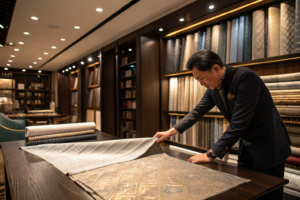
Sampling is not a formality. It’s your insurance policy. Before we run any custom logo order, we produce a pre-production sample. For jacquard, that’s a small piece of fabric—usually 0.5 meters—with your logo knitted in. For embroidery, we embroider the logo on a piece of your chosen base fabric. For printing, we print the logo on a sample. We send this to you. You check everything: logo size, placement, color, sharpness, and feel. Only when you approve do we start production. In 2023, a Swedish brand approved their jacquard logo design by email without requesting a physical sample. We insisted on sending one anyway. When they received it, they realized the logo was 20% larger than they intended because of how the jacquard pattern scaled. We corrected it before production. If we had run without the sample, they would have had 5,000 meters of fabric with an oversized logo. That’s why we always sample. If you want to understand why physical sampling is critical for custom textile orders, it’s the single best way to avoid costly mistakes.
What Role Does QR Code Tracking Play in Custom Logo Orders?
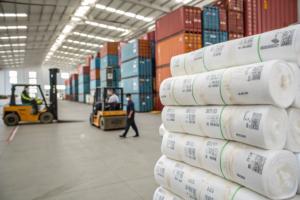
Our QR code system gives you full visibility into the quality of your custom logo order. Every roll we ship has a QR code label. Scan it with your phone, and you’ll see the batch number, the production date, the inspection report, and—for custom logo orders—a photo of the approved logo standard. If you ever have a question about a specific roll, you can scan the code, see the data, and we can trace it back to the exact production run and inspection record. In late 2023, a client in Australia received a shipment of custom printed logo fabric. One roll had a slight color shift in the logo—barely visible but noticeable under certain light. They scanned the QR code, saw that the roll had passed inspection with a ΔE of 1.2 (within our tolerance), but they felt it was too different from the other rolls. We accepted the return of that roll, replaced it, and adjusted our tolerance for that client going forward. The QR code gave us the traceability to have that conversation with precision. For clients who want to learn how QR code traceability improves supply chain transparency, it’s a tool we’ve been refining for years.
Conclusion
Let me bring this all together. Ordering custom logo on knitted fabric is one of the most powerful ways to make your brand unmistakable. It turns a piece of clothing into a statement. It says “this is ours. This is intentional. This is quality.” But it’s also a process that requires a partner who understands the technical details, manages the quality, and delivers consistency.
At Shanghai Fumao, we’ve been doing this for over 20 years. We own the weaving factory, the embroidery factories, and we work with the best printing partners. We have the equipment, the expertise, and the quality systems—like our CNAS-accredited lab and QR code tracking—to make sure your logo looks perfect, every time, on every meter.
I’ve walked you through the methods—jacquard, embroidery, printing. I’ve told you what to prepare—vector files, Pantone colors, fabric base. I’ve been transparent about MOQs and costs. And I’ve shown you how we control quality from sample to shipment.
Now it’s your turn.
Whether you’re launching a new brand, expanding an existing collection, or just tired of dealing with suppliers who can’t get the details right, I’d invite you to reach out. Our Business Director, Elaine, leads our custom logo team. She’s worked with startups and global brands alike. She can walk you through the options, help you choose the right method for your product, and give you a clear timeline and cost estimate.
Let’s put your logo on fabric. Let’s make it yours.
Email Elaine: elaine@fumaoclothing.com
From Keqiao, China—the heart of the world’s textile industry—to your customers around the world. We’re ready when you are.