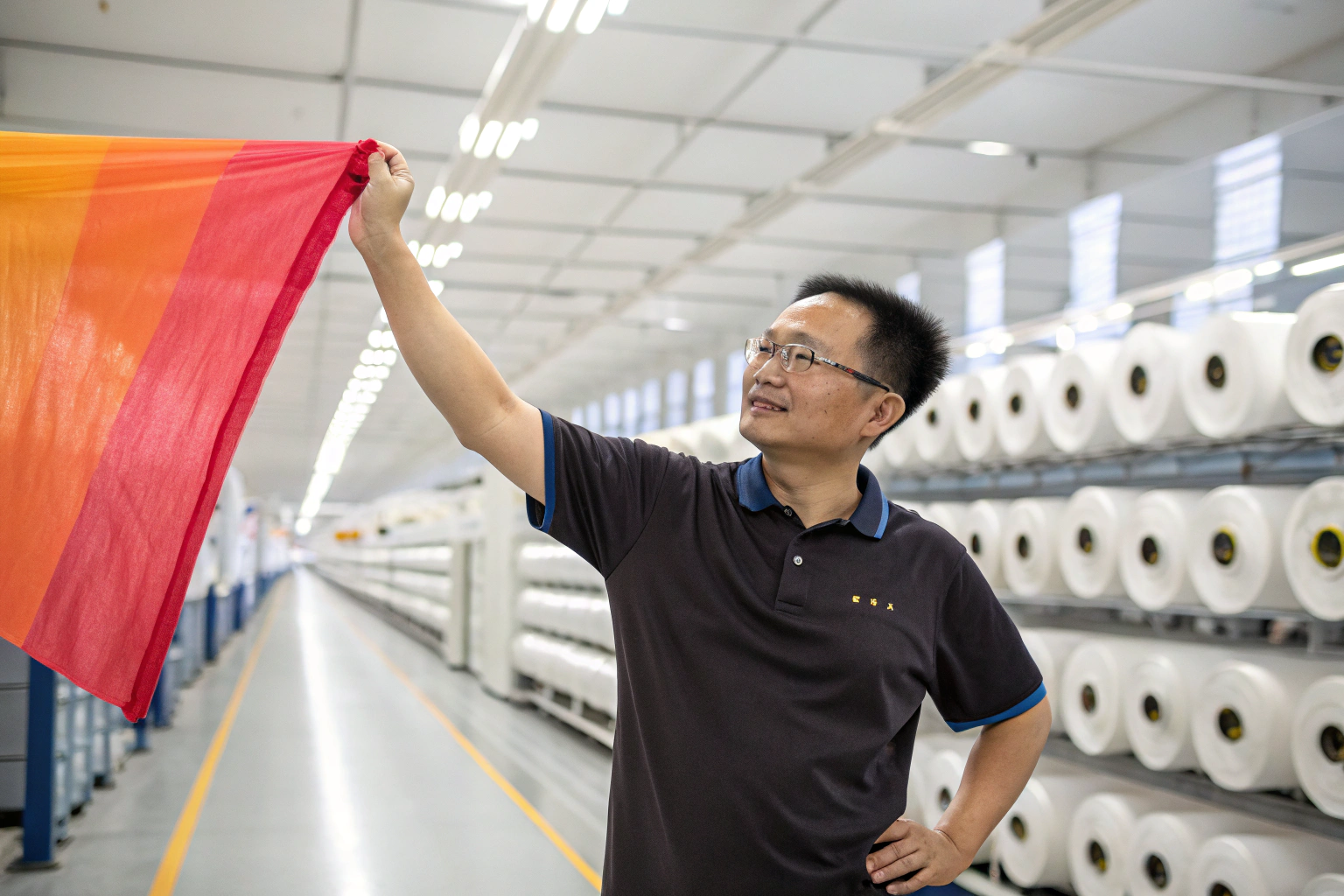
As a fabric supplier for over 20 years here in Keqiao, I've heard this question from buyers like you more times than I can count. You finally find that perfect sample, the color is spot-on, the hand feel is exactly what you wanted, and you place a bulk order. Then, weeks later, a container arrives at your door in the US, and something feels... off. The color might be slightly duller. The fabric might feel a bit stiffer. You're now stuck with materials that don't meet your standards, facing delays and angry customers. This "sample versus bulk" gap is the single biggest frustration in our industry, costing buyers time, money, and their reputation. It’s a risk that keeps many of you awake at night.
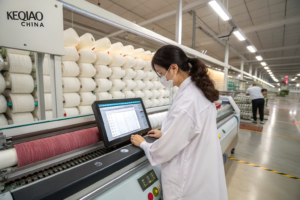
The direct answer is that you ensure quality matches by not just trusting a sample, but by trusting a system. It’s about moving beyond a simple handshake on a swatch and building a process of verification. At Shanghai Fumao, we bridge this gap through a combination of rigorous, transparent quality control and our vertically integrated supply chain. We don't just send you a sample from our design studio; we produce your lab dip, test it in our CNAS-accredited lab, and then use that data to calibrate our bulk production runs. We replace guesswork with measurable data points, ensuring that the roll of fabric we ship to you in Chicago is a chemical and physical twin of the 10x10cm sample you approved.
But let’s be real—simply stating we have a lab isn't enough to build trust. You need to understand how the process works, the potential pitfalls, and the specific checkpoints that protect your order. In this article, I’ll walk you through the concrete steps we take to guarantee consistency. We’ll look at the hidden variables in dyeing, the critical role of pre-shipment inspection, and how smart scheduling around China’s production calendar can actually give you better quality control. We'll use real examples from our own factory floor to show you how we turn the risk of "sample vs. bulk" into a guarantee of consistency, saving you from the hidden costs of bad fabric.
How do Chinese holidays like CNY affect my production quality timeline?
You’re planning a summer fashion line launch, and you need the fabric in Portland by April. You think ordering in January gives you plenty of time. Then, the Chinese New Year (CNY) holiday hits. Your supplier’s factory shuts down for 3-4 weeks, and your order, which was supposed to start production in February, doesn't begin until March. Suddenly, you're in a mad rush, quality checks get skipped to meet sailing schedules, and the fabric that arrives is a mess. This isn't just about timing; rushed production is the enemy of consistent quality.
The real key to protecting your quality during these periods isn't just about avoiding delays; it's about strategic planning. When you're scrambling to meet a deadline, factories cut corners. They might reduce dyeing times or skip a crucial finishing step to get your fabric out the door. A well-planned timeline, built around China’s production rhythms, ensures that quality is never sacrificed for speed. We build quality into the schedule, not just the inspection.
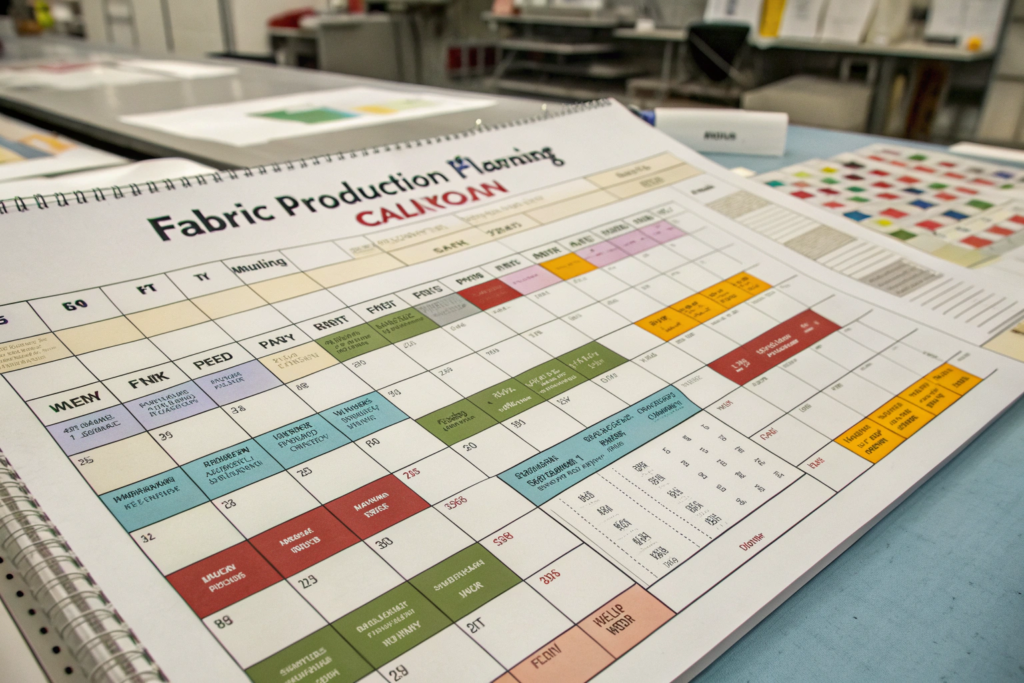
What are the exact shutdown dates for Chinese New Year and Golden Week in 2024?
This is the million-dollar question. For 2024, the official Chinese New Year holiday falls on February 10th, but the reality on the ground is different. Most factories, including our own weaving and dyeing partners, will begin shutting down 5-7 days prior as migrant workers travel home. Production usually halts around February 1st, 2024. Operations don't resume immediately on February 17th either. It takes another week to get workers back and production lines running smoothly, meaning a full return to capacity is often not until late February or early March. For a detailed breakdown of regional variations in shutdowns, you can check this discussion on industry shutdown patterns on the Importing forum.
Golden Week in 2024 is from October 1st to October 7th. This is a shorter, cleaner break, but it still causes a 1-2 week disruption. Forward-thinking buyers plan around this. In 2023, a Swedish sportswear brand we worked with completed all pre-production sampling 6 weeks before CNY. We QC'd everything, and the moment our doors reopened, their order was first in line for dyeing. Their fabric consistency was actually better than their previous orders because we weren't rushing to meet a pre-holiday deadline.
How can I plan my purchase orders to avoid quality issues from rushed production?
You plan for quality by adding buffer time before the holiday, not after. The common mistake is to think, "If I order in December for a February holiday, I'll get my fabric in March." Wrong. The factory is scrambling in December to finish orders before they close. Your new order in December is just noise. They might promise you delivery before CNY just to get your PO, but then your production gets squeezed into a week of frantic, low-quality work.
Here’s a strategy we've seen work for our top US clients: use the slower periods. June-July and November-December are our "shoulder seasons." Production pressure is lower, and we have more capacity to run trials and extra tests. A guide on timing your textile orders from the Sourcing Journal suggests that ordering in November for a January shipment avoids the CNY rush entirely. We recently had a client from Melbourne who ordered a complex recycled polyester blend in early November. Because the factory wasn't overloaded, we could run an extra 2 hours of color-matching tests in our lab, ensuring their "ocean blue" was perfect across all 5,000 meters. If they had ordered in late January, that extra care would have been impossible.
Why do some suppliers offer discounts during slower production months?
You might think a discount in June means lower quality. But in China, it's actually the opposite. When we have slower months, like June-July, our machinery is still running, but we aren't rushed. We offer competitive pricing to attract volume and keep our skilled workers employed. But more importantly, the quality control during these months is superior. Our QC team has time to inspect every single roll more thoroughly. Our dyeing masters can take their time adjusting the formulations. It's like a chef cooking a meal when the restaurant is half-empty—the attention to detail is just better.
This period is also perfect for developing new products. During the 2022 summer lull, we helped a New York-based designer perfect a "peached finish" on a heavy organic cotton that normally would have taken months. Because we weren't slammed with peak-season orders, our R&D team could run multiple trials. The final quality was exceptional, and we delivered it in 5 weeks, a timeline that would have been 8 weeks in September. So, a discount during slower periods doesn't mean you're getting cheap goods; you're getting premium attention at a better price.
What lab tests actually prove my fabric matches the approved sample?
I get it. Looking at a lab report filled with numbers like "Delta E" and "Grab Test" can feel like reading a foreign language. You just want to know if the fabric in the warehouse is the same as the swatch in your hand. But here's the hard truth: your hands and eyes can be fooled. Lighting conditions change, a fabric might feel different after a day in the warehouse, and slight color variations can be invisible until you cut and sew 1,000 garments. Relying solely on visual inspection is the fastest way to get a rejected shipment.
That’s why we at Shanghai Fumao invested $2 million in our own CNAS-accredited lab. We don't just look at the fabric; we measure it. We use standardized, objective tests that provide a numerical "fingerprint" of your fabric. When you compare the fingerprint of the bulk production to the fingerprint of the original sample, you get a definitive yes or no on quality. It takes the emotion and guesswork out of the equation and puts the power of proof in your hands.

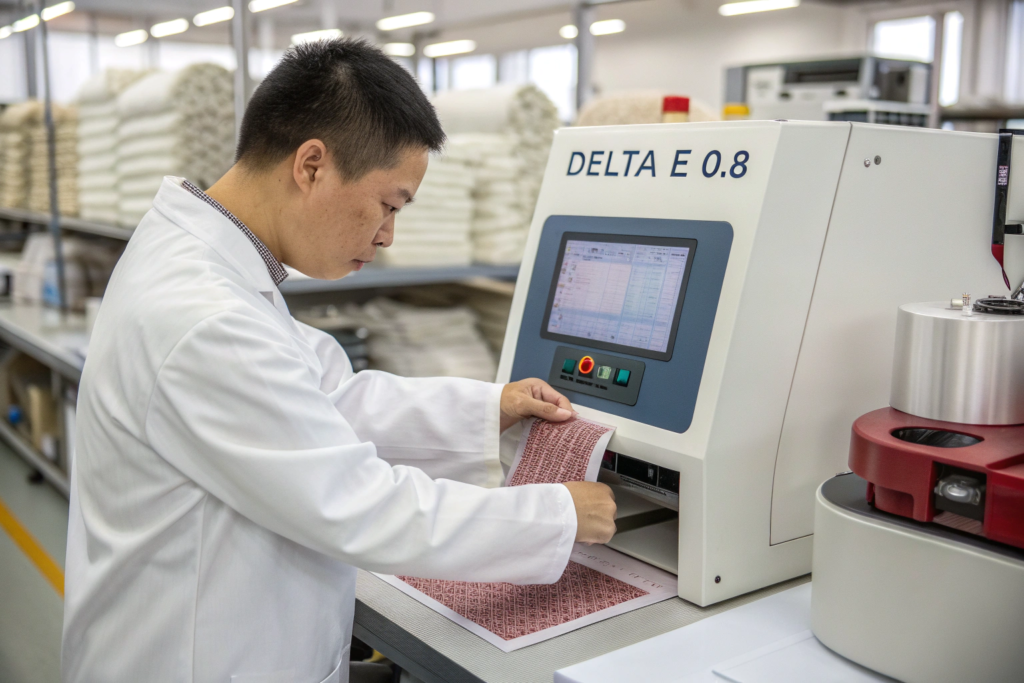
What is a Delta E reading and why should I care about it?
Delta E (dE) is your new best friend. It’s a single number that represents the difference between two colors. In our lab, we use a spectrophotometer—a machine that reads color much more precisely than the human eye—to measure your original sample. We then measure a piece of the bulk production fabric. The Delta E is the calculated difference between the two readings.
In the textile industry, a Delta E of under 1.0 is generally considered an excellent match, invisible to the naked eye. A reading between 1.0 and 2.0 is usually acceptable for most commercial standards, but a trained eye might see a slight difference. Anything above 2.0 is a red flag and warrants a closer look or rejection. For a deep dive into how color tolerances are set for different markets, this article on color quality control from X-Rite is a fantastic resource. We use this data to calibrate our dyeing machines. If a bulk run starts showing a dE creeping up to 1.5, we stop the line and adjust, preventing thousands of meters of off-shade fabric. We don't wait for the final inspection to find a problem.
How do we test for strength to ensure the fabric won't fall apart?
Color matching is one thing, but structural integrity is another. Imagine your sample is a sturdy canvas, but the bulk order arrives feeling thin and flimsy. That’s a structural failure. We use two primary tests in our CNAS-certified lab to prevent this. The first is the Grab Test (ASTM D5034), where we literally put a piece of fabric in a machine and pull it until it tears. We measure the force required in pounds or Newtons. If your original sample tore at 100 lbs of force, but the bulk fabric tears at 70 lbs, we know the yarn or construction is compromised.
The second is the Tearing Strength test (ASTM D2261). This measures how easily a fabric will continue to tear once a cut is made. We had a situation in late 2022 with a Canadian outerwear company. Their sample of a high-density nylon had great tear strength. But during bulk production, our tests showed a 15% drop. We traced it back to a tension issue on the weaving loom. Because we caught it in our lab, we were able to correct the tension and re-weave the affected batches before they ever left the factory. Without this data, they would have had jackets ripping at the seams. You can read more about standard fabric strength testing methods on this educational textile site.
What about shrinkage? How can we guarantee the garment will fit after washing?
This is a classic "sample vs. bulk" trap. Your sample might be pre-washed, but your bulk fabric might be finished differently, leading to massive shrinkage in the first wash. The test here is straightforward but critical: the Home Laundering Test (AATCC 135). We take a representative sample of the bulk fabric, measure it precisely, wash it according to your care label instructions (e.g., cold wash, tumble dry low), and then re-measure it.
We calculate the percentage change in both length and width. If we see shrinkage exceeding 3-5% (depending on the fabric type), we know the finishing process, like sanforizing or compacting, wasn't effective. For a detailed overview of how to interpret these results, you can check the shrinkage standards explained by the American Association of Textile Chemists and Colorists. We actually go a step further. We use this data to advise our clients on cutting room allowances. For instance, for a recent order of slub cotton jersey for a Los Angeles-based t-shirt brand, our tests showed 4% length shrinkage. We advised them to add 2 inches to their pattern pieces, which eliminated post-production fit issues and saved them thousands in returns.
Why do shipping delays from China sometimes ruin fabric quality?
Let’s paint a picture. Your fabric is perfect. It passed all the inspections, it's rolled beautifully onto tubes, and it's packed in cartons. It sits on the factory floor, waiting for the truck to the Shanghai port. Then, the truck is delayed 3 days. Then, the ship is delayed another week at the Ningbo port because of congestion. That fabric, which was in perfect condition, is now sitting in a humid, unventilated container, or stacked under tons of heavier cargo. When it finally arrives in the US, the cartons are crushed, the fabric has mildew spots, or there are permanent creases that won't press out. The shipping delay didn't just make you late; it destroyed your product's quality.
At our company, we've learned that our responsibility for quality doesn't end when the truck leaves our loading dock. A delay is an opportunity for damage. Moisture, pressure, and time are enemies of finished fabric. We've had to develop specific protocols to protect our clients' goods from the chaos of global logistics. It's about packing for a worst-case scenario, not a best-case one.
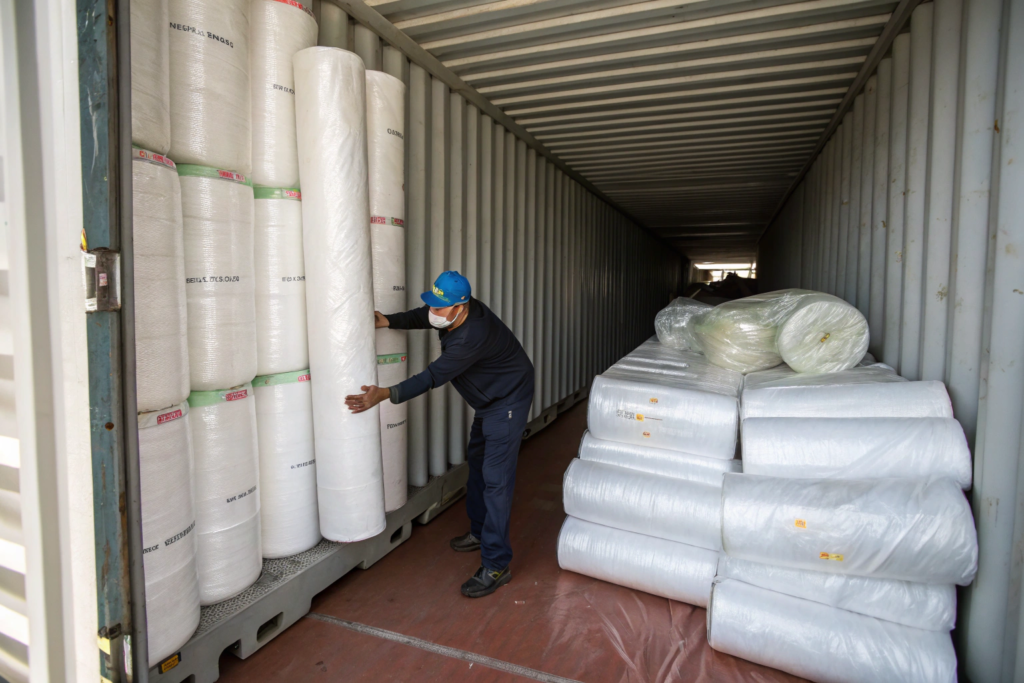
How can packing methods prevent moisture damage during ocean freight?
The biggest threat on a long sea voyage is "container rain." This happens when the temperature inside the container fluctuates, causing condensation to form on the ceiling and drip down onto your fabric. For natural fibers like cotton and linen, this moisture is a death sentence, leading to mildew and rot that can ruin entire rolls.
We combat this with a multi-layer defense. First, we always use desiccants—large bags of moisture-absorbing silica gel—placed strategically inside the container. For high-value organic cotton or bamboo fabrics destined for humid climates like Florida or Texas, we also insist on vapor barrier bags. Each roll is sealed in a heavy-duty plastic bag with its own small desiccant pack inside. For a detailed guide on how different desiccant types work for ocean freight, this resource from a logistics supplier is very helpful. In 2023, a shipment to a buyer in Hamburg got held up for 3 extra weeks at port. Because we had used full vapor barrier packaging, the linen fabric arrived without a single spot of mildew. The client told us that decision saved them over $15,000 in potential losses.
What causes "crush" damage in fabric rolls during shipping?
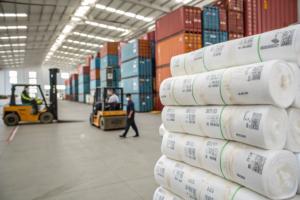
It's physics. Fabric rolls are heavy, often 30-50 kg each. When they're stacked 5 or 6 high in a container, the rolls at the bottom bear an enormous amount of weight. If the rolls aren't packed perfectly, or if the cardboard tubes inside them are too weak, the bottom rolls will crush. This creates permanent distortions in the fabric, often called "hard creases" or "pressure marks," that are impossible to remove during cutting.
We learned this lesson the hard way a few years back with a shipment to a client in Toronto. The fabric was a beautiful, delicate viscose velvet. By the time it arrived, the bottom rolls were crushed, and over 30% was unusable. Since then, we've changed our rules. For delicate fabrics, we now use extra-heavy wall tubes (3mm thickness) and we strictly limit stacking height in the container to 4 rolls. We also use inflatable dunnage bags to brace the load and prevent shifting during rough seas. A good explanation of how to calculate proper stacking weight limits for textiles can be found on the Freightos blog. We now include this as a standard step in our packaging SOP.
Can fumigation for wooden pallets affect my fabric?
Yes, absolutely. This is a hidden quality risk many buyers don't think about. If your fabric is shipped on wooden pallets (which is common for LCL or less-than-container-load shipments), those pallets must be heat-treated or fumigated with methyl bromide to comply with ISPM 15 international standards. If the fumigation chemicals are still present on the wood when your fabric is packed, or if the fumigation tent is too close to the fabric rolls, those chemicals can transfer. This can cause discoloration, strange odors, and even chemical degradation of certain synthetic fibers.
We strictly separate the fumigation process. We never allow fumigation of pallets while they are in the same warehouse as open fabric rolls. We also offer clients the option of using fumigation-free plywood pallets or plastic pallets for an extra layer of safety. For a US brand importing children's wear, this is non-negotiable due to strict chemical safety regulations. You can learn more about ISPM 15 standards and how to request compliant packaging on the official IPPC website. We always ask our shipping partners for a fumigation certificate to ensure the process was done correctly and well before our goods are packed, protecting your fabric from chemical exposure.
How do US tariffs and trade costs affect my ability to get consistent fabric quality?
You're looking at the landed cost: fabric price + shipping + tariff. It's a lot. So, to save money, you might be tempted to squeeze your supplier on the price per yard. "Can you do it for $0.10 less?" you ask. The supplier, wanting to keep your business, says yes. But here's what happens next: to make that $0.10 work, the factory might switch to a cheaper dye, reduce the amount of finishing chemicals (making the fabric stiffer), or use a lighter-weight yarn. Suddenly, that cost-saving measure has completely destroyed the quality of the fabric. You saved pennies on the yard but lost dollars on unusable goods and angry customers.
We take a different view at Shanghai Fumao. We believe that navigating trade costs shouldn't mean compromising on the product. Our integrated model—where we control weaving, dyeing, and finishing—allows us to find efficiencies that don't touch the quality. We can shave costs by optimizing logistics, not by cheapening the raw materials. The key is to focus on the total value and the security of the transaction, not just the initial price tag.
Can you guarantee quality even if I need to declare a lower value to save on tariffs?
I have to be direct with you: We will not help you with illegal activity like falsifying invoices for a lower customs declaration. That's fraud, and it puts your entire business at risk of massive fines and seizure of goods. But there are legal ways to manage the cost. For example, we can be transparent about the breakdown of your product's value. The fabric itself might be worth X, but the research and development cost for a custom finish is a separate service.
By itemizing these on the commercial invoice, you can sometimes clarify the transaction for US Customs. More importantly, many of our US clients are leveraging the de minimis provision for smaller shipments or exploring opportunities under the USMCA by having certain value-added processes done in Mexico with our fabric. A great resource for understanding these legal pathways to optimize textile sourcing costs is the Trade Risk Guaranty blog. We always recommend you work with a licensed customs broker who can advise you on the legal structure of your import declaration. We're happy to provide any legitimate documentation they need.
How does paying by letter of credit (L/C) versus TT affect my quality leverage?
This is a powerful tool you might be overlooking. When you pay by Telegraphic Transfer (TT), especially with a large deposit (like 30% upfront), you're handing over a lot of leverage. If the quality is bad, your supplier already has your money. Getting it back is a nightmare. A Letter of Credit (L/C), however, puts the power in your hands. The bank only pays the factory when you present documents that prove the shipment meets the terms of the L/C.
And you can put quality terms in the L/C. For instance, you can require a "Clean Report of Findings" from a third-party inspection company like SGS or Bureau Veritas, stating the goods meet your quality standards, as a condition of payment. This aligns the factory's interests perfectly with yours: they only get paid if the quality is right. We actually encourage this for new clients. It builds trust. In 2023, a large Danish furniture maker used an L/C for their first order of heavy linen from us. It required a pre-shipment inspection by QIMA. Passing that inspection was our goal, and we did. Now, they pay us by TT because we've proven our quality. For a deeper look at how to structure these L/C clauses for quality control, check out this guide from the International Chamber of Commerce.
What is a "China Plus One" strategy and how can it protect my quality from tariffs?
You've probably heard this term a lot. It means sourcing from China, but also having a backup or alternative source in another country, like Vietnam or Bangladesh, to mitigate tariff risks. The challenge with this is that quality consistency across different countries is incredibly hard to maintain. You might get great greige goods from China, but poor dyeing in Vietnam.
We offer a solution to this by acting as your hub. We can supply our high-quality greige (unfinished) fabric from our weaving factory in Keqiao to your nominated garment factory in Vietnam or Cambodia. The fabric quality is consistent because it comes from our controlled looms. Then, the finishing, cutting, and sewing happen in the lower-tariff country. This gives you the best of both worlds: our known quality and better tariff treatment. A US-based workwear brand used this exact model last year. They faced 25% tariffs on finished Chinese imports. By shipping our fabric to their partner factory in Vietnam for garment assembly, they cut their tariff bill by nearly 70% while keeping the fabric quality their customers expected. For more insights on this strategy, this analysis by McKinsey on supply chain resilience is very insightful.
Conclusion
Look, ensuring your fabric quality matches the sample isn't about luck or finding a supplier who just "gets it." It's a process. It’s about understanding the hidden variables that can destroy your product—the crush of a shipping container, the rush of a holiday schedule, the compromise of a cost-cutting measure. It’s about replacing hope with data from a lab, and trust with verification through third-party inspections and smart payment terms like Letters of Credit. The real cost of bad fabric isn't just the price you paid for it; it's the lost sales, the damaged brand reputation, and the frustrated customers who return a garment that fell apart after one wash.
This is exactly why we built Shanghai Fumao the way we did. We didn't want to be just another fabric trader. We wanted to be a partner who could control the entire journey—from the yarn and the dye to the packing and the port. Our CNAS-accredited lab, our in-house QC team, and our decades of experience navigating China's production cycles and global logistics are all tools we use for one purpose: to deliver fabric that is exactly what you approved, every single time. We understand the pressure you're under to get it right, and we've built our systems to relieve that pressure.
So, if you're tired of the gamble, if you're looking for a partner who can offer both the quality you need and the logistical and financial security you deserve, let's talk. I invite you to reach out to our Business Director, Elaine, directly. She can walk you through how we can apply our end-to-end quality control system to your next collection. Whether you're a startup needing 500 yards or a major brand ordering 50,000, the process is the same: built on precision, transparency, and a shared goal of making your product a success. Contact Elaine at elaine@fumaoclothing.com to start a conversation about your next project. Let's build something great together, without the quality headaches.