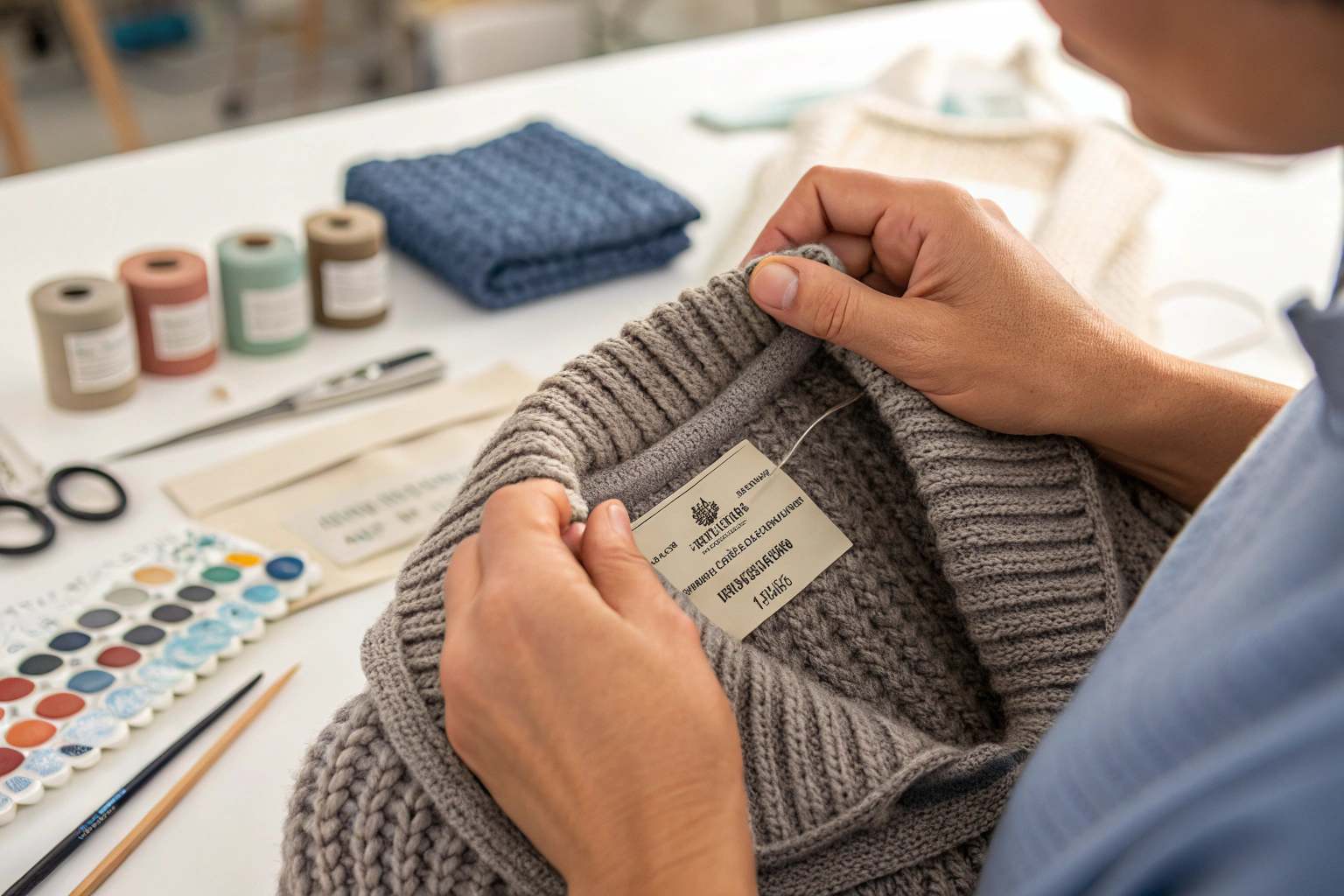
You spend months perfecting your knitted garment line. You source the softest organic cotton jersey, you nail the perfect fit with your pattern maker, you choose the exact shade of heather grey that matches your brand aesthetic. Then you ship it, and it lands on a retail shelf. And you know what? It looks like every other garment on that rack. How does a customer know it's yours? How do they remember your name after they take it home?
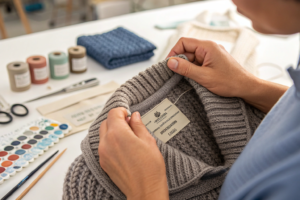
Custom logo labels are the finishing touch that transforms a well-made knitted garment into a recognizable brand asset. They are not just a tag; they are your signature, your quality mark, and your most cost-effective marketing tool. A custom label on a knitted sweater or a cotton jersey tee tells the customer that this piece was made with intention, and it creates the emotional connection that drives repeat purchases. In an industry where margins are thin, a simple label can be the difference between a one-time sale and a loyal brand advocate.
I’ve been in the textile business for over 20 years, and I’ve seen too many brands—especially startups and small designers—overlook this detail. They pour their budget into the fabric and the cut, and then they slap on a cheap, papery label that falls apart after three washes. That’s a missed opportunity. Let me walk you through why custom labels matter, what options work best for knitwear, and how we at Shanghai Fumao help our clients get this right, every single time.
Why Custom Labels Matter for Knitted Garment Branding?
I remember a conversation with a buyer from a Los Angeles-based streetwear brand in 2023. They had just received their first bulk order of knitted hoodies. The fabric was perfect—a premium 320gsm cotton fleece. The embroidery on the chest was sharp. But when I asked about the neck label, they shrugged. "Oh, we just got some generic woven tags from a local printer." I asked them to show me one. It was thin, the logo was blurry, and the edge was already fraying. They didn’t realize they were about to ship 5,000 hoodies with a label that screamed "cheap."
Custom labels serve three critical functions for your knitted garment line. First, they establish brand recognition—every time a customer sees your label, they connect it to the quality experience they had with your garment. Second, they communicate value—a premium, well-stitched label signals that the entire garment was made with care. Third, they provide essential care information that protects your customer and your garment. In our experience with clients from the US and Europe, brands that invest in custom labels see a measurable increase in customer retention and word-of-mouth referrals.
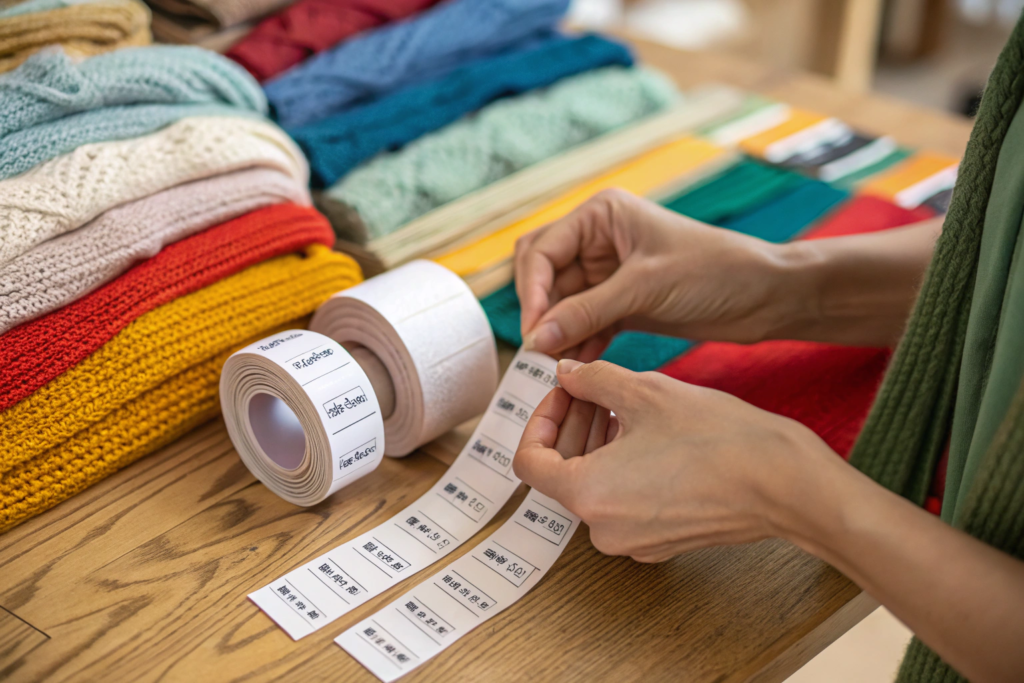
What Types of Custom Labels Work Best on Knit Fabrics?
This is a question I get from almost every new client. Knitted fabrics are stretchy, soft, and often used for garments that sit directly against the skin. You can’t just use any label. A stiff, scratchy label will ruin the comfort of your finest merino wool sweater.
We offer several options, and the choice depends on your garment type, budget, and brand image:
| Label Type | Best For | Pros | Cons |
|---|---|---|---|
| Woven Labels | High-end sweaters, polos, jackets | Durable, premium feel, sharp detail, colorfast | Higher cost, longer lead time |
| Printed Satin Labels | T-shirts, lightweight knits, baby wear | Soft, silky feel, affordable, quick turnaround | Less durable than woven, can fray if edges aren't finished |
| Heat Transfer Labels | Activewear, seamless garments | No stitching required, comfortable against skin, waterproof | Less "premium" feel, can peel over time |
| Leather/PU Patches | Denim jackets, heavy knit cardigans | Premium, rustic aesthetic, very durable | Stiff, not suitable for lightweight knits |
For a knitted garment line, I usually recommend woven labels for outerwear and heavier knits, and printed satin labels or heat transfers for lightweight jersey and base layers. In 2024, we helped a sustainable babywear brand from the UK choose a 100% organic cotton printed satin label for their line of bamboo-knit onesies. The label was so soft we could sew it directly into the side seam without any irritation concerns. The client told us their customer reviews specifically mentioned the "super soft tag that doesn't scratch the baby." That’s the kind of feedback that builds a brand.
How Do You Choose the Right Label Material for Durability?
Durability is everything. A label that fades, frays, or falls off after a few washes makes your entire brand look bad. I’ve seen it happen. A client from Texas sent us a sample of a competitor's label that had completely disintegrated after three cycles in a washing machine. The brand name was unreadable. The customer was furious.
So, how do we prevent that? We start with material selection. For woven labels, we use high-tenacity polyester threads that are colorfast and shrink-resistant. For satin labels, we use a double-faced weave that prevents fraying, and we finish the edges with a hot knife cut rather than a standard blade. That melts the edges slightly, sealing them against unraveling.
We also test everything. Our CNAS-accredited lab runs wash tests on every new label design before we approve it for bulk production. For a client in Sweden who needed labels for their heavy-knit wool sweaters, we ran a 10-cycle industrial wash test. The label came out looking brand new. The client now uses that test result as a selling point in their product descriptions. You can learn more about label durability standards and testing protocols for garment accessories to understand what you should be demanding from your supplier.
Can Custom Labels Help with Regulatory Compliance and Sizing?
Absolutely. And this is something many small brands overlook until they get a nasty letter from a retailer or a customs agent.
Your custom labels aren't just for your logo. They carry critical information: fiber content, country of origin, care instructions, and size. In the US, the Federal Trade Commission (FTC) has strict rules about textile labeling. If you're selling into the EU, the requirements are even more detailed. A missing or incorrect care label can get your shipment held at customs, costing you thousands in storage fees and missed deadlines.
We help our clients design labels that incorporate all this information without cluttering the design. For a US-based activewear brand we work with, we created a custom woven label that folds into a "booklet" style. The front flap has the brand logo. The inner flaps contain the size, fiber content (e.g., "92% Recycled Polyester, 8% Spandex"), and care icons. It’s clean, professional, and meets all FTC requirements.
We also maintain a database of the latest regulatory changes. For example, in 2025, California is rolling out new disclosure requirements for textiles containing certain chemicals. We’ve already started advising our clients to include QR codes on their labels that link to their product’s chemical compliance data. This proactive approach saves them from expensive recalls down the line. For a deeper dive into US and EU textile labeling regulations for fashion brands, you’ll find it’s a complex area best navigated with an experienced partner.
What Are the Lead Times and Production Planning for Custom Labels?
So, you’ve designed the perfect label. Now, you need it—and you need it yesterday. Your knitted garment production is waiting. I’ve been in the situation where a client calls, panicking, because their labels are delayed, and now 10,000 finished hoodies are sitting in a warehouse with nothing to sew in. That’s a nightmare scenario, and it’s completely avoidable.
Lead times for custom labels typically range from 10 to 25 days, depending on the complexity, material, and quantity. Woven labels require loom setup and color matching, which takes longer than printed satin labels. However, with advanced planning and a partner who understands the entire production chain, you can align your label production perfectly with your garment manufacturing schedule. We’ve developed a system where we often produce labels in parallel with fabric production, eliminating waiting time entirely.
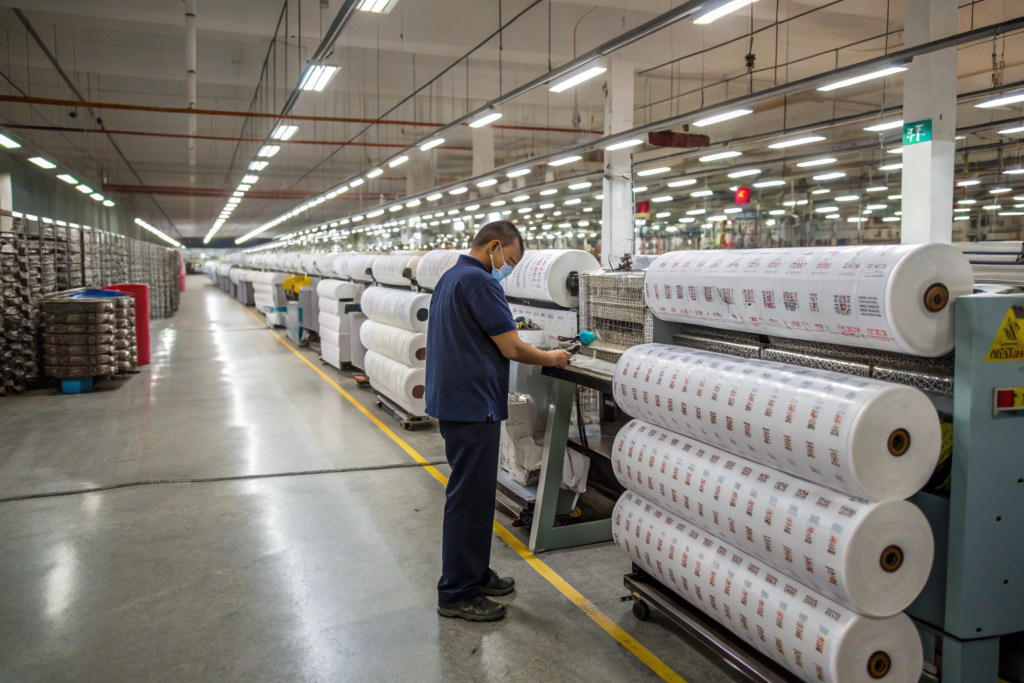
How Do We Sync Label Production with Knitted Garment Manufacturing?
This is where our integrated model really shines. We don’t just make labels in isolation. We’re a full-service textile company. We produce the knitted fabric, we coordinate with our dyeing partners, and we manage the trim and accessories—including your custom labels.
Here’s how we do it. When you place an order for a knitted garment line with us, we schedule everything on a master timeline. Let’s say you need 5,000 pieces of a custom rib-knit beanie. While the yarn is being spun and the fabric is being knitted, our label factory is already setting up the looms for your custom woven patch. The label production runs in parallel. By the time the fabric is cut and sewn, the labels are ready, inspected, and delivered to the sewing factory.
A perfect example is a client from Toronto who launched a line of cashmere-blend knitwear in late 2023. They needed custom satin labels with a foil-stamped logo. The foil stamping added an extra 5 days to the label production. We built that into the timeline from day one, so the labels arrived at the cut-and-sew facility exactly when the first garments came off the line. No waiting. No rush fees. The client told us it was the smoothest production run they’d ever experienced.
What Happens During Chinese Golden Week and Other Holidays?
This is a question I have to answer every single year. Chinese manufacturing has a rhythm. There’s the Chinese New Year shutdown (3-4 weeks) and the Golden Week holiday in October (1 week). If you don’t plan around these, your label order—and your entire garment production—will be delayed.
I always tell my clients: if you need labels delivered in September, we need to start production in August. For any order that needs to ship between mid-January and mid-February, we need to have the labels finished and in our warehouse by the first week of January. (Here’s a pro tip: we actually have a "holiday buffer" system. We over-produce a small percentage of our most popular label styles during slow periods so we can fulfill emergency orders even when the factory is technically closed.)
In 2024, a US-based streetwear brand ignored our planning advice. They placed an order for custom leather patches for their knit hoodies on January 10th. Chinese New Year started on February 1st. They missed the window. The patches didn’t ship until late February. Their entire spring collection launched six weeks late. They lost shelf space at two major retailers. They now plan all their label orders six months in advance. For a more detailed look at how to plan your sourcing calendar around Chinese holidays, I highly recommend setting up a recurring reminder in your calendar.
How Can Small Brands and Startups Afford Custom Labels?
I hear this all the time. “I’m just starting out. I can’t afford custom labels. I’ll just use generic tags for now.” I understand the budget pressure. I really do. But let me tell you a story. A young designer from Brooklyn came to us in 2022 with a small line of organic cotton knit tees. She had a tiny budget. We convinced her to invest in a simple, high-quality satin woven label. It cost her an extra $0.15 per garment. Her tees retailed for $48. That $0.15 label was the difference between looking like a mass-market product and looking like a designer piece. She sold out her first collection in three weeks.
Small brands can absolutely afford custom labels by starting with simpler designs, smaller minimum order quantities, and leveraging suppliers who understand startup needs. The cost per label for a basic woven or printed satin label can be as low as $0.08 to $0.25 in quantities of 1,000 pieces. When you consider the perceived value and brand recognition it adds, it’s one of the most cost-effective investments you can make in your product.

What Are the Minimum Order Quantities for Custom Woven Labels?
This is the number one question from smaller clients. The good news is that the days of needing 10,000 labels to get a decent price are over.
At Shanghai Fumao, we’ve set up a streamlined process specifically for startups and small brands. Our minimum order quantity for custom woven labels starts at just 1,000 pieces. For printed satin labels, we can go as low as 500 pieces.
Now, the price per label will be higher at lower quantities. A basic woven label might cost $0.25 each at 1,000 pieces, but drops to $0.12 at 5,000 pieces. But for a brand doing their first or second production run, $250 for labels that will be used on 1,000 garments is a very reasonable marketing expense.
We worked with a vintage-inspired knitwear brand from Nashville in 2024. They needed only 800 custom leather-look woven patches for their sweater collection. We set up a smaller loom run, adjusted our process, and delivered the patches at a price that fit their budget. The owner told us, “I almost didn’t do custom labels because I thought it was out of reach. Now I can’t imagine selling a sweater without my name on it.” If you want to understand how to negotiate MOQs with Chinese label manufacturers for small runs, the key is finding a supplier who values long-term partnerships over short-term volume.
How Can You Balance Quality and Cost for Label Production?
Balancing quality and cost is an art. You don’t want to over-engineer a label for a basic t-shirt, but you also don’t want to cheap out on the one element that carries your brand name.
Here’s my practical advice, based on 20 years of experience:
- Match the label to the garment. A heavy, damask-woven label looks amazing on a $200 cashmere sweater, but it’s overkill on a $25 jersey tee. For mid-range knits, a good quality printed satin label is perfect.
- Simplify your design. Every color in your label requires a separate thread or ink pass. If you have a 5-color logo, you’re paying more than for a 2-color design. Can you simplify your label to use your brand’s primary color and a neutral?
- Choose your finishing wisely. A folded label (where the edges are folded under) costs more than a cut label but looks much more premium and lasts longer. For a garment that will be washed frequently, the extra cost is worth it.
- Order in bulk for your core styles. If you have a signature line that you reorder season after season, place a larger label order once a year. You’ll get better pricing and you won’t have to worry about reordering during peak production season.
We had a client from Australia who was producing a line of merino wool base layers. They wanted a premium woven label but were on a tight budget. We suggested a damask weave with just two colors (black and white) and a folded finish. The result was a label that looked like it cost twice what they paid. They now use that same label design across their entire product range.
Conclusion
Custom logo labels are the detail that separates a garment from a brand. They’re the final stitch that tells your customer, “This was made for you, with care.” In my two decades in this industry, I’ve seen countless brands try to save a few cents by skipping this step, and I’ve watched them regret it when their products blend into the sea of unbranded competitors on a retail rack.
The truth is, your knitted garment line deserves a label that reflects the quality of the fabric, the precision of the cut, and the passion you poured into the design. Whether you need a soft satin label for a baby onesie, a durable woven label for a hoodie, or a premium leather patch for a knit cardigan, getting it right matters.
And this is exactly what we do at Shanghai Fumao. We don’t just provide fabrics. We provide the complete package. From the yarn to the finished garment, including the custom labels that make it yours. We understand the nuances of working with knitted fabrics. We know how to schedule production around Chinese holidays to avoid delays. We have the relationships with specialized label factories to ensure your small order gets the same attention as a large one. And we have the in-house testing to guarantee your labels will survive the wash and wear that your customers expect.
We’ve helped brands from Los Angeles to London, from startups launching their first collection to established names expanding their lines. We’ve solved problems—like preventing satin labels from fraying on stretch fabrics—that our clients didn’t even know they had.
Now, I want to invite you to take the next step. Stop treating your labels as an afterthought. Make them a priority. Let’s work together to create custom labels that elevate your knitted garment line and build a brand your customers will remember and trust.
Reach out to our Business Director, Elaine, directly at elaine@fumaoclothing.com. Send her your label design, your garment specifications, and your target timeline. She’ll personally guide you through the options, provide samples, and create a production plan that fits your budget and schedule. Let’s make your next collection unforgettable.