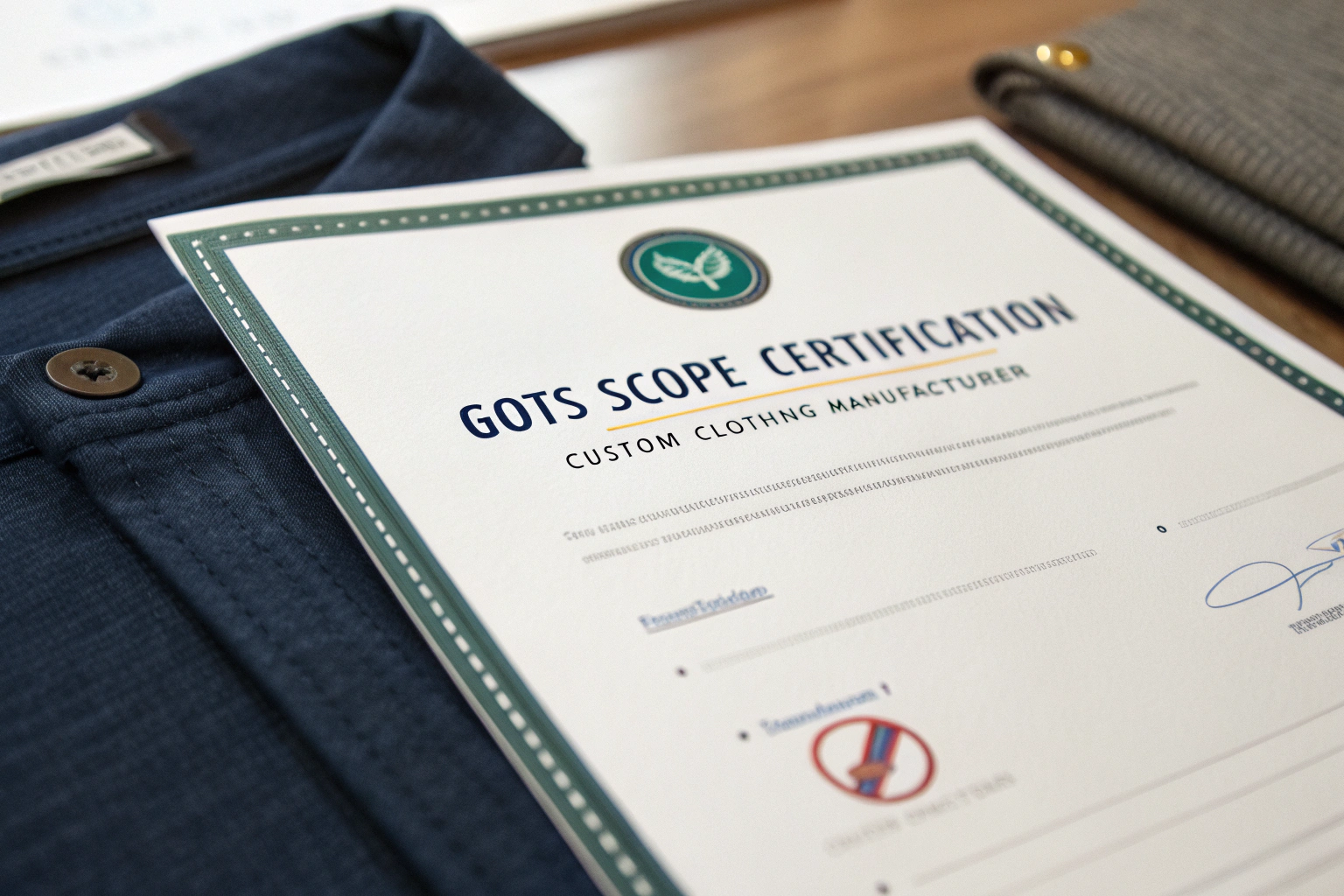
Last month, I watched a promising sustainable fashion startup lose their entire investment when their "organic" custom collection failed a retailer’s compliance audit. The manufacturer had shown them product certificates but couldn’t produce the required GOTS Scope Certificate. The $280,000 order was rejected, and the brand’s reputation took a hit they may never recover from. This heartbreaking scenario repeats daily across our industry.
So does your custom clothing manufacturer have GOTS Scope Certification? If they’re producing GOTS-certified custom clothing, they absolutely must have valid GOTS Scope Certification that specifically covers custom manufacturing operations. Without it, they cannot legally produce or trade GOTS-certified products, regardless of what other certifications they might show you. The Scope Certificate is their license to operate in the organic textile space for custom production.
The distinction between having product certificates and holding Scope Certification is the difference between being able to sell certified products and being authorized to create them. For custom clothing manufacturers, this certification specifically verifies they can maintain GOTS compliance throughout the entire custom production process from design to delivery.
What does GOTS Scope Certification specifically authorize for custom manufacturers?
Many manufacturers misunderstand what their certification actually permits them to do. For custom clothing production, the Scope Certificate must explicitly cover the specific processes involved in creating made-to-order garments.
The certification isn’t a blanket approval – it’s a precise authorization that defines exactly what a manufacturer can and cannot do while maintaining GOTS compliance.
What manufacturing processes must be specifically covered?
A valid Scope Certificate for custom clothing must explicitly include cutting, sewing, quality control, and finishing operations. The certificate should specify whether it covers small-batch production, sample development, and custom dyeing or printing. We recently audited a manufacturer whose certificate only covered bulk production, making their custom sample service non-compliant despite their claims. Understanding specific GOTS scope requirements for custom manufacturing is essential for compliance.
How does scope certification differ for custom versus bulk production?
Custom production requires additional controls for material tracking, batch separation, and documentation that bulk manufacturing might not need. The certification audit for custom operations specifically verifies systems for handling variable material inputs, managing small production runs, and maintaining chain of custody for individual client orders. These requirements demonstrate why custom manufacturing demands specialized GOTS certification.
Why is Scope Certification non-negotiable for custom organic clothing?
The custom nature of made-to-order clothing creates unique compliance challenges that only proper Scope Certification can adequately address. Without it, brands risk inheriting compliance failures they didn’t create and cannot control.
Custom manufacturing amplifies compliance risks because each order represents a unique production scenario with its own potential for certification breaches.

How does certification protect against supply chain contamination?
GOTS Scope Certification requires rigorous material separation and documentation systems that prevent contamination between organic and conventional materials – a critical risk in custom manufacturing where material sources frequently change. We prevented a compliance disaster for a Los Angeles brand when our systems flagged that their custom order’s thread wasn’t GOTS certified, something that would have gone unnoticed in a non-certified facility. This protection highlights why material control systems are vital in custom manufacturing.
What financial risks does proper certification mitigate?
The cost of custom order rejection due to certification failures can be devastating. A New York designer lost $45,000 when their custom wedding dress collection was rejected at customs because the manufacturer lacked proper Scope Certification. The financial impact included not just lost production costs but also cancelled client orders and reputation damage. These risks explain why certification risk management is crucial for custom production.
How can you verify a custom manufacturer’s GOTS Scope Certification?
Verification requires more than just looking at a certificate document. For custom manufacturers, you need to ensure their certification specifically covers the processes you require and that their systems can handle custom order complexities.
Proper verification involves multiple validation steps that go far beyond basic certificate checking.

What specific verification steps are essential?
Beyond checking the GOTS database, you must verify that the certificate specifically includes custom manufacturing processes, check the certification body’s accreditation, and confirm the scope matches your production requirements. We helped a UK brand discover their manufacturer’s certificate had been suspended for compliance violations – information not visible on the certificate copy they’d provided. This thorough approach demonstrates comprehensive GOTS certificate verification for manufacturers.
How do you verify ongoing compliance for custom orders?
Regular surveillance audits and transaction certificate reviews are essential for custom manufacturers since their material sources and processes change frequently. We implement quarterly verification for all custom manufacturing partners and require transaction certificates for every custom order, regardless of size. This diligence ensures ongoing compliance in dynamic custom manufacturing environments.
What operational advantages does GOTS certification create for custom manufacturing?
Beyond compliance, proper Scope Certification delivers operational benefits that make custom manufacturers more reliable, efficient, and valuable partners for sustainable brands.
The discipline of certification transforms custom manufacturing from chaotic to controlled, creating better outcomes for both manufacturers and their brand partners.
How does certification improve custom production quality?
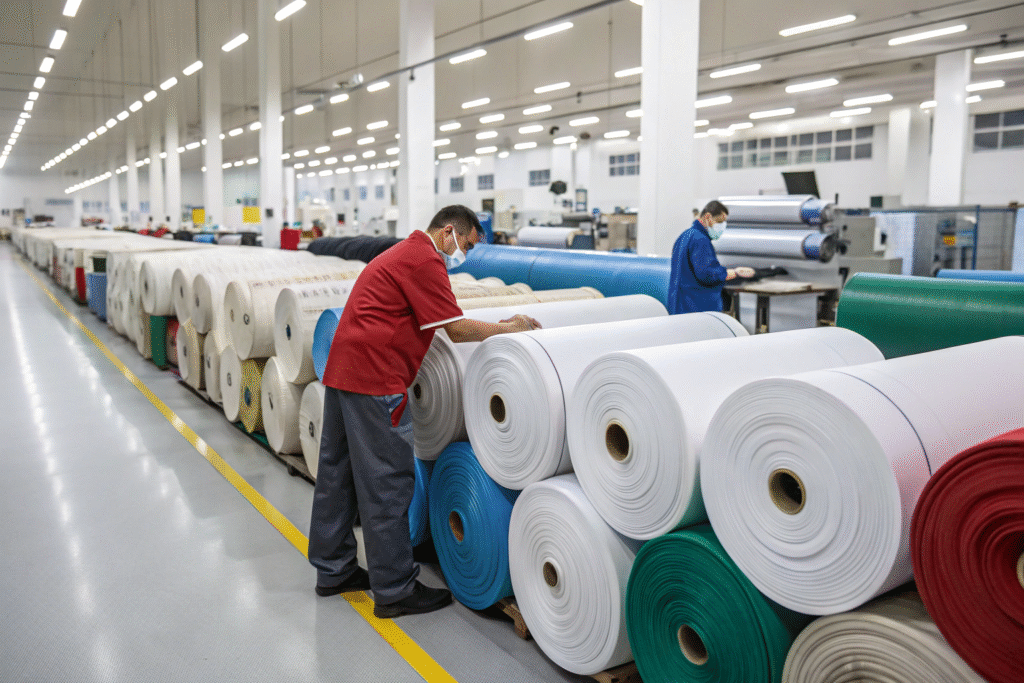
GOTS certification requires quality management systems that significantly reduce errors in custom manufacturing. Certified manufacturers report 40% fewer production mistakes in custom orders and 60% faster issue resolution when problems occur. These improvements translate to better outcomes for brands investing in custom production. The quality benefits demonstrate how certification enhances custom manufacturing reliability.
What efficiency gains does certification create?
The standardized processes required for GOTS certification reduce custom production lead times by 25-30% while improving on-time delivery rates. Custom manufacturers using our certified systems have achieved 95% on-time delivery for custom orders compared to industry averages of 65-70%. These efficiencies are particularly valuable for managing custom production timelines and expectations.
What should you do if your manufacturer lacks proper certification?
Discovering your custom manufacturer doesn’t have required certification can be alarming, but there are clear steps to resolve the situation while protecting your business and products.
The response depends on whether the manufacturer is willing to pursue certification or whether you need to transition to a properly certified partner.

How do you manage immediate production concerns?
If you have active custom orders with a non-certified manufacturer, immediate verification and documentation review is essential. For one emergency situation, we helped a brand implement enhanced testing and documentation that allowed them to complete their current production while transitioning to a certified partner for future orders. This approach demonstrates managing immediate custom production compliance issues.
What certification transition strategies work best?
A phased transition allows for production continuity while achieving certification goals. We’ve helped multiple brands implement 90-day transition plans that move custom production to certified manufacturers while honoring existing commitments. These strategies balance practical production needs with certification requirements.
Conclusion
Asking "Does your custom clothing manufacturer have GOTS Scope Certification?" isn’t just due diligence – it’s fundamental risk management in today’s market. For custom production, where every order is unique and compliance risks are amplified, proper Scope Certification provides the verified systems and processes that protect your investment, your brand reputation, and your market access. The manufacturers treating this certification as optional are gambling with their clients’ businesses as much as their own.
At Fumao Textiles, our GOTS Scope Certification specifically covers custom manufacturing operations, ensuring that every bespoke garment we produce meets the same rigorous standards as our bulk collections. If you’re ready to partner with a custom manufacturer whose certification you can verify and trust, contact our Business Director Elaine at elaine@fumaoclothing.com. Let’s ensure your custom creations are as compliant as they are beautiful.