You've approved the final samples, production is complete, and your goods are ready to ship. But what happens when your shipment gets held at customs because of incorrect paperwork? Or your bank rejects payment due to document discrepancies? In global garment sourcing, proper export documentation isn't just bureaucratic paperwork—it's the lifeline of your supply chain. Missing or incorrect documents can cause costly delays, additional fines, or even result in your goods being confiscated. Many brands discover their manufacturer's documentation weaknesses only when it's too late, facing unexpected costs that erase their product margins.
Yes, a professional clothing manufacturer must have a complete suite of proper export documentation. This goes beyond basic commercial invoices to include legally mandated certificates, transport documents, and compliance papers that vary by destination country and product type. Proper documentation serves three critical functions: it ensures legal compliance for export/import, facilitates secure financial transactions (like Letters of Credit), and provides the audit trail necessary for quality claims and future orders. At Shanghai Fumao, we treat documentation not as an afterthought, but as an integral part of our production quality control system.
Think of export documents as your shipment's passport and visa system. Each document verifies a specific aspect of the journey—origin, value, content, safety, and financial terms. Without the correct stamps and information, your shipment gets "denied entry." The following breakdown will show you exactly which documents are non-negotiable, how to verify their authenticity, and why skipping due diligence here is one of the costliest mistakes an importer can make.
What Are the Mandatory Export Documents for Shipping from China?
Any legitimate shipment from China requires a core set of documents that satisfy customs authorities, carriers, and banks. Missing any of these will stop your shipment dead in its tracks.
The absolute essentials are:
-
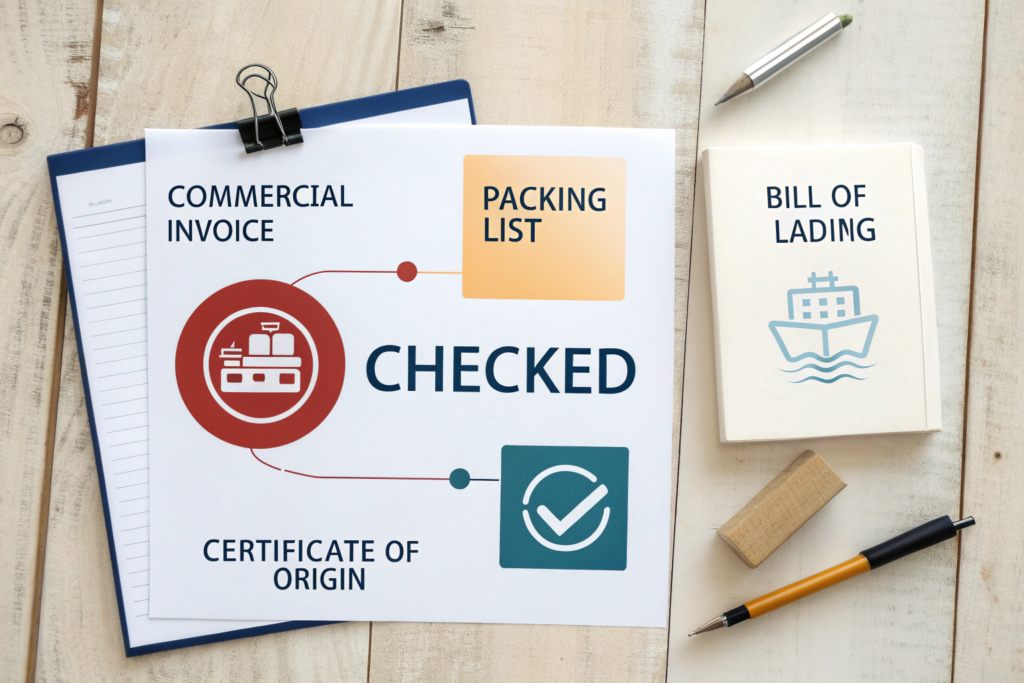
Commercial Invoice: This is the cornerstone document declaring the transaction value for customs. A proper invoice must include detailed product descriptions (matching the goods), HS codes, unit prices, total value, Incoterms (e.g., FOB Shanghai, CIF Los Angeles), and the full details of buyer and seller. It must be issued by the exporter (the manufacturer) on their official letterhead.
-
Packing List: This details exactly what is in each carton and container—styles, colors, sizes, quantities, carton dimensions, weights (net/gross), and total package count. It allows customs and your warehouse to verify contents quickly. Discrepancies between the invoice and packing list are a major red flag for inspections.
-
Bill of Lading (B/L) or Air Waybill (AWB): This is the contract of carriage and title document (for sea freight). The Master Bill of Lading is issued by the shipping line to the forwarder, and the House Bill of Lading is issued to the shipper (you/your manufacturer). It must perfectly match the details on the invoice and packing list. For DDP shipments we handle at Shanghai Fumao, we manage the entire process, ensuring the B/L accurately reflects the "Delivered Duty Paid" Incoterm.
-
Certificate of Origin (COO): This certifies where the goods were made. It's crucial for determining tariff rates. A General COO is often sufficient, but for preferential tariffs (like under USMCA or ASEAN-China FTA), a specific Form A or Form E Certificate of Origin is required. The manufacturer must obtain this from a local Chamber of Commerce or government agency. We guide our clients on which COO is optimal for their shipment's destination port clearance procedures.

How do you verify the authenticity of a Certificate of Origin?
A genuine COO will have a wet seal (or raised seal) and a signature from the issuing Chamber of Commerce. You can often verify the issuer's seal online. Be wary of digitally generated COOs without proper authorization. For high-value shipments, we recommend clients request that we process the COO through China Council for the Promotion of International Trade (CCPIT), the most authoritative issuer. Their unique anti-forgery markings and online verification system provide absolute certainty. In 2023, a client avoided a 12% penalty duty in a South American country because our CCPIT-issued COO was instantly verified by their customs, while a competitor's generic document was rejected.
What shipping documents are needed for Letters of Credit?
Letters of Credit (LCs) are strictly documentary transactions. Banks will reject payment if documents show any discrepancies. Beyond the standard set, an LC may require additional documents like:
- Inspection Certificate: From a pre-agreed third party (e.g., SGS, Intertek).
- Beneficiary's Certificate: A statement from the manufacturer confirming specific actions.
- Insurance Policy/Certificate (if CIF/CIP terms).
All documents must be presented within the LC's expiry date and precisely follow its wording (e.g., "Packing List in triplicate"). We maintain a dedicated trade compliance team that cross-checks every document against LC terms before submission, a service that has resulted in a 99.8% first-presentation success rate for our clients.
Why Are Compliance & Testing Certificates Non-Negotiable?
For modern apparel brands, especially in the US and EU, mandatory compliance certificates are as important as shipping documents. They are your legal license to sell in those markets and protect your brand from liability.
The most critical certificates include:
-
Oeko-Tex Standard 100: This certifies that textiles are free from harmful levels of regulated substances. For garments with skin contact, this is often a minimum requirement. The certificate is issued to the manufacturer for specific articles and is valid for one year. You must receive a valid Oeko-Tex certificate copy referencing your specific product article number.
-
CPSIA Compliance (USA): For children's apparel, the Consumer Product Safety Improvement Act requires strict testing for lead, phthalates, and flammability. Your manufacturer must provide a Children's Product Certificate (CPC) supported by test reports from a CPSC-accepted lab.
-
REACH / SDS (EU): EU's REACH regulation restricts chemicals. A manufacturer should provide a Safety Data Sheet (SDS) for fabrics and, for certain substances, a statement of compliance. For example, our azo-free dyeing certification for EU imports is a standard part of our documentation pack for European clients.
-
Proof of Ethical Manufacturing: While not always a legal mandate for import, brands are increasingly required to prove ethical sourcing. Documents like BSCI or SMETA audit reports from the factory are essential.
A manufacturer lacking these certificates isn't just unprofessional; they are exposing you to severe risk. Customs can detain shipments, and products can be recalled. Last year, a US brand faced a $250,000 recall when their supplier failed to provide valid CPSIA test reports for organic cotton children's pajamas, a mistake that could have been avoided with proper document verification.
How can you verify a testing certificate is genuine and current?
Always check the certificate's validity period, the certified product scope (does it list your exact item?), and the issuing laboratory's accreditation (e.g., ILAC, CNAS). Use the certificate number to verify it on the issuer's official website (e.g., the Oeko-Tex or SGS online database). A reputable manufacturer like Shanghai Fumao will provide direct links for verification. We invest in annual certifications for our core product ranges, and our clients can verify them in real-time via our secure portal, which details the differences between Oeko-Tex Class I, II, and III certifications.
What documents prove fabric composition and sustainability claims?
For claims like "100% Organic Cotton" or "50% Recycled Polyester," you need Transaction Certificates (TCs) from the relevant certification body (e.g., GOTS, GRS). These TCs are batch-specific and trace the certified material from source to final product. They should match the quantity in your shipment. A generic GOTS scope certificate from the factory is not enough; you need the TC for your order. This is the only way to substantiate marketing claims and comply with laws like the UK's Green Claims Code. We provide full GRS or GOTS Transaction Certificates as part of our standard documentation for sustainable orders.
How Does Inadequate Documentation Directly Impact Your Costs?
The financial impact of poor export documentation is often hidden until a crisis occurs. The costs go far beyond simple courier fees for resending papers.
Direct Financial Impacts Include:
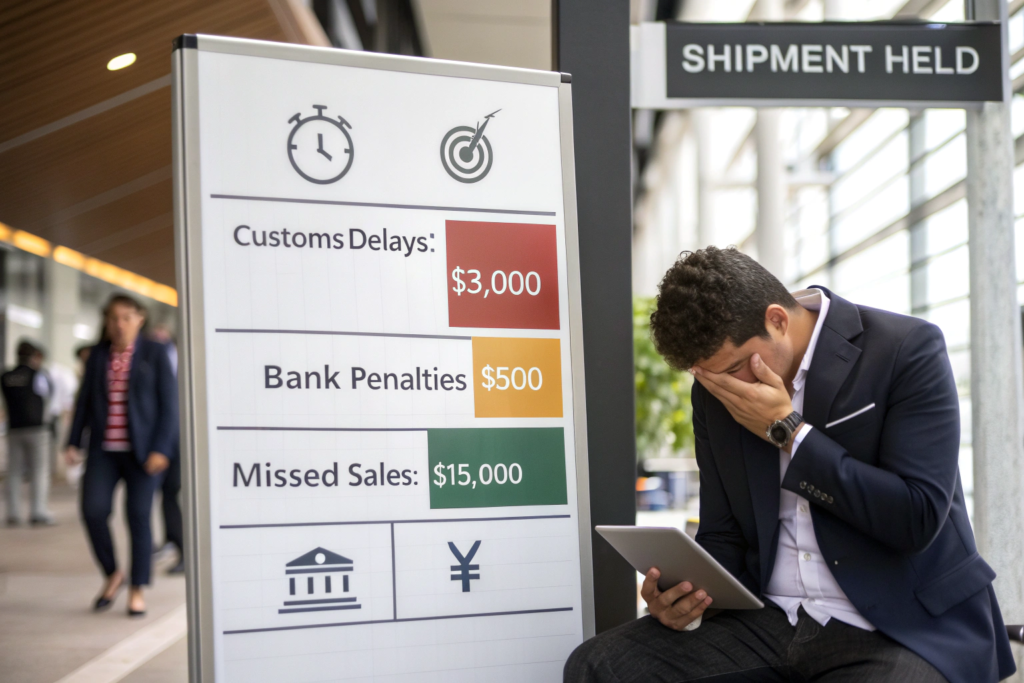
- Customs Demurrage & Storage Fees: If documents are incorrect, customs will hold the container. Daily demurrage charges at ports can range from $100-$300 per day. Storage fees add up quickly. A one-week delay can cost thousands.
- Bank Penalties & Delayed Payment: Under an LC, any discrepancy leads to rejection. Banks charge discrepancy fees ($50-$150), and payment is delayed until issues are resolved, hurting your cash flow.
- Re-export or Destruction Costs: If goods are non-compliant (e.g., fail safety standards) and lack the proper documentation to prove otherwise, authorities may order their re-export or destruction—at your expense.
- Lost Sales and Discounts: Delayed shipments miss delivery windows for seasonal sales, forcing you to sell at a discount or lose the sales entirely.
A Real Case from Our Files: In early 2024, a potential client came to us after a disaster with another supplier. They had ordered 5,000 units of down-filled jackets. The supplier's commercial invoice listed the filling simply as "down." EU customs requested a veterinary hygiene certificate to prove the down was not from banned sources. The supplier couldn't provide it. The shipment was held for 3 weeks, accruing over €8,000 in fees, before being rejected. The entire order was lost. Had the supplier prepared the proper export documents for animal by-products to the EU, this would have been avoided. We now include this specialized documentation as part of our service for down products.

Can poor documentation affect your import duty rates?
Absolutely. The Certificate of Origin directly determines whether you pay the standard Most Favored Nation (MFN) duty rate or a preferential (often zero) rate under a Free Trade Agreement. An incorrect or missing COO means you automatically pay the highest rate. Similarly, an inaccurate HS code on the invoice—a common error if the manufacturer is not experienced with your market—can lead to misclassification and higher duties, or even penalties for evasion. It's worth consulting a guide to HS code classification for textiles to understand the stakes.
How does documentation link to cargo insurance claims?
To file a successful insurance claim for damaged or lost goods, you must prove the value and condition of what was shipped. The core evidence is the Commercial Invoice (for value) and the Bill of Lading (clean vs. claused). If the B/L is marked "packaging torn" or "cartons wet," the insurer may argue the damage occurred pre-shipment and deny the claim. A professional manufacturer ensures a "clean" B/L is issued, meaning the carrier received the goods in apparent good order. This is a fundamental aspect of managing risk in international textile logistics.
What Are the Red Flags of a Manufacturer with Weak Documentation?
Spotting a manufacturer who will cause documentation headaches early can save your project. Here are key warning signs:
Red Flag 1: Vagueness and Reluctance. When asked for specific certificates or document samples, they respond with "Don't worry, we can provide" or "It's standard." A professional manufacturer will immediately send you templates or previous examples (with sensitive data redacted).
Red Flag 2: Inconsistent Information. The company name or address on their Business License doesn't match their email signature, website, or invoices. This suggests a complex (and risky) trading company setup, not a direct factory.
Red Flag 3: No Dedicated Logistics/Compliance Staff. Documentation is handled by the salesperson as a side task. This almost guarantees errors. Ask, "Who is your export documentation manager?" A legitimate factory has a dedicated team.
Red Flag 4: Inability to Explain Incoterms or HS Codes. If they can't explain the responsibilities under FOB vs. EXW, or suggest an incorrect HS code for your product, they lack fundamental export knowledge.
Red Flag 5: No Digital Document Management. They send poorly scanned, blurry documents via WeChat/email instead of using a secure portal or professional system. This hints at a disorganized back office.
We encountered a client who showed us emails from a previous supplier where the salesperson misspelled the client's company name on three different document drafts—a small but telling sign of carelessness that foreshadowed bigger B/L errors later.
What questions should you ask to vet their documentation process?
Ask these directly:
- "Can you walk me through your document preparation and checking process for a typical shipment?"
- "For a [specific certificate, e.g., GOTS TC], how long does it take you to obtain it, and what information do you need from me?"
- "What is your procedure if a customer's shipment is held by customs due to a document issue?"
Their answers will reveal their level of systemization. Our team at Shanghai Fumao has a ready presentation on our 8-point document check system, which we share with serious clients to build confidence.
How can you audit a manufacturer's documentation before your first order?
Request a Documentation Package Sample. Ask them to provide redacted copies of a complete document set from a recent, similar shipment to your target market. Review it for completeness, accuracy, and professionalism. Check if the COO is chamber-stamped, if test reports are valid, and if all data aligns. This is the most effective due diligence. Many resources online, like checklists for auditing an overseas garment factory, include a thorough documentation review section.
Conclusion
Proper export documentation from your clothing manufacturer is not a minor administrative detail; it is a critical indicator of their professionalism, operational maturity, and commitment to a seamless supply chain. It is the system that ensures your goods move legally, safely, and efficiently from their factory to your market. Overlooking this aspect is akin to building a beautiful house on a foundation of sand—it may look good initially, but the first storm will reveal the fatal weakness.
A manufacturer that excels in documentation, like Shanghai Fumao, demonstrates control over the entire process, from material certification to final shipping instructions. This control translates directly into fewer delays, lower unforeseen costs, and greater peace of mind for you. In today's complex regulatory and logistical environment, robust documentation is a competitive advantage that protects your investment, your timeline, and your brand reputation.
Don't let documentation be the weakest link in your supply chain. Partner with a manufacturer who understands that the paperwork is part of the product. To see examples of our comprehensive, audit-ready export documentation packs and to discuss how our systematic approach can safeguard your next shipment, contact our Business Director, Elaine. Let us show you the difference that professional execution makes, from stitch to signature. Reach Elaine at: elaine@fumaoclothing.com.