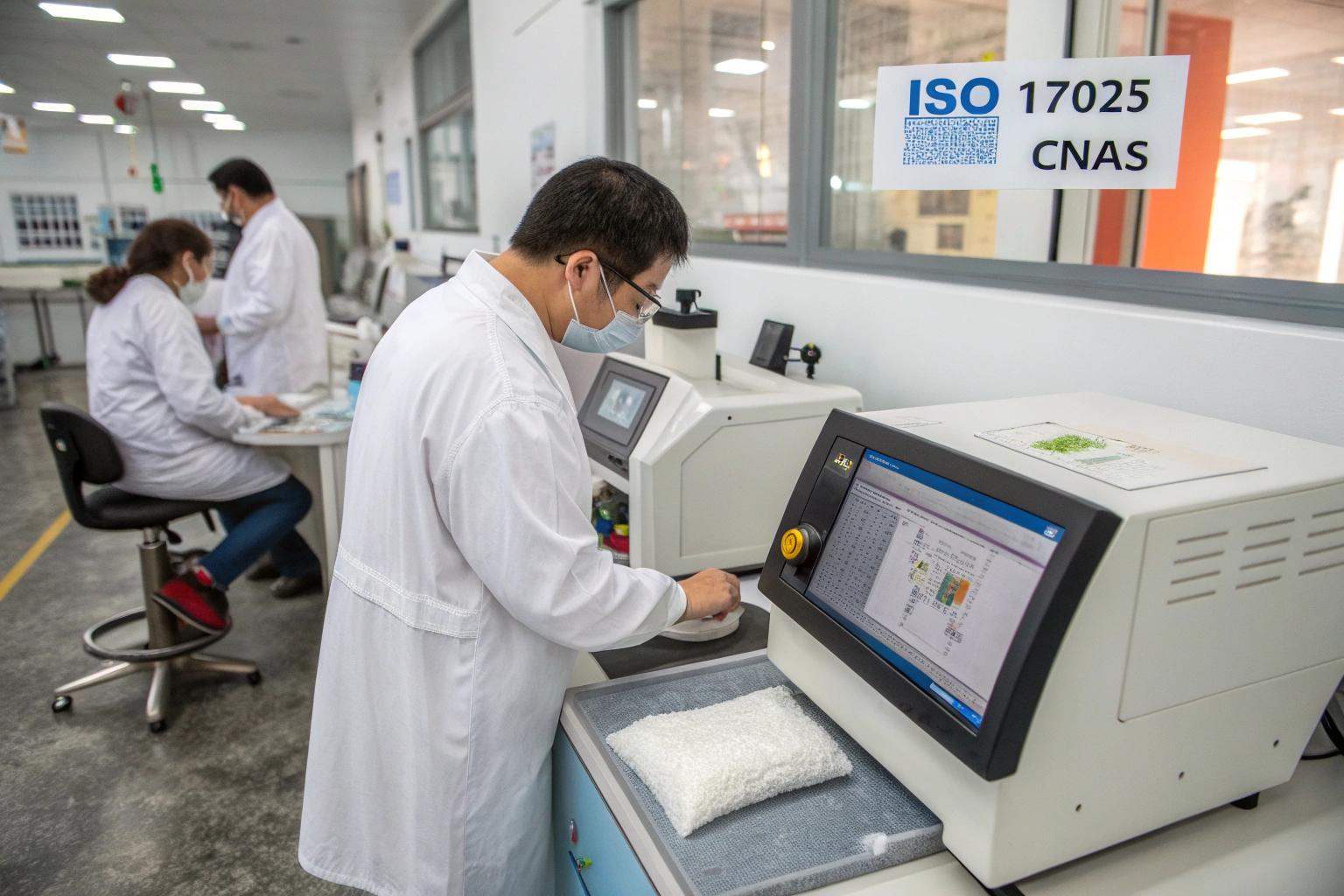
Let's address the elephant in the room head-on: the stereotype that "Made in China" means low quality, and that "organic from China" is an oxymoron. This is not just outdated; it's dangerously misleading. As someone who has sourced, tested, and shipped millions of meters of Chinese organic cotton to the world's most demanding markets, I can tell you this: The quality of organic cotton from China is not a matter of geography; it's a matter of supply chain selection. Yes, there is low-quality, uncertified cotton. But there is also world-class, OCS/GOTS-certified organic cotton that consistently outperforms conventional counterparts in rigorous international tests. The question isn't whether China can produce quality organic cotton—it's how to navigate the vast ecosystem to find the producers who do.
Organic cotton from China can not only meet but exceed international quality standards, provided it is sourced from vertically-integrated, certified manufacturers who implement rigorous testing protocols aligned with global norms (such as ISO, AATCC, OEKO-TEX). The determining factors are the specific cotton cultivar (e.g., Xinjiang long-staple), the technological sophistication of the spinning and weaving processes, and the integrity of the certification system that guarantees both organic and quality parameters.
Forget the blanket statements. Let's examine the empirical evidence—the test reports, the fiber data, and the performance metrics—that separate commodity-grade from world-class Chinese organic cotton.
The Fiber Foundation: Genetics and Agriculture
Quality starts in the field. The misconception is that all Chinese cotton is the same. It's not. China grows different varieties, and the regions matter immensely. Xinjiang is a major producer, known for its long-staple and extra-long-staple cotton varieties, which are genetically capable of producing high-strength, fine yarns. The quality potential here is intrinsically high.
The "organic" designation, verified by OCS or GOTS, adds a crucial layer: it mandates farming without synthetic pesticides and GMOs. This often results in healthier soil and, over time, can lead to more resilient fiber growth. However, organic farming alone doesn't guarantee superior yarn quality; it must be paired with superior cotton genetics and careful harvesting and ginning to prevent fiber damage.
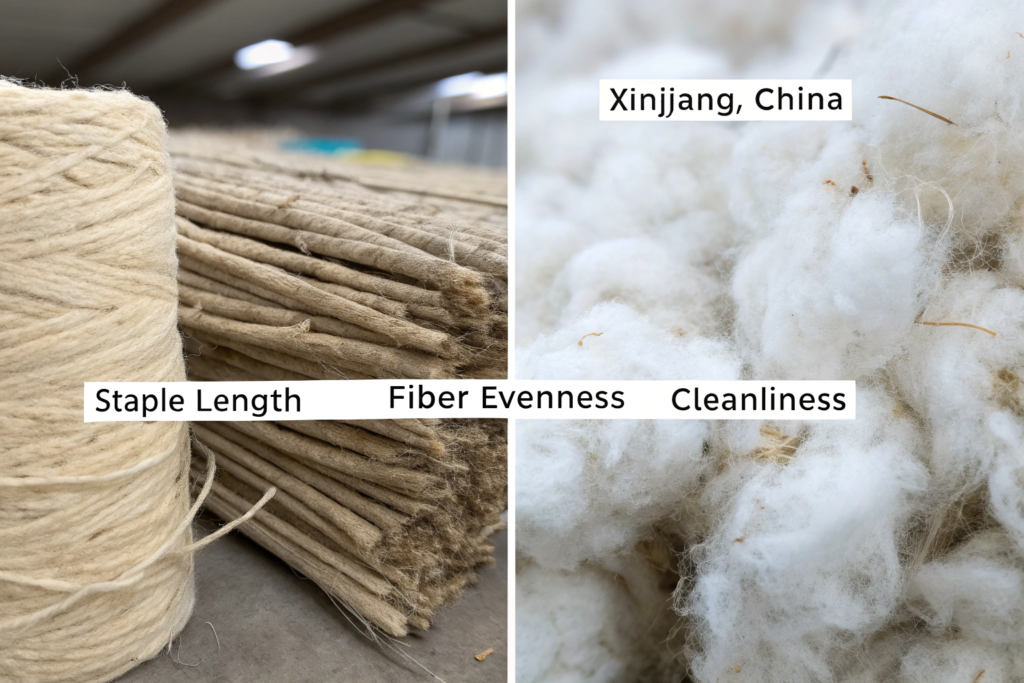
How do Chinese organic cotton fiber specs compare internationally?
When sourced from top programs, the key metrics are competitive:
- Staple Length: Premium Chinese organic cotton can achieve 28mm - 36mm (medium to extra-long staple), comparable to high-quality cotton from the US, Egypt, or Australia.
- Micronaire (Fineness & Maturity): A good range is 3.8 - 4.5. Values in this range indicate mature fibers that are fine but strong, ideal for spinning.
- Strength (g/tex): Can exceed 30 g/tex, which is excellent for durability and pilling resistance.
The difference between mediocre and premium is traceability. A generic "organic cotton from China" claim tells you nothing. A specification sheet that states "OCS-certified, Xinjiang origin, staple length 32mm, micronaire 4.2" is what you need. Reputable spinners provide this data. In 2023, we supplied a Danish brand with OCS organic cotton yarn where the fiber specs were integral to their tech pack; the resulting jersey had a pilling rating 1.5 points higher (on a 5-point scale) than their previous Turkish organic source.
Does the organic certification process itself ensure quality?
Indirectly, yes. OCS and GOTS require a documented chain of custody and annual audits of certified facilities. Facilities that can pass and maintain these audits are typically better managed overall. They are more likely to have:
- Proper storage to prevent contamination or moisture damage.
- Quality control checkpoints for incoming and outgoing materials.
- Calibrated equipment.
This systemic discipline reduces variability, a key component of quality. However, certification alone is not a guarantee of high performance specs; it's a guarantee of integrity and process control, which is the foundation upon which quality is built.
The Manufacturing Benchmark: Spinning, Weaving, and Finishing
This is where fiber potential is transformed—or squandered. China's textile manufacturing landscape is bipolar: it has some of the world's most outdated, polluting mills and some of the most advanced, automated facilities on the planet. The quality of your final fabric depends entirely on which side of this divide your supplier operates.
International quality standards (like those from ISO, ASTM, AATCC) are not Chinese, American, or European; they are global benchmarks. The question is whether a Chinese factory chooses to test and comply with them. The leading ones do, aggressively.
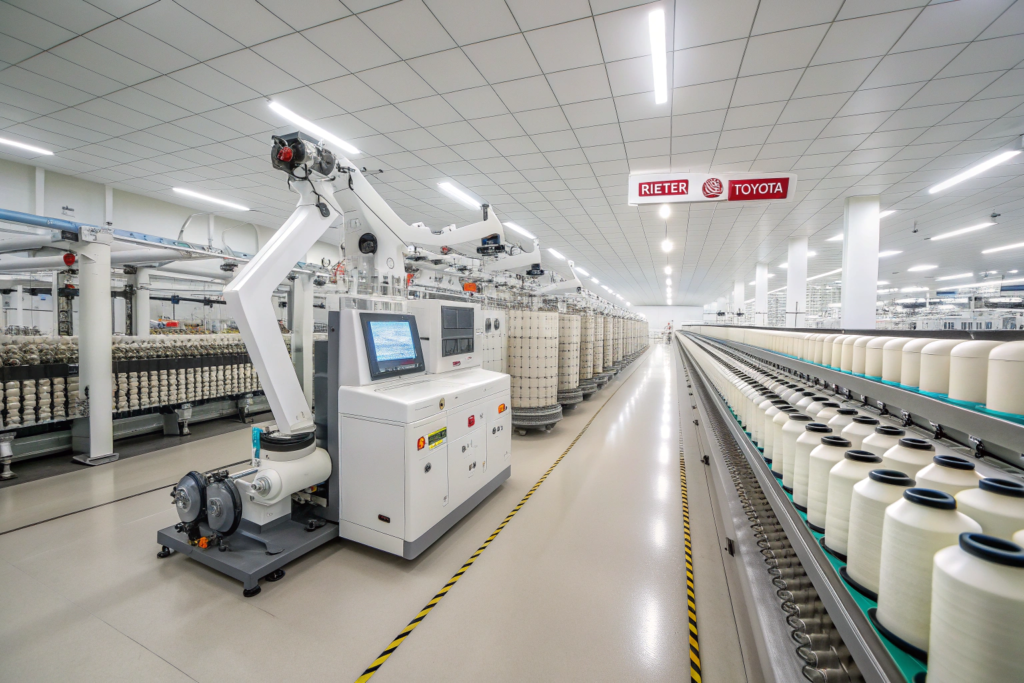
What international tests should you demand for Chinese organic cotton fabric?
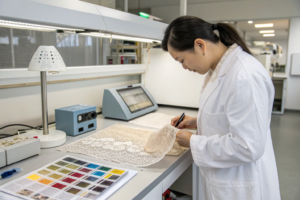
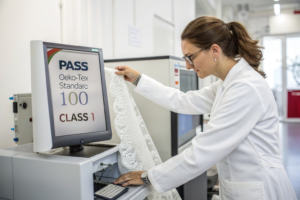
Your supplier should provide test reports from accredited labs (CNAS in China, which has mutual recognition with ILAC internationally, or from SGS/ITS/BV). Key tests include:
| Test Standard (e.g., AATCC/ISO) | What It Measures | Why It Matters for Quality |
|---|---|---|
| Colorfastness to Washing (AATCC 61) | How much color bleeds or fades after washing. | Essential for garment longevity and customer satisfaction. |
| Dimensional Stability (AATCC 135) | Fabric shrinkage after washing. | Critical for fit consistency. Premium organic cotton should show <3% shrinkage. |
| Fabric Strength & Tear (ASTM D5034/D5587) | Tensile and tear strength. | Indicates durability and resistance to tearing during use. |
| Pilling Resistance (ASTM D4970) | Formation of fuzz balls on fabric surface. | Directly impacts the "like-new" appearance over time. |
| Fiber Composition (ISO 1833) | Verifies the material is 100% cotton (or specified blend). | The core of your organic claim. |
A supplier that cannot provide these reports for specific fabric lots is not operating at an international quality level. At Shanghai Fumao, our in-house CNAS lab runs this battery of tests on every OCS fabric lot as a standard procedure. The reports are part of the product dossier we share with clients, proving compliance before shipment.
How does Chinese finishing technology impact final quality?
Advanced finishing is where China often excels. Processes like:
- Mercerization: For cotton, this increases luster, strength, and dye affinity. Top-tier Chinese mills do this superbly.
- Sanforization (Pre-Shrinking): Precisely controls residual shrinkage to meet tight tolerances.
- Bio-Polishing: An enzyme wash that reduces pilling and gives a smoother hand-feel.
- Low-Impact Dyeing: Using advanced machinery and chemistry to achieve excellent colorfastness with a lower environmental footprint.
The technology is available; the choice to invest in it separates quality leaders from followers. A Swiss brand we work with was initially skeptical but audited our dyeing partner. They were impressed by the computerized dye kitchens and effluent treatment plants, which surpassed some European facilities they had seen. The color consistency across 10,000 meters of fabric was flawless.
The Verification Imperative: Trust, but Verify
The phrase "meets international standards" is meaningless without evidence. For Chinese organic cotton, the burden of proof is (rightly) higher due to historical skepticism. Therefore, your sourcing strategy must be built on verification, not assumption.
This means going beyond the supplier's word and even their provided certificates to implement your own checks. This is standard practice for brands in the EU, US, and Japan, and it's what drives continuous improvement in Chinese supply chains.
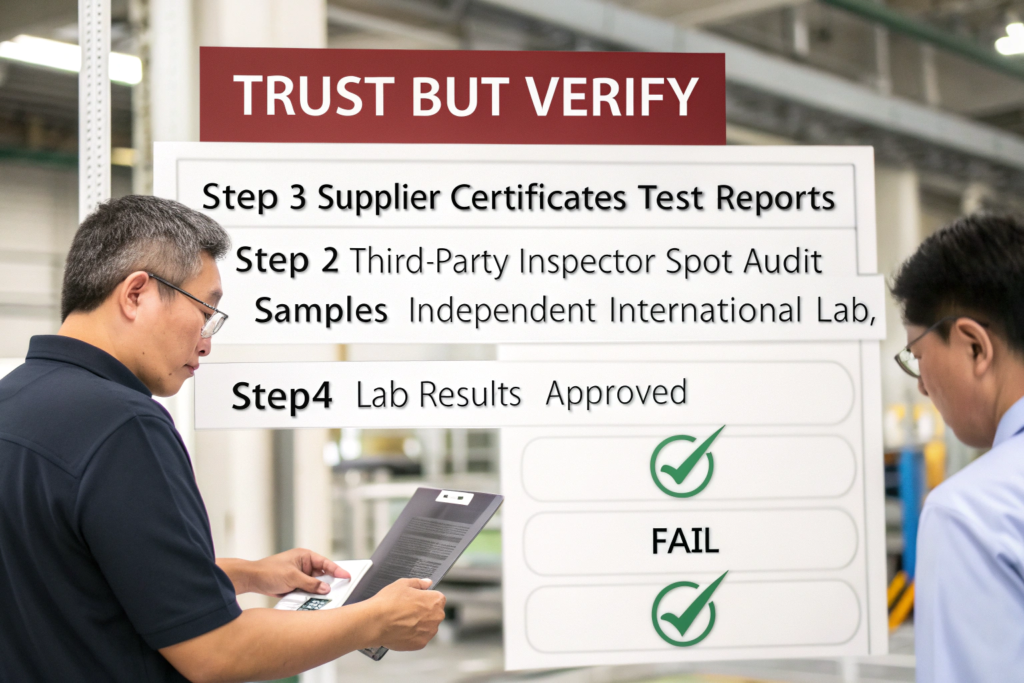
Should you conduct third-party testing on every shipment?
For bulk orders, absolutely yes. It is your final quality and compliance gate. The process is straightforward:
- Hire a third-party inspection company (e.g., QIMA, SGS, Bureau Veritas) to visit the factory during packing.
- The inspector randomly selects sealed cartons, pulls fabric or garment samples, and sends them directly to an ISO 17025 accredited lab of your choice (often the inspector's own lab).
- The lab runs the critical tests you specify (e.g., composition, shrinkage, colorfastness, and a PCR test for GMO screening).
The cost is a tiny fraction of the order value (often 0.1%-0.3%) and is the best insurance you can buy. In late 2023, this very process saved a UK brand: a PCR test commissioned by them found trace GMOs in a batch that had passed the factory's own (less sensitive) test. The shipment was stopped, and liability was clear.
How to verify the authenticity of Chinese OCS/GOTS certificates?
Fraudulent certificates exist. Verification steps:
- Check the Issuer: Is it from a recognized certifier like Control Union, Ecocert, or ICEA?
- Cross-Reference: Many certifiers have online databases where you can enter a certificate number to check its validity and scope.
- Audit the Chain: The certificate should have a unique number. Ask the supplier to show you the Transaction Certificates (TCs) that move with the material. A valid TC is much harder to fake than a facility certificate.
- Physical Audit: Visit or do a live video audit of the facility. Does the operation match the scale and processes on the certificate?
This level of diligence filters out the non-serious players. It's how you find partners whose quality systems are real, not just for show.
Conclusion
Does organic cotton from China meet international quality standards? The resounding answer is that the top tier of Chinese organic cotton production not only meets but is engineered to exceed these standards. The evidence lies in the fiber specifications from select regions, the world-class technology in leading spinning and weaving mills, the comprehensive test reports aligned with global norms, and the rigorous, verifiable certification systems like OCS.
The challenge and opportunity for global brands lie in skillfully navigating this complex landscape. Success requires moving beyond geographic bias to a criteria-based selection: demanding transparency, insisting on proof, and partnering with vertically-integrated manufacturers who treat international quality standards as their baseline, not their aspiration.
If your brand requires organic cotton that is both ethically impeccable and performance-proven, the source is not a country—it's a partner with the right systems. At Shanghai Fumao, we bridge this gap daily, supplying certified quality that passes the most stringent international audits. Contact our Business Director, Elaine, to access organic cotton that meets your highest standards: elaine@fumaoclothing.com. Let's set a new standard, together.