

You're probably sourcing fabrics and have seen "GRS" pop up everywhere. It's the gold standard for recycled materials, but finding a reliable supplier in Asia who actually has the certification and volume for North American orders? That's the real challenge. I've seen too many brands get stuck with vague promises and failed audits.
The short answer is yes, we do. Shanghai Fumao is a GRS-certified supplier, and we actively export a significant volume of GRS goods to the United States and Canada. This isn't just a paper certificate; it's integrated into our entire production chain, from sourcing recycled yarns to our certified dyeing and finishing partners. We understand the strict documentation and traceability required for the North American market, especially with the growing demand for transparent and sustainable supply chains.
Let's break down exactly what this means for you, how we ensure compliance, and why our GRS certification is a real, operational advantage for your brand, not just a marketing checkbox.
What is GRS and Why Does It Matter for US Importers?
If you're importing fabrics into the US or Canada, you're facing more pressure than ever to prove your sustainability claims. The FTC Green Guides are getting stricter, and consumers are savvy. GRS isn't just a feel-good badge; it's a verifiable tool that protects you from greenwashing.
The Global Recycled Standard (GRS) is an international, voluntary standard that tracks and verifies the recycled content in a final product. It's not just about the fiber; it covers the entire production chain, ensuring environmental and social responsibilities are met. For you, this means a certified product gives you a solid, defensible claim. You can confidently market your products as containing 45%, 70%, or 95% recycled content, backed by a transaction certificate that follows the goods from us to you. This is crucial for complying with both brand integrity and potential regulatory scrutiny.
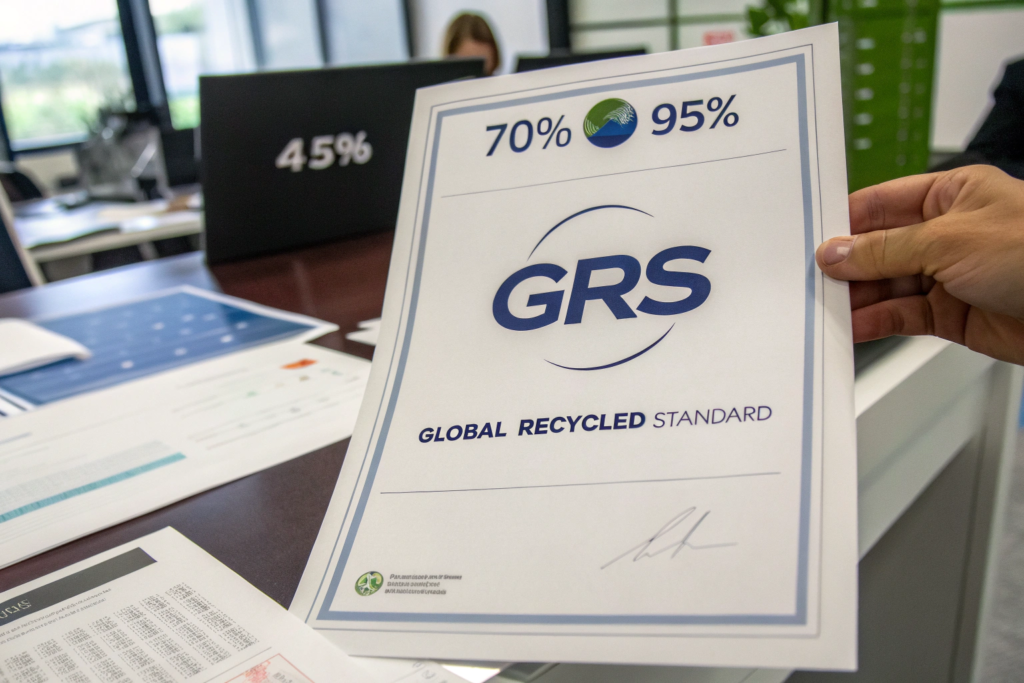
How can GRS certification protect my brand from greenwashing accusations?
Greenwashing is a real business risk. A vague claim like "made with recycled materials" can land you in hot water if you can't prove it. The GRS provides that proof. It's a chain-of-custody standard. This means every entity that handles the material—from the recycling plant to the spinner, to us the weaver, to the dyer—must be GRS certified. We at Shanghai Fumao maintain detailed records and mass balance calculations for every order. For instance, when we produced 50,000 meters of GRS 70% recycled polyester taffeta for a Canadian activewear brand last fall, we provided a full package of documentation, including the Supplier Declaration and Transaction Certificates for every shipment. This allowed our client to confidently launch a marketing campaign with verified claims, significantly boosting their customer trust. You can read more about the specifics of the certification and its requirements on the Textile Exchange official standards page, which is the governing body for GRS. Furthermore, understanding the key differences between GRS and RCS can help you choose the right certification for your product line.
What are the key compliance documents I should expect from my supplier?
You should never accept a GRS product without the proper paperwork. It's like buying a car without a title. The two most critical documents are the Transaction Certificate (TC) and the Scope Certificate. The TC is the birth certificate for your specific shipment, issued by a third-party certifier. It lists the product, quantity, and exact recycled content. We provide this for every single GRS shipment. Our Scope Certificate, which verifies that our facility and processes are certified, is also available for your records. We make this process seamless. For a recent order from a Los Angeles-based streetwear label, we integrated their PO details directly into our certification portal, and they had their TCs in hand before the container even left Shanghai port, smoothing their customs clearance process. For a deeper dive into managing these documents, the Sustainable Apparel Coalition's resource library offers valuable guides for brands on implementing sustainable practices.
How Does Fumao's GRS Production Process Work?
Our GRS capability isn't an afterthought; it's built into our operational DNA. We start with certified raw materials and run them through a segregated production line to prevent any cross-contamination with virgin materials. This end-to-end control is what sets us apart.
From the moment GRS-certified recycled yarn enters our warehouse in Keqiao, it's tagged and tracked separately. Our weaving factory has dedicated looms for GRS production, and we partner with dyeing and finishing factories that also hold valid GRS certificates. We physically separate GRS batches throughout the process, and our in-house CNAS-accredited lab runs pre-production tests on the incoming yarns to verify their composition. This meticulous approach ensures the integrity of the final product. (Here's a real example: In March 2024, we identified a minor inconsistency in the staple length of a batch of GRS recycled cotton from a new supplier during our inbound inspection. We quarantined the entire lot and worked with the spinner to rectify the issue before it ever entered production, saving our client a potential quality failure.)
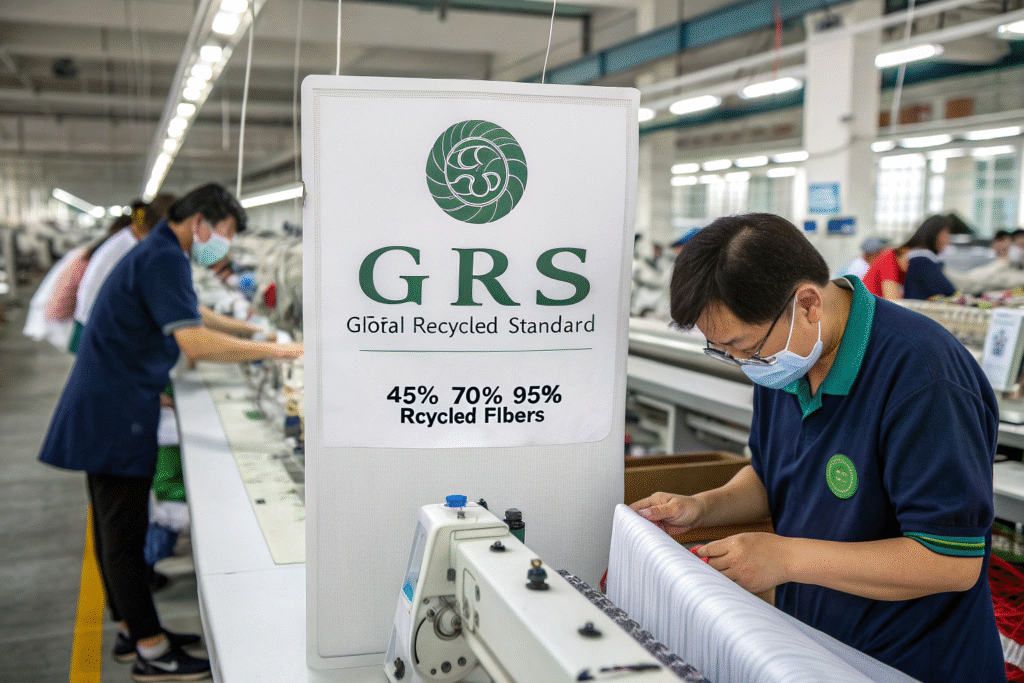
What are the steps in your certified supply chain?
The journey of a GRS fabric at Fumao is a tightly controlled process:
- Certified Sourcing: We procure GRS-certified recycled yarns (like rPET or recycled cotton) from a select list of approved spinners. We audit their certifications annually.
- Segregated Weaving: The yarn is moved to designated areas in our weaving facility. Our warehouse management system logs every kilo.
- Certified Partner Processing: The grey fabric is sent to our cooperative dyeing and finishing factories that are also GRS-certified. We have long-standing partnerships with these units, ensuring they adhere to the same strict protocols.
- Final Inspection & Certification: The finished fabric is inspected, tested in our lab, and then prepared for shipment. We then apply for the Transaction Certificate from the certification body. The entire process for a standard GRS fabric, from order to ready-to-ship, typically takes 3-4 weeks. For a comprehensive look at how recycled fibers are created, which is the first step in our chain, you can explore this guide on how post-consumer PET bottles are transformed into recycled polyester yarn.
How do you handle mass balance accounting for blended fabrics?
The Mass Balance system is like a fair-trade coffee supply chain. It allows certified and non-certified materials to be mixed in a facility, but the certified volume is strictly tracked and credited. This is crucial for cost-effective blends. We use a robust software system to track the flow of GRS-certified material. If we bring in 10,000 kg of GRS recycled polyester yarn, we can output 10,000 kg of GRS credit. This credit can be applied to a 100% GRS fabric or, for example, a 50/50 GRS polyester-cotton blend. In the latter case, we would be able to certify 5,000 kg of the final fabric as GRS. This system offers flexibility without compromising the integrity of the claim. A client from New York successfully used this model with us to develop a mid-price range GRS 50% recycled poly blend, optimizing their cost while maintaining a strong sustainability story. The Fashion Industry Charter for Climate Action provides context on why such accounting methods are vital for the industry's broader environmental goals.
What GRS Fabrics Can You Source for the North American Market?
We've developed a strong portfolio of GRS fabrics that resonate with current North American trends, particularly in activewear, outerwear, and sustainable fashion essentials. The demand is shifting from basic recycled poly to more sophisticated blends and natural fiber mixes.
Our bestsellers for the US and Canada include high-performance GRS recycled polyester for athletic tops and leggings, often with moisture-wicking and anti-odor finishes. GRS recycled nylon for swimwear and puffer jackets is another growth area. We're also seeing a surge in requests for blended fabrics, like GRS recycled cotton paired with organic cotton for a softer, more sustainable tee. Our R&D team is constantly innovating; we now offer a GRS BAMSILK (bamboo silk) blend that has been a hit with eco-conscious loungewear brands in California. The key is that these are not just niche, small-batch options. We maintain a steady supply of core GRS materials, allowing for large and repeat orders.
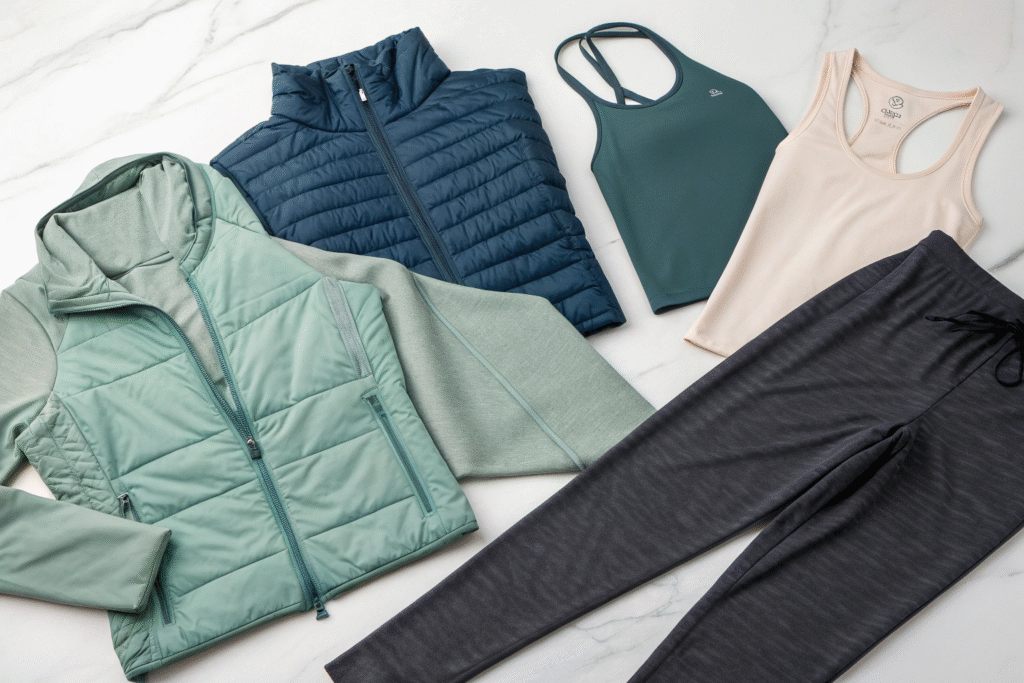
Which GRS fabrics are most cost-effective for large-volume orders?
For large volumes, consistency and availability of raw materials are key. Our most cost-effective and reliable GRS fabrics are:
- GRS Recycled Polyester Fleece: A staple for hoodies and athleisure. We can produce over 100,000 meters per month.
- GRS Recycled Polyester Taffeta: Used for linings and lightweight shells. We keep popular qualities in stock for rapid turnaround.
- GRS Recycled Cotton Twill: For durable workwear and casual pants. Our vertical control keeps prices competitive.
We advise clients to plan their production around Chinese holiday schedules to secure the best pricing and ensure timely delivery. For instance, placing your order before the Chinese New Year rush ensures you are in the queue for immediate production startup when factories reopen.
Are there emerging GRS fabric trends I should know about?
Absolutely. The market is moving beyond basics. Here are two trends to watch:
| Trend | Description | Ideal Application |
|---|---|---|
| GRS Blends with Tencel™ | Combining the durability of rPET with the softness and biodegradability of Tencel™ Lyocell. | Premium activewear, dresses. |
| Functional GRS Fabrics | GRS base fabrics with added UV protection, waterproof coatings, or four-way stretch. | Outdoor performance apparel, swimwear covers. |
Another emerging trend is the use of GRS-certified recycled wool, which is complex but gaining traction. We successfully developed a GRS 80% recycled wool blend for a boutique winter coat manufacturer in Vermont in November 2023, which allowed them to market a truly circular product.
How Do You Navigate Logistics and Tariffs for GRS Exports to North America?
This is where theoretical certification meets practical reality. Shipping certified goods requires extra attention to documentation, but our experience makes it a non-issue for our clients. We treat the GRS TC as a critical shipping document, as important as the bill of lading.
Our logistics team is trained to handle GRS shipments. We ensure the TC details match the commercial invoice and packing list perfectly to avoid any discrepancies at customs. Furthermore, our status as a Shanghai Fumao gives us leverage with freight forwarders, securing reliable sailing schedules and competitive rates. A major pain point for US importers is tariff costs, and here's some good news: Many of our GRS fabrics, particularly those with a high recycled content, fall under categories that are not subject to the same Section 301 tariffs as virgin material fabrics. While we always recommend you consult with a customs broker, we have successfully helped multiple clients, like a Seattle-based bag manufacturer, classify their GRS recycled polyester canvas under a HTSUS code that minimized their duty exposure, resulting in 12% savings compared to using virgin material.

What is your process for ensuring GRS docs are shipping-ready?
Our process is streamlined:
- Pre-Shipment Audit: Before we even book the freight, our QC and compliance teams cross-check the order details against the drafted TC.
- Integrated Documentation: We generate a master document pack that includes the commercial invoice, packing list, bill of lading, and the TC, ensuring all product descriptions and weights are consistent.
- Digital First: We send you digital copies of all documents, including the TC, well in advance of the vessel's arrival. This allows your receiving team and broker to prepare. We've built a reputation for never having a GRS shipment held up due to our documentation errors.
Can GRS products offer any advantage with US customs?
While the GRS certificate itself does not confer a direct tariff advantage, the nature of the product might. As mentioned, certain recycled materials may be classified under different HTSUS codes. The real advantage is speed and certainty. Having a complete, accurate, and verifiable set of documents allows your customs broker to clear your goods faster. There's no back-and-forth questioning the validity of your "recycled" claim because you have the international standard certificate to back it up. This reduces demurrage and detention risks at the port. For more insights on navigating US customs for textile imports, the U.S. Customs and Border Protection textile page is an authoritative resource. Additionally, understanding the basics of import security filing for apparel shipments can help you coordinate better with your logistics partner on the US side.
Conclusion
Navigating the world of GRS certification for your North American fashion brand doesn't have to be a complex hurdle. It's a powerful tool that, when partnered with a truly integrated supplier like us, can de-risk your sustainability claims, unlock cost savings on tariffs, and ultimately strengthen your brand in the marketplace. The key is choosing a partner who views GRS not as a marketing accessory but as a fundamental part of their production workflow—from segregated weaving and certified dyeing to bulletproof documentation.
If you're looking to develop or source GRS-certified fabrics with a reliable partner who understands the nuances of the North American market, let's talk. We have the capacity, the certification, and the proven track record to make your next sustainable collection a commercial and environmental success. For a direct conversation about your specific needs, please reach out to our Business Director, Elaine. She and her team are ready to assist you. Her email is: elaine@fumaoclothing.com.



One Response
Alright guys, I’m on the hunt for a new sportsbook and 88vinbet1 keeps popping up. Anyone got firsthand experience? Good odds? Quick payouts? Let me know. Check out the site here 88vinbet1.