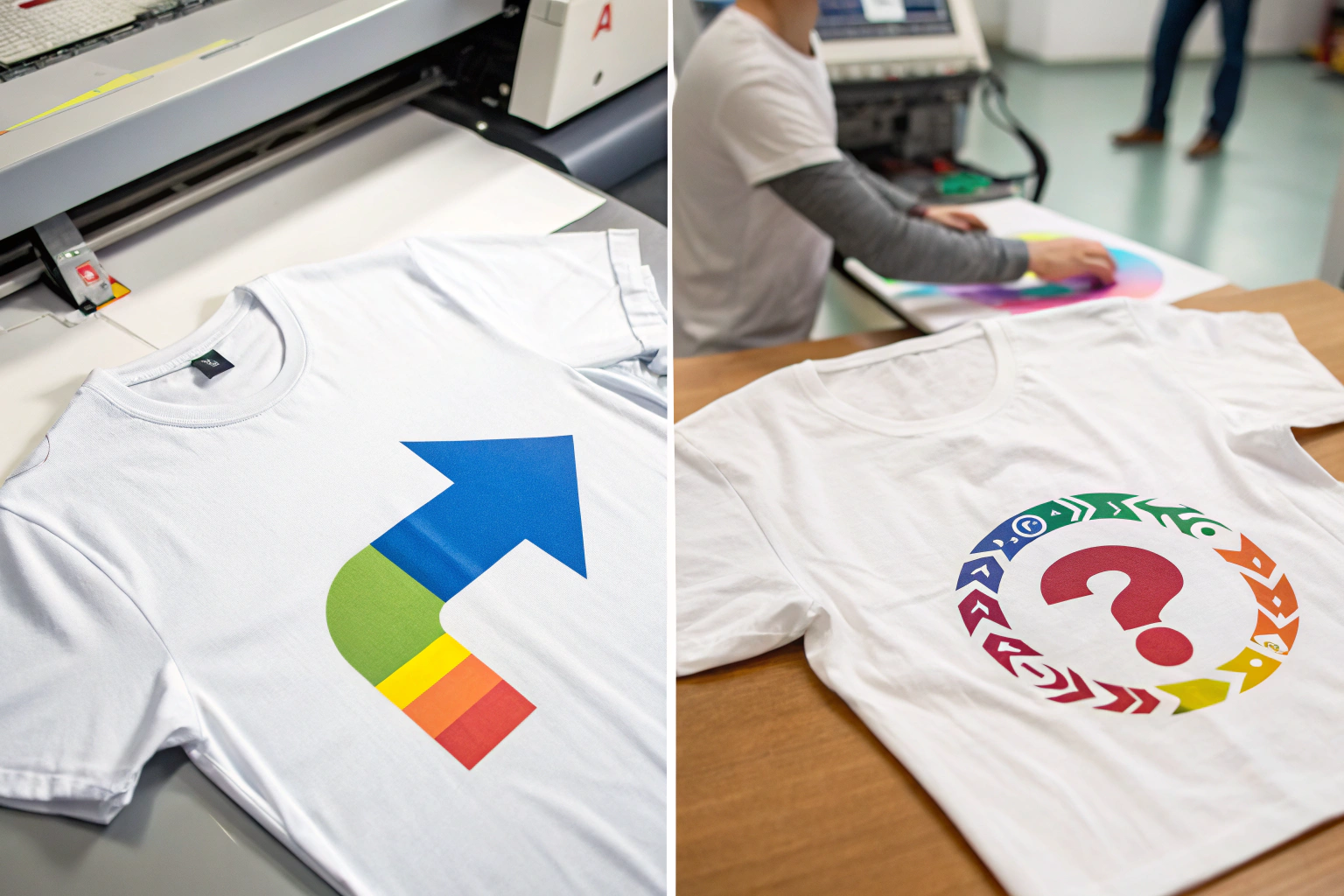
You’ve designed the perfect custom logo tee. The fabric feels right, the print is sharp, and the order is ready to go. Your supplier assures you the base garment is “CMIA certified.” But here’s the uncomfortable question that keeps sourcing managers up at night: does that certification still mean anything after your logo hits the fabric? I’ve seen brands face costly rejections because they assumed certification was a blanket cover. The painful reality is that adding a custom element—be it printing, embroidery, or a patch—changes the product’s chemical profile. Relying solely on the base fabric’s certificate is like wearing a raincoat with holes; you're not fully protected.
So, does CMIA certification cover custom logo apparel production? The direct answer is no, not automatically. A standard CMIA certificate is typically issued for a specific, unadorned fabric or a basic garment. The moment you add a custom decoration process, you introduce new chemicals (inks, plastisol, embroidery threads, adhesives) and physical treatments (heat, pressure) that were not part of the original test. Your newly decorated product is, in the eyes of compliance, a new and untested item.
This isn’t meant to scare you, but to empower you. In this guide, we’ll dissect exactly where the gaps in coverage are, what specific risks custom decorations introduce, and—most importantly—the clear, actionable steps you must take to ensure your finished custom apparel is fully compliant and safe for your customers. Let’s move from assumption to certainty.
What does a standard CMIA certificate actually test?
To understand the gap, we first need to know what’s covered. A standard textile CMIA certificate, based on GB 18401, focuses on the inherent safety of the textile material itself. It answers the question: “Is this fabric, as produced, free from excessive levels of specific harmful substances?”
The core tests are:
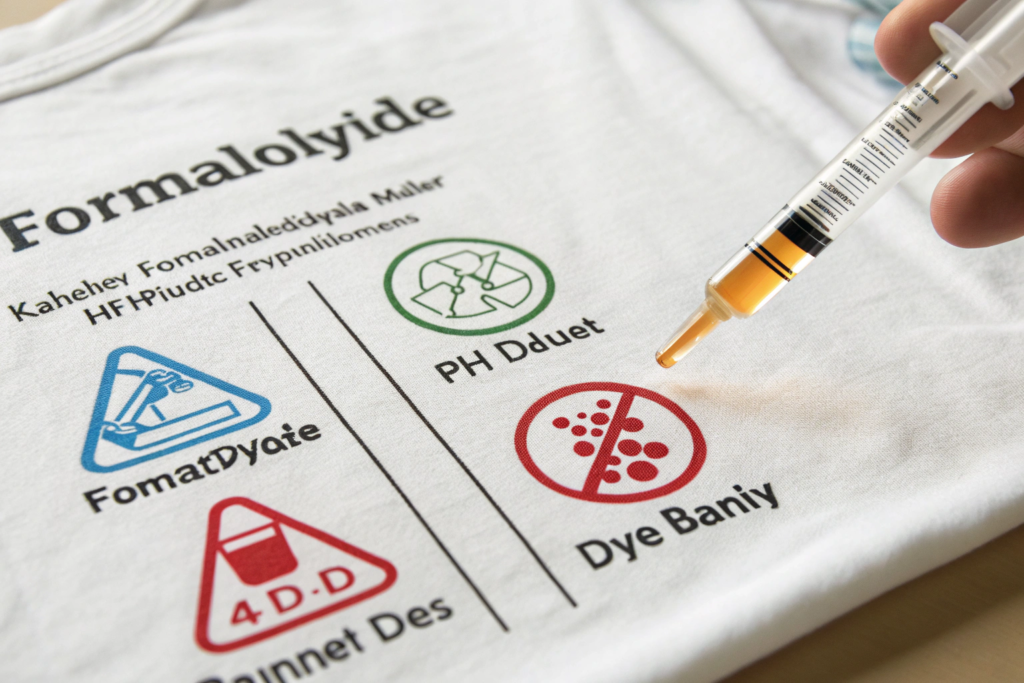
- Formaldehyde Content: In the fibers and from finishing resins.
- pH Value: Acidity/alkalinity of the fabric.
- Colorfastness: To water, perspiration, and rubbing (saliva for infants).
- Banned Azo Dyes: In the fabric’s base dyes.
Crucially, the test sample is the unadorned, untreated fabric. The certificate assumes no additional layers or processes beyond standard washing and finishing. It’s a snapshot of the material’s “naked” state. This is perfect for verifying bulk fabric or basic garments but becomes insufficient the moment you start customization. For brands looking into sustainable screen printing techniques for bulk apparel orders, understanding this baseline is the first step.
Why is the "base fabric only" scope a critical limitation?
Think of it as testing a car’s engine and frame, but not the custom paint job you added later. The paint could contain lead, even if the engine is fine. Similarly, the safest organic cotton shirt can become non-compliant if the ink used for your logo contains heavy metals like lead or cadmium, or if the adhesive on a heat-transfer vinyl releases excessive formaldehyde when cured.
The certificate’s “Product Description” field is legally binding. If it says “100% Cotton Jersey Knit Fabric (White),” it certifies that specific, white, unprinted fabric. It does not magically extend to “100% Cotton Jersey Knit Fabric (White) with Plastisol Screen Print in Navy Blue.” The print is a new, untested component. We learned this the hard way years ago with a client’s polo shirt order. The piqué fabric had a valid CMIA. The embroidery thread, sourced separately by the factory, did not. The finished shirts failed a spot check for pH imbalance coming from the untreated embroidery thread, leading to a full container being held at customs. The fabric certificate was useless in that dispute.
How do decoration processes create new compliance risks?
Each customization method introduces unique substances:
- Screen Printing (Plastisol): Introduces phthalates (plasticizers), heavy metals (in pigments), and formaldehyde. The high heat curing can also cause migration of chemicals from the fabric to the print.
- DTG (Direct-to-Garment) Printing: Uses inkjet-like inks containing binders and pigments that need testing for allergenic disperse dyes and heavy metals.
- Embroidery: The thread is a new textile. It must be tested for the same GB 18401 criteria (azo dyes, pH, formaldehyde). The backing stabilizer (if used) is another variable.
- Heat Transfer Vinyl: The vinyl film and adhesive layer are chemical cocktails. Risks include PVC (vinyl chloride), phthalates, and again, formaldehyde release.
- Patch Attachment: The patch itself and the adhesive or sewing thread create a multi-material composite that must be assessed as a whole.
The finished, decorated garment is a new, composite product. Its safety depends on the sum of all its parts.
Which specific tests become crucial for decorated apparel?
When you add a logo, your testing protocol must expand beyond the base GB 18401. You need to look at the specific risks introduced by your decoration method and the intended use of the garment (e.g., children’s wear vs. adult promotional wear).
Key additional or heightened tests include:
- Heavy Metals (Lead, Cadmium): Primarily in the pigments of prints, plastisols, and vinyl. This is non-negotiable for children’s products and increasingly for adults.
- Phthalates (DEHP, DBP, BBP, etc.): Plasticizers found in PVC-based materials (like some vinyls) and plastisol inks. They are heavily regulated (e.g., EU REACH, CPSIA).
- Formaldehyde (Re-test): The heat from curing prints or applying transfers can cause residual formaldehyde in the fabric or adhesive to be released or “re-activated.”
- Colorfastness (Specific to Decoration): You now need “Colorfastness to Rubbing” tests specifically on the printed/embroidered area, not just the base fabric. Will the logo crack or stain?
- Migration of Certain Elements: For items that might be mouthed (babies’ apparel), testing for chemical migration from decorative trims in children's clothing is critical.
What is the difference between testing the "component" vs. the "finished product"?
This is a core strategy decision in compliance.
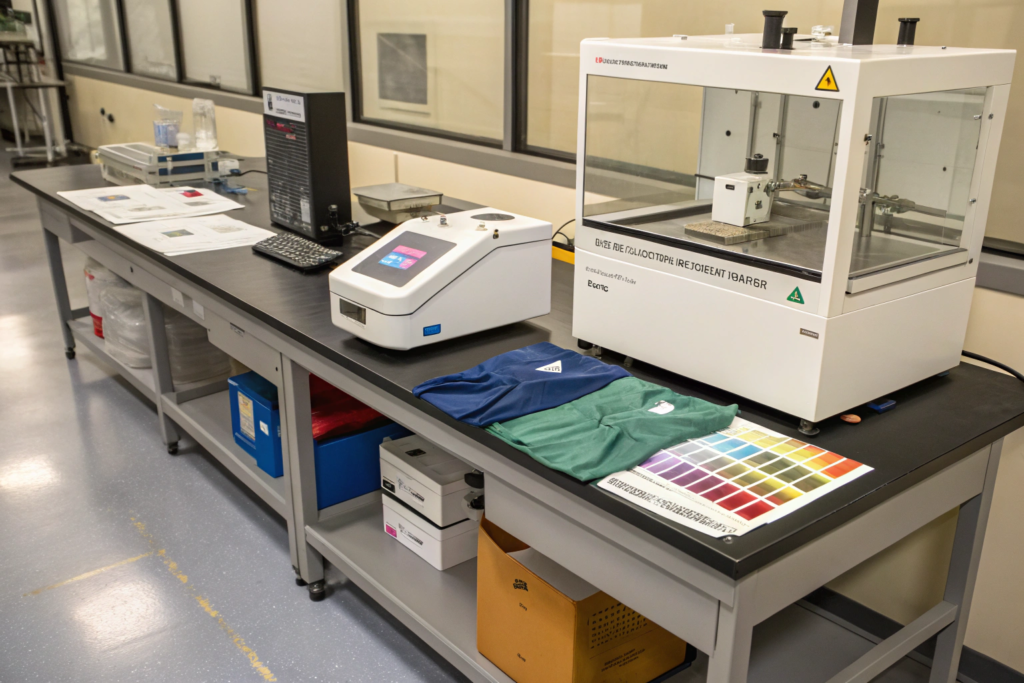
- Component Testing: Testing each part separately—the base fabric (with its CMIA), the ink batch, the embroidery thread, the adhesive. This is modular and useful if you use the same components across many styles.
- Finished Product Testing: Testing the complete, decorated garment as a single unit. This is the gold standard and most defensible, as it accounts for chemical interactions during production (e.g., heat curing causing migration).
Best Practice: For your first production run with a new decoration method or material supplier, insist on finished product testing. Once you have established a stable supply chain (same fabric, same ink/thread supplier, same factory process), you can move to a component-based approach with periodic finished-garment audits. At Shanghai Fumao, when we handle orders involving fabric with subsequent printing, we often recommend and facilitate a finished-product test for the initial batch to establish a compliance baseline for the entire production run.
How to specify testing requirements in your purchase order?
Clarity is power. Your PO must be explicit. Do not write: “Garments must be CMIA certified.” Instead, write:
“The finished, decorated garment must comply with GB 18401-2010 Class B [or A for infants] and must additionally be tested for heavy metals (Lead, Cadmium) and phthalates (DEHP, DBP, BBP) in the decorated areas. A valid test report from a CNAS-accredited laboratory for the finished production batch is required prior to shipment. Testing samples must be taken from production units after the complete decoration process.”
This language removes ambiguity and places the legal and operational onus on the supplier to deliver a certified finished product.
What is the correct process to certify custom logo apparel?
The correct process is sequential and verification-focused. It turns compliance from a hope into a controlled outcome.
- Start with Certified Base Materials: Source your base fabric or garment from a supplier who can provide a valid, batch-specific CMIA or equivalent report. This is your foundation. Verify this certificate using the methods discussed in our previous guide.
- Certify Your Decoration Materials: Require test reports for the specific ink batch, thread lot, or vinyl roll from their respective suppliers. These should cover the relevant risks (heavy metals, phthalates).
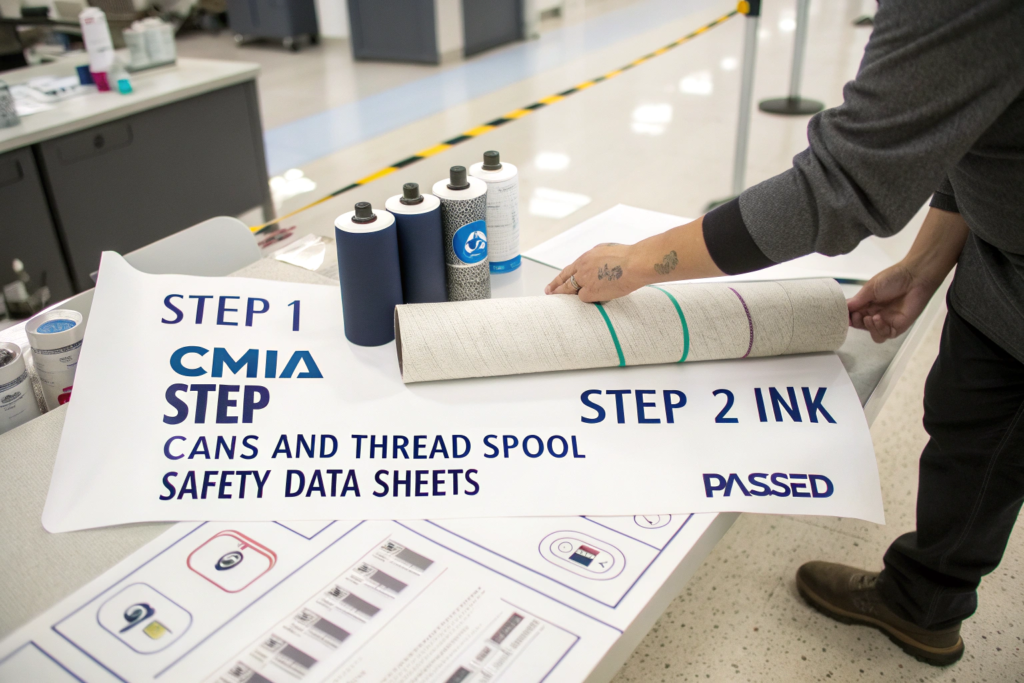
- Conduct a Pre-Production Sample Test (Most Critical Step): Before starting bulk decoration, produce a few samples using the exact base materials and decoration materials/processes you will use for production. Submit these finished samples to a lab for full testing against your required standards. This is your “pilot test.”
- Bulk Production and Batch Testing: Once the pre-production sample passes, proceed with bulk production. Then, sample from the actual, finished bulk order and send for a final batch test. The report for this test is your official certification for shipment.
Why is a pre-production sample test non-negotiable?
The pre-production test is your insurance policy. It identifies failures when the cost is just a few samples, not 10,000 finished t-shirts. Common failures at this stage include:
- Colorfastness failure of the print (logo cracks after wash).
- Phthalate levels in plastisol exceeding limits.
- Formaldehyde re-activation from heat pressing.
In 2023, a UK streetwear brand working with us on custom jersey wanted a specific high-density foam print. The base fabric was certified. We ran a pre-production test on the printed sample, and it failed for excessive formaldehyde. The culprit was the curing temperature interacting with a finishing agent on the fabric. We adjusted the curing profile and re-tested—it passed. This $500 test saved them from a potential $50,000 recall and saved us both a massive headache.
How to handle certification for multi-component items (e.g., shirts with prints + embroidered patches)?
For complex items, the finished product test is the only safe path. However, you should also maintain a “Technical File” that includes:
- The base garment CMIA.
- Test reports for the ink.
- Test reports for the patch fabric and its adhesive.
- Test reports for the embroidery thread.
- The final, comprehensive finished product test report that covers the entire assembled garment.
This file is your evidence of due diligence and is invaluable if ever questioned by regulators or auditors. It shows you understood the risks and managed them systematically.
Can a supplier provide a "blanket" certification for custom orders?
Be extremely wary of any supplier who offers a “blanket” or “annual” certification that they claim covers all custom orders. This is almost certainly a red flag.
Why “Blanket” Certificates Are Meaningless for Custom Apparel:
- Batch-Specific Nature: Legitimate chemical testing is batch-specific for both materials and production runs.
- Variable Inputs: Your custom order uses a specific fabric color, a specific ink color, and a specific application process. A blanket certificate cannot account for these variables.
- Legal Liability: If challenged, a blanket certificate will not hold up as a defense because it cannot be traced to your specific production batch.
A reputable supplier will explain the need for batch testing, not avoid it. Their quote should include a line item for testing costs. If a supplier says, “Don’t worry, all our products are certified,” ask for the certificate for an order identical to yours (same fabric, same decoration method/position) and then verify its batch number and product description. At Shanghai Fumao, we are transparent: we include testing costs and timelines in our project quotes for custom orders because we know it’s essential for a successful, worry-free partnership.

What are the realistic cost and timeline implications?
Adding proper certification for custom apparel has real, but manageable, impacts.
- Cost: Finished product testing can add $300 - $1000 to your order cost, depending on the number of tests and lab. This is a small percentage of a large order but crucial insurance.
- Timeline: The pre-production and batch testing process adds 7-15 working days to your critical path. This must be planned from the start.
Pro-Tip: Build these costs and days into your standard operating procedure and product costing model. Consider it part of the “cost of quality.” The alternative—a rejected shipment, a recall, or brand damage—is exponentially more expensive.
How do international standards (OEKO-TEX, GOTS) interact with custom decoration?
If you are targeting higher sustainability standards, the requirements are even stricter.
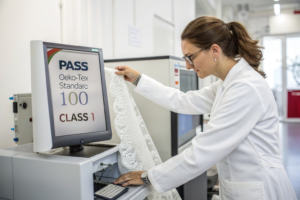
- OEKO-TEX® Standard 100: This certification can cover decorated garments, but the logo/decoration must be specifically included in the application and testing scope. You cannot use a certificate for a plain garment. The lab will test the finished item.
- GOTS (Global Organic Textile Standard): For custom decoration, the inks and threads must also be GOTS-approved (listed in the GOTS Positive List). The entire production unit (printing/embroidery facility) must also be GOTS certified to handle certified organic fabric. This is a complex chain of custody.
For brands committed to sourcing GOTS-certified organic cotton with custom prints, the takeaway is clear: you must work with suppliers who have the certified facilities and processes end-to-end, or your final product cannot carry the label. It’s an integrated system, not a mix-and-match game.
Conclusion
The question “Does CMIA certification cover custom logo apparel production?” reveals a fundamental truth in responsible sourcing: compliance is not transferable; it must be earned for each unique product. A base fabric certificate is a necessary starting point, but it is utterly insufficient for decorated goods. The chemicals and processes involved in applying your logo create a new product with its own compliance requirements.
The path to certainty is methodical: start with certified base materials, certify your decoration inputs, validate with a pre-production sample test, and finalize with a batch-specific test on the finished goods. This process requires upfront investment in time and cost, but it transforms risk management from a theoretical concept into a documented reality.
Embrace this rigor as a mark of a professional brand. It protects your customers, defends your reputation, and ultimately builds stronger, more transparent partnerships with your suppliers. Don’t let your brand’s story be marred by a compliance oversight hidden in a logo.
If you seek a partner who understands this complexity from the fabric mill through to the finished decorated garment, let’s talk. At Shanghai Fumao, our integrated control doesn’t stop at the fabric roll. We work with certified partner printing and embroidery units and can manage the entire testing and compliance process for your custom apparel project, ensuring every step—from our yarn to your logo—is documented and verified. Contact our Business Director, Elaine, to plan your next compliant custom collection: elaine@fumaoclothing.com.