Navigating the rhythm of Chinese manufacturing can feel like trying to catch a wave—timing is everything. If you miss the cycle, you’re looking at delays, frustrated clients, and missed market opportunities. But if you master it, you unlock a secret weapon for speed and reliability that your competitors don’t have. I’ve seen too many international buyers, just like you, get caught off-guard by factory shutdowns or overwhelmed production lines, turning what should be a smooth sourcing journey into a logistical nightmare. The pain isn't just about waiting; it's about the financial hit from air-freighting goods or losing a prime sales season.
The key to winning in this environment isn't just finding a good supplier; it's about strategic timing. China's industrial heartbeat follows a predictable annual cadence driven by cultural holidays, climate, and global demand cycles. Understanding these patterns—peak production, major holidays, and slower periods—is the single most effective way to optimize your production scheduling, protect your margins, and ensure on-time delivery. It transforms sourcing from a reactive cost center into a proactive competitive advantage.
So, let's move past the frustration and turn this challenge into your operational superpower. In this guide, we’ll break down China’s production calendar not as a series of obstacles, but as a map you can follow to plan smarter, move faster, and build a more resilient supply chain. From leveraging quiet months to perfectly planning around the Lunar New Year, you’ll learn how to align your sourcing strategy with the realities on the ground in Keqiao and beyond.
What are the key busy and slow seasons in Chinese fabric production?
You wouldn't sail into a storm without checking the weather, and you shouldn't place a bulk fabric order without checking China's production calendar. The industry's tempo creates distinct "waves" of activity throughout the year, directly impacting your lead times, costs, and even quality. Getting caught in the peak-season crunch can add weeks and stress, while smartly riding the slow-season lull can give you an unbeatable edge.
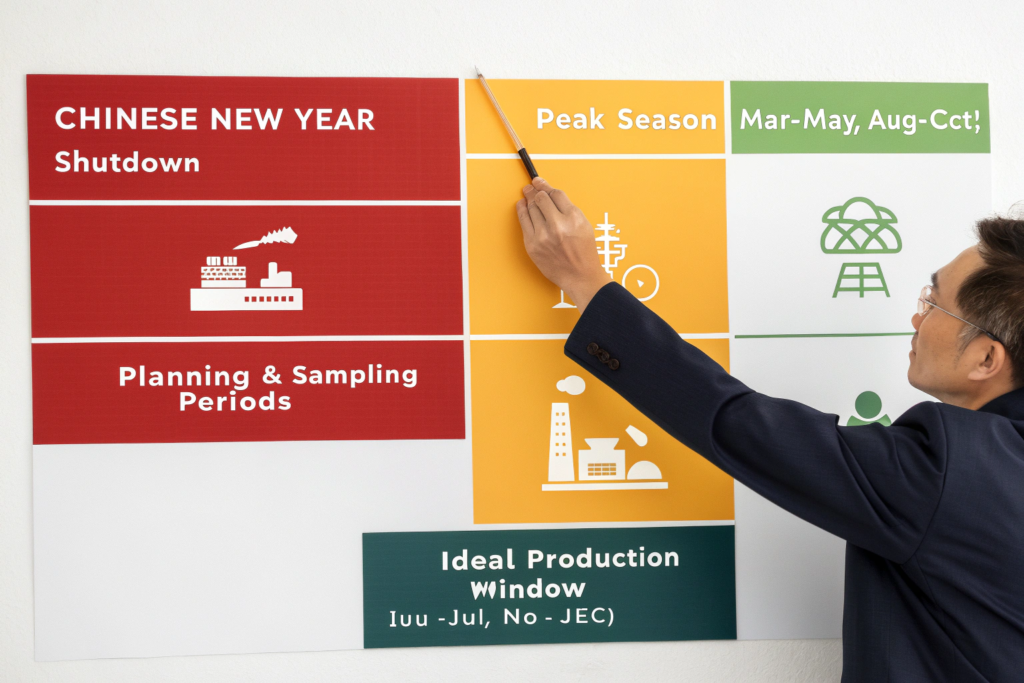
The year is sharply divided by two major holiday closures and two peak production windows. The most critical shutdown is the Chinese New Year (Lunar New Year), which can halt operations for 3-4 weeks from late January to mid-February. The National Day Golden Week in early October brings a 1-week pause. The busiest production periods are Spring (March-May), as factories ramp up after New Year, and Autumn (August-October), as they prepare for year-end holidays. Conversely, the summer months (June-July) and late fall/early winter (November-December) often see a relative slowdown.
Why do March-May and August-October become peak production bottlenecks?
These periods are driven by a confluence of global fashion and retail cycles. Spring (March-May) is when factories are executing orders for Northern Hemisphere's Fall/Winter collections and Southern Hemisphere's Spring/Summer lines. Autumn (August-October) is the frantic push for the following year's Spring/Summer collections and the final holiday (Christmas) inventory for Western markets. The entire supply chain—from yarn spinners to dyers and weavers—is operating at full capacity. This congestion means every process takes longer. Scheduling a reliable ocean freight booking during peak season becomes a challenge, as vessel space gets tight. Furthermore, quality control can be stretched thin, increasing the risk of overlooked defects. A common rule of thumb is to add a 1-2 week buffer to any lead time quoted during these windows. For instance, in April 2023, we coordinated a complex 50,000-meter order of recycled polyester jacquard for a German sportswear brand. By booking our cooperative dyeing factory's slot in late February—ahead of the March rush—we avoided a 15-day delay that affected many of their competitors.
How can you leverage the slower periods of June-July and November-December?
These are the industry's "secret sauce" for agile buyers. Factory load is lighter, management attention is higher, and communication is faster. This is the perfect window for developing new functional fabric prototypes without competing with bulk production queues. It's also an ideal time for mid-volume orders where speed is paramount. You can often negotiate more favorable terms, secure faster sampling turnaround (we've achieved 48-hour samples during these times), and enjoy more meticulous QC inspections. A savvy American activewear brand we work with now strategically places their innovation orders in June. Last November, they developed a moisture-wicking bamboo silk blend with us; the R&D team had the bandwidth for five iterative revisions in three weeks—a pace impossible during peak season. This allowed them to test-market the fabric and lock in bulk production slots for early March, perfectly syncing with their launch cycle.
How should you plan for the Chinese New Year factory shutdown?
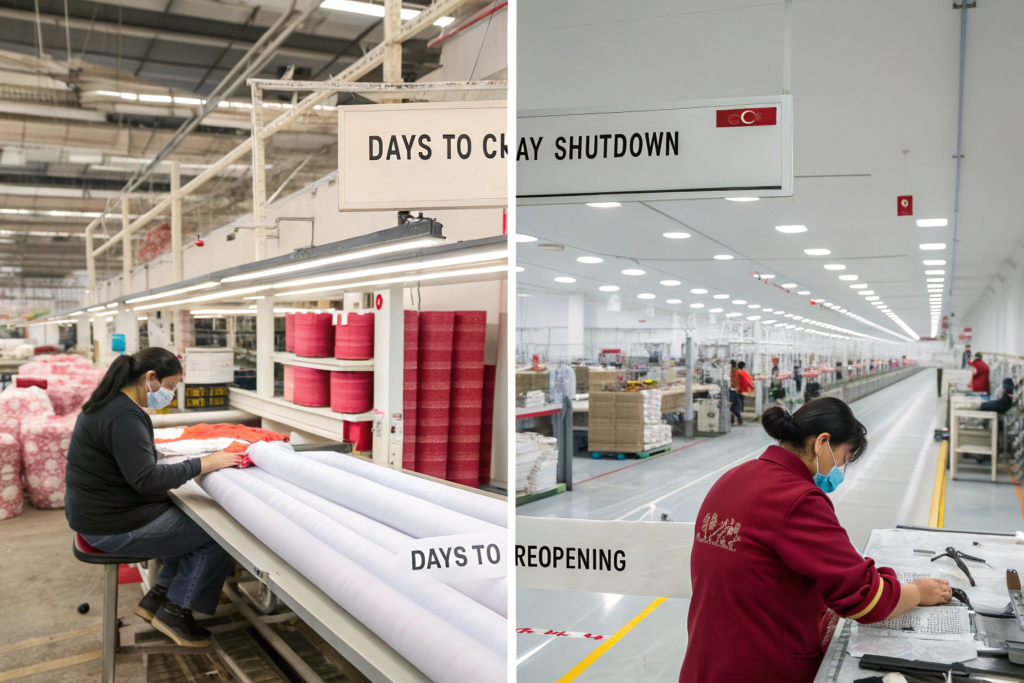
The Chinese New Year (CNY) shutdown is the single biggest logistical event in the Asian manufacturing calendar. Treating it as a minor inconvenience is a costly mistake; treating it as a strategic planning pivot point is a mark of a professional. The shutdown isn't just the official week off; it involves a massive migration of workers, leading to staggered departures and returns that can disrupt production for 4-6 weeks in total. Advanced planning isn't just advised; it's mandatory for survival.
Your goal is not to avoid the shutdown, but to orchestrate your workflow around it. Success hinges on backward planning from the factory reopening date. This means finalizing all pre-production activities—fabrics development, lab dips, approval of how to properly evaluate a fabric's colorfastness and shrinkage test report—at least 6-8 weeks before the holiday begins. This ensures production can literally start on the first day factories are back at full strength.
What specific steps must be completed 6-8 weeks before CNY?
This pre-holiday phase is all about locking down every variable. Your checklist should be exhaustive:
- Finalized Tech Packs & Approved Samples: All design ambiguity must be eliminated. This includes signed-off on lab dips, strike-offs, and garment samples. Any "we'll finalize it later" items will cause massive post-holiday delays.
- Raw Material Procurement: Your supplier must have all yarns, dyes, and specialty threads physically in their warehouse. Post-CNY demand spikes can cause raw material shortages and price hikes.
- Production Slot Reservation & Deposit Paid: A verbal promise isn't enough. Secure a written production schedule and confirm it with a deposit. This commits the factory's capacity to you for when they reopen.
- Logistics Plan Drafted: Book your freight forwarder tentatively. Discuss the best practices for consolidating mixed textile shipments from China to optimize cost and space as soon as production finishes.
We guided a Spanish fast-fashion client through this drill in Q4 2023 for their CNY 2024 planning. By December 1st, they had all 12 fabric qualities for their Summer line approved and raw materials stocked at our partner weaving mill. When factories reopened on February 19th, their production was first in line, shipping completed by March 25th, beating their competitors by a full month.
What happens if you miss the pre-CNY deadline?
Missing the deadline puts you in a precarious "post-CNY scramble." You'll face four major hurdles: First, a queue behind all the buyers who planned properly. Second, potential worker attrition—some workers don't return, causing temporary labor shortages and training delays. Third, a "bullwhip effect" of pent-up demand straining every sub-supplier (dye houses, printers). Fourth, congested ports as everyone ships at once. Your only recourse is to air freight, which can obliterate your profit margin. If you find yourself behind schedule, transparency is key. Immediately contact your supplier, like Shanghai Fumao, to assess damage control. Options may include splitting the order, producing the most critical styles first, or exploring alternative fabrics from stock. It's a fire drill, but a capable partner can help contain it.
What are the timeline advantages during China's summer and year-end lulls?
The slower periods, particularly June-July and November-December, are your strategic windows for acceleration and innovation. While not completely dormant, the reduced pressure on factories creates opportunities that simply don't exist during the peak chaos. Think of it as having the express lane mostly to yourself. Lead times can be 10-25% shorter, communication is more responsive, and factories are more willing to accommodate special requests or smaller batch sizes.
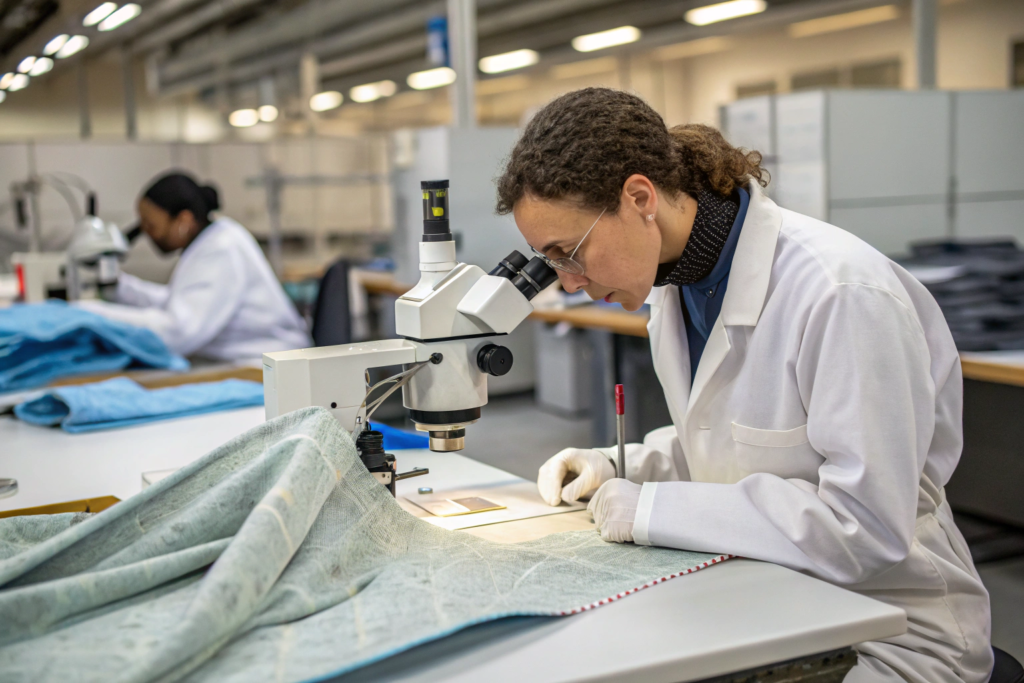
These periods are ideal for projects that require extra attention, such as working with delicate natural fibers like comparing the benefits of organic cotton versus recycled cotton for sustainable apparel, or executing complex digital prints. The climate also plays a role; summer humidity in regions like Zhejiang is actually ideal for certain dyeing and finishing processes, ensuring better color consistency. A Russian outerwear brand leveraged this with us in July 2023. They produced a batch of high-density nylon taffeta with a complex PU coating for waterproofness. The coating factory had the downtime to fine-tune the application temperature three times to achieve the exact hand-feel and crackle they wanted, resulting in a 40% reduction in coating rejects compared to a similar order run during the busy October period.
How can you use these periods for faster development and sampling?
With factory R&D and sampling departments less burdened, you can compress your development timeline dramatically. This is the time to:
- Fast-Track Innovation: Submit your ideas for performance fabrics—like those with UV-resistant or antibacterial properties. Our CNAS lab can run iterative tests quickly.
- Explore Small-Batch Customization: Need a unique jacquard design or a specific silk blend? MoQs can be more flexible, allowing you to test the market with 500-1000 meters instead of the usual 3000-meter minimum.
- Conduct Rigorous Pre-Production Testing: Use the time to conduct full battery of tests—martindale abrasion, pilling, lightfastness—before committing to bulk. This de-risks your order.
The process becomes a true collaboration rather than a transaction. (Here's a tip from our floor: this is when our senior pattern masters have the most bandwidth for coaching). You can get detailed feedback on how to adjust a weave structure for better drape or which dye class to use for a specific color fastness requirement.
What types of orders are best suited for these off-peak windows?
| Order Type | Why It's a Good Fit for Slow Season | Potential Timeline Advantage |
|---|---|---|
| New Product Development | Requires high interaction and trial/error. | Sample cycle reduced from 3 weeks to 1-2 weeks. |
| Mid-Volume/Specialty Orders | Factories can slot them in without disrupting large流水线. | Lead time reduction of 2-3 weeks vs. peak. |
| Re-orders of Best Sellers | Simple, repeat production with known specs. | Predictable and fast turnaround; perfect for restocking. |
| Orders with Complex Finishing | (e.g., brushing, coating, special washes) requires machine dedication. | More setup time available, leading to higher first-pass quality yield. |
For example, a UK-based home textiles brand consistently places their orders for luxury linen-cotton blends in November. The straightforward, high-quality repeat order gets dedicated loom time, and they consistently receive goods by mid-January, ready for their spring catalog shoot.
How do European and American brands successfully sync with this calendar?
The most successful global brands don't fight the Chinese production calendar; they integrate it into their own seasonal calendars. They operate on an 18-month planning horizon, where key Chinese holidays are fixed milestones, not surprises. Their sourcing offices or trusted agents on the ground, like us at Shanghai Fumao, provide real-time intelligence on factory capacity and raw material trends, allowing for dynamic adjustments. The European fashion brand mentioned earlier is a prime example. They don't just "plan around" CNY; they have a standardized operating procedure where "Pre-CNY Finalization" is a formal gate in their product lifecycle management system.
This syncing creates a rhythmic, predictable, and lower-stress supply chain. It shifts the relationship with the supplier from adversarial to partnership-based. When your supplier isn't constantly in emergency mode, they can invest more in quality and innovation for your account.

What does a best-practice annual sourcing timeline look like?
Here’s a simplified blueprint based on how our top clients operate:
- February-April (Post-CNY Execution): Bulk production for Fall/Winter goods ships. Finalize fabric sourcing for next Spring/Summer begins.
- May-July (Summer Development): Approve fabrics and lab dips for Spring/Summer. Produce bulk of Spring/Summer fabrics (leveraging the June-July lull). Holiday season (Christmas) product sampling.
- August-October (Autumn Peak): Bulk production of Spring/Summer fabrics and final Holiday goods. Initiate development for Fall/Winter of the following year.
- November-January (Year-End & CNY Prep): Ship Holiday goods. Finalize all pre-production for post-CNY Fall/Winter production. Complete all payments and documentation before the CNY break.
This cycle creates a virtuous loop of continuous, planned activity.
How does a local partner like Shanghai Fumao provide a critical advantage?
A partner on the ground is your eyes, ears, and boots on the ground. We don't just sell fabric; we manage your slice of the production calendar. Our integrated structure—controlling weaving, coordinating dyeing, printing, and finishing with partner factories—means we orchestrate the sub-processes to hit your windows. For example, when we see a potential bottleneck at the dyeing plant in September, we can shift schedules between our partnered units to keep your order on track. In 2023, for an Australian startup, we used our local network to source alternative GOTS-certified organic cotton yarn within 72 hours when their primary mill had a machine breakdown in early December, saving their February production slot. This deep, localized control is what turns the complex calendar from a threat into a tool.
Conclusion
Mastering China's production calendar is less about navigating obstacles and more about harnessing a powerful, predictable rhythm. By understanding the why behind the peak seasons, respecting the immovable reality of the Chinese New Year, and proactively leveraging the quieter periods, you transform time from your biggest adversary into your most reliable ally. This strategic approach minimizes delays, reduces costs associated with expedited shipping, and significantly lowers the risk of quality issues born from rushed work.
The consistent thread in every success story is forward planning and local partnership. The brands that thrive are those who bake these cyclical patterns into their very own product calendars, moving from a reactive stance to a proactive, synchronized dance with their supply chain. They don't just place orders; they co-manage a timeline with a trusted supplier.
If the idea of turning the complexity of Chinese manufacturing into a streamlined, predictable advantage resonates with you, then let's start planning your next cycle together. At Shanghai Fumao, with our 20 years rooted in Keqiao and control over the entire fabric production process, we provide more than just quality materials—we provide calendar certainty and peace of mind. We can help you map your upcoming collection to the optimal production windows, from fast-tracking development in the summer lull to securing that critical post-CNY production slot. Reach out to our Business Director, Elaine, to discuss how we can align our cycles with your vision. Let's weave your schedule into success: elaine@fumaoclothing.com.