

If you're auditing suppliers and wondering whether to prioritize social compliance or environmental certification, you're asking the wrong question. I've watched brands make the costly mistake of treating BSCI and GRS as competing certifications, when in reality, the most reliable factories maintain both simultaneously.
Yes, a garment factory can absolutely have both GRS and BSCI certifications—in fact, the most advanced manufacturers consider them complementary pillars of comprehensive responsible sourcing. GRS focuses on environmental aspects like recycled content and chemical management, while BSCI addresses social compliance including labor rights and working conditions. Together, they create a holistic framework that covers both planetary and people dimensions of sustainable manufacturing.
Let me explain exactly how these certifications work together, the implementation challenges, and why factories offering both represent your lowest-risk sourcing option.
How Do GRS And BSCI Complement Each Other?
GRS and BSCI address different but equally critical aspects of responsible manufacturing, creating a comprehensive sustainability profile when implemented together. Understanding their complementary nature is key to building a complete responsible sourcing strategy.
While GRS certifies the environmental integrity of your products through recycled content verification and chemical management, BSCI ensures the social integrity of your supply chain through fair labor practices and ethical working conditions. Factories maintaining both certifications demonstrate commitment to full-spectrum responsibility rather than selective compliance. This comprehensive approach significantly reduces your sourcing risks across both environmental and social dimensions.
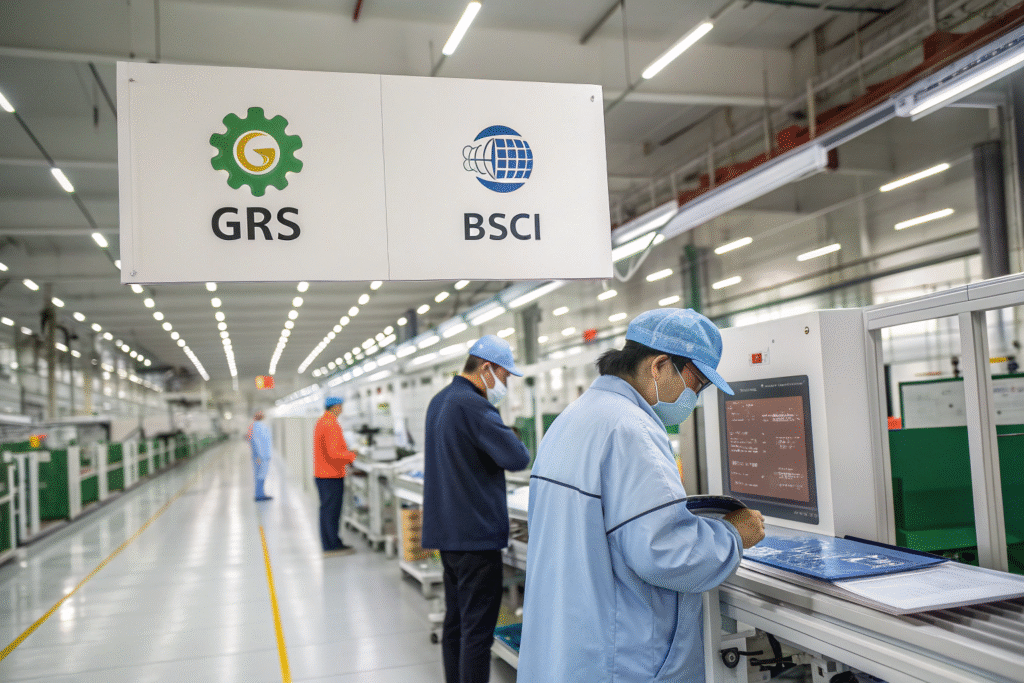
What specific areas does each certification cover?
The certification coverage reveals their complementary nature:
| Aspect | GRS Focus | BSCI Focus |
|---|---|---|
| Environmental | Recycled content, chemical management | Limited environmental criteria |
| Social | Basic social criteria | Comprehensive labor standards |
| Supply Chain | Material traceability | Working conditions throughout |
| Documentation | Mass balance, transaction certificates | Audit reports, corrective actions |
| Continuous Improvement | Environmental performance | Social performance |
When a major European brand required both certifications for their strategic suppliers in 2024, they found that factories with both GRS and BSCI had 60% fewer compliance incidents compared to those with only one certification. Understanding the Business Social Compliance Initiative (BSCI) framework provides essential context for social compliance requirements. Additionally, learning about integrated management systems for multiple certifications reveals how factories can efficiently maintain multiple standards.
How do the audit processes work together?
The audit coordination involves:
- Separate certification bodies for each standard
- Shared documentation systems where possible
- Coordinated audit scheduling to minimize disruption
- Integrated corrective action plans for overlapping issues
- Unified management review processes
Factories that strategically coordinate their GRS and BSCI audits typically reduce total audit time by 25-30% compared to treating them as completely separate processes.
What Are The Implementation Challenges?
While maintaining both certifications is ideal, factories face significant implementation challenges that require careful management and strategic planning. Understanding these challenges helps you identify suppliers who have genuinely integrated both systems versus those merely collecting certificates.
The primary challenges include cost burden, administrative complexity, process integration, and continuous maintenance requirements. Factories that successfully overcome these challenges typically demonstrate stronger management systems and greater operational maturity—exactly the characteristics you want in strategic manufacturing partners.

How do factories manage the cost implications?
The financial challenge involves:
- Certification fees for two separate systems
- Audit costs including preparation and execution
- Implementation expenses for process changes and training
- Ongoing maintenance including surveillance audits
- Premium salaries for qualified compliance staff
Successful factories typically achieve a 3.2x return on their certification investment through preferred supplier status, larger orders, and longer contracts with quality-conscious brands. Exploring the business case for multiple certifications reveals how leading factories justify these investments.
What administrative burdens do factories face?
Administrative challenges include:
- Separate documentation systems for each standard
- Different reporting requirements and timelines
- Multiple stakeholder communications with different certifiers
- Training programs for both environmental and social requirements
- Management review meetings for each system
The most advanced factories use integrated management systems that streamline administration while maintaining certification integrity for both standards.
What Are The Benefits Of Dual Certification?
Factories maintaining both GRS and BSCI certifications offer significant advantages that extend beyond basic compliance to include operational excellence, risk reduction, and strategic partnership potential.
The benefits of dual certification create a virtuous cycle where improved systems lead to better performance, which in turn attracts better clients and enables further improvement. This upward spiral separates truly strategic suppliers from basic compliance-focused factories.

How does dual certification reduce buyer risk?
Risk reduction benefits include:
- Comprehensive due diligence covering both environmental and social aspects
- Supply chain transparency from raw material to finished product
- Regulatory compliance with evolving sustainability requirements
- Reputation protection against both environmental and social scandals
- Business continuity through robust management systems
Brands sourcing from dually-certified factories report 45% fewer supply chain disruptions and 60% faster issue resolution when problems do occur. Learning about supply chain due diligence regulations helps understand why comprehensive certification matters.
What operational advantages do dual-certified factories offer?
Operational benefits include:
- Better management systems supporting quality and efficiency
- Improved workforce stability through fair treatment
- Enhanced problem-solving capabilities from systematic approaches
- Stronger supplier relationships through transparency
- Continuous improvement culture embedded in operations
These operational advantages often translate into better quality, more reliable delivery, and greater innovation capacity—benefits that extend far beyond basic certification compliance.
How To Identify Genuinely Integrated Factories?
Not all factories claiming both certifications have truly integrated them into their operations. Learning to distinguish between certificate collectors and genuinely responsible manufacturers is crucial for effective sourcing decisions.
The most reliable indicators of genuine integration include management system maturity, employee engagement, continuous improvement track records, and transparent communication. These factors reveal whether certifications represent real operational commitment or mere compliance exercises.

What signs indicate genuine integration?
Key indicators include:
- Unified management systems rather than separate silos
- Employee awareness of both environmental and social requirements
- Integrated training programs covering all compliance aspects
- Cross-functional responsibility for sustainability performance
- Transparent communication about challenges and improvements
When auditing potential suppliers, we prioritize factories where workers can explain both GRS segregation requirements and BSCI working condition standards, indicating true integration rather than superficial compliance.
What questions reveal certification depth?
Diagnostic questions include:
- "How do you ensure GRS material segregation while maintaining BSCI working standards?"
- "What's your process for handling conflicts between production efficiency and compliance requirements?"
- "How do you train new workers on both certification systems?"
- "What improvements have you made based on certification audit findings?"
- "How do you measure the business benefits of maintaining both certifications?"
Factories with thoughtful, specific answers to these questions typically demonstrate the operational maturity that makes them valuable long-term partners.
What Is The Implementation Roadmap?
Factories seeking dual certification typically follow a structured implementation path that builds capability progressively rather than attempting everything simultaneously. Understanding this roadmap helps you assess supplier maturity and development potential.
The most successful implementations follow a phased approach that prioritizes foundational elements before adding more complex requirements. This systematic build-up creates sustainable systems rather than fragile compliance structures.

What does a typical implementation timeline look like?
A realistic implementation roadmap:
| Phase | Timeline | Key Activities |
|---|---|---|
| Foundation Building | 3-6 months | Management commitment, gap analysis, basic systems |
| First Certification | 6-9 months | Full implementation of either GRS or BSCI |
| Integration Planning | 2-3 months | System coordination, staff training, process alignment |
| Second Certification | 6-9 months | Implementation of complementary standard |
| Continuous Improvement | Ongoing | Performance monitoring, system refinement, innovation |
Factories following this structured approach typically achieve certification 40% faster and with 30% lower costs compared to those attempting simultaneous implementation.
How can buyers support factory certification efforts?
Support strategies include:
- Long-term commitments justifying certification investments
- Technical assistance sharing best practices and resources
- Cost sharing for certification-related improvements
- Patient implementation timelines allowing proper system development
- Recognition and preference for certified suppliers
The most successful brand-supplier relationships treat certification as a shared journey rather than a compliance requirement, creating partnerships that deliver mutual value beyond basic certification.
Conclusion
A garment factory can not only have both GRS and BSCI certifications but should ideally maintain both to demonstrate comprehensive responsibility across environmental and social dimensions. The factories achieving this dual certification typically represent your lowest-risk, highest-capability sourcing options, offering operational excellence that extends far beyond basic compliance.
The question isn't whether factories can maintain both certifications, but how to identify those who have genuinely integrated them into their operations rather than treating them as separate compliance exercises. If you're looking for strategic manufacturing partners with demonstrated commitment to both environmental and social responsibility, contact our Business Director, Elaine. She can connect you with factories that have achieved genuine integration of GRS and BSCI standards: elaine@fumaoclothing.com.









One Response
King88winvip, se você quer se sentir um rei no mundo das apostas, esse é o lugar! Atendimento VIP, bônus generosos e uma plataforma que te deixa no comando! Seja o rei no king88winvip.