You're sitting at your desk, and your email inbox is overflowing. New regulations from the EU. A customer just asked where your cotton comes from, and you realized you don't actually know beyond the first supplier. Your biggest retail partner just announced they'll require full supply chain traceability by 2027 or they'll drop vendors. And somewhere in the back of your mind, you know this is just the beginning. The sustainable fabric sourcing revolution isn't coming—it's already here, and 2026 is the year everything changes.
I've been in this industry for over two decades, supplying fabric to brands in Europe, America, and across Asia. I've seen trends come and go. But what's happening now with sustainable sourcing is different. It's not a marketing angle anymore. It's becoming the law. It's becoming the baseline for doing business with major retailers. And the brands that aren't ready—that don't know where their materials come from, can't prove their claims, haven't adapted their supply chains—are going to find themselves locked out of their most important markets. Let me walk you through what's changing in 2026 and what you need to do to stay ahead.
What new regulations are reshaping fabric sourcing in 2026?
The era of voluntary sustainability is ending. 2026 marks a tipping point where multiple major markets are implementing mandatory requirements. If you sell in Europe, if you sell to large US retailers, if you ship to California—these rules apply to you whether you're ready or not. And the penalties for non-compliance are severe enough to put small brands out of business.
A Toronto-based brand learned this the hard way in late 2025. They shipped a container of jackets to Germany without full documentation of their recycled polyester's origin. German customs seized the shipment, demanded proof, and when the brand couldn't provide it within 30 days, the goods were destroyed. $85,000 in product, gone. The regulation had been announced two years earlier. They just hadn't paid attention.
What is the EU's Digital Product Passport and how does it affect me?
The EU's Digital Product Passport (DPP) is the single biggest change in textile sourcing since the invention of the container ship. Starting in 2026 for certain categories (phasing in fully by 2027), every textile product sold in the EU must have a digital passport containing detailed information about its entire lifecycle.
What does this mean for you as a fabric buyer? It means every roll of fabric you purchase needs to be traceable back to its origin. Not just "made in China," but: where was the cotton grown? Which farm? Which ginning facility? Which spinning mill? Which dye house? Which finishing plant? And all of this needs to be verified by third-party certifications and accessible via QR code on the finished garment.
A London-based brand we work with started preparing for DPP in 2024. They mapped their entire supply chain, certified every supplier, and built a database of every component. In 2025, they ran a test: could they generate a compliant Digital Product Passport for one of their best-selling dresses? It took 6 weeks and cost €8,000 in consulting and certification fees. But when the regulation hits, they'll be ready while their competitors are scrambling.
The technical requirements are specific: the passport must include unique product identifiers, global trade item numbers, compliance documentation, material composition and origin, repair and durability information, and end-of-life instructions. A comprehensive guide to the EU Digital Product Passport on the European Commission site provides the official requirements and timeline.
How are US regulations catching up in 2026?
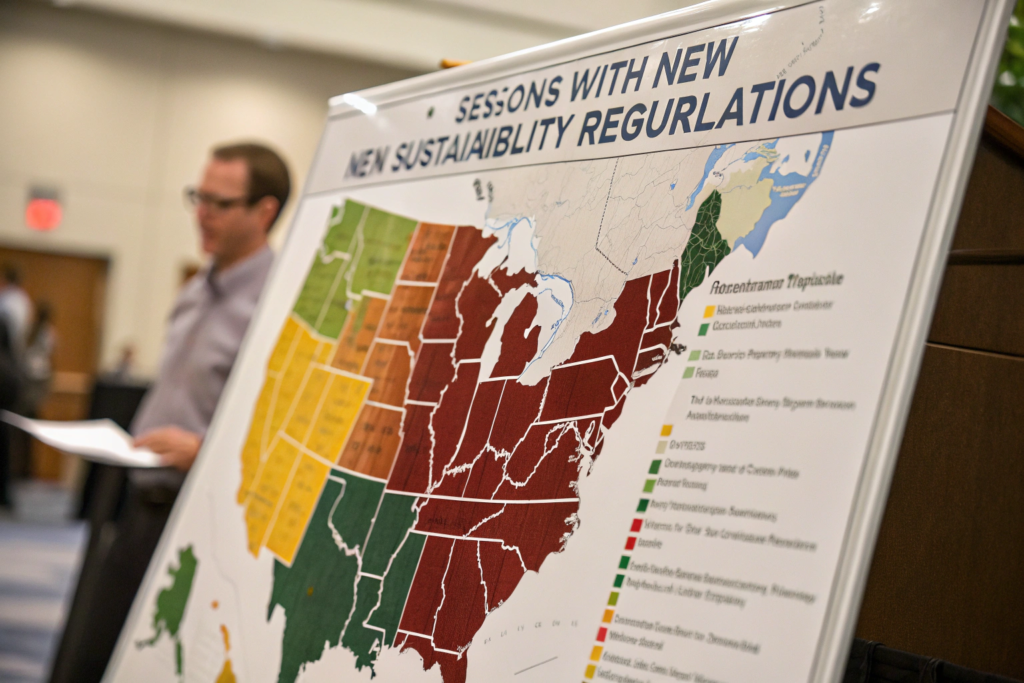
The US doesn't have a single national framework like the EU, but that doesn't mean you're safe. California leads the way with its own requirements, and because California is such a massive market, its rules effectively become national standards.
The California Textile Accountability Act, fully effective in 2026, requires brands selling in the state to disclose their full supply chain, prove sustainability claims with third-party verification, and take responsibility for end-of-life recycling. A New York-based brand that doesn't sell directly in California still has to comply if any of their retail partners have California stores—which most of them do.
Beyond California, the Federal Trade Commission has been aggressively enforcing "greenwashing" claims. In 2025, they fined three major fashion brands a total of $8 million for making sustainability claims they couldn't prove. The message is clear: if you say it's sustainable, you better have the paperwork to back it up.
A Chicago-based brand learned this when a competitor reported them to the FTC for claiming "eco-friendly" on products made with conventional cotton. The FTC investigation took 8 months, cost $35,000 in legal fees, and resulted in a consent decree requiring 5 years of compliance reporting. They removed "eco-friendly" from all marketing and lost significant market position. A guide to US sustainability regulations for textile imports on the Federal Trade Commission site explains what you can and cannot claim.
What about import documentation requirements tightening?
Customs authorities worldwide are getting smarter. In 2026, it's not enough to have a certificate of origin. Customs now cross-references import declarations with production data, export records, and certification databases.
A Vancouver-based brand in early 2026 declared a shipment of "organic cotton" t-shirts from India, with all the proper certificates. Customs ran a routine check and discovered the exporting factory's organic certification had expired 3 months earlier. The certificates the brand received were fraudulent. Customs seized the shipment, fined the brand $22,000, and flagged them for enhanced inspections on all future imports. The brand's cost to fight this: over $50,000 in legal fees and lost product.
The message: your documentation needs to be not just present but verifiable in real-time. Customs can now check certification databases instantly. If your supplier's certification number doesn't match the current database, you have a problem. A guide to customs compliance for sustainable imports on the World Customs Organization site provides best practices for documentation.
How are major retailers changing their sourcing requirements in 2026?
The regulations are one thing. What your customers demand is another. And in 2026, the biggest retail customers are implementing requirements that go far beyond what the law mandates. If you want to sell to Target, Walmart, H&M, Zara, or any of the major players, you need to meet their specific sustainability standards—and they're getting tougher every year.
A Denver-based brand lost their biggest account in late 2025 because their fabric supplier couldn't provide Scope 3 emissions data. The retailer's new sustainability policy required all suppliers to report carbon footprint data for every product. The brand's Chinese fabric supplier (not us, fortunately for them) said "we don't track that." The retailer said "find suppliers who do." The brand spent 6 months requalifying new suppliers and lost a full selling season.
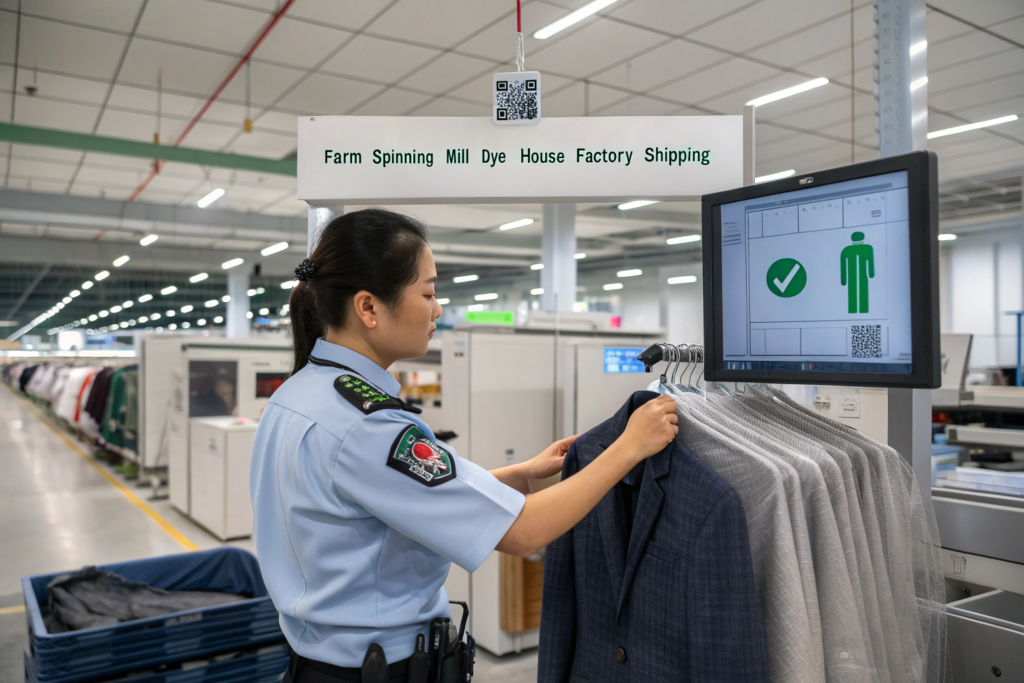
What are the big retailers' 2026 sustainability deadlines?
Every major retailer has published timelines. Here are the ones that matter:
H&M Group: By end of 2026, 100% of materials must be either recycled or sustainably sourced, with full traceability to origin. They've already dropped suppliers who couldn't provide this.
Inditex (Zara): All suppliers must be enrolled in their sustainability program with regular audits and full supply chain disclosure. Non-compliant suppliers are phased out annually.
Target: By 2027, all owned-brand products must use sustainable materials and have verified supply chains. They're auditing suppliers now to identify who will make the cut.
Walmart: Project Gigaton requires suppliers to report and reduce emissions. Suppliers who don't participate risk being delisted.
A Los Angeles-based brand we work with went through Target's sustainability audit in 2025. The audit took 3 months, required documentation from every tier of their supply chain, and uncovered issues they didn't know existed—like a subcontractor their garment factory used without disclosure. They had to switch factories to pass. But they passed, and they're now positioned as a preferred supplier while competitors scramble.
The key insight: retailers are using sustainability as a supplier selection filter. If you can't provide what they need, they'll find someone who can. A summary of major retailer sustainability requirements on the Sustainable Apparel Coalition site tracks the latest deadlines and standards.
How are sustainability scorecards affecting supplier selection?
Retailers are increasingly using scorecards to rank suppliers. These scorecards track:
- Material sustainability: What percentage of your fabrics are certified sustainable?
- Traceability: Can you trace materials back to origin?
- Emissions: What's your carbon footprint per unit?
- Water and chemical use: Do you have proper treatment and certifications?
- Social compliance: Are your factories audited and certified?
A Chicago-based brand told me in early 2026 that their retailer scorecard dropped from 82 to 67 when they switched to a new fabric supplier that had weaker certifications. The retailer put them on a "performance improvement plan" with 12 months to improve or lose shelf space. They switched back to us at Shanghai Fumao and their scorecard recovered, but they lost a year of momentum.
The scorecards matter for another reason: retailers share them. A low score with one retailer can affect your ability to land other retailers. The data is increasingly centralized through platforms like Higg Index and Worldly. A guide to retailer sustainability scorecards on the Higg Index site explains how they work and what they measure.
What about direct-to-consumer brands and sustainability expectations?
If you sell DTC, you might think you're safe from retailer requirements. You're not. Your customers are demanding the same transparency. A 2025 survey by McKinsey found that 67% of consumers consider sustainability an important factor in purchasing decisions, and 43% have stopped buying from a brand because of sustainability concerns.
A Portland-based DTC activewear brand learned this when a TikTok video went viral questioning their "sustainable" claims. The creator had done research and found that while the brand used recycled polyester, they couldn't prove where it came from or how it was processed. The video got 2 million views. The brand's sales dropped 30% in the following month. They spent $150,000 on a crisis PR campaign and still haven't fully recovered.
DTC customers have higher expectations than retail buyers. They want transparency, authenticity, and proof. They're willing to research and share what they find. In 2026, hiding behind vague claims is more dangerous than ever. A study of consumer sustainability expectations on the McKinsey site provides the data every DTC brand needs to understand.
What sustainable materials should you be sourcing in 2026?
With all the pressure and regulation, the question becomes: what should you actually buy? The landscape of sustainable materials has exploded, with new options appearing constantly. But not all sustainable materials are created equal, and some carry hidden challenges that can trip you up. After two decades in this industry and watching the sustainable revolution unfold, I have a clear view of what works and what's just marketing.
A Melbourne-based brand in 2025 made what they thought was a sustainable choice: they switched to a new "biodegradable" synthetic fiber. Six months later, they discovered the fiber only biodegraded in industrial composting facilities, not in home compost or landfill. Their marketing claims were technically true but practically misleading. They faced consumer backlash and had to relabel thousands of garments.

Which recycled fibers offer the best performance and availability?
Recycled polyester (rPET) is the workhorse of sustainable synthetics. Made from plastic bottles or post-industrial waste, it's widely available, performs identically to virgin polyester, and is increasingly affordable. At Shanghai Fumao, our rPET production has tripled since 2023 as brands switch from virgin materials.
The key with rPET is certification. Not all recycled polyester is created equal. Some suppliers use a small percentage of recycled content and call it "made from recycled materials." The Global Recycled Standard (GRS) certification ensures you're getting what you pay for. A Boston-based brand audits their rPET suppliers annually, testing samples to verify recycled content. In 2025, they caught one supplier providing fabric with only 30% recycled content while claiming 100%. They switched to us and haven't looked back.
Recycled nylon is harder to source but offers unique advantages for performance wear. It's less common than rPET, with fewer suppliers, but quality is improving. A Denver-based outdoor brand uses our recycled nylon for their premium collection, citing its strength and environmental profile. The cost is higher than virgin nylon but coming down as adoption increases.
Mechanical vs chemical recycling matters too. Mechanically recycled fibers can be shorter and weaker, limiting their use in high-quality fabrics. Chemically recycled fibers perform like virgin but cost more and are less available. A guide to recycled fiber types on the Textile Exchange site explains the differences and helps you choose.
What about next-generation bio-based materials?
This is the frontier that's generating the most excitement and the most confusion. Materials made from agricultural waste, algae, mushrooms, and other sources are entering the market. Some are ready for prime time; others are still laboratory curiosities.
Piñatex (pineapple leaf fiber) has found its niche in accessories and footwear. It's durable, unique-looking, and has a compelling story. But it's not yet a substitute for traditional fabrics in most apparel applications.
Mylo (mushroom leather) has attracted major investment from brands like Adidas and Lululemon. It's getting closer to commercial viability, but production capacity is limited and costs remain high.
Orange Fiber (made from citrus juice byproducts) creates a silk-like fabric that's beautiful but expensive. A few luxury brands have experimented with it, but it's not yet scalable for mid-market brands.
A London-based sustainable brand tested 12 next-generation materials in 2025. Their conclusion: most aren't ready for production at scale. They found quality inconsistent, supply unreliable, and costs prohibitive. They're watching the space closely but sourcing primarily from established sustainable fibers for now. A state of the industry report on next-gen materials from the Material Innovation Initiative provides realistic assessments of what's ready and what's coming.
How do you verify that a sustainable material is actually sustainable?
This is the million-dollar question. Greenwashing is everywhere, and it's getting harder to detect. Here's what actually works:
Third-party certification: Look for GRS, GOTS, OEKO-TEX, FSC, and other established certifications. These require audits, testing, and ongoing compliance. A supplier with credible certifications is far less likely to be greenwashing.
Chain of custody documentation: Ask for transaction certificates showing the certified material moving from supplier to supplier. If they can't provide these, the certification may be fake.
Independent testing: Test the fabric yourself. If it claims to be recycled, test for isotopic signatures that can verify recycled content. If it claims to be organic, test for pesticide residues.
Supplier visits: Visit your suppliers. See their operations. Ask hard questions. A Toronto-based brand visits every sustainable supplier annually, and they've caught two providing fraudulent certifications by walking the floor and finding conventional materials being processed alongside "certified organic" materials.
A guide to verifying sustainable material claims on the Green Business Bureau site provides checklists and resources for due diligence.
How do you build a supply chain that can prove everything?
The final piece of the puzzle is building a supply chain that can actually provide the documentation, traceability, and verification that 2026 demands. This isn't something you can fake or shortcut. It requires systematic changes to how you source, who you work with, and how you track information. But the brands that do it right aren't just surviving the regulations—they're thriving because customers trust them.
A Stockholm-based brand we work with has built what they call their "transparency stack"—a combination of supplier relationships, digital tools, and verification systems that let them trace every component of every garment. When a customer asks where their sweater's wool came from, they can pull up a map showing the specific farm in New Zealand, the date it was shorn, the mill that spun it, and the factory that knitted it. That's not just compliance—that's marketing gold.
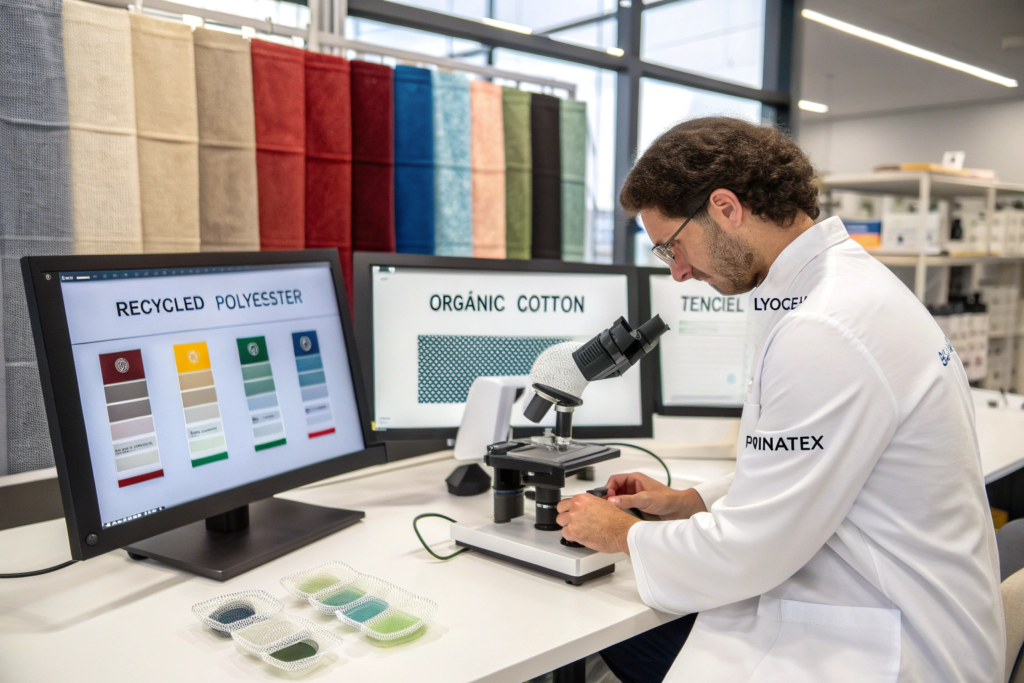
What documentation do you need from every supplier?
Start with the basics. For every supplier in your chain, you need:
Certifications: Current, valid certifications for all claims. Not just the certificate numbers—the actual certificates with valid dates and scope.
Transaction certificates: For certified materials, you need chain-of-custody documentation showing the certified material moving from supplier to supplier. If your fabric supplier bought certified yarn, they should have a transaction certificate from the yarn supplier.
Test reports: Independent lab test results verifying material composition, fiber content, and any performance claims.
Audit reports: Social compliance audits, environmental audits, and any other third-party assessments.
Process documentation: For recycled materials, documentation of the recycling process. For organic materials, documentation of farming practices.
A San Francisco-based brand created a supplier portal where every vendor uploads their documentation. The system flags expiring certificates automatically. When they're audited by retailers or customs, they can generate complete documentation packages in hours instead of weeks. A template for supplier documentation requirements on the Sustainable Apparel Coalition site provides a starting point.
How do digital tools enable traceability in 2026?
Technology has caught up with the need. Blockchain-based traceability platforms, digital product passports, and cloud-based compliance systems are now accessible to brands of all sizes.
Blockchain traceability: Platforms like TextileGenesis and TrusTrace create immutable records of material movement. When a bale of organic cotton is ginned, that event is recorded. When it's spun into yarn, another record. By the time fabric reaches you, there's an unbroken chain of custody records that can't be falsified.
Digital product passport platforms: Companies are building systems to generate and manage DPPs. These integrate with your production data to automatically create compliant passports for every product.
Supplier management software: Tools like Worldly (formerly Higg) and SupplyShift help you collect, organize, and verify supplier data. They provide dashboards showing compliance status across your entire supply base.
A Vancouver-based brand adopted blockchain traceability in 2025. The implementation took 4 months and cost $35,000. But when a major retailer asked for full traceability on a rush order, they could provide it in 24 hours. Their competitors were still emailing suppliers and waiting weeks. A guide to digital traceability tools on the Fashion for Good site reviews the major platforms and their capabilities.
How do you audit your supply chain effectively?
Documentation is one thing. Verification is another. You need to audit your supply chain to ensure the documentation reflects reality. This doesn't mean visiting every farm (impractical for most brands), but it does mean:
Risk-based auditing: Focus audit resources on high-risk suppliers and materials. Organic cotton from known regions with strong certification infrastructure is lower risk than novel materials from unverified sources.
Third-party audits: Use accredited third-party auditors for critical certifications. A supplier's self-declaration isn't enough.
Unannounced audits: The best audits are the ones suppliers don't know are coming. A Toronto-based brand does random, unannounced audits of their top 10 suppliers annually. They've caught issues that scheduled audits missed.
Traceability exercises: Randomly select a finished product and trace every component back to source. If you can't, you have gaps to fix.
A Copenhagen-based brand runs a "traceability day" every quarter. They pick three products and try to trace everything. In Q1 2026, they discovered one of their fabric suppliers had subcontracted dyeing to an unapproved facility. The dye house wasn't certified for the organic cotton they were processing. The brand had to requalify that supplier and strengthen their contract terms. A guide to supply chain auditing for fashion brands on the Ethical Trading Initiative site provides practical frameworks.
Conclusion
The 2026 sustainable fabric sourcing revolution isn't a choice. It's happening whether you're ready or not. New regulations in the EU and US are creating mandatory requirements. Major retailers are implementing supplier scorecards that determine who gets shelf space. Consumers are demanding transparency and punishing brands that can't deliver. And the technology to meet these demands exists—but only if you invest in it.
The brands that succeed in 2026 and beyond will be those that treat sustainability not as a marketing angle but as a fundamental business requirement. They'll build supply chains with full traceability, work only with certified suppliers, invest in digital tools to manage documentation, and verify everything. They'll see the regulations not as burdens but as competitive advantages—because when your competitors can't sell in major markets, you can.
At Shanghai Fumao, we've been preparing for this moment for years. Our CNAS-accredited lab tests everything. Our suppliers are certified to international standards. Our traceability systems track every roll from yarn to finished fabric. Our documentation meets the requirements of the most demanding retailers and regulators. We don't just sell fabric—we sell confidence that your products will still be sellable when the regulations hit.
If you're looking at 2026 and wondering whether your supply chain is ready, let's talk. Elaine, our Business Director, has helped hundreds of brands navigate the transition to compliant, sustainable sourcing. She can assess your current situation, identify gaps, and connect you with the resources you need. Contact Elaine at elaine@fumaoclothing.com to start a conversation about making your brand ready for the sustainable sourcing revolution. Let's build a supply chain that works for 2026 and beyond.