You’ve found a clothing manufacturer in China with competitive prices and decent samples. But when you ask about certifications, they hesitate or present a blurry document you can’t verify. Meanwhile, another factory proudly shows their CMIA certification with traceable batch numbers. Is that piece of paper worth the potentially higher cost or more rigorous process? After two decades in Keqiao, I’ve seen the fallout when brands choose based on price alone: shipments detained at customs, costly product recalls, and irreversible brand damage from safety scandals. The initial savings evaporate in an instant.
Choosing a CMIA certified manufacturer isn’t about paying for a certificate—it’s about investing in a system. It’s a visible signal of a factory’s commitment to fundamental product safety, systematic quality control, and operational transparency. In a market where opacity is the default, a verifiable CMIA certification acts as a filter. It separates suppliers who understand the rules of global trade from those who are hoping you won’t ask the right questions. This choice directly impacts your risk exposure, supply chain resilience, and brand equity.
So, let’s move beyond the checkbox mentality. This guide will explore the tangible, operational advantages of partnering with a CMIA-certified manufacturer. We’ll look at how this certification translates into fewer production defects, smoother customs clearance, stronger legal protection, and ultimately, a more trustworthy and sustainable partnership. The goal is to show you that this isn’t a cost, but a strategic investment in the security of your supply chain.
What Operational Advantages Does a CMIA Certified Factory Offer?
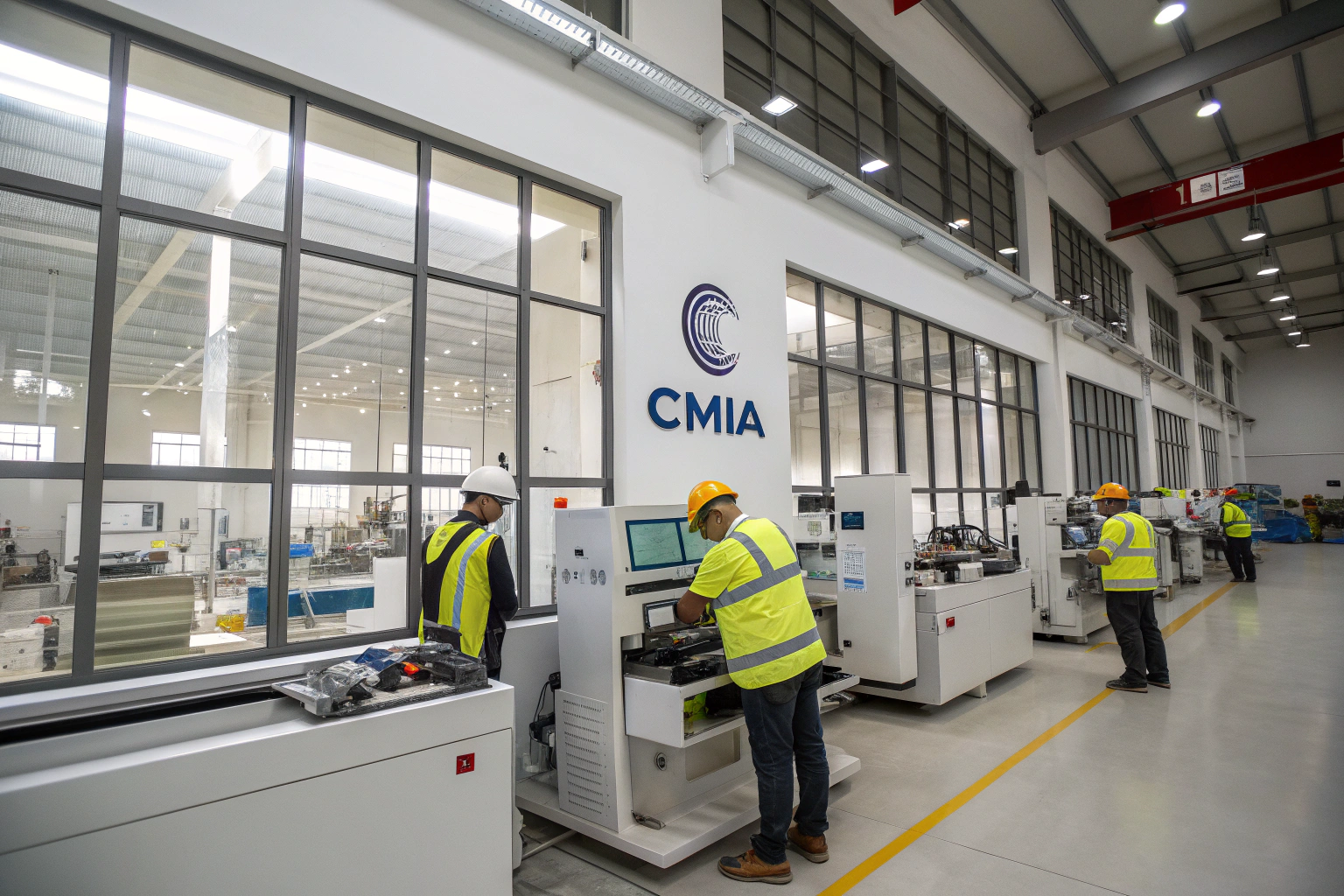
The certificate on the wall is the result of a system in place. A factory that maintains valid CMIA certification for its products has necessarily built internal processes that benefit you far beyond mere compliance.
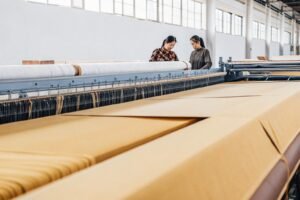
First, it indicates embedded quality control. To consistently pass chemical and physical safety tests, a factory must control its inputs (fabrics, threads, dyes, accessories) and its processes (dyeing, printing, washing). This means they have established relationships with reputable sub-suppliers, conduct incoming material inspections, and maintain production records. This systemic approach inherently reduces variability and defect rates. For example, a factory controlling for pH balance to meet CMIA standards is also less likely to have issues with color bleeding or fabric degradation—problems that might not be caught until after the customer complains.
Second, it signifies technical competency and investment. Maintaining certification requires knowledge of standards, proper lab testing protocols (either in-house or via accredited partners), and often investment in better machinery or chemistry. This technical foundation makes them a more capable partner for problem-solving. When we audit potential partner factories for Shanghai Fumao, the presence of a functioning, documented compliance system is a stronger positive indicator than the size of the facility. A mid-sized, certified factory often outperforms a larger, uncertified one on consistency and communication.
How does CMIA certification de-risk your supply chain?
Supply chain risk isn’t just about delays; it’s about catastrophic failures. A CMIA-certified partner mitigates several key risks:
-
Customs Rejection and Detention: This is the most immediate financial risk. Customs authorities in the EU, US, and other markets are increasingly screening imports, especially for children’s wear. A verifiable CMIA certificate is a recognized document that can expedite clearance. Without it, your shipment can be held for testing, which costs time and daily storage fees, or even destroyed if it fails. In 2022, we helped a Scandinavian brand rescue a container held in Rotterdam. Their original, uncertified supplier’s goods failed a spot check. We provided our CMIA documentation for the replacement order, and the subsequent shipment cleared without issue. The certificate acted as a "pre-approved" passport for the goods.
-
Product Recalls and Liability: If a product is found to contain harmful substances after sale, the brand faces the recall costs, legal liability, and reputational ruin. A valid CMIA certificate from the manufacturer is your primary evidence of "due diligence." It shows you took reasonable steps to ensure product safety, which is a critical legal defense. It shifts a portion of the liability back to the certified manufacturer who provided the non-compliant goods.
-
Inconsistent Quality and Delays: Factories without process control are prone to batch-to-batch variation. A shade difference might be the least of your worries; inconsistent dyeing or finishing can lead to failed tests mid-production, causing massive delays while the problem is diagnosed and fixed. A certified factory’s processes are designed to prevent this.
Does certification correlate with better communication and professionalism?
In our experience, overwhelmingly, yes. The discipline required to maintain a certification system often spills over into general business operations. To manage certification, a factory must:
- Maintain accurate and organized records (batch numbers, test reports, production logs).
- Have staff who understand technical specifications and standards.
- Engage in clearer communication about requirements and limitations.
This creates a foundation for a more professional partnership. You’re dealing with a team that speaks the language of specifications and compliance, rather than one that relies on vague assurances. When you ask, "Can you meet the formaldehyde limit for Class A?" they can give you a precise answer about their process, rather than a simple "yes." This transparency is invaluable for navigating complex product compliance for international fashion brands.
How Does CMIA Certification Impact Product Safety and Brand Trust?
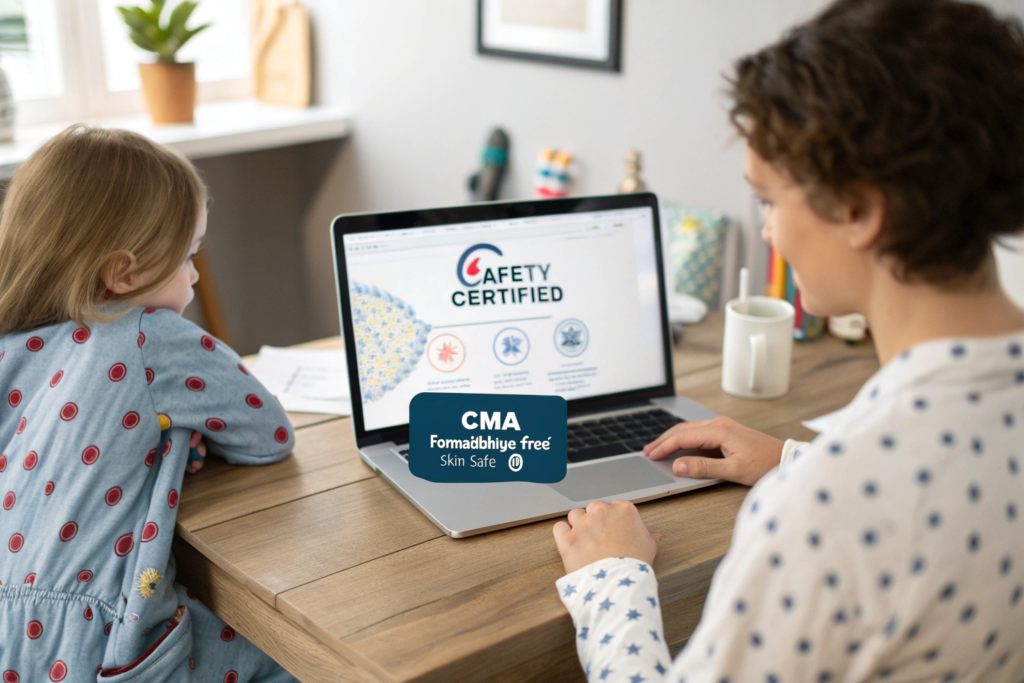
Today’s consumers are informed and cautious. They read labels, research brands, and value transparency. A product safety scandal spreads across social media in hours, eroding years of brand building. CMIA certification, while a B2B tool, underpins the consumer-facing promise of safety.
The certification specifically targets substances that pose real health risks: formaldehyde (a known irritant and carcinogen), allergic disperse dyes, heavy metals, and imbalanced pH levels that can harm skin. By choosing a certified manufacturer, you are building your product on a verified foundation of safety. This isn’t marketing fluff; it’s a preventative measure. You’re not just avoiding legal trouble; you’re actively protecting the end-user. This is especially critical for categories like children’s wear, athleisure (where sweat and heat increase chemical migration), and anything worn close to skin for extended periods.
Brand trust is hard-earned and easily lost. Promoting that your products are "made in safe, certified facilities" is a powerful, authentic message. It moves your brand narrative from just style and price to include responsibility and care. In an audit for a potential partnership with a US-based eco-conscious brand, they didn’t just want our CMIA certificates; they wanted to see the corrective action logs from our internal QC checks. They saw the certificate as the output of a living system of accountability, which aligned perfectly with their brand values.
What are the specific health risks that CMIA testing prevents?
Let’s get concrete about what you’re avoiding:
- Formaldehyde: Used in anti-wrinkle and anti-shrink finishes. Can cause skin rashes, allergic reactions, and respiratory issues. Long-term exposure is a cancer risk.
- Banned Azo Dyes: When absorbed through skin and metabolized, they can release carcinogenic aromatic amines.
- Heavy Metals (like Lead & Cadmium): Sometimes present in pigments for prints or dyes. These are toxic, accumulate in the body, and can cause developmental and neurological damage.
- pH Value Imbalance: Skin’s natural pH is slightly acidic (~5.5). A highly alkaline or acidic fabric can cause skin irritation, dryness, or dermatitis.
A CMIA-certified manufacturer has processes to control these exact parameters. For instance, they will use pre-approved, safe dyes and auxiliaries, have controlled curing times/temperatures for finishes, and conduct regular wash tests to ensure colorfastness. This controlled environment is your product’s first and best line of defense.
How can you leverage this certification in your marketing?
Authenticity is key. Don’t just say "safe." Educate.
- On Product Tags: Include a line such as "Tested for safety against international harmful substance standards."
- On Your Website: Create a "Our Responsibility" page. Explain in simple terms what you test for and why it matters for the customer’s well-being. You can reference compliance with "GB 18401 standards, which regulate substances like formaldehyde and heavy metals."
- In Press and Storytelling: Share the story of your diligent sourcing process. Customers appreciate knowing the care taken behind the scenes.
This turns a compliance cost into a brand equity asset. It shows you go the extra mile, which builds loyalty. A European client of ours uses the test reports from our Shanghai Fumao lab not just for clearance, but to provide downloadable "Transparency Reports" for their top-tier products, earning immense trust in their community.
Is a CMIA Certified Manufacturer More Expensive? Cost vs. Value Analysis.
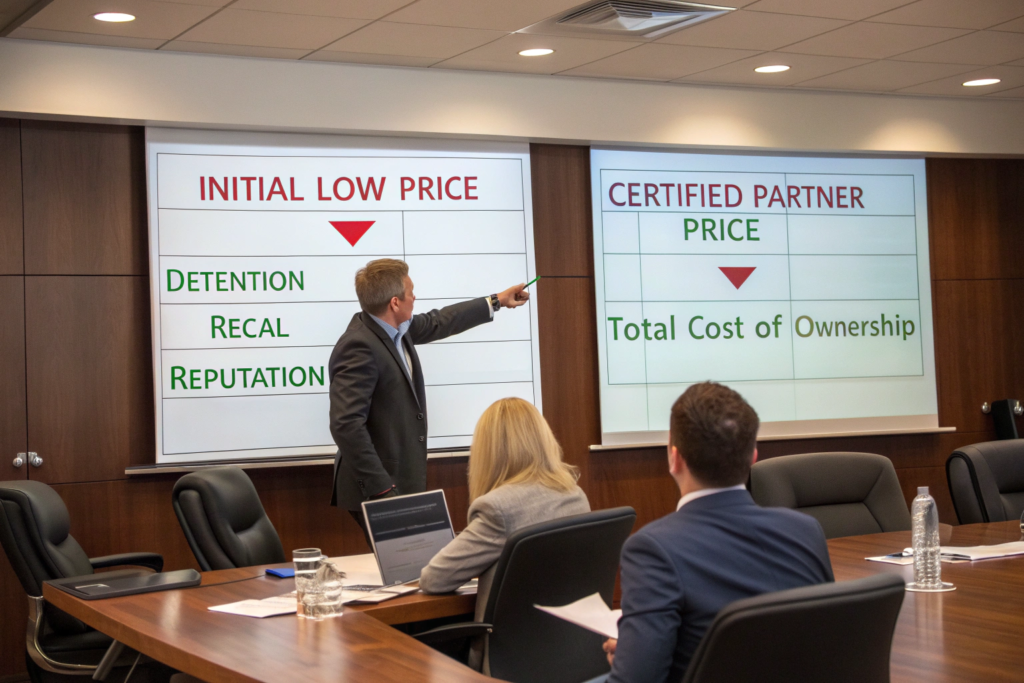
The upfront cost per unit from a CMIA-certified factory might be 5-15% higher than from a non-certified competitor. This premium covers their investment in better raw materials, testing fees, and more meticulous processes. The critical question is: Are you comparing price or total cost?
Let’s break down the Total Cost of Sourcing, which includes hidden and risk-based costs:
| Cost Factor | Non-Certified Supplier | CMIA-Certified Supplier |
|---|---|---|
| Unit Price (FOB) | Lower | Higher |
| Risk of Customs Detention | High (Costs: storage, testing, delays) | Low (Faster clearance) |
| Risk of Batch Failure/Recall | High (Catastrophic cost) | Low (Systemic prevention) |
| Communication & Error Costs | High (Misunderstandings, rework) | Lower (Clearer specs, processes) |
| Brand Reputation Risk | Very High | Mitigated |
The "value" from a certified partner isn’t in the item line; it’s in risk reduction and operational smoothness. Paying a slight premium for certainty is often far cheaper than dealing with a single crisis. I advise clients to think of it as insurance. You wouldn’t ship a container without cargo insurance; partnering with an uncertified factory is like opting out of that insurance to save a small premium.
Can certification actually lead to long-term cost savings?
Absolutely, through three main channels:
- Reduced Rejection and Rework: Consistent processes mean fewer surprises. The first article is right, and the 10,000th article is right. This reduces the time and cost you spend on quality disputes, re-orders, and compensation.
- Efficient Time-to-Market: Reliable lead times and predictable outcomes allow for tighter planning. You reduce your need for expensive air freight to compensate for delays caused by quality hiccups or customs holds.
- Stronger Partnership Efficiency: Over time, working with a professional, transparent factory streamlines everything from sampling to production updates. This efficiency saves countless hours of management and troubleshooting.
A case in point: An Australian e-commerce brand switched to us after two disastrous orders with a cheaper, uncertified maker. While our FOB price was 8% higher, their landed cost per unit became 5% lower within a year because they eliminated all air freight surcharges, import penalties, and defective write-offs they had previously factored in as "normal."
How should you evaluate the cost premium?
Ask the supplier to explain the premium. A reputable one will be transparent:
- "This covers the cost of batch testing at a CNAS lab."
- "We use more expensive, eco-friendly dyes that guarantee passing azo dye tests."
- "Our finishing process is controlled to ensure stable pH, which requires better equipment."
If they can’t explain it, be cautious. If they can, you’re paying for tangible, value-adding components. This is part of conducting a comprehensive supplier audit for your clothing line, where cost breakdown transparency is a key indicator of overall honesty.
How to Verify and Work Effectively with a Certified Manufacturer?
Finding a factory that claims certification is step one. Verifying it and establishing an effective workflow is what separates successful partnerships from failed ones.
Verification is a 3-step process:
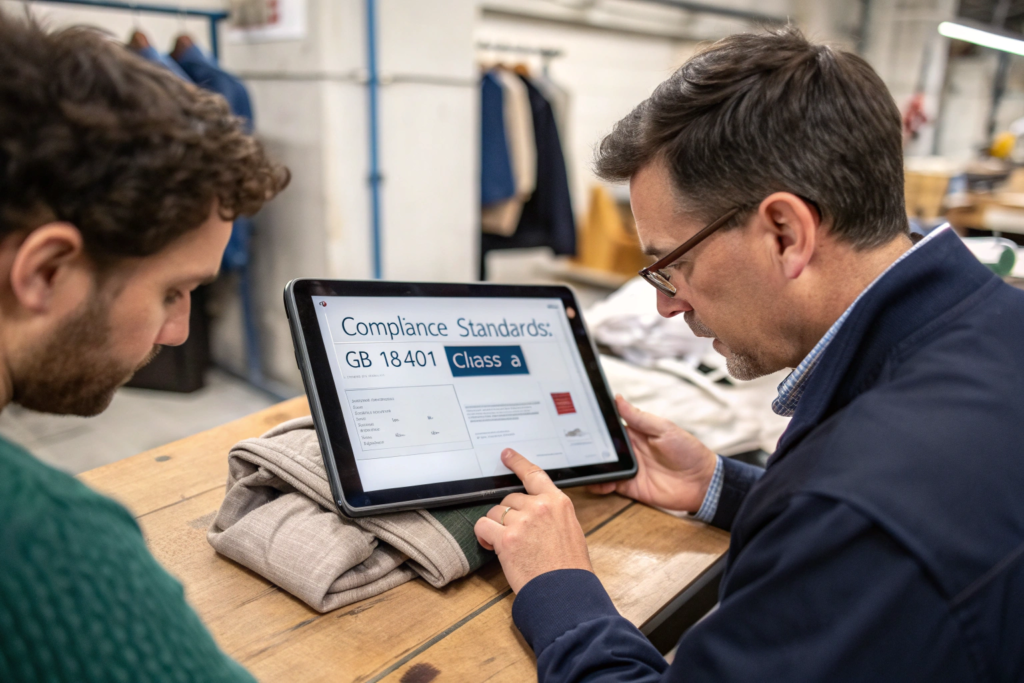
- Document Scrutiny: Request the CMIA certificate for a product similar to what you plan to order. Check the issuing lab’s CNAS accreditation, the product description (does it match?), and the batch number. Ensure it’s recent.
- Online Check: Use the certificate number or QR code to verify on the lab’s official website.
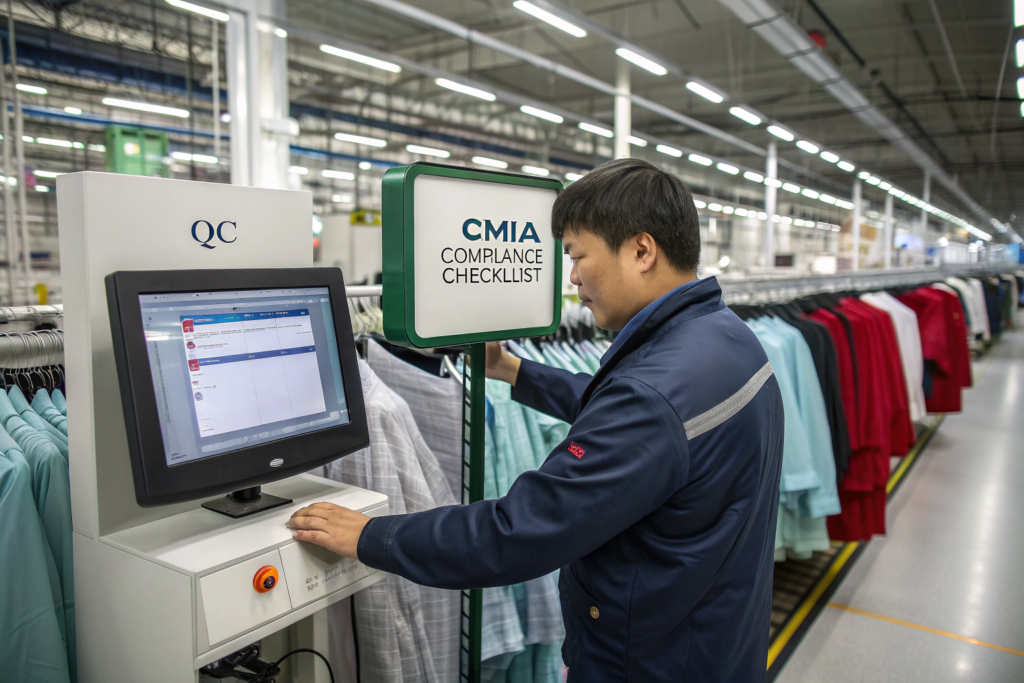
- Factory Audit Question: Ask how they maintain certification. "Do you test every batch? Who are your approved fabric and dye suppliers? Can I see your QC checklist?" Their answers will reveal if it’s a integrated system or a purchased piece of paper.
Once verified, working effectively means using the common language of standards. Your tech pack should reference the required CMIA class (e.g., "Garment must comply with GB 18401 Class B"). Specify that the final pre-shipment sample must be accompanied by the batch test report. Make certification a formal condition of your purchase order.
What questions should you ask beyond the certificate?
- "Can you provide test reports for the specific fabrics and accessories you will use for my order?" (Tests component control.)
- "What is your process if a batch fails an internal test?" (Reveals their corrective action system.)
- "How do you manage material traceability from fabric roll to finished garment carton?" (Essential for targeted recalls if needed.)
- "Can we arrange for a third-party inspection that includes a fabric composition and safety test verification?" (Shows your seriousness and their confidence.)
Asking these questions positions you as a knowledgeable buyer and attracts serious, professional manufacturers. It discourages those who rely on ambiguity.
What is the role of a partner like Shanghai Fumao in this ecosystem?
For brands that cannot constantly be on the ground, a partner like us acts as your embedded compliance and quality agent. Our advantage is vertical integration. We don’t just source from certified mills; we are the mill with control over the first critical stage. Our Shanghai Fumao CNAS-accredited lab tests our own fabrics as a matter of course. When we manage a full garment order, we apply the same systematic approach to selecting certified trimming and decoration partners. We provide a coherent, traceable compliance package for the entire product. You get a single point of accountability and verification, which simplifies your due diligence from managing multiple suppliers to auditing one capable partner.
Conclusion
Choosing a CMIA-certified clothing manufacturer in China is a strategic decision that prioritizes long-term stability over short-term cost saving. It is a choice for reduced risk, enhanced product safety, professional partnership, and ultimately, brand protection. The certificate is not the goal; it is the evidence of a factory’s operational discipline and commitment to meeting the fundamental safety expectations of the global market.
In a landscape where finding a reliable partner can feel daunting, this certification serves as a powerful initial filter. It leads you to factories that are more likely to understand your needs, communicate clearly, and deliver consistent, compliant quality. The modest upfront premium is an investment in peace of mind, supply chain predictability, and the integrity of your brand promise.
If you are ready to build your brand on a foundation of verified safety and professional execution, we invite you to experience the difference a vertically integrated, certified partner can make. At Shanghai Fumao, our certification is the output of our daily operational reality. Let us show you how our controlled processes, from fiber to finished fabric, can de-risk your sourcing and elevate your product quality. Contact our Business Director, Elaine, to begin a partnership based on transparency and trust: elaine@fumaoclothing.com.