
You’re asking the right question. As a fabric manufacturer and wholesaler sitting on thousands of fabric rolls in Keqiao, I think about inventory every single day. When we decided to push into BCI certification a few years back, my first worry wasn’t about marketing—it was about our warehouse. Would this tie up our cash flow in specialty yarns? Would we end up with dead stock labeled "BCI" that nobody wanted? Let me give you the real answer from the factory floor, not the marketing brochure.
The impact is profound, but it’s not about physically segregating “BCI fabric” from regular fabric. That’s the biggest misconception. BCI operates on a mass-balance chain of custody. This means we don’t need separate silos or bins labeled “BCI Cotton.” Instead, we track the volume of BCI cotton we purchase from licensed spinners (via Transaction Certificates) against the volume of cotton fabric we sell as “BCI.” Our physical inventory remains mixed, but our paperwork and commitment are segregated. This changes the game completely—it turns inventory management from a physical logistics challenge into a data tracking and strategic purchasing exercise.
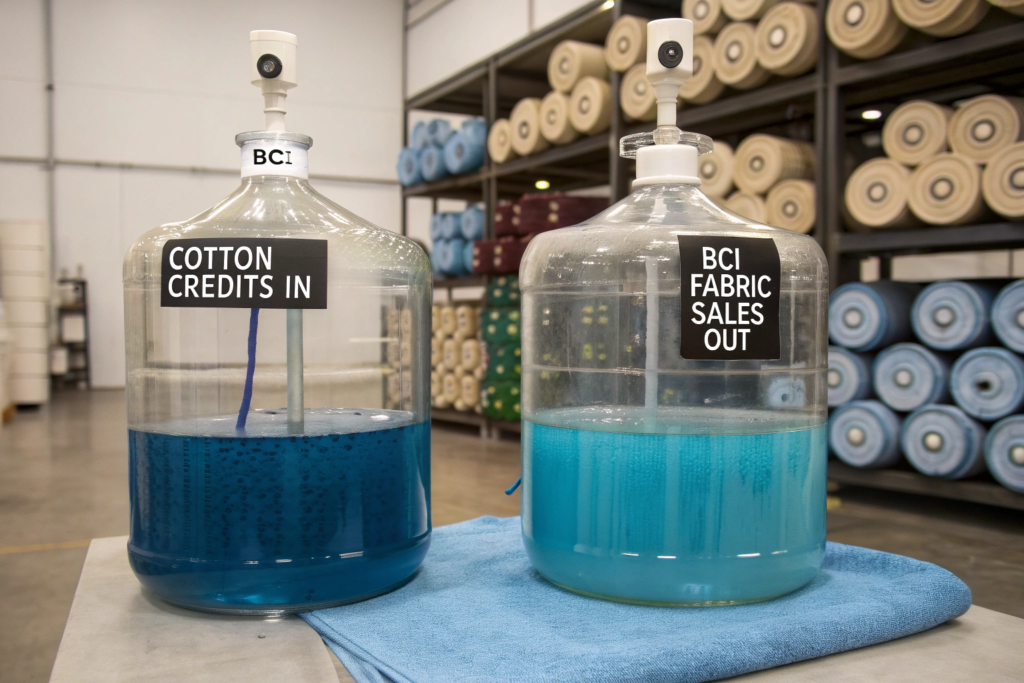
Think of it like this: imagine your inventory is a large reservoir of water. The BCI system doesn’t require you to build a separate, smaller tank. It just asks you to carefully measure how much “sustainably sourced” water you put into the main reservoir and then allows you to sell an equivalent amount of water from that reservoir with a “sustainably sourced” label. Your warehouse looks the same, but your sales tickets now have a powerful new line item. This system is why BCI can scale. In 2023, this approach allowed us at Shanghai Fumao to convert over 40% of our mainstream cotton inventory (like poplins, twills, and jerseys) to BCI-claimable without changing a single storage location.
So, the impact is less about where you store the fabric and more about how you buy the raw material and what you promise to your customers. Let’s dive into the specific operational shifts that BCI certification triggers in your inventory management.
Does BCI Require Separate Physical Inventory Storage?
No, and this is the key operational advantage. The mass-balance model is designed specifically to avoid the inefficiency and cost of physical segregation. In our Keqiao warehouse, a roll of 100% cotton poplin could be sold tomorrow as “BCI” fabric to a German brand, and next week, an identical roll from the same batch could be sold as standard cotton to a domestic buyer who doesn’t require the certification. The fabric is the same. The difference is in the documentation we allocate to each sale.
This is liberating but demands discipline. We don’t manage two piles of fabric; we manage two numbers in our ERP system: “BCI Cotton Credit In” (from our yarn purchases) and “BCI Cotton Credit Out” (from our fabric sales). As long as the “Out” never exceeds the “In,” we are compliant. This means our inventory managers don’t need new warehouse protocols, but our procurement and sales teams need tight coordination. For example, in Q2 of last year, we had a large order for BCI cotton canvas from a Dutch workwear brand. Our sales team had to check with procurement before confirming that we had enough BCI credit in the system to cover the order, even though the physical fabric was already in stock.
How does mass-balance tracking work in a daily ERP system?
It’s all about creating virtual batches. When we receive a BCI Transaction Certificate for, say, 10,000 kg of cotton yarn, we create a corresponding “virtual lot” in our system. Then, as we produce and sell fabric, we allocate portions of this virtual lot to specific sales orders. The system automatically prevents overallocation. The critical link is ensuring your yarn supplier’s BCI license number and TC details are accurately entered into your system. A small error here breaks the chain. We learned this early on when a misplaced digit in a TC reference number caused a delay for a French client’s audit. Now, we use barcode scanning for all incoming yarn lots linked to TCs. Learning about integrating sustainability certifications into textile ERP software was a game-changer for us.
What happens if we oversell our BCI credit?
This is a serious compliance failure and a major business risk. You would be making a false claim to your customer. To prevent this, we built a simple but effective rule: No sales order can be marked as “BCI” without prior system approval from our dedicated Sustainability Compliance Officer. This person has the authority to block the order if credits are insufficient. This role didn’t exist before BCI, but now it’s crucial. It’s a cost, but it protects our reputation. This practice aligns with broader guidelines for managing chain of custody in certified textile production.
How Does BCI Affect Raw Material (Yarn) Procurement Strategy?
This is where the real impact hits. BCI certification shifts power and responsibility upstream to your yarn suppliers. Your inventory risk is no longer just about fabric price fluctuations; it’s about securing a steady flow of credible BCI-certified raw material. You are now buying two things: yarn and the attached BCI credit.
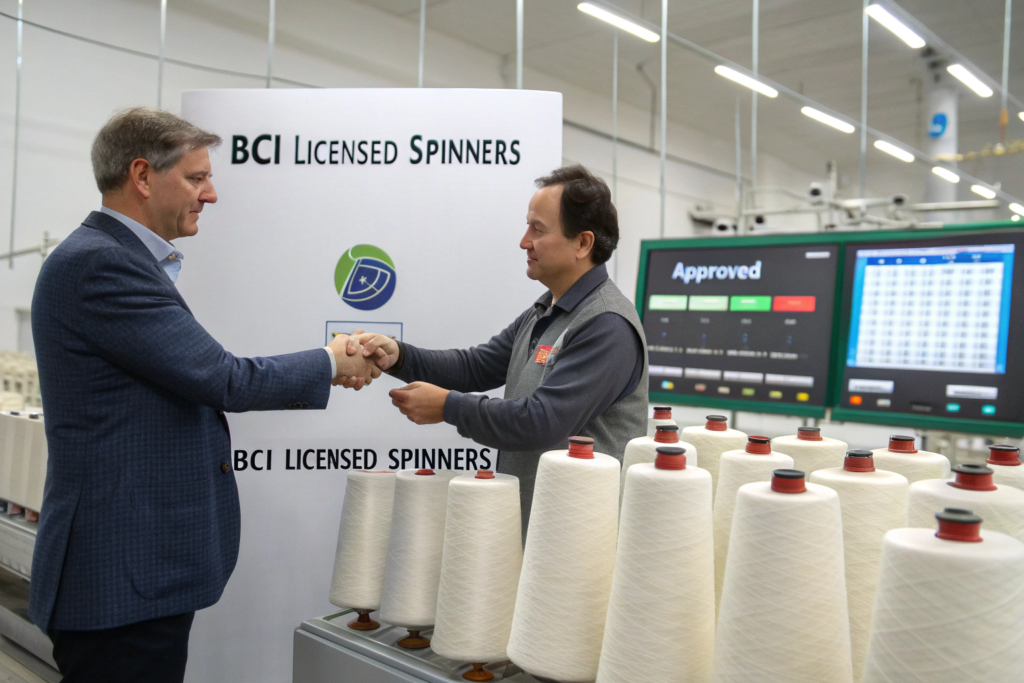
This changes your supplier relationships. You can’t just chase the cheapest yarn on the market each week. You need to develop strategic partnerships with BCI-licensed spinners who are reliable, can provide valid TCs promptly, and whose quality matches your standards. We had to drop two of our previous yarn suppliers because they couldn’t or wouldn’t get BCI licensed. Conversely, we deepened our ties with three key licensed spinners, even agreeing to slightly longer-term contracts to guarantee our BCI credit pipeline. In return, we get priority during tight supply periods, like before Chinese New Year. Last October, this partnership ensured we could fulfill a sudden 30,000-meter BCI fleece order for a Polish sportswear brand when other mills were already booked out.
Does BCI yarn cost more, and how does that impact inventory value?
Yes, there is typically a premium, ranging from 3% to 8% for the yarn. This directly increases your Cost of Goods Sold (COGS) for the fabric you plan to sell as BCI. You must factor this into your pricing model. However, this isn’t just a cost—it’s an investment in market access. The increased raw material cost is offset by:
- Higher Selling Price: You can charge a premium for BCI fabric (usually 5-15%).
- Access to New Markets: The European and brand-conscious segments.
- Reduced Risk of Obsolescence: BCI-claimable fabric has a wider and more resilient buyer pool.
The key is to avoid buying BCI yarn for inventory you’re not confident you can sell as BCI. This requires much sharper sales forecasting. We now run separate demand forecasts for “BCI-intended” products versus standard ones.
How do you manage lead times for BCI yarn procurement?
Lead times often increase. Securing the yarn isn’t the only step; you must also wait for the spinner to issue the official Transaction Certificate, which can add several days. Your entire procurement timeline needs a buffer. We’ve adjusted our Material Requirements Planning (MRP) to account for this “administrative lead time.” For fast-turnaround orders, we sometimes reserve a pool of BCI credit from yarn already in our pipeline, but this requires very precise coordination between sales, production, and procurement teams.
What Are the Risks of BCI Inventory Becoming Dead Stock?
The risk is real, but it’s different from typical dead stock. The fabric itself isn’t “dead”—it’s still usable cotton fabric. The risk is that the BCI credit attached to that fabric expires or becomes stranded, meaning you paid a premium for the yarn but cannot sell the fabric at the BCI premium price. You’re then forced to sell it as conventional fabric, eating the cost difference.
This usually happens for two reasons:
- Poor Demand Forecasting: You over-bought BCI yarn for a fabric style that falls out of fashion.
- Lack of Sales Channel: You don’t have enough customers asking for BCI.
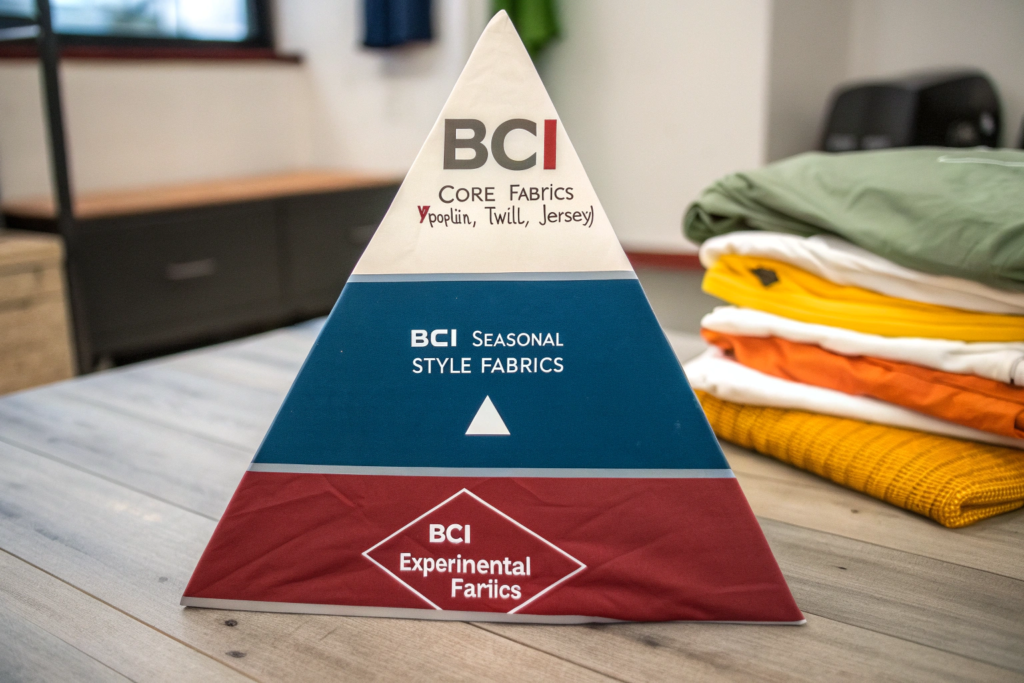
To mitigate this, we adopted a two-pronged strategy at Shanghai Fumao. First, we focus our BCI procurement on core, evergreen fabrics—like 40s combed cotton poplin, 2/1 twill, and single jersey. These are the “bread and butter” textiles with consistent, year-round demand from multiple market segments (workwear, basics, fashion). Second, we actively develop our BCI sales channels through our digital marketing, explicitly highlighting our BCI capability on Alibaba, our website, and in samples. We don’t make a fabric “BCI” unless we have a clear path to sell it as such.
How can you convert stranded BCI credit?
You have options, but they require agility:
- Blend it Down: Use the BCI yarn in a blended fabric (e.g., BCI cotton/polyester). The BCI credit is diluted but can still be claimed for the cotton portion, potentially saving a portion of the premium.
- Transfer to High-Demand Items: If you have multiple fabric types, you can re-allocate the BCI credit from a slow-moving item to a fast-moving one in your accounting, as long as the total volume doesn’t exceed your purchased credit. This is a virtual transfer within your ERP system.
- Sell the Credit: Some platforms and networks are emerging for trading sustainability credits, though this is still nascent in textiles. Staying informed on emerging markets for textile sustainability credits is wise.
What’s the role of fabric testing in maintaining BCI inventory value?
It’s indirect but critical. A BCI claim adds value, but the fabric must still pass all physical tests (colorfastness, shrinkage, pilling). If a batch fails, you can’t sell it as high-value BCI fabric. Our CNAS lab tests every batch of BCI-intended fabric before we allocate the precious BCI credit to it. This “test-first, claim-later” policy prevents us from wasting credits on substandard goods. In 2024, this saved us from allocating BCI credit to a 5,000-meter lot of dyed twill that had a shrinkage issue, allowing us to re-route the credit to a good lot.
How Does BCI Certification Optimize Overall Inventory Turnover?
Paradoxically, going through the BCI certification process can force a positive discipline that improves overall inventory efficiency. To make BCI work profitably, you must become better at forecasting, procurement planning, and sales-data alignment. This discipline spills over into your entire inventory operation.
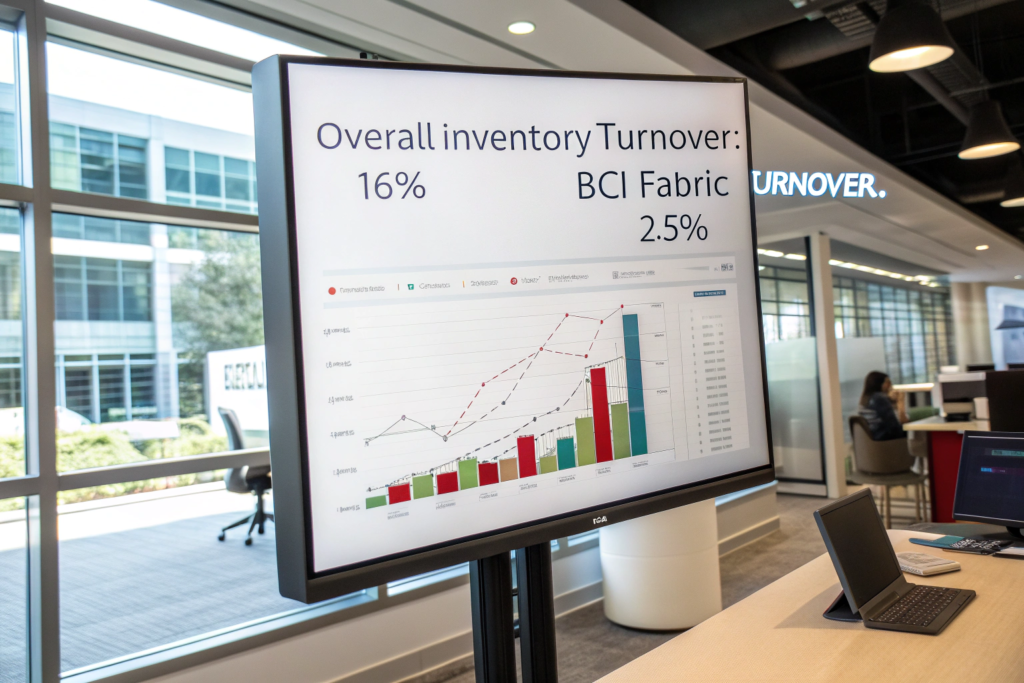
For us, it led to a tangible improvement. Before BCI, our average inventory turnover for cotton fabrics was about 5 times per year. After implementing the tighter systems for BCI tracking, forecasting, and supplier management, our overall cotton turnover improved to 5.8 times within two years. Why? Because we were paying closer attention. We were analyzing demand patterns more carefully to decide what to make as BCI. This analysis helped us reduce overproduction across the board. A specific example: our data showed that BCI organic cotton jersey had strong, steady demand from European babywear brands. We moved it from a “make-to-order” to a “strategic stock” item with defined reorder points, which increased its turnover rate by 40%.
Can BCI help with inventory financing or insurance?
Increasingly, yes. Banks and financial institutions are developing ESG-linked financing products. If you can demonstrate that a portion of your inventory is dedicated to certified, sustainable materials with stable demand (like BCI fabrics), you may qualify for lower interest rates on inventory financing loans or better insurance terms. This turns your BCI inventory from an asset on a balance sheet into a strategic financial tool. We are currently in discussions with our bank in Keqiao to leverage our BCI and GOTS inventory data for exactly this purpose. Resources on ESG financing for manufacturing companies in Asia are becoming more relevant for businesses like ours.
How does it affect sample inventory and development?
It adds a layer of communication. We now maintain a separate section in our sample room for fabrics we can reliably offer as BCI. Each sample card is marked with the BCI logo. This manages client expectations from the very first touchpoint. Furthermore, our R&D team, when developing new fabrics intended for the European market, will now proactively source BCI yarns for the prototyping stage. This means our development sample inventory also starts to align with our certified production pipeline, reducing time-to-market for BCI products.
Conclusion
So, how does BCI certification impact your fabric inventory? It transforms it from a purely physical asset into a data-driven, strategically managed portfolio. The biggest shift isn’t in the warehouse racks; it’s in your company’s mindset, systems, and supplier relationships. You stop thinking just about meters of cloth and start thinking about meters of credible, market-ready value.
The risks of dead stock and increased raw material cost are real, but they are manageable with disciplined forecasting, a focus on core products, and the development of strong sales channels for certified goods. The benefits—access to premium markets, improved inventory turnover through better planning, and potential financial advantages—far outweigh the challenges for those who implement it systematically.
At Shanghai Fumao, embracing BCI was one of the best decisions we made for the long-term health of our inventory and our business. It forced us to become smarter, more connected, and more valuable to our partners. If you’re looking to future-proof your fabric business and unlock new opportunities, understanding and integrating BCI into your inventory strategy is no longer optional—it’s essential.
Ready to explore how BCI certification can optimize your inventory and open new doors? Let’s talk about building a tailored strategy. Contact our Business Director, Elaine, who can guide you through the operational and commercial implications. Start the conversation at elaine@fumaoclothing.com.