You’re running a factory floor. Every minute of downtime, every meter of wasted fabric, every inconsistent dye lot hits your bottom line directly. You need raw materials that don’t just tick an ethical box but actually make your production smoother, more predictable, and less wasteful. That’s the real business case we discovered on our own factory floor.
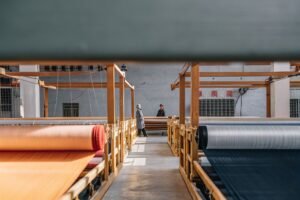
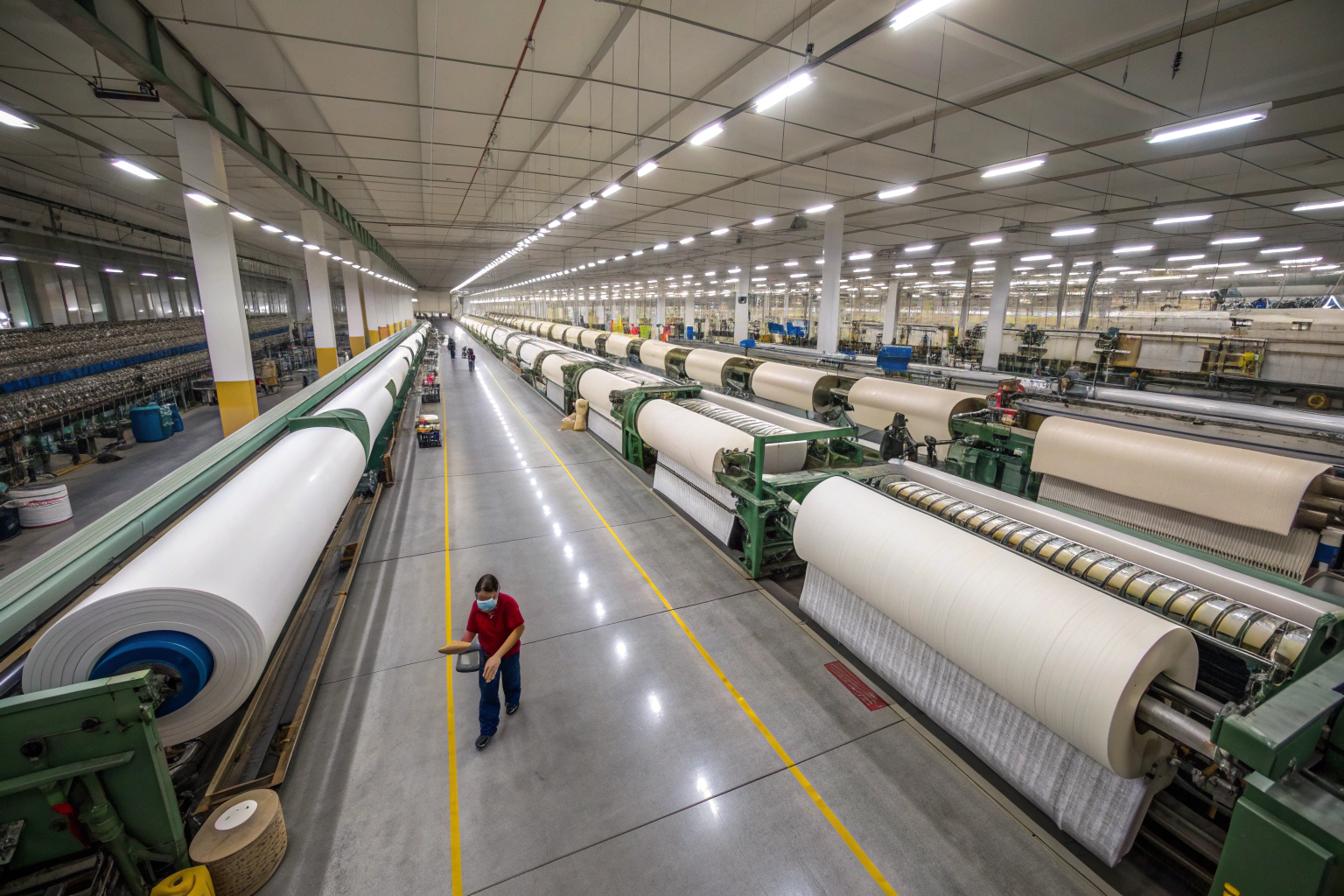
At Shanghai Fumao, with five dedicated production lines for weaving, dyeing, printing, embroidery, and coating, we didn’t adopt BCI cotton because it was trendy. We standardized it because it solves practical manufacturing headaches. From reducing yarn breaks on high-speed looms to ensuring print clarity, BCI cotton delivers operational excellence that benefits both our business and our clients’ brands.
This article pulls back the curtain on our production reality. We’ll show you the tangible, quantifiable reasons why BCI cotton has become our default spec across all lines—not as a marketing add-on, but as a core component of our quality and efficiency strategy.
Line 1 & 2: Weaving & Knitting – Fewer Breaks, Higher Efficiency
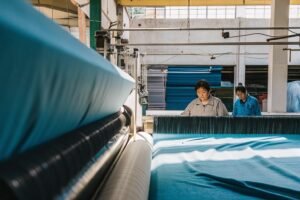
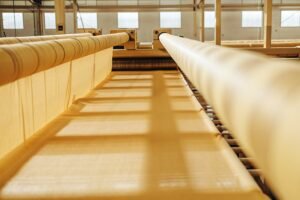
On our high-speed Toyota air-jet looms and circular knitting machines, consistency is king. Any weakness or irregularity in the yarn causes breaks. A single break can stop a machine for minutes, requiring re-threading and causing defects in the fabric. This downtime and waste directly erode our margins and your fabric cost.
BCI cotton’s focus on better ginning and fiber handling results in yarn with higher tenacity and better uniformity (lower CV%). Simply put, the fibers are stronger and more consistent in length and diameter. When we spin this into yarn, there are fewer weak spots. In our 2023 internal data review, we found that shifting two of our weaving lines to primarily use BCI-sourced yarn reduced yarn breakage rates by an average of 18%. This translated to a 5% increase in overall meterage output per shift on those lines. That’s not a sustainability story—that’s a hard production efficiency story. For technical managers, understanding yarn quality parameters for high-speed weaving is critical, as detailed in resources from Textile School.

How Does Fiber Cleanliness Impact Our Weaving Output?
It’s all about "non-lint content" – the plant trash, dust, and leaf particles that get ginned with the cotton. BCI-trained farmers and ginners prioritize keeping cotton dry and protected from contamination. Cleaner raw cotton means cleaner yarn.
When yarn has less debris:
- Fewer Slubs and Neps: These thick spots in the yarn can cause snags, breaks, or visible flaws in the woven fabric.
- Smoother Yarn Surface: This reduces friction in the weaving process, allowing for higher operating speeds with less wear on the loom’s components.
- Less Machine Downtime for Cleaning: Dust and lint from dirty cotton clog machinery guides and sensors, requiring frequent stops.
Last October, we ran a 50,000-meter order of 30×30 68×68 plain weave using conventional and BCI cotton back-to-back. The BCI batch required 30% fewer loom stops for cleaning and fault correction. Our head technician, Lao Zhang, now actively requests BCI yarn for complex jacquard patterns because he gets a cleaner shed formation. This kind of practical insight into reducing weaving defects is shared among production veterans on forums like Fibre2Fashion’s industry pages.
Line 3: Dyeing & Finishing – Predictable Results, Less Chemical Waste
The dye house is where inconsistency costs the most. A dye lot that doesn’t match the standard means re-processing, wasting water, energy, chemicals, and time. It can delay an entire shipment. The single biggest factor in achieving first-pass dye lot accuracy is the consistency of the fabric substrate.
BCI cotton provides that consistent substrate. Because the fibers are more uniform in maturity and have fewer impurities, they absorb dye solutions more evenly. This leads to superior batch-to-batch reproducibility. For our dye house manager, this predictability is worth its weight in gold. Since prioritizing BCI bases, we’ve seen our first-pass dye lot approval rate climb from 92% to 97%. This 5% improvement might seem small, but it saves us thousands of dollars per month in reprocessing costs and guarantees our clients more reliable lead times.

What’s the Real Impact on Water and Chemical Use in Our Dyeing?
It’s significant. Inconsistent cotton often requires pre-treatment with additional harsh chemicals to achieve uniform absorbency. With BCI cotton, the need for these corrective pre-treatments is reduced. Furthermore, when dye uptake is even from the start, we can often use slightly lower concentrations of dyes and auxiliaries to achieve the same depth of shade, as less is wasted on uneven absorption or washed out later.
Here’s a concrete example from our wet processing line: For a standard medium-depth reactive dye, we’ve been able to reduce salt usage by approximately 8-10% when working with BCI cotton fabrics, as the dye fixation is more efficient. This aligns with both our cost-saving goals and our Shanghai Fumao green investment initiatives. Reducing the chemical load also simplifies wastewater treatment. The environmental benefits of optimized textile dyeing are a major focus for research institutes like The Zero Discharge of Hazardous Chemicals (ZDHC) Foundation.
Can BCI Cotton Handle Our Demanding Technical Finishes?
Yes, and often better. Our coating and functional finishing line applies everything from moisture-wicking treatments to durable water repellents (DWR) and UV blockers. These finishes need a clean, uniform fabric surface to adhere to evenly.
A fabric with less surface fuzz (from short fibers) and fewer oily residues (from seed fragments) allows for a more even application of finish chemistry. This results in consistent performance across the fabric roll. For instance, we produce a lot of BCI cotton-based fabrics with antibacterial finishes for the European market. The even application ensured by a clean BCI fabric base means the antimicrobial efficacy tests show remarkable consistency from the beginning to the end of a 10,000-meter batch, which is a key requirement for brands selling into regulated markets. Learning about best practices for textile functional finishing is essential, as covered by industry associations.
Line 4 & 5: Printing & Embroidery – A Pristine Canvas for Detail
This is where the superior surface quality of BCI cotton fabric shines. For digital printing, any imperfection—a nep, a slub, a speck of leaf—becomes a visible flaw in the final printed image. It can disrupt fine lines, cause color splotches, or simply look unprofessional. The same goes for intricate embroidery; the needle needs to punch through a consistent fabric without being deflected by hard seed coat fragments or weak spots.
Our printing and embroidery managers were among the strongest advocates for switching to BCI cotton. They reported an immediate drop in print rejection rates due to fabric-borne defects. The smoother, more uniform fabric surface allows for sharper print definition and more vibrant color expression because the ink sits on a consistent plane. For embroidery, the stronger base fabric reduces the risk of puckering or distortion around dense stitch patterns.

How Much Faster Can We Run Our Print Production with BCI Fabrics?
Speed comes from confidence. When you trust the substrate, you can optimize the process. With BCI cotton, we’ve been able to increase the feed speed on our rotary printing machines by about 7% because we encounter fewer fabric-induced stoppages for cleaning print screens or correcting misalignments caused by fabric irregularities.
More importantly, it reduces pre-production sampling. We know that a print design approved on one BCI cotton poplin will look virtually identical on the next 50,000 meters. This reliability allowed us to fulfill a complex, multi-SKU order for a French home textile brand in Q1 2024. They needed 15 different printed designs across 30,000 meters, with absolute color and pattern consistency. Using our dedicated BCI cotton base, we achieved a 99% goods acceptance rate on first inspection. Their design lead specifically noted the "unusually clean print registration." This reliability is a direct result of investing in superior base materials for textile printing.
Does BCI Cotton Improve the Hand Feel and Drape of Finished Fabric?
Absolutely, and this is a critical selling point for our clients. The combination of longer, stronger fibers and cleaner processing results in a fabric with a noticeably softer, more luxurious hand feel right off the loom or knitting machine. It requires less aggressive finishing (like excessive softening or sanding) to achieve a desirable tactile quality.
This inherent quality allows us to offer a better product. A client sourcing BCI cotton jersey for high-end loungewear from us last year commented that the fabric had a "mature softness" that their usual conventional cotton didn’t achieve until after several washes. This superior initial hand feel directly enhances the perceived value of the final garment, allowing brands to command a better price point. The relationship between fiber quality and final fabric hand is a key topic in textile product development circles.
Conclusion
Prioritizing BCI cotton across all five of our production lines wasn’t an ideological decision; it was a strategic business optimization. We see it in our key performance indicators: higher machine efficiency, lower rejection rates, reduced chemical and resource waste, and ultimately, more satisfied clients who receive consistent, high-quality fabric on time.
For us at Shanghai Fumao, BCI cotton is the baseline that allows our technical expertise in weaving, dyeing, printing, embroidery, and coating to truly shine. It removes variables and lets us focus on innovation and execution. We are not just passing on a certificate; we are building a more reliable, efficient, and quality-driven manufacturing process from the ground up.
The result is a fabric that performs better for you, both in production and in the hands of your end customer. If your current supply chain is plagued by inconsistencies, hidden waste, and quality surprises, it’s time to look at the foundation. Let us show you how our BCI-powered production lines can bring a new level of reliability to your fabric sourcing. Contact our Business Director, Elaine, to discuss integrating this stable foundation into your next order: elaine@fumaoclothing.com.