You’ve approved the perfect shade for your collection—a rich, earthy olive for your BCI cotton twill pants. The lab dip was flawless. But when the bulk fabric arrives, the color is patchy, or the printed floral pattern on your BCI jersey looks dull and blurry. The problem isn’t the dye recipe or the print screen; it’s the conversation you didn’t have about how the base material interacts with these processes. So, does switching to BCI "Good Cotton" introduce hidden variables that can sabotage your color and print results? Or can it actually make your dyer’s job easier?
The truth is, BCI Good Cotton positively influences dyeing and printing outcomes by providing a more uniform and predictable fiber substrate. It doesn’t change the chemistry of dyes or the mechanics of printing, but it significantly reduces the variability that often causes problems in these highly sensitive stages. The core benefit is consistency. Dyeing and printing are like photography: the result depends on the quality and preparation of the "canvas." A rough, uneven canvas will distort the image, no matter how good the paint. BCI practices promote a smoother, cleaner, more consistent cotton "canvas," leading to better right-first-time rates, sharper prints, and more vibrant, even colors.
However, this advantage isn’t automatic. It requires your dyer and printer to understand and sometimes slightly adjust their processes to fully leverage the quality of the incoming fiber. Let’s develop the technical picture of how BCI cotton behaves from the dye house to the print shop.
The Dyeing Advantage: Predictability and Purity
The journey of color starts with the fiber’s inherent properties. BCI’s focus on better ginning and fiber care directly impacts two critical factors for dyeing: absorbency and uniformity.
1. Reduced Contaminants, Cleaner Absorption: Conventional cotton can carry more natural impurities (waxes, pectins, seed coat fragments) and field contaminants (dust, leaf trash). If not thoroughly removed in pre-treatment (scouring and bleaching), these act as a barrier, causing uneven dye uptake. BCI cotton, through better harvesting and ginning, typically arrives at the mill with lower levels of physical contamination. This means the pre-treatment can be slightly more efficient and consistent, leaving a cleaner fiber surface for dyes to bond to uniformly.
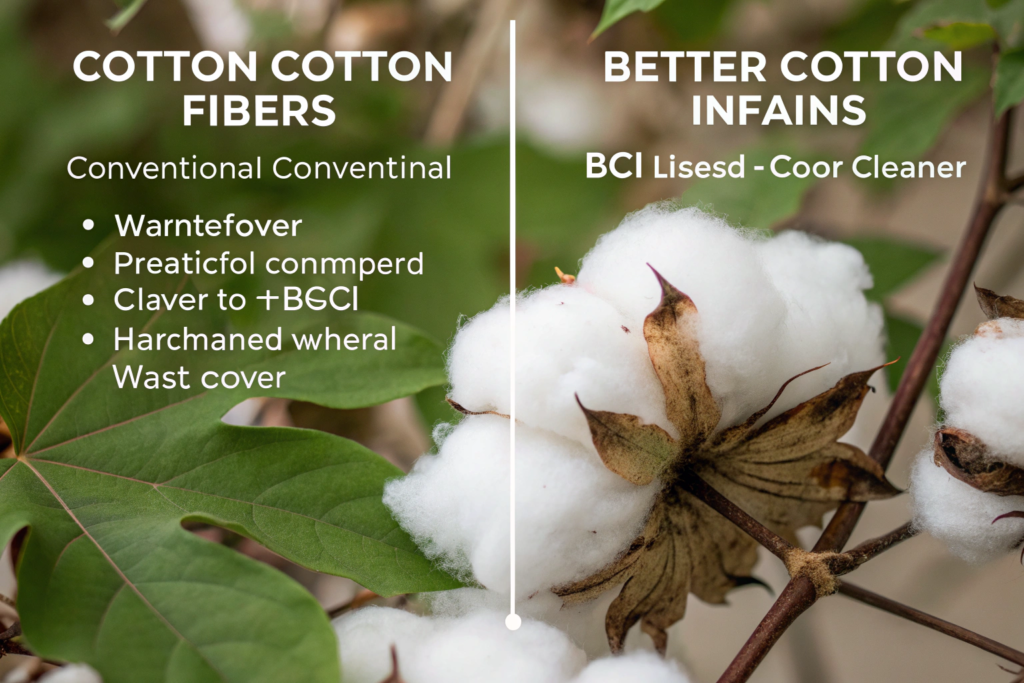
2. Fiber Maturity and Consistency: Dye molecules bond to the cellulose in the cotton fiber. An immature fiber (low micronaire) has a thinner cell wall and less crystalline cellulose, absorbing dye differently than a mature fiber. A batch of cotton with mixed maturity levels will dye unevenly, creating a streaky appearance called "barre." BCI’s agricultural principles that promote soil health and optimal harvest timing contribute to a crop with more uniform fiber maturity within a batch. This is the single biggest contributor to even dyeing. For your dyer, this means less need for corrective additions or reprocessing, saving time, water, chemicals, and energy.
Does This Mean Dye Recipes Need to Change?
Not necessarily, but communication is key. When you provide a BCI fabric to a dye house, you should inform them: "This is BCI-sourced cotton with good batch consistency." An experienced dyer will appreciate this information. They might run a small preliminary test to confirm the fiber’s behavior, but they often find they can use their standard recipe for that fabric weight with greater confidence in the outcome. The risk of off-shade bulk is reduced. At Shanghai Fumao, when we supply BCI greige fabric to our partner dye houses, we see their "right-first-time" rate improve by an average of 5-7% compared to conventional lots, which is a massive cost and environmental saving.
How Does This Affect Special Dyeing Effects?
For effects that rely on fiber reactivity, consistency is king.
- Heather/Grey Melange: Achieved by mixing pre-dyed fibers (e.g., black and white cotton) before spinning. The uniformity of BCI fiber in length and strength allows for more consistent blending, resulting in a smoother, more even heather effect with less "patching."
- Yarn-Dyed Fabrics (like gingham or chambray): The even dye uptake in the yarn stage ensures the final woven pattern has crisp, clear color definition.
The Printing Precision: Clarity and Color Fidelity
Fabric printing, whether screen, digital, or rotary, is even more sensitive to substrate consistency than dyeing. The color or binder must sit on the fiber surface precisely.
1. A Smoother Surface for Sharper Details: Fabric made from uniform, longer-staple BCI cotton can be spun into finer, smoother yarns. When knitted or woven, this creates a fabric with a more even, less hairy surface. For printers, this is a dream. A smooth surface allows for crisper screen printing with less "bleed" at the edges of designs. For digital printing, it ensures the ink droplets land precisely, resulting in higher-definition patterns with vibrant color pop. Imagine printing on high-gloss photo paper versus absorbent newspaper—the difference in clarity is analogous.
2. Consistent Absorbency for Even Color Build-Up: The consistency in fiber prep (scouring/bleaching) that benefits dyeing also benefits printing. An evenly prepared fabric absorbs print paste or ink uniformly across its entire surface. This prevents "blotchiness" or areas where the color looks weaker, which is a common defect when printing on variable-quality cotton. Your florals will be crisp, your geometric patterns sharp, and your color blocks solid.
A Real-World Example: A UK-based children’s wear brand switched to BCI cotton for their printed jersey line. Their printer reported a 30% reduction in "misfires" and fabric wasted due to unclear print registration. The sharper print quality also led to a 15% decrease in customer returns for "faulty print," directly improving their bottom line and brand reputation.

What About Specialty Inks and Sustainable Printing?
BCI cotton pairs exceptionally well with advanced, more sustainable printing methods.
- Pigment Printing: Widely used, but can stiffen the fabric if not managed well. The smooth surface of quality BCI fabric can allow for lower add-on rates of binder to achieve the same color strength, preserving better fabric hand feel.
- Digital Printing with Eco-Inks: The precision of digital printing is maximized on a consistent substrate. Using BCI cotton with GOTS-certified or OEKO-TEX® certified inks creates a powerful, fully certified sustainable printed product.
- Discharge or Reactive Printing: These techniques rely on chemical reactions with the fiber. A consistent, clean fiber substrate ensures more predictable and vibrant results.
The Process Adjustment Mindset: Working With the Fiber
To capitalize on BCI’s advantages, your supply chain partners need a slight shift from a corrective to an optimizing mindset.
For Dyers:
- Pre-Treatment Calibration: They might be able to use a slightly less aggressive scouring process, saving energy and chemicals, because the fiber starts cleaner.
- Process Control: They can run their dyeing machines with tighter temperature and pH control parameters, as the fiber is less likely to react unpredictably.
For Printers:
- Screen Mesh/Viscosity Fine-Tuning: They may adjust the viscosity of their print paste or the mesh count of their screens to perfectly match the smooth absorbency of the BCI fabric, maximizing detail.
- Curing Optimization: Consistent fabric means curing (fixing the print) can be standardized more easily, ensuring colorfastness without over-processing.
The Critical Role of the Fabric Supplier: A supplier like Shanghai Fumao acts as the translator. We understand the inherent qualities of our BCI fabrics and can provide technical data sheets to the dyer/printer, recommending optimal processing parameters. This bridges the gap between farm and finish.
Potential Challenges & How to Navigate Them
While the net effect is positive, being aware of potential hiccups prepares you.
1. The "It’s Too Clean" Myth: A rare comment from an old-school dyer might be that the fiber has "too little natural lubricant," making it run through machines differently. This is easily managed with modern lubrication additives and is far outweighed by the benefits of consistency.
2. Supplier Complacency: The biggest risk is assuming BCI solves everything and skipping your standard bulk lot approval (BLA) process for dyeing and printing. You must still approve bulk swatches! The difference is that with BCI, you are far more likely to approve the first bulk submission, keeping you on schedule.
3. Cost of Higher-End Finishing: To truly maximize the potential of BCI cotton for luxury prints, you might pair it with high-end finishing like mercerization (which adds luster and strength) or singeing (to remove surface hairs). This adds cost but creates a premium product. BCI provides the excellent base; these finishes elevate it further.
Conclusion
BCI Good Cotton doesn’t just affect dyeing and printing; it enhances them. By providing a superior, more uniform raw material, it reduces the process variables that lead to waste, rework, and disappointment. It empowers your creative and production teams to achieve their vision with greater reliability and vibrancy.
For a brand, this translates to:
- Fewer production delays due to dyeing or printing defects.
- Lower environmental impact from reduced water, chemical, and energy use in reprocessing.
- Higher-quality final product with better color consistency and sharper prints.
- Stronger brand reputation for quality and attention to detail.
In essence, choosing BCI cotton is a decision that resonates from the farm field to the finished, beautifully colored garment on the rack. It’s a choice for quality as much as it is for responsibility.
Ready to see the difference consistent, high-quality cotton makes in your dyed and printed collections? At Shanghai Fumao, we specialize in BCI fabrics engineered for excellent performance in dyeing and printing. We connect you with technical partners who understand how to unlock their full potential. Contact our Business Director, Elaine, at elaine@fumaoclothing.com to source the canvas that makes your designs truly shine.