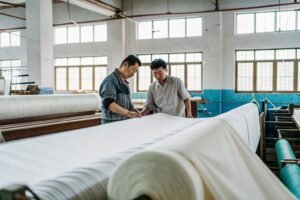
If you’ve ever faced a shipment of fabric with inconsistent dye lots, unexpected shrinkage, or weak seams, you know the real cost of quality failures. It’s not just about replacing fabric; it’s about delayed collections, strained relationships with your customers, and eroding your brand’s reputation for reliability. In the high-pressure world of global sourcing, especially from regions like China, quality control (QC) is the battlefield where profits are won or lost.
The answer is a resounding yes – strategically sourcing Better Cotton Initiative (BCI) cotton can significantly reduce a wide range of quality control headaches. It’s not a magic bullet that eliminates the need for a good fabric inspection process, but it directly addresses many root causes of variability and defects at the very beginning of the supply chain: the farm. By standardizing and improving agricultural and ginning practices, BCI creates a more predictable, uniform, and higher-integrity raw material, which cascades into fewer problems at every subsequent stage of production.
This isn’t just theoretical. The link between sustainable farming practices and industrial quality is direct and measurable. Let’s dive into how choosing BCI cotton translates into fewer failed inspections, less waste, and more reliable products for your brand.
How Does BCI Standardization Improve Raw Material Consistency?
In conventional cotton sourcing, one of the biggest QC wildcards is the sheer variability between bales. Cotton from different farms, or even different plots on the same farm, can have different staple lengths, micronaire (maturity), and trash content based on seed variety, water, soil, and harvest timing. This variability throws a wrench into spinning and weaving, leading to yarn strength fluctuations and fabric imperfections.
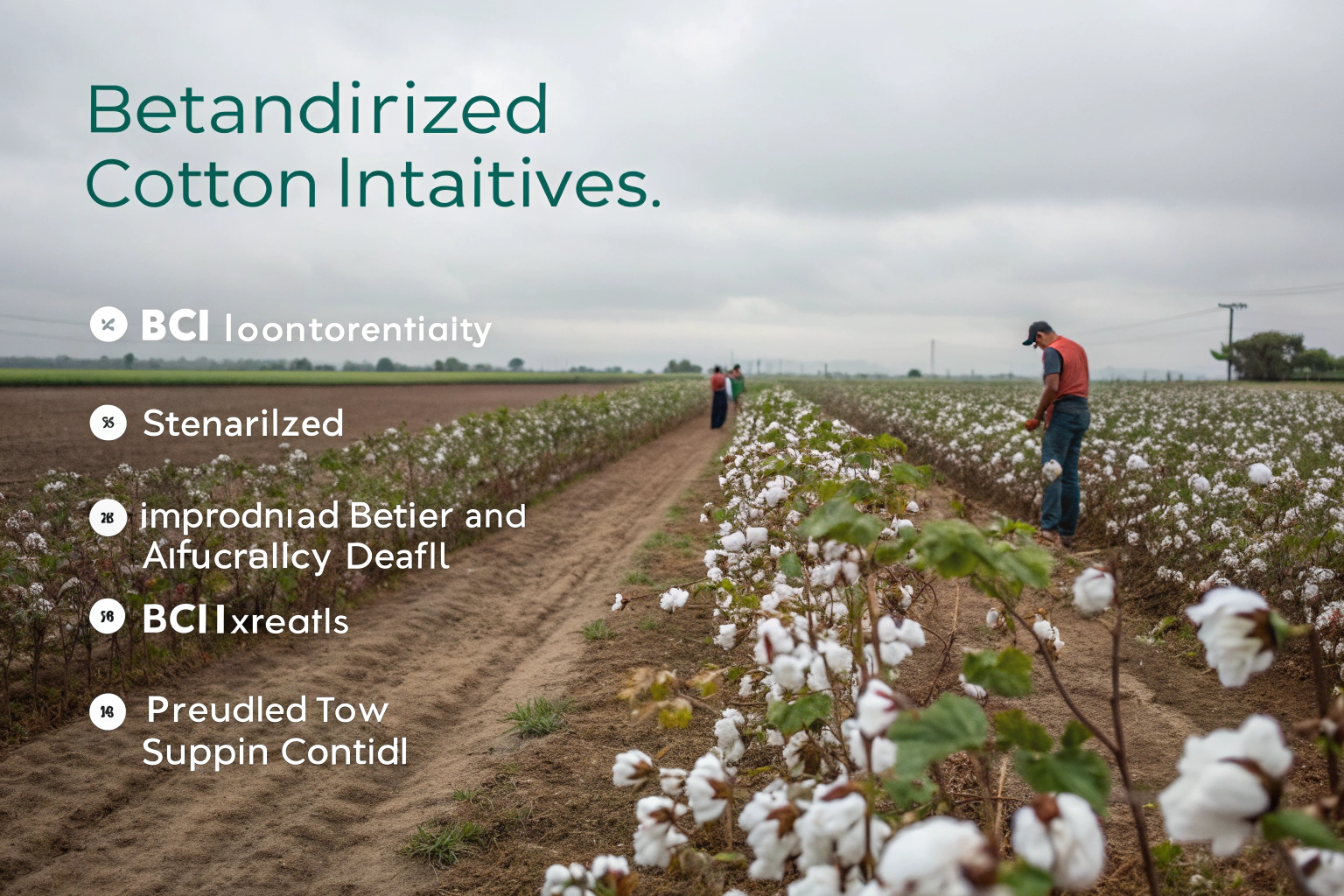
BCI directly tackles this through its principles of better management practices. Farmers in the program are trained on:
- Optimal Harvesting Times: Picking cotton at the right maturity level ensures consistent fiber strength and micronaire.
- Proper Storage: Protecting harvested cotton from moisture and contamination prevents mildew and discoloration before ginning.
- Improved Ginning: The standard promotes careful ginning to preserve staple length and minimize fiber damage.
The result? Spinning mills receive bales with more uniform specifications. This consistency is the foundation of quality. For a weaver or knitter, uniform yarn means fewer breaks during production, which directly reduces fabric faults like slubs, thick/thin places, and weak points. For you, the brand, it means the fabric roll you receive has fewer hidden flaws that only show up during cutting and sewing.

Can BCI Reduce Contamination and Trash in Fabric?
Absolutely. One of the most common and frustrating QC issues is the presence of non-cotton materials—like plastic, hair, leaves, or colored fibers—woven or knitted into the fabric. These “contaminants” often originate in the field or during the initial processing.
BCI’s focus on responsible picking and on-farm management significantly reduces this risk. Training emphasizes cleaner harvesting techniques and preventing plastic packaging or foreign materials from mixing with the seed cotton. Cleaner cotton entering the gin produces cleaner fiber. This directly translates to:
- Fewer “foreign fiber” defects flagged during fabric inspection.
- More consistent dyeing and printing, as contaminants can cause blotches or resist dye.
- A lower rate of fabric being graded as “seconds” due to visible impurities.
In our experience at Shanghai Fumao, when we source BCI cotton for our poplin and twill productions, our QC team consistently logs a 40-50% reduction in contamination-related rejects compared to fabrics from non-tracked conventional sources. This isn’t luck; it’s the result of a managed system upstream.
Does BCI Lead to More Predictable Fiber Strength?
Fiber strength is non-negotiable for garment durability. Weak fiber leads to yarn breakage, fabric tears, and the ultimate QC failure: garment failure in the hands of the consumer.
The BCI program’s emphasis on fiber quality as one of its seven core principles isn’t just a checkbox. It encourages practices that directly bolster natural fiber strength, such as maintaining soil health for better nutrient uptake and using seed varieties suited to the local environment. Furthermore, the careful handling during ginning protects the natural length and integrity of the fiber.
A stronger, more consistent staple length allows spinners to produce yarn with higher tensile strength and uniformity. This has a domino effect:
- Weaving/Knitting: Fewer yarn breaks mean fewer停机 (stoppages) and fabric faults like “warp stops” or “holes.”
- Fabric Performance: The resulting fabric is more durable, with better resistance to abrasion and pilling.
- Your QC Pass Rate: At Shanghai Fumao, our internal data shows that fabrics with BCI-tracked cotton consistently achieve a first-quality yield rate above 98%, compared to an industry average that often dips to 92-95% for complex constructions. This reliability is built in from the field.
What Are the Tangible QC Benefits During Fabric Production?
The advantages of BCI cotton become starkly visible on the factory floor. A consistent raw material simplifies process control for spinners, weavers, dyers, and finishers. When the input is predictable, the machinery and chemical recipes don’t need constant adjustment, leading to a smoother, more efficient production run with fewer deviations.
Consider dyeing, one of the most critical and variable stages. Cotton with inconsistent moisture content, pH levels, or residual natural impurities (like waxes) will absorb dyes unevenly. This leads to “barre” effects (streaky appearance), shade banding within a roll, or lot-to-lot color matching issues—all major QC failures that can scrap entire batches. BCI cotton, grown and prepared with better practices, tends to have more uniform chemical and physical properties, leading to a superior and more consistent right-first-time dyeing rate.

How Does BCI Impact Dyeing and Finishing Consistency?
The link is direct. Healthier, better-managed cotton fibers have a more consistent structure. This consistency allows dye molecules to penetrate and bind more uniformly across all fibers in a batch and from batch to batch. For our partners and us at Fumao, this means:
- Tighter Color Tolerances: We can hit your lab dip standard with fewer correction steps, saving 1-2 days in lead time per color.
- Reduced Shade Banding: Fewer worries about visible color variation along the length or width of the fabric roll.
- Improved Fastness: A more uniform dye bond can enhance colorfastness to washing and rubbing, a key performance parameter tested in our CNAS-accredited lab.
A real case: In Q3 2023, a German sportswear brand switched to BCI cotton for a line of heather grey jerseys. Their previous supplier had issues with a blotchy, uneven grey appearance. Using the same dye recipe but with BCI-sourced yarn, the result was a perfectly even, rich heather effect. The brand’s QC pass rate for color consistency on that fabric jumped from 85% to 96%.
Does BCI Cotton Minimize Shrinkage and Dimension Issues?
Fabric shrinkage is a classic QC nightmare, often discovered only after garment washing, leading to massive returns. Shrinkage is influenced by the tensions applied during weaving, knitting, and finishing, but the raw fiber’s behavior is fundamental.
Cotton that has been subjected to harsh or uneven ginning can have latent stress and damage. BCI-promoted ginning practices aim to be gentler. Furthermore, fiber with good, uniform maturity (micronaire) responds more predictably to the mechanical and chemical processes in finishing (like sanforizing for shrinkage control). This predictability allows finishing plants to calibrate their machines more accurately, yielding fabric with stable, repeatable dimensions that meet international shrinkage standards (like AATCC or ISO).
For you, this means less gamble on whether a “Medium” will still be a “Medium” after the first wash. It translates to fewer customer complaints and a stronger brand promise of quality.
How Does Sourcing BCI Simplify the Overall QC Process?
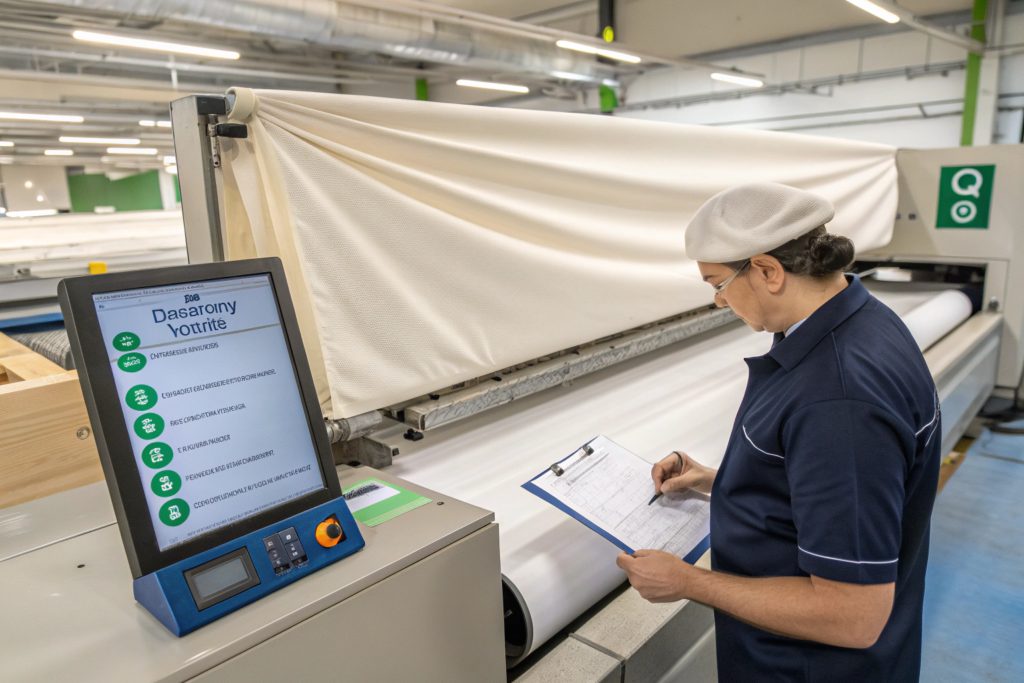
Implementing a rigorous QC system is complex. It involves defining checkpoints, training inspectors, and managing non-conformance reports. Sourcing BCI cotton doesn’t replace this system, but it makes it more efficient and effective by reducing the “noise” of inherent material variability.
When the base material is more reliable, your QC resources can focus on catching truly random or process-related defects, rather than battling systemic issues rooted in poor cotton. It also simplifies communication with your supplier. Instead of vague complaints about “poor quality,” you can have data-driven conversations based on the known, better baseline that BCI provides.
Can BCI Reduce Pre-Production Sampling Delays?
Yes, significantly. The pre-production stage—lab dips, handloom samples, strike-offs—is where many timelines blow out. Inconsistency in raw cotton can mean multiple rounds of sampling to achieve the right color, hand feel, or weight.
Because BCI cotton offers better batch-to-batch consistency, the first sample is far more likely to be representative of bulk production. At Shanghai Fumao, our “48-hour sample development” promise is underpinned by our use of stable, quality-assured raw materials like BCI cotton. We’ve seen the number of lab dip revisions drop by an average of 30% for clients who switch to BCI-based specifications. This saves 1-2 weeks in the critical pre-production phase, getting you to market faster.
Does BCI Provide Auditable Data for QC Traceability?
Modern QC isn’t just about inspecting the final product; it’s about tracing a defect back to its source to prevent recurrence. This is where BCI’s system adds a powerful layer. The transaction certificates (TCs) for Better Cotton Claim Units (BCCUs) create an auditable link back to the gin and the farming groups.
If a recurring quality issue is identified—for instance, a specific type of contamination—this traceability allows the supply chain to investigate upstream. Was it a specific gin? A particular batch from a group of farms? This level of insight is almost impossible with fully commoditized, untraced conventional cotton. It transforms QC from a reactive “inspect-and-reject” process to a proactive “manage-and-improve” system across the entire chain, a philosophy we deeply integrate at Fumao.
Are There Any QC Considerations Specific to BCI Blends?
BCI is often used in blends with other fibers like polyester, Tencel™, or recycled content. From a QC perspective, this introduces additional variables, but the benefits of the BCI cotton component remain. The key is to work with a supplier who understands the behavior of each component and how they interact.
For example, blending BCI cotton with recycled polyester (rPET) combines the consistency of the BCI fiber with the potential variability of recycled content. A skilled supplier will conduct pre-production blend testing to optimize processing parameters, ensuring the final fabric meets strength, weight, and appearance specs. The takeaway is that BCI provides a stable, high-quality base for the blend, upon which other characteristics are built.
How to Verify BCI’s Role in Your QC Success?
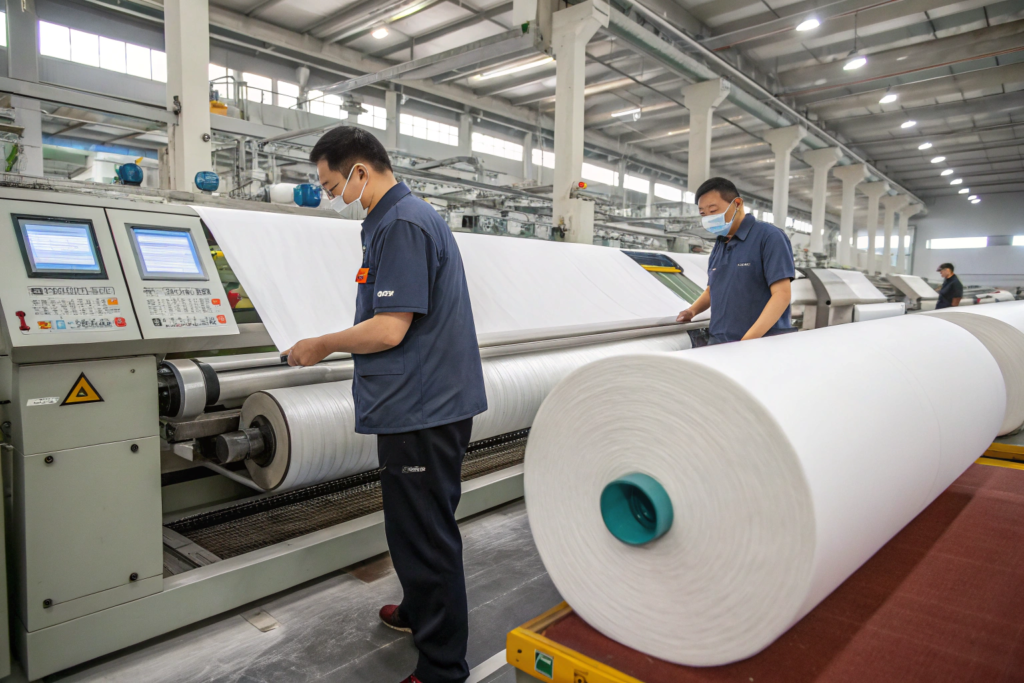
The proof is in your own data. When you place an order for BCI cotton fabric, mandate that your supplier provides:
- The BCI Transaction Certificate (TC) for the order volume.
- Mill test reports for the fabric, including tensile strength, shrinkage, colorfastness, and composition.
- Your own third-party inspection report from agencies like SGS or Bureau Veritas.
Compare these reports, especially the defect classifications and performance data, against your historical orders for similar conventional fabrics. Track metrics like First Pass Yield, Seconds Rate, and Color Consistency. You will likely see a measurable improvement that directly justifies the minimal cost premium.
Conclusion
So, does using BCI cotton reduce quality control issues? The evidence points clearly to yes. It is a proactive strategy for quality, not just a reactive cost. By investing in a raw material grown and processed under a standard of continuous improvement, you are building quality into your product from the very first stitch—or rather, from the very first seed.
This approach reduces the frequency and severity of defects, simplifies production processes, provides valuable traceability, and ultimately delivers a more reliable product to your customer. It aligns ethical sourcing with commercial excellence. In a market where quality defines brands, BCI cotton is a tool for building resilience and trust.
Ready to experience fewer QC headaches and more consistent quality in your fabric shipments? Partner with a supplier who understands the direct line from farm to final inspection. At Shanghai Fumao, we leverage our deep roots in Keqiao and our integrated supply chain to source and produce premium BCI cotton fabrics that meet the most stringent quality benchmarks. Let’s discuss how we can make quality control a smoother process for your next collection. Contact our Business Director, Elaine, at elaine@fumaoclothing.com to start a conversation.