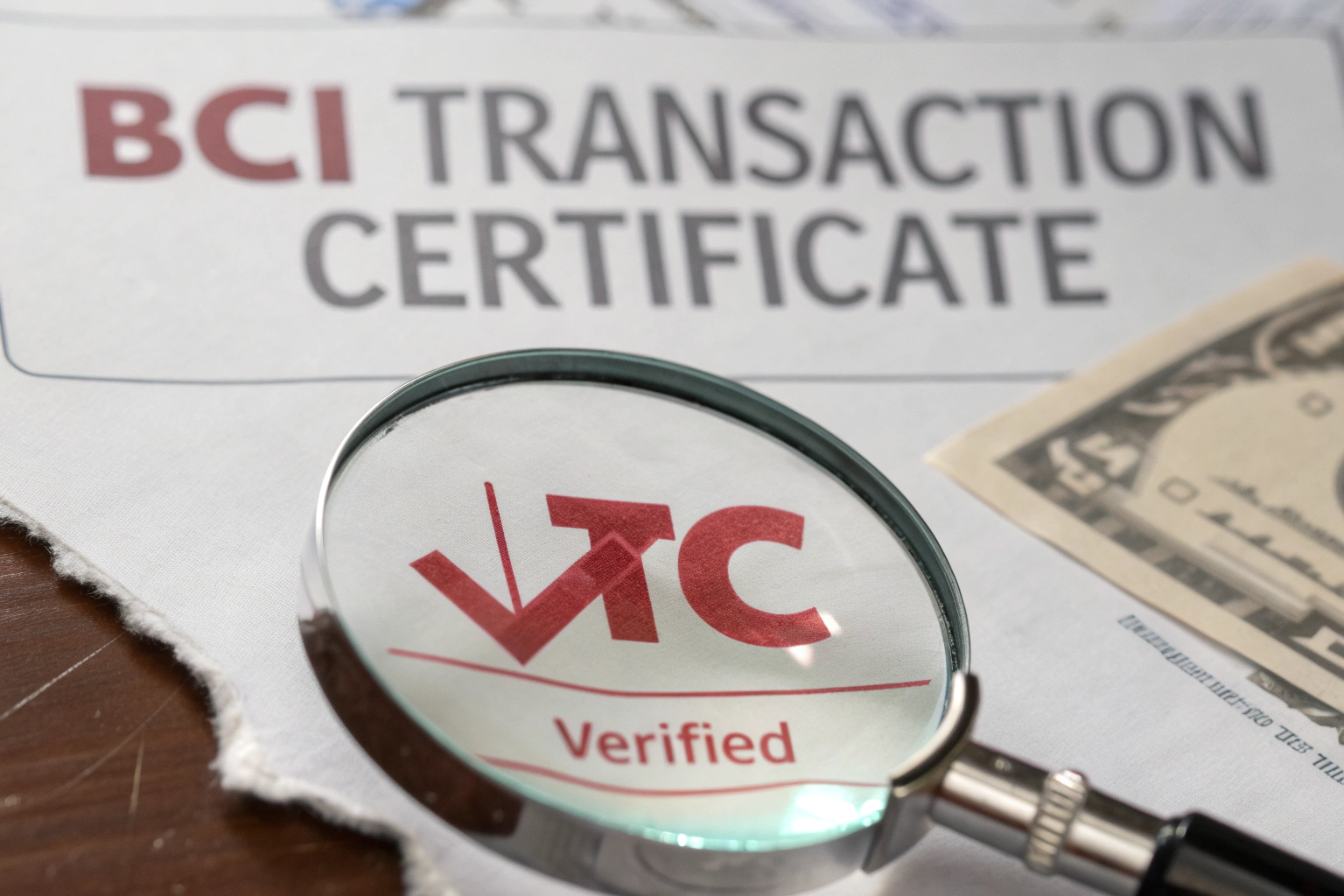
You’ve made the decision to source BCI-certified garments. You’ve negotiated the price, reviewed the samples, and the factory has sent over a BCI Transaction Certificate (TC) before shipment. It looks official. But how can you be sure it’s real? In the rush to meet sustainability demands, the market has seen a rise in misleading claims and, in some cases, outright fraudulent documents. For a brand, receiving a fake BCI certificate is a catastrophic risk—it exposes you to greenwashing accusations, legal liability, and irreparable damage to your reputation. The trust you’ve built with your customers can shatter overnight. Knowing how to verify authenticity isn’t just due diligence; it’s a fundamental survival skill in modern sourcing.
The key to avoiding fake BCI certificates lies in proactive verification, deep supplier vetting, and understanding the mechanics of the BCI system itself. You cannot wait until the goods are shipped to check the documents. The verification process must be integrated into your sourcing workflow from the very first conversation. By taking specific, actionable steps, you can protect your investment and ensure your ethical claims are built on an unshakable foundation.
Let’s walk through the concrete methods to separate legitimate BCI compliance from clever forgeries.
What Are the Hallmarks of a Genuine BCI Transaction Certificate?
A genuine BCI TC is a standardized digital document with specific, verifiable data points. It is not a simple letter or a self-issued statement from the factory. Here is what you must see on every legitimate TC:
- Unique TC Number: A sequential number that follows a standard format.
- Issue Date: The date the certificate was generated.
- Seller & Buyer Details: The licensed BCI supplier (Seller) and your company (Buyer) with clear names and addresses.
- Volume & Product Description: The net weight (in kilograms) of the BCI cotton claimed, and a description of the material (e.g., "100% cotton knitted fabric").
- BCI License Numbers: The unique BCI license number of the Seller (the company issuing the TC) is the most critical element. This is their identity in the BCI system.
- Mass Balance Statement: A clear sentence stating the transaction is under the BCI Mass Balance Chain of Custody.
- Authorized Signature/Stamp: A digital or physical signature from the authorized representative of the selling company.
The most common fake is a document that mimics the look of a TC but is missing the seller’s unique BCI license number or contains a generic, made-up number. Another red flag is a TC issued by a factory that is not a licensed BCI supplier—only licensed entities can legitimately issue TCs.

How do I perform a basic visual check on a TC?
When you receive a TC, immediately ask: "Is the company named as the ‘Seller’ on this TC a licensed BCI supplier?" To check this, you can use the BCI’s public licensee search function on their website. If you cannot find the seller’s exact business name and license number listed, it is a massive red flag. Do not proceed. In a recent case from early 2024, a European brand received a TC from a trading company. A quick search revealed the trading company was not listed as a licensee. Upon pressing, they admitted they had "bought" the certificate from another mill—a clear violation of BCI rules that rendered the certificate invalid for the brand’s claim.
For thorough verification, familiarizing yourself with the official BCI platform and its resources for brands is step one. Additionally, understanding common types of fraud in sustainable textile certification provides crucial context on what to look out for.
Can a factory issue a TC if they are not a licensed supplier?
No, they cannot. This is a fundamental rule of the BCI Chain of Custody. Only companies that have gone through the BCI licensing process and have a unique license number are authorized to buy BCI materials and sell them on with a TC. A garment factory that is not itself a licensed supplier must source its fabric from a licensed supplier (like a mill or fabric merchant such as Shanghai Fumao). The fabric supplier issues the TC to the garment factory. The factory then uses that fabric to make your garment. They cannot create a new TC for you; they can only pass on the TC they received from their supplier, which should correspond to the volume of fabric used for your order.
What Proactive Steps Must You Take Before Placing an Order?
Verification starts long before a TC is ever generated. Your pre-qualification of the factory is your first and most important line of defense.
- Demand Proof of BCI License from the Direct Supplier: Ask your garment factory: "Are you a BCI licensee? Please provide your BCI license number and a screenshot from the BCI licensee directory." If they are not, ask: "Who is your BCI fabric supplier? Please introduce us and provide their BCI license number." You must trace the certification back to its source.
- Establish a Transparent Chain: The ideal scenario is a three-way communication between you, the garment factory, and their BCI fabric supplier. This transparency removes layers where misinformation can hide. At Shanghai Fumao, we encourage this. We are happy to verify our license and confirm the fabric supply directly with our brand client, providing peace of mind.
- Ask for a Sample TC from a Previous Order: A reputable supplier will have no issue providing a redacted TC from a past shipment. Examine its format and cross-check the seller’s license number.

What specific questions should be in your supplier audit?
Incorporate these into your vendor questionnaire:
- "What is your BCI license number? Can we see it in the BCI online directory together on a call?"
- "Walk us through your process: from receiving our BCI order to issuing the TC. Who generates it?"
- "If you are not a licensee, who is your primary BCI fabric partner? Can we have a direct introduction?"
- "Can you share references from other brands for whom you have supplied BCI goods?"
A supplier’s hesitation or vague answers are your cue to walk away.
How does vertical integration of the supplier help?
Sourcing from a vertically integrated supplier or a factory with a tightly managed vertical partnership significantly reduces fraud risk. For example, when you work with a partner factory of ours, you are sourcing from a system where the BCI fabric comes from a single, verified source (us) with a clear license. The document flow is internal and controlled, leaving no gap for a third party to insert a fake certificate. It simplifies the chain from "Farm -> Fabric Mill -> Garment Factory -> You" to "Integrated Responsible System -> You."
What Are the Red Flags and Verification Protocols at Shipment?
Even with good pre-qualification, a final check at the time of shipment is critical. Here is a step-by-step protocol:
- Match the TC to the Order: Ensure the volume (kg) on the TC is appropriate for the quantity of garments shipped. A TC for 500kg of BCI cotton cannot cover a shipment of 10,000 heavy hoodies.
- Verify the "Seller" on the TC: This name must be your direct supplier of the BCI material. If you bought garments from Factory A, but the TC is issued by an unknown Trading Company B, demand an explanation. Factory A should have received a TC from their fabric supplier, which they can show you as proof of purchase, but they should not be issuing one unless they are the licensee.
- Cross-Check Details: The product description, dates, and company addresses should be consistent with your commercial invoice and other shipping documents. Inconsistencies are a major warning sign.
- Use the BCI Integrity Team: In cases of serious doubt, you can report suspicious certificates to BCI directly. They have an integrity unit that investigates misuse of their logo and certification system.

What if the factory says, "Trust us, the certificate is real"?
This is the biggest red flag of all. Never take trust for granted in certification. The entire point of third-party certification is to remove the need for blind trust. Your response should be, "I trust you, but my customers and the regulators require verified proof. Please provide the evidence so we can all be confident." A legitimate supplier will understand and comply immediately.
Can QR codes or blockchain help avoid fakes?
This is the future. BCI is moving towards digital, traceable credits. In the meantime, some advanced suppliers create additional layers of verification. For instance, we are piloting a system where our TCs are linked to a unique code that can be cross-referenced in our client portal. While not an official BCI feature, it adds a layer of security from the supplier’s side. Asking your supplier if they have any additional digital verification methods shows you are serious and can deter bad actors.
Conclusion
Avoiding fake BCI certificates is not about a single clever trick; it’s about building a rigorous, process-driven approach to supplier management and documentation. It requires shifting from a passive receiver of documents to an active, informed verifier.
The cost of failure is simply too high. The investment in time and effort to establish these checks is minimal compared to the reputational and financial ruin a greenwashing scandal can bring.
Ultimately, the safest path is to partner with suppliers who have transparency in their DNA, who welcome scrutiny, and whose business model is built on genuine compliance, not just marketing it. At Shanghai Fumao, we believe our license and our reputation are our most valuable assets. We provide our clients with transparent access to our certification data and encourage the verification steps outlined here.
Protect your brand. Verify, then trust. To start a sourcing relationship built on verifiable integrity, contact our Business Director Elaine. We will gladly take you through our BCI credentials step by step: elaine@fumaoclothing.com.