

As a distributor, you’re the vital link between global manufacturers and local markets. Your customers—retailers, brands, and even other wholesalers—increasingly demand more than just a product; they demand a story backed by proof. You’re caught between manufacturers who may offer low prices without credentials and end-buyers who scrutinize ethics and sustainability. In this squeeze, BCI (Better Cotton Initiative) certification isn’t just another paperwork hurdle; it’s a strategic business tool that de-risks your inventory, future-proofs your supply chain, and elevates you from a simple logistics provider to a trusted sustainability partner.
Choosing BCI-certified products is a smart choice because it directly addresses your core pain points: mitigating risk, protecting your brand reputation, and adding tangible value in a commoditized market. It transforms your product from a generic commodity into a differentiated, compliance-ready asset. In practical terms, it means you can walk into a buyer’s office and confidently answer their toughest questions about sourcing, reducing your sales cycle and justifying a stronger margin. It’s an investment in trust, and in today’s market, trust is your most valuable currency.
Let’s break down the specific, bottom-line reasons why BCI is a strategic imperative for distributors, not just an ethical nice-to-have.
How Does BCI De-Risk Your Inventory and Supply Chain?
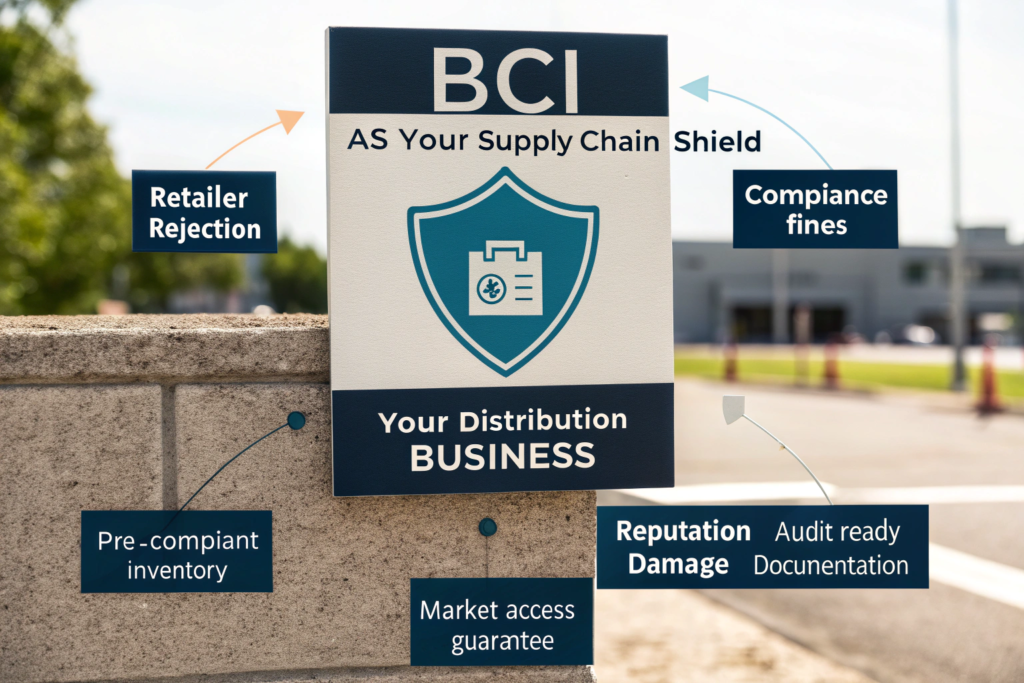
Your worst nightmare is investing in a container-load of fabric or garments, only to have a key client reject it because it lacks the required sustainable credentials, or worse, facing a reputational scandal because your supply chain is linked to poor practices. BCI acts as a powerful insurance policy against these risks.
Firstly, it future-proofs your stock. More and more retailers, especially in Europe and North America, have internal mandates requiring a percentage of sustainable materials. By stocking BCI-certified products, you ensure your inventory is always "retail-ready." You won’t lose a last-minute, high-volume order because you can’t provide the necessary Transaction Certificates (TCs). Secondly, it simplifies due diligence. Legislation like the EU’s Due Diligence laws means importers must prove their goods aren’t linked to environmental harm or human rights abuses. BCI’s farm-level principles and audited chain of custody provide a ready-made, defensible paper trail. As a distributor, you can pass this documentation cleanly to your buyer, making their compliance job easier and locking in your position as a reliable supplier.
Can BCI protect against sudden changes in buyer requirements?
Absolutely. Buyer sustainability policies can change with little notice—a new corporate mandate from headquarters, or a key account suddenly adopting a stricter code of conduct. If your core inventory is conventional, you’re left scrambling. If your core inventory is BCI-based, you’re already aligned with the most widely accepted cotton standard globally. This agility is priceless. For instance, in early 2023, a major UK value retailer abruptly updated its vendor manual to prioritize BCI cotton. Distributors who were already working with us at Shanghai Fumao on BCI lines were able to pivot and supply immediately, securing contracts for the season. Those without BCI stock were simply locked out.
To stay ahead of these shifts, savvy distributors monitor emerging sustainability regulations affecting textile imports. Furthermore, building a diversified supplier base with strong certification portfolios is a key topic in distribution strategy forums.
How does it reduce quality and claim-related disputes?
BCI comes with a documented chain of custody. This isn’t just an ethical document; it’s a quality control checkpoint. When you source from a licensed BCI supplier like us, you’re engaging with a partner who has systems in place. This systemic approach often correlates with better overall operational discipline, leading to more consistent quality. If there’s ever a dispute about a product’s composition or origin, the BCI Transaction Certificate is an impartial, third-party-verified document that settles the matter. It reduces the "he-said-she-said" that can poison supplier-distributor relationships.
How Does BCI Add Value and Boost Your Margins?
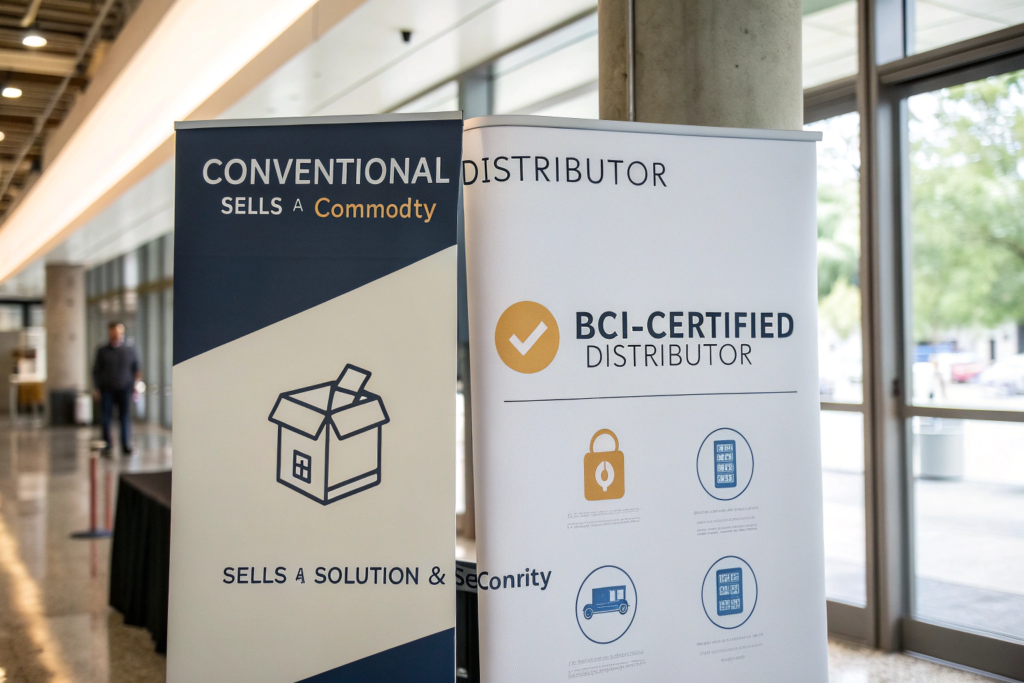
In a price-competitive world, BCI allows you to compete on value, not just cost. You are no longer selling "cotton fabric"; you are selling "risk-managed, future-proof, retail-ready cotton fabric with verified sustainability credentials." This is a fundamentally different proposition that commands a premium.
You can structure your pricing to reflect this added value. The BCI premium you pay to your manufacturer is not a cost to be absorbed; it’s an investment to be leveraged. You can educate your buyers on the tangible benefits: faster time-to-market for them (as the product is pre-compliant), reduced internal compliance costs, and a stronger story for their own customers. This justification supports a higher selling price and improves your margin structure. More importantly, it changes the conversation from a transactional price haggle to a strategic partnership discussion.
Can BCI help me win new clients and enter new markets?
It’s a direct key to locked doors. Many eco-conscious brands, boutique labels, and government/corporate uniform suppliers now have BCI or equivalent standards as a minimum sourcing requirement. By prominently marketing your BCI-certified lines, you automatically qualify for these opportunities. Your sales team isn’t starting from scratch to prove your reliability; the certification does the initial heavy lifting. For example, a distributor client of ours in Australia used our BCI-certified organic cotton jersey as a flagship product to pitch and win a contract with a national hospital network seeking sustainable scrubs—a market they couldn’t previously access.
Does BCI loyalty lead to better terms from manufacturers?
Yes, it fosters strategic partnerships. Manufacturers like us prioritize reliable, forward-thinking distributors who understand the market’s direction. By committing to BCI volumes, you become a more valuable partner. This can translate into better payment terms, priority access to new developments and stock, and more collaborative support in marketing. We view our BCI-focused distributors as extensions of our own sales and education force, and we invest in that relationship accordingly.
How to Operationalize BCI in Your Distribution Business?
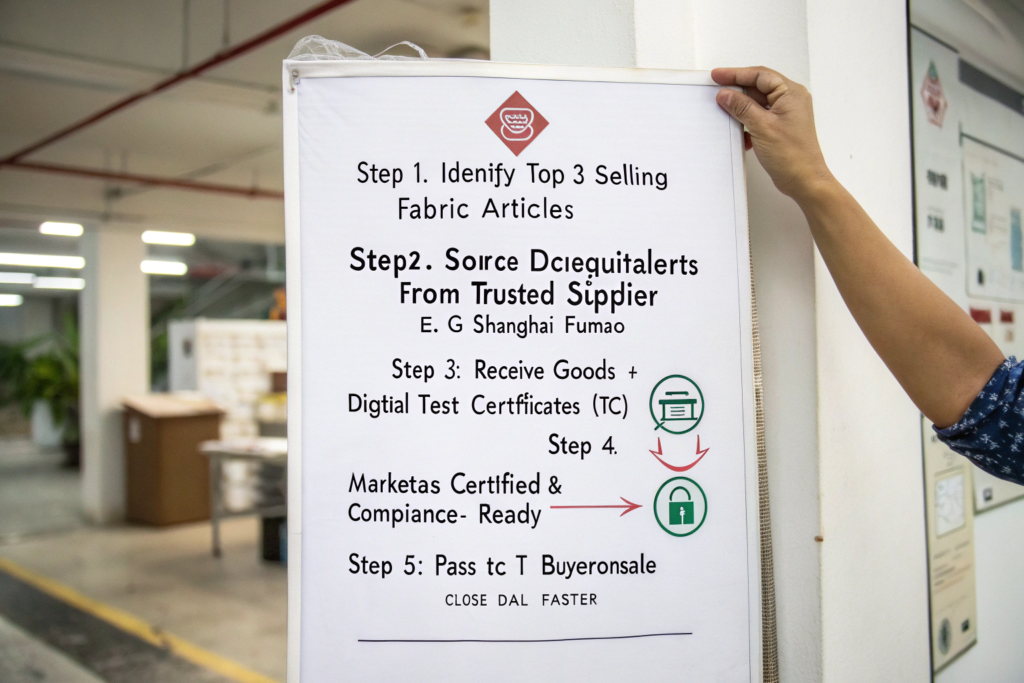
Implementing BCI doesn’t mean flipping your entire inventory overnight. The smart approach is phased integration. Start with your best-selling commodity items—like basic jersey, poplin, or denim—and switch them to BCI-certified versions from a trusted supplier. This minimizes risk and maximizes impact, as these high-volume items contribute the most to your sustainability profile.
The operational key is documentation management. Ensure your supplier provides clean, complete BCI Transaction Certificates (TCs) with each shipment. Create a simple digital filing system (a dedicated cloud folder) where you store TCs by product lot number. When you sell to your buyer, you include the corresponding TC. This turns a bureaucratic task into a value-added service. At Shanghai Fumao, we provide digital TC copies immediately upon shipment and can even bundle TCs for consolidated orders, making your back-office work effortless.
What should I look for in a BCI manufacturer partner?
You need a partner who is a licensed supplier, not just a reseller. Verify their license. You need a partner with consistent stock of BCI basics, so you’re not facing availability hiccups. You need a partner with efficient TC processing—it should be automatic, not something you have to chase for weeks. Finally, you need a partner who provides marketing and educational support—high-quality product images, explainer videos about BCI, and sales argument bullet points you can give to your team. We provide all of this as a package because we want our distributors to succeed.
How do I communicate BCI value to my price-sensitive buyers?
Focus on hard business benefits, not just environmental feel-good. Use this script: "This BCI fabric costs X% more per meter. However, it eliminates the risk of your order being rejected by your retail partner for non-compliance. It saves your team approximately Y hours in due diligence paperwork per shipment. And it allows you to market your final product with a verified claim, which can increase sell-through and protect your brand from criticism. The small upfront cost is insurance for your larger business." Frame it as a cost of doing business in the modern market, not an optional extra.
What Are the Long-Term Strategic Advantages?
Adopting BCI early positions you as a market leader and thought partner, not just a warehouse. You become the go-to expert for sustainable textiles in your region. This builds immense brand equity for your distribution company. It also makes your business more attractive to investors and partners who are increasingly applying ESG (Environmental, Social, and Governance) criteria to their decisions.
In the long run, as regulations tighten and consumer awareness becomes universal, BCI or equivalent standards will be the baseline. Distributors who have already built their operations, supplier relationships, and customer education around this baseline will have a monumental competitive advantage. They will own the market. Those who wait will be playing a desperate, costly game of catch-up.

How does BCI fit with other certifications I might carry?
Think of BCI as your foundational layer. It’s the broadest, most scalable standard for cotton. You can then layer on more specific, premium certifications for niche markets. For instance, you might have a core range of BCI fabrics, a premium line of GOTS (Global Organic Textile Standard) organic cotton, and a specialty line of recycled blends. BCI ensures your core business is covered, while other certifications allow you to address specific high-end segments. This creates a tiered, strategic product portfolio.
Is there a risk of BCI becoming obsolete?
The principles BCI champions—responsible water use, soil health, decent work—are timeless. While the specific standard may evolve, and while competing or complementary standards may arise, the core demand for verified, responsible cotton is only growing. By integrating BCI now, you are building the operational muscles for handling any certified product flow—the systems, the supplier relationships, the sales arguments. This adaptability is the ultimate future-proofing.
Conclusion
For distributors, the choice around BCI is not an ethical sidebar; it’s a central business strategy decision. It is a direct response to the evolving pressures of your customers and the regulatory landscape. Smart distributors recognize that their role is evolving from moving boxes to managing risk and delivering verified value.
BCI certification provides the toolkit for this evolution: it de-risks your inventory, adds defensible margin, unlocks new customers, and builds a foundation of trust that transcends price. In the commodity world of distribution, trust and foresight are the ultimate differentiators.
Partnering with a licensed, reliable manufacturer is the first and most critical step in this journey. At Shanghai Fumao, we are built to support distributors in this transition. We provide the consistent BCI product, the flawless documentation, and the strategic partnership you need to lead your market. Contact our Business Director Elaine to discuss how we can build your certified product portfolio together: elaine@fumaoclothing.com.








