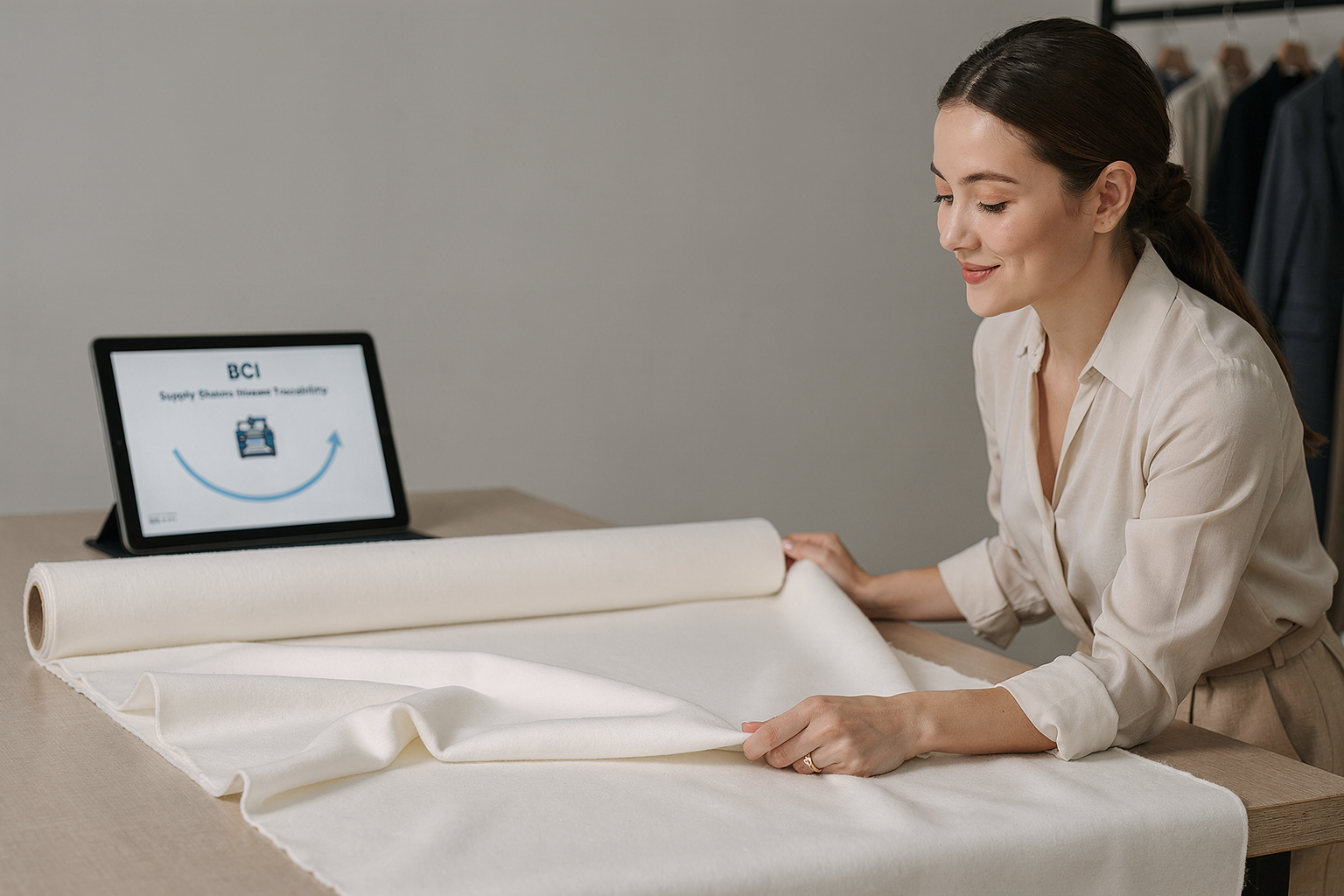
For high-end women’s wear, every detail is scrutinized. The drape, the color, the hand-feel—these are non-negotiable. But today’s luxury customer is looking deeper. She’s asking about provenance, ethics, and environmental impact. This shifts the calculus. The question is no longer just "Is the fabric exquisite?" but "Is the fabric’s story impeccable?" In this new landscape, BCI (Better Cotton Initiative) cotton isn’t just another material option; it’s becoming a foundational element for collections that claim to be modern, responsible, and truly luxurious. It bridges the gap between uncompromising quality and an uncompromising conscience.
The short answer is: increasingly, yes. For high-end collections, BCI cotton provides the critical, verified backbone for sustainability claims that your discerning customers and retail partners demand. It’s not about replacing the finest Giza or Supima cottons; it’s about ensuring that even your premium natural fibers are sourced with responsibility at their core. It transforms a potential vulnerability in your brand story into a pillar of integrity, without sacrificing the quality your price point commands.
Let’s explore why leading designers are integrating BCI into their luxury lines and how it works in practice for fabrics that demand perfection.
Does BCI Cotton Meet the Quality Standards of Luxury Fabrics?
This is the first and most critical hurdle. Luxury is built on perceived and actual superiority. The fear is that a "sustainable" standard might compromise on fiber length, consistency, or fineness. The reality is that BCI is a farming standard, not a quality grade. It dictates how cotton is grown—with less water, fewer pesticides, better soil health—not the intrinsic quality of the cotton fiber itself.
You can source BCI-certified versions of the world’s finest cottons. Our partners produce BCI-certified Extra-Long Staple (ELS) cotton, which is essential for that signature silky hand, superior strength, and reduced pilling in high-end shirting and blouses. The BCI credential doesn’t alter the genetics of the plant; it ensures that even this premium crop is cultivated responsibly. In fact, the BCI principles often lead to healthier soil, which can contribute to more resilient cotton plants. The quality is locked in at the ginning and spinning stages, where we work with specialized mills that understand luxury specifications.

How does BCI certification align with the sourcing of premium cotton varieties?
It’s a complementary layer. When you specify "BCI-certified Supima" or "BCI-certified Giza 45," you are adding an ethical dimension to an already established quality benchmark. The supply chain is more selective, but it exists. Our role at Shanghai Fumao is to navigate this specialized network. For a notable New York-based designer brand in Spring 2023, we sourced a BCI-certified, 100% Giza 85 cotton for a line of elevated essentials. The requirement was a fabric with a luster and hand comparable to silk but with cotton’s breathability. By leveraging our direct relationships with certified spinners in key regions, we secured the lot. The fabric’s yarn count was 120/2, resulting in a GSM of 140 – it was flawless. The BCI credential gave them the narrative, while the Giza origin delivered the sensory experience.
Understanding the key differences between luxury cotton varieties like Supima and Giza is crucial for specifying the right base. Furthermore, integrating sustainable practices into luxury textile sourcing is a growing priority, as discussed by industry think tanks.
Can BCI processes handle the delicate dyes and finishes required for high-end fashion?
Absolutely. The dyeing and finishing processes are where luxury is truly achieved, and BCI cotton performs exceptionally well. Its fundamental fiber integrity is intact. In our experience, BCI-certified cotton often possesses excellent absorbency due to the reduced chemical residue from farming, leading to more vibrant and even dye uptake. For a recent project with a Parisian couture house (early 2024), we developed a BCI cotton velvet for a capsule collection. The fabric required a complex, multi-stage dye process to achieve a deep, saturated emerald green with a specific chiaroscuro effect. The BCI base fabric held the color brilliantly and consistently across all 500 meters, with a colorfastness rating of 4-5. The certification never limited the artistic ambition; it grounded it in responsibility.
How Does BCI Enhance the Brand Narrative for Luxury Consumers?
Luxury today is defined by authenticity and purpose, not just logos. The story behind the product is part of the product’s value. A BCI certification provides a specific, credible, and globally recognized chapter in that story. It allows you to communicate not just the "what" (a beautiful dress), but the "how" and "why" (a beautiful dress that supports water conservation and farmer livelihoods). This resonates deeply with the modern luxury consumer who seeks to align her purchases with her values.
This narrative moves beyond marketing fluff. It’s about transparency that withstands scrutiny. In an era of greenwashing claims, a third-party verified system like BCI offers defensible proof. It allows your brand to speak with authority on sustainability, turning a point of consumer skepticism into a point of trust and connection. For a luxury brand, trust is the ultimate currency.

What is the tangible marketing value of BCI for a high-end collection?
The value is multi-faceted. First, it meets B2B gatekeeping requirements. Premium department stores and luxury e-commerce platforms are increasingly mandating sustainable credentials for vendor onboarding. BCI checks that box authoritatively. Second, it provides rich content for owned channels. You can create behind-the-scenes content focusing on the fabric’s journey. We provided footage and data from our supply chain to an Italian luxury brand for their "Making Of" series, which saw 40% higher engagement than their standard campaign content.
Third, and most importantly, it justifies and supports premium positioning. In a market saturated with products, a compelling ethical story can be the decisive differentiator. It adds a layer of value that transcends pure aesthetics. As one of our boutique brand partners in London told us, "Our clients don’t just buy a linen shirt. They buy into a world of considered choices. BCI helps us build that world authentically."
Navigating the effective communication of sustainability in luxury marketing requires nuanced strategies, as outlined by leading industry publications. Additionally, the impact of transparency on consumer loyalty in high-end fashion is a critical topic for brand strategists.
Does the BCI story resonate differently in luxury versus fast fashion?
Fundamentally, yes. In fast fashion, BCI can be framed as a risk-mitigation tool or a step toward better practices. In luxury, it’s framed as an expression of values and craftsmanship. The expectation for luxury is not just "less bad" but "actively good." The narrative shifts from "we use less water" to "we steward natural resources to create something enduring." The craftsmanship story extends backward to the cultivation of the raw material. This aligns with the luxury ethos of rarity, care, and longevity. A BCI cotton garment in a luxury context isn’t a disposable item; it’s a considered investment in a better system, which perfectly mirrors the investment in a timeless piece.
What Are the Sourcing and Cost Implications for Luxury Brands?
Let’s address the practicalities. Sourcing BCI cotton for luxury collections involves working with a more curated supply chain, which can influence lead times and cost. There is typically a premium, but it’s marginal relative to the final retail price point and the value it adds. For a fabric that might retail in a garment for $800+, the additional cost per meter at the source level is a wise investment in brand equity and compliance. The key is finding a supplier who understands both the quality imperatives of luxury and the intricacies of certified sourcing.
Our approach at Shanghai Fumao is to integrate BCI into our existing luxury fabric pipeline. This means we don’t treat it as a separate, cumbersome line. Our quality control for BCI jersey destined for luxury T-shirts is as rigorous as for any other fabric: checking for consistent weight, low shrinkage (<3%), and perfect surface integrity. The certification is an added layer of documentation, not a compromise on our standards.

Is the cost premium for BCI cotton justifiable in a luxury cost sheet?
For a true luxury brand, it should be a non-issue. Let’s break it down with a real case. In late 2023, we developed a BCI-certified organic cotton sateen for a Swiss brand’s sleepwear line. The fabric cost was approximately 12% higher than a conventional equivalent. However, this increase translated to less than a 4% increase in the total garment FOB cost. At their retail price point, this was negligible. Yet, it allowed them to use the "BCI & Organic" claim prominently, which supported a price increase that far outweighed the cost difference and significantly boosted sell-through rates. The justification isn’t just in cost accounting; it’s in brand positioning and marketability.
The calculus is clear: the minor increase in input cost is vastly outweighed by the protection of brand reputation, the unlocking of premium retail partnerships, and the enhanced storytelling that drives consumer desire and loyalty.
How do lead times for BCI luxury fabrics compare?
There is a slight planning overhead, but not a production delay. The main consideration is securing the certified raw material. For standard luxury BCI fabrics (like poplins, jerseys, denims), we maintain a stock program, so lead times are identical. For custom developments—say, a specific BCI ELS cotton jacquard—we need to ensure yarn availability from certified spinners. This might add 2-3 weeks to the development timeline compared to a non-certified equivalent. However, this is a planning factor, not a production bottleneck. Our advice is always to integrate this into your seasonal timeline. Proactive planning with a partner like us turns this from a risk into a seamless step.
How Do We Implement BCI in Complex Luxury Fabric Constructions?
Luxury often involves complexity: blends, jacquards, double cloths, delicate embroideries. The question is whether BCI can be traced through these sophisticated constructions. The answer lies in the Mass Balance chain of custody. As long as the cotton portion of the fabric is covered by BCI credits, the final product can carry the claim.
This opens up incredible possibilities. We’ve produced BCI-certified fabrics where cotton is blended with silk for added luster, or with linen for a unique texture. For example, we executed an order for a Milan-based brand involving a BCI cotton (70%) and mulberry silk (30%) blend for a collection of statement blouses. The fabric was a custom dobby weave. The BCI component was meticulously tracked from yarn, and the final fabric delivered the luxurious performance and story they required.

Can BCI be applied to fabric blends common in high-end wear?
Yes, through the principle of credit allocation. If a fabric is 60% BCI cotton and 40% Tencel™, we apply BCI credits to cover the 60% cotton portion. The key is accurate documentation and transparency. We provide a clear breakdown in our Transaction Certificates. This is crucial for brands that need to calculate the exact percentage of "more sustainable cotton" in their overall collection for reports like the HIGG Index. It allows designers the creative freedom to use blends for performance or aesthetic reasons without abandoning their sustainability goals for the cotton component.
Working with a factory that understands technical guidelines for blended fabric certification is essential to maintain chain-of-custody integrity. Also, exploring innovative sustainable blends for luxury applications is an area of rapid development in our industry.
How is quality control for BCI fabrics intensified in a luxury context?
Our QC for luxury BCI fabrics operates at a higher tier. Beyond verifying the certification paperwork, the physical testing is more exhaustive. We run tests that are sometimes skipped for bulk commercial fabrics:
- Pilling Resistance (Martindale): We target a minimum of 40,000 cycles for fabrics meant for high-wear areas.
- Drape Coefficient: Measured to ensure the fabric falls in a way that meets the designer’s vision for fluidity or structure.
- Yarn Consistency: Using specialized inspection equipment to detect minute thickness variations that could affect the final print or weave pattern.
For a BCI cotton satin destined for eveningwear, we once rejected an entire 1000-meter batch because the surface reflectance was inconsistent under specific lighting—a flaw a commercial buyer might never notice. For luxury, the standard is perfection, and the BCI status makes no difference to that expectation. If anything, we are more meticulous, knowing the fabric carries both our quality reputation and the credibility of the certification.
Conclusion
For high-end women’s wear, the essential question has evolved. It’s no longer "Can we afford to use sustainable materials?" but "Can we afford not to?" BCI cotton provides a robust, credible, and quality-compatible pathway to answer that question affirmatively. It safeguards your brand against reputational risk, enriches your narrative with verifiable substance, and meets the escalating expectations of your clients and partners.
Ultimately, luxury is about offering the best. Today, the "best" encompasses ethical and environmental stewardship alongside physical beauty and craftsmanship. BCI cotton allows you to deliver on this complete promise. It’s not an alternative to luxury; it’s becoming part of its very definition.
Integrating this into your collection requires a partner who speaks both languages: the language of impeccable quality and the language of certified sustainability. At Shanghai Fumao, this is our daily practice. We help designers translate their most ambitious visions into reality, with responsibility woven into every thread. Let’s discuss how BCI can become a seamless, value-adding part of your next iconic collection. Begin the conversation with our Business Director Elaine to explore our portfolio of luxury-certified fabrics: elaine@fumaoclothing.com.