Managing a fragmented supply chain with multiple vendors—one for weaving, another for dyeing, another for inspection—can feel like a full-time job. Imagine reducing errors, saving time, and cutting costs by relying on one trusted partner for the entire process. That’s the promise of end-to-end fabric production.
End-to-end fabric production simplifies your supply chain by consolidating sourcing, weaving, dyeing, finishing, inspection, packaging, and logistics into a single streamlined process. Working with integrated suppliers like Fumao Fabric eliminates coordination issues, shortens lead times, and ensures consistent quality from fiber to final roll.
Let’s break down how end-to-end production works, and why it can be the key to a smoother, more profitable supply chain.
How can you simplify the supply chain?
Overseeing multiple suppliers increases risk of miscommunication, delays, and inconsistent quality. Imagine a system where each step flows smoothly without your constant intervention. How can your fabric supply chain become simpler and more efficient?
You can simplify the supply chain by choosing integrated partners that offer in-house services across the full production lifecycle—from yarn procurement to final packaging. Centralized oversight, standardized communication, and synchronized production timelines eliminate complexity and reduce your workload.

What are the typical pain points of a complex supply chain?
Disjointed sourcing often results in missed timelines, inconsistent fabric quality, and costly misalignments. When weaving, dyeing, and finishing are handled by separate entities, delays in one stage affect all others. Fumao Fabric’s all-in-one solution brings these steps under one roof, enabling us to deliver faster and with greater accuracy.
What tools support a simplified supply chain?
At Fumao Fabric, we use QR code tracking, real-time production dashboards, and CNAS-certified quality checks to monitor progress. This transparency enables our clients to track fabric status live—from yarn dyeing to export loading—without having to juggle multiple vendors or spreadsheets.
What is an end-to-end supply chain?
Understanding the term is the first step to unlocking its value. Imagine being able to control every touchpoint in your sourcing journey—from material to shipment. What does “end-to-end” really mean in fabric production?
An end-to-end supply chain covers all stages of the product journey, including raw material procurement, production, inspection, packaging, warehousing, and delivery. It is fully integrated, allowing buyers to manage fewer vendors, reduce risk, and improve visibility throughout the process.
What stages are included in end-to-end fabric production?
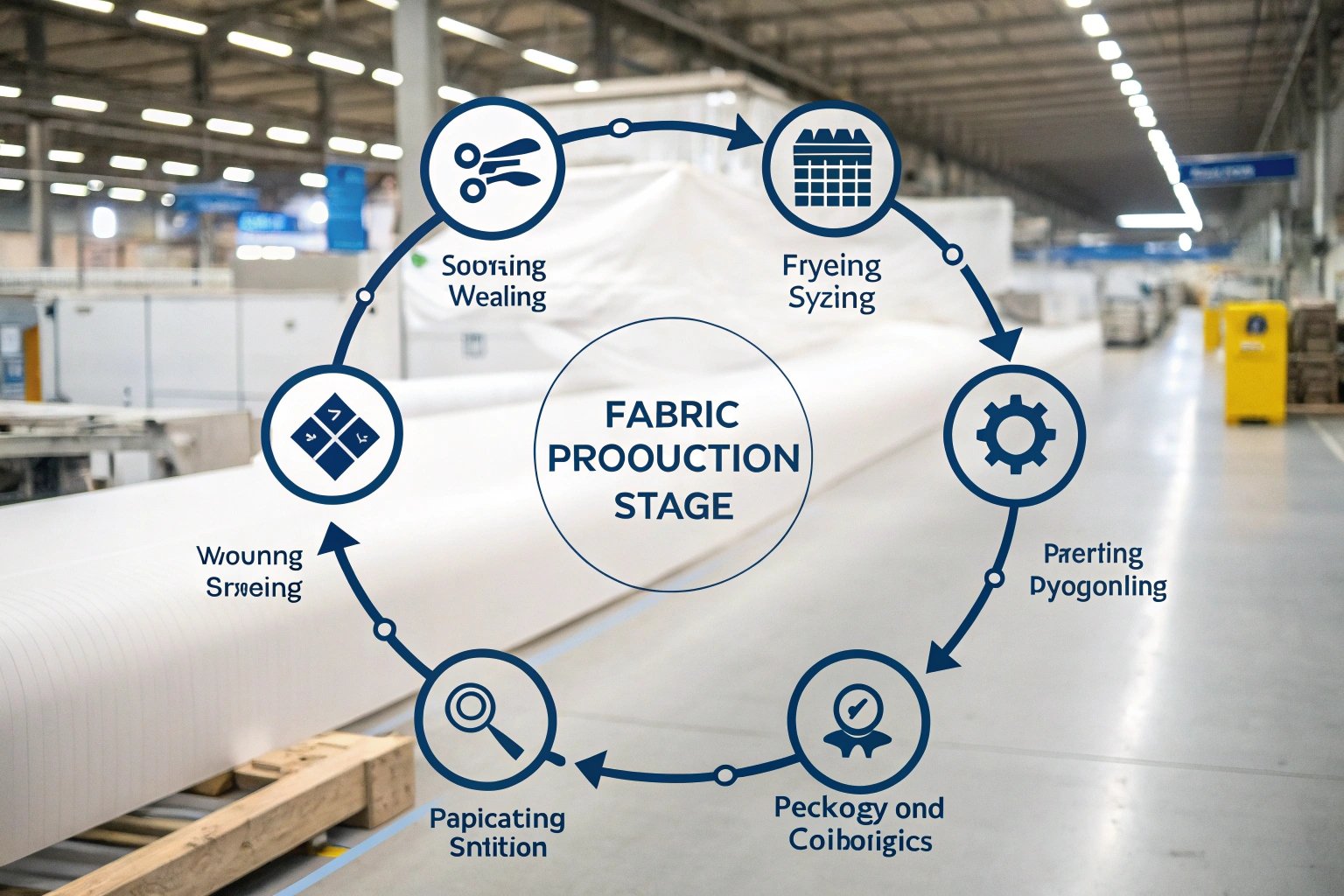
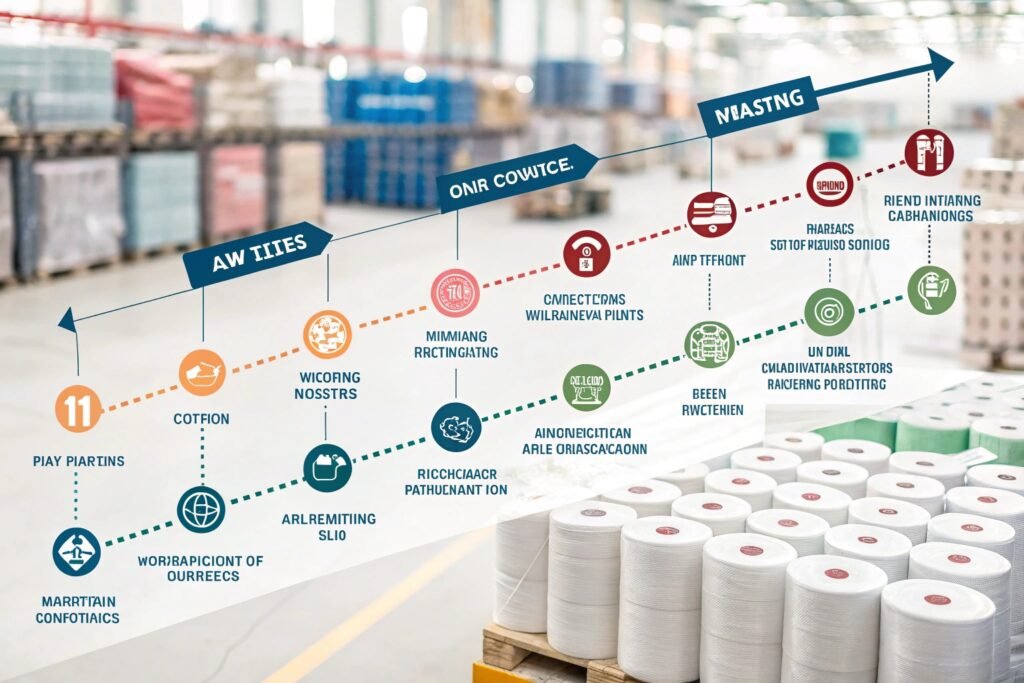
A complete textile supply chain typically involves:
- Yarn Sourcing (e.g., organic cotton, recycled polyester)
- Weaving/Knitting
- Dyeing and Finishing
- Printing or Embroidery
- Quality Control and Lab Testing
- Packaging and Labeling
- Export and Logistics
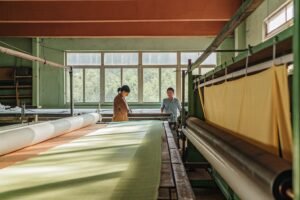
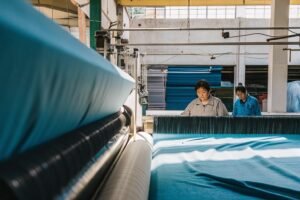
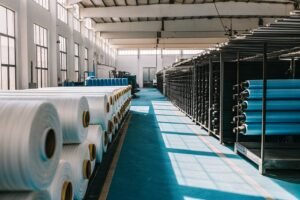
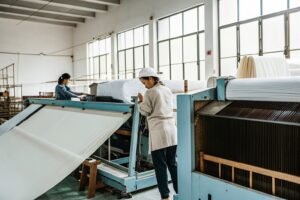
At Fumao Fabric, each of these steps is performed in-house or through long-term partner facilities located within our Keqiao ecosystem—minimizing transit and coordination times.
What makes a supply chain “end-to-end” in practice?
The key is operational control and visibility. From the moment yarn is selected to the time the finished rolls are shipped, all production decisions, quality checks, and schedules are centralized. That means fewer errors, faster execution, and clearer communication—all of which simplify your sourcing experience.
What are the benefits of end to end supply chain management?
Even with high-quality products, poor supply chain management can erode margins and delay launches. Imagine working with a system that enhances speed, quality, and flexibility. What benefits does end-to-end supply chain management bring?
End-to-end supply chain management improves speed, cost-efficiency, visibility, traceability, and reliability. It reduces handoffs, eliminates communication breakdowns, and offers faster response times to market changes—all while ensuring consistent product quality and better planning accuracy.

How does this model reduce costs?
By eliminating intermediaries and transportation between production stages, end-to-end systems significantly lower labor, logistics, and admin expenses. Fumao Fabric reduces waste and cost by managing each process under one coordinated framework, which allows clients to save on both unit pricing and operational overhead.
How does it enhance quality and consistency?
When every step is managed by one team, we maintain strict quality standards from the beginning. Any issue—like dye absorption inconsistency or weave tension—is resolved in real time without needing third-party involvement. Our CNAS-accredited lab ensures batch-by-batch testing at each phase to guarantee compliance and quality.
What is the supply chain process for clothing?
If fabric sourcing breaks down, apparel production suffers. Imagine syncing your clothing production perfectly with fabric delivery. How does the fabric supply chain tie into the full apparel production process?
The clothing supply chain begins with fabric sourcing and extends through cutting, sewing, finishing, packing, and delivery. Reliable fabric production is the foundation, and delays or inconsistencies here ripple through the entire chain. An optimized, end-to-end fabric partner accelerates your apparel supply chain by ensuring timely, consistent, and compliant fabric delivery.

How does the fabric stage affect garment lead times?
If fabric development takes 30 days instead of 15, your whole production calendar gets pushed back. That’s why we prioritize speed and reliability at Fumao Fabric. Our fast sample turnaround (24–48 hours) and bulk production (5–10 days for core items) allow our clients to meet tight garment production schedules.
Can end-to-end fabric sourcing shorten the entire garment lifecycle?
Yes. When your fabric partner manages every stage internally, your apparel production benefits from reduced miscommunication, faster material readiness, and real-time problem-solving. This results in quicker final delivery, fewer defects, and a stronger supply chain overall.
Conclusion
End-to-end fabric production removes the friction of fragmented sourcing, bringing every stage under one roof. With partners like Fumao Fabric, brands enjoy faster timelines, reduced risk, consistent quality, and simplified coordination—allowing your supply chain to move with confidence and speed from concept to final delivery.