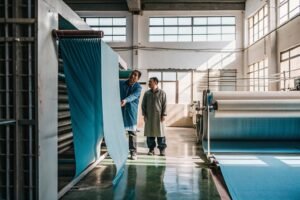
You’re sourcing OCS-certified garments, and quality is non-negotiable. Yet, how often does the final product fall short of the sample? The gap between certified fabric and a flawless finished garment is wider than most realize. It’s not just about having the right material; it’s about having the right, fully integrated production process to handle it.
The secret lies in vertical control. Most suppliers manage just one or two steps—like cutting or sewing—and outsource the rest. This fragmentation is where consistency breaks down, especially with delicate organic fabrics. True excellence in OCS garment making requires synchronized, in-house control over every critical transformation point, from fabric to final stitch.
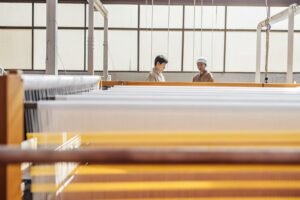
At Shanghai Fumao, we built our reputation on fabric. But our real superpower for brands is our dedicated 5-Line Garment Production System. This isn’t a loose network of subcontractors; it’s a fully managed, co-located ecosystem designed specifically for the rigors of sustainable apparel. Let me show you how each line eliminates a common bottleneck and collectively guarantees the garment quality your brand deserves.
How Does Dedicated Cutting Prevent OCS Fabric Waste?
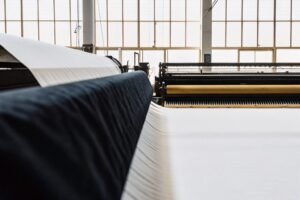
Precision cutting is the first make-or-break moment for OCS fabric. Organic cotton, often softer and with a different tension than conventional cotton, can shift or curl if not handled with specialized equipment and techniques. A standard cutting room, optimized for polyester blends, will waste precious OCS material and compromise pattern accuracy.
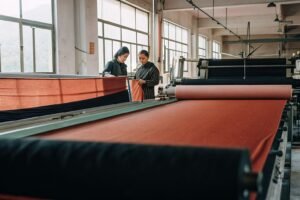
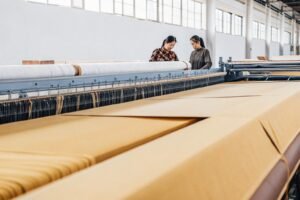
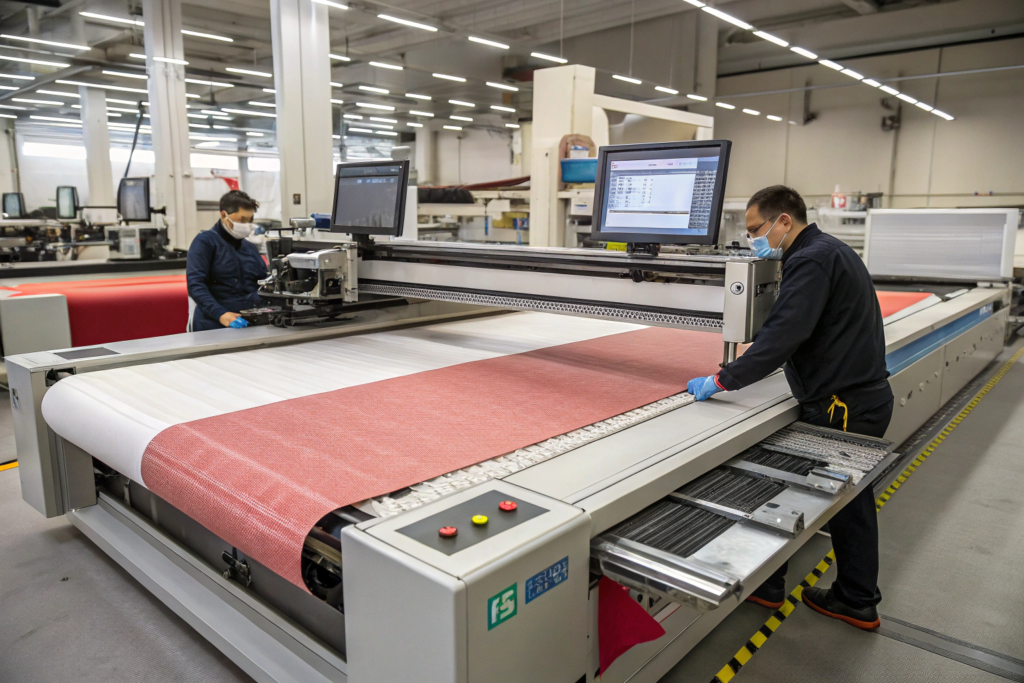
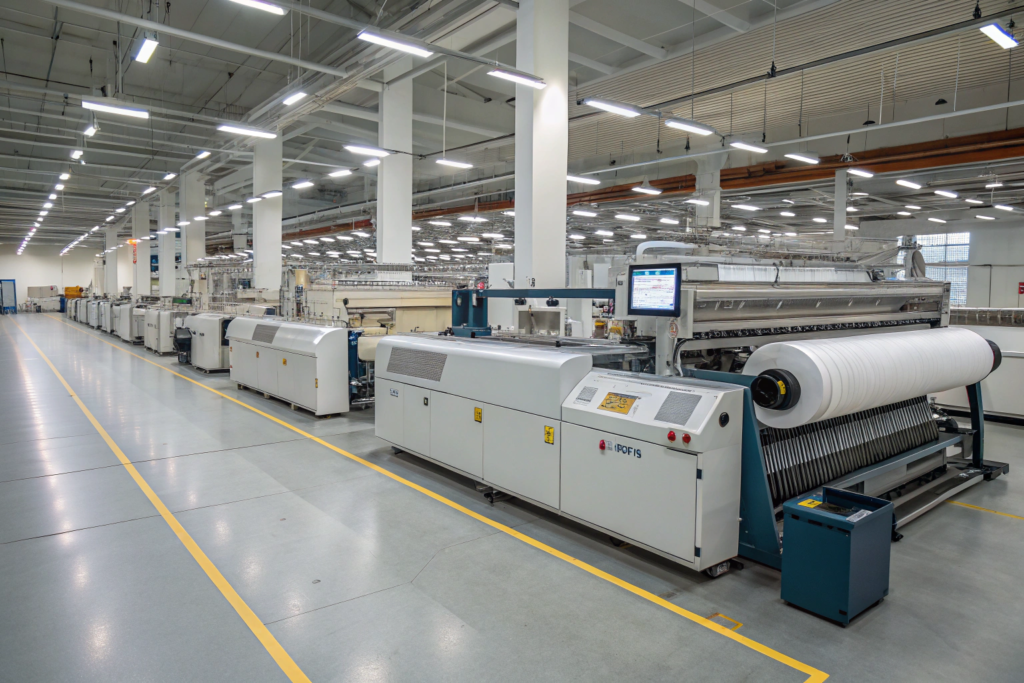
Our Line 1: Automated Precision Cutting is calibrated for sustainable textiles. We use computer-controlled spreaders that adjust tension dynamically, laying OCS fabric rolls without stretching or distorting the grain. The cutting blades are laser-guided and razor-sharp, ensuring clean edges that prevent fraying—a common issue with organic knits. This isn’t just about saving material (though we achieve over 95% fabric utilization); it’s about preserving the integrity of every piece before it even reaches sewing.
The impact is direct: consistent cut pieces mean seam allowances are uniform, panels match perfectly, and the garment assembles smoothly. For a Canadian activewear brand in 2023, this precision was critical. They used a lightweight OCS cotton jersey for a run of yoga sets. Our cutting line’s accuracy reduced fabric waste by 8% compared to their previous supplier and eliminated the panel misalignment that caused twisting in the final leggings.
What Technology Ensures Minimal OCS Material Waste?
The core of our cutting efficiency is Nesting Software. This AI-driven program arranges pattern pieces on the digital fabric layout like a complex puzzle, maximizing the number of pieces per meter. For OCS fabric, which has a higher cost per yard, this software is configured to respect the fabric’s natural stretch direction and any inherent shading, which is more visible in undyed organic materials. We combine this with ultrasonic cutting for synthetic blends and high-frequency knives for natural fibers to prevent edge fusion or burning.
Furthermore, we implement a First-Piece Approval protocol. Before a full batch is cut, we run one complete set of garment pieces, assemble a prototype, and get client approval on the fit and fabric roll alignment. This step, often skipped in rushed production, caught a potential shading issue for a French linen shirt order last season, saving 500 meters of OCS fabric from being incorrectly cut. Resources like Apparel Resources’ deep dive on smart cutting room technologies explain the broader industry shift toward this waste-reducing approach.
Why Does In-House Cutting Speed Up The Entire Process?
Control equals speed. When cutting is outsourced, it adds days for transportation and juggles another vendor’s schedule. With in-house cutting, the moment fabric passes our QC, it moves directly to the cutting floor. There’s no waiting for a third-party truck or dealing with their backlog. This seamless transition shaves 3-5 days off the typical production timeline.
More importantly, it allows for immediate feedback loops. If our sewing line (Line 2) notices a slight inconsistency in a batch of cut pieces, our cutting technicians can walk over, diagnose the issue with the specific fabric roll, and adjust settings in real-time. This integrated problem-solving is impossible with a fragmented supply chain. It’s why our sampling-to-bulk consistency score for OCS garments stays above 98%.
What Makes Our Sewing Lines Specialized for OCS Fabrics?
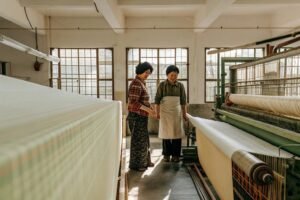
Sewing organic cotton is different. It’s not just about joining pieces; it’s about understanding how the fabric behaves under the needle. OCS fabrics can be more prone to puckering, seam grin, and needle damage if the machinery, thread, and operator skill aren’t perfectly matched to the material’s properties.
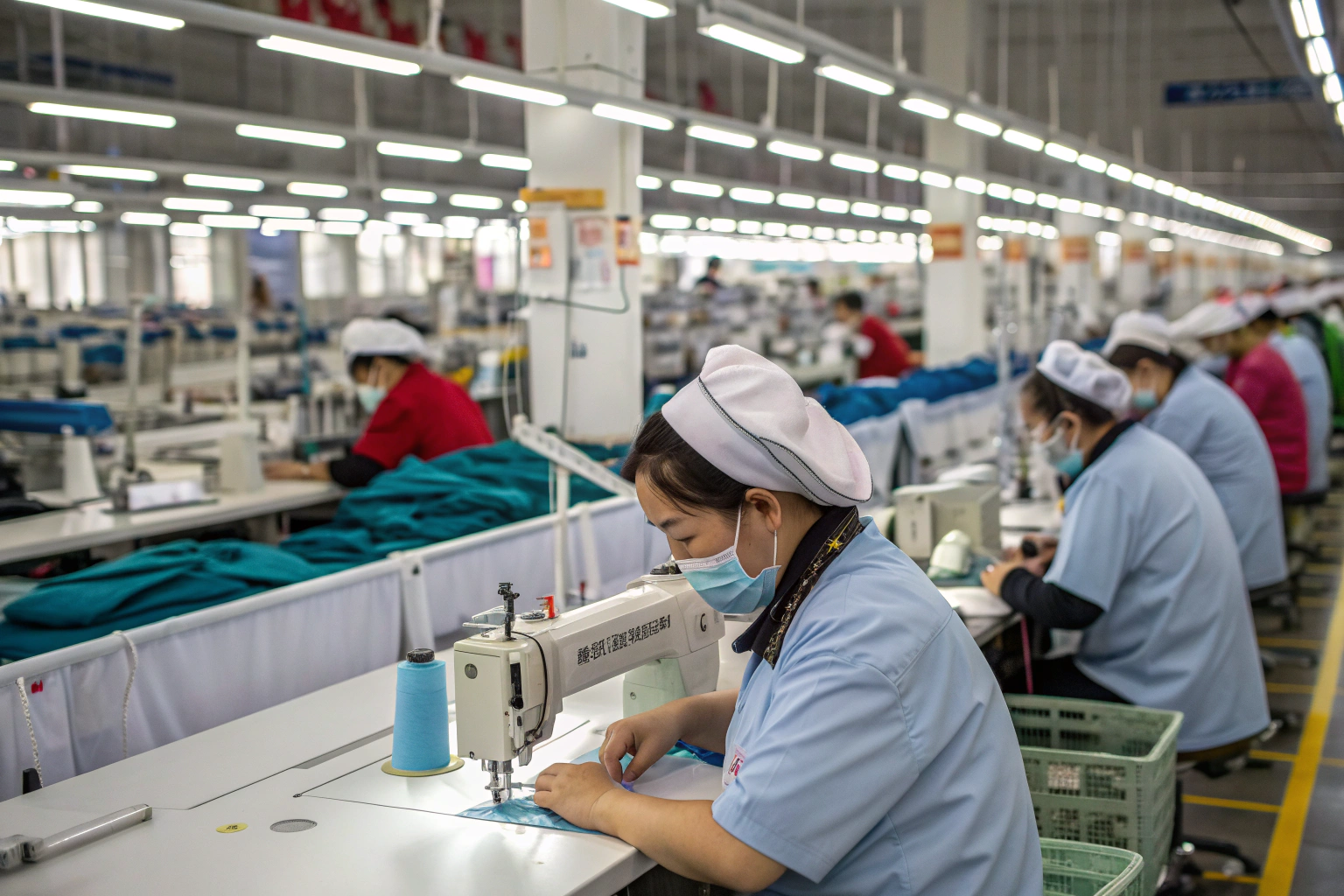
That’s why we don’t have just one sewing line. We have two specialized lines (Line 2 & Line 3). Line 2 is dedicated to wovens: OCS poplins, twills, and linens for shirts, dresses, and trousers. It’s equipped with machines that offer precise thread tension control and use finer, sharper needles to cleanly penetrate dense woven fibers without pushing them aside. Line 3 is engineered for knits: OCS jerseys, rib knits, and french terries for tees, sweats, and activewear. This line features overlock and coverstitch machines with differential feed systems that gently stretch the fabric as it sews, preventing wavy seams—the nemesis of any knit garment.
How Do We Avoid Common Seam Issues in Organic Cotton?
The devil is in the details, and for OCS garments, the devil is often in the seam. We combat this with a three-pronged approach:
- Needle & Thread Protocol: We use ballpoint needles for knits to separate yarns without breaking them, and sharp needles for wovens. We pair OCS cotton fabric with GOTS-certified organic cotton thread or compatible synthetic threads to ensure similar shrinkage rates and durability.
- Tension Tuning: Each order undergoes sewing machine tension calibration on scraps from the actual production fabric roll. This accounts for batch-to-batch variations in the organic material.
- Operator Training: Our sewers are trained specifically on handling delicate fabrics. They understand how to guide material without pulling, which is crucial for maintaining the garment’s intended shape and drape.
A practical case: An Australian brand ordered OCS organic cotton polo shirts. Their previous supplier had issues with shoulder seams popping after washes. Our Line 3 used a reinforced safety-stitch seam and adjusted the differential feed, resulting in a 0% seam failure rate in their post-production garment wash testing protocols. The brand’s customer return rate for seam issues dropped to near zero.
Why Are Separate Lines for Wovens & Knits a Game-Changer?
Specialization breeds excellence. Mixing wovens and knits on the same line forces constant machine reconfiguration, thread changes, and operator mental shifts, increasing the risk of error and slowing pace. By dedicating lines, our teams become true experts. The woven line operators develop an intuitive feel for managing plackets and collars on shirting, while the knit line masters the nuances of setting sleeves on stretchy jersey without distortion.
This specialization directly impacts quality and speed. Changeover time between different OCS knit orders is minimal. The line is always "in the zone" for the fabric type it handles. For you, this means faster turnaround and fewer defects. It’s like having a chef who only makes pasta and another who only grills steak—each produces a superior result faster than a generalist.
How Does Integrated Finishing & QC Protect OCS Garment Quality?
The journey doesn’t end at the last stitch. Washing, finishing, and inspection are where a good garment becomes retail-ready. For OCS garments, which often use low-impact dyes and minimal chemical finishes, this stage requires a gentle, observant touch to preserve the fabric’s natural character and ensure certification integrity.
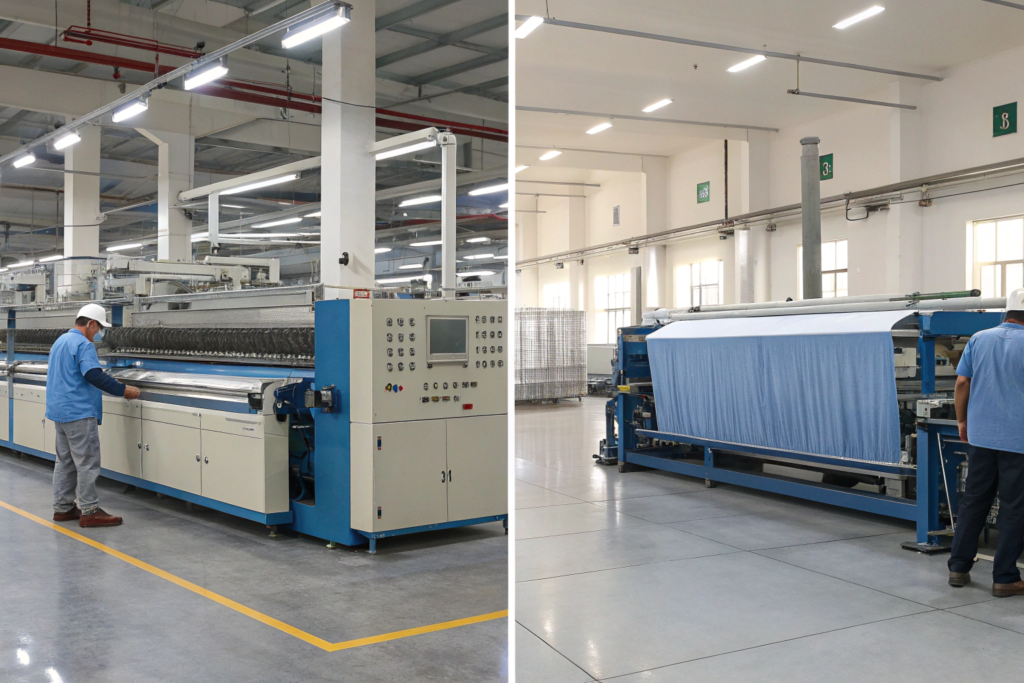
Our Line 4: Low-Impact Finishing & Washing and Line 5: Multi-Point Quality Control work in tandem. Line 4 uses ozone washing and soft enzymatic treatments instead of harsh chemical washes to achieve desired softness or vintage effects on OCS denim. This aligns with the eco-ethics of the organic standard. Temperature and cycle times are carefully controlled to prevent excessive shrinkage.
Line 5 is where our CNAS-lab-trained inspectors take over. Every single garment undergoes a 12-point check that goes beyond loose threads. We verify seam strength, measure shrinkage against tolerances, check colorfastness against the approved lab dip under standard light, and ensure all OCS labels are correctly attached and documented. The QR code from our fabric tracking system is linked to the garment’s batch report, providing full traceability.
What Finishing Techniques Enhance OCS Garment Durability?
For OCS garments, durability is about enhancing natural properties, not masking flaws. We employ several key techniques:
- Pre-Shrinking: We conduct controlled pre-washes on garment samples to predict and account for bulk shrinkage, ensuring consistent sizing.
- Seal Pressing: Using steam presses at optimal temperatures, we "set" the seams and hems, giving the garment a clean, retail-ready appearance that holds through packaging and transit.
- Functional Finishes: For performance-oriented OCS apparel, we can apply eco-friendly water-repellent finishes for sustainable outerwear in a controlled environment, ensuring even application without compromising fabric breathability or certification.
In 2024, for a series of OCS cotton hotel bathrobes for a luxury European chain, our finishing line implemented a specialized terry-loop brushing process that enhanced absorbency and softness without damaging the loops, passing all the client’s rigorous linting and pilling tests for toweling fabrics.
Why Is In-House QC Critical for Certification Compliance?
Final QC is your last defense before shipment. If this is outsourced, you risk a disconnect between the production standard and the inspection standard. Our in-house QC team is trained on the specific requirements of OCS certification. They verify that every component—from the main fabric and thread to the care labels and hangtags—is compliant and that the correct OCS grade (e.g., "95% Organic") is stated.
They also conduct AQL (Acceptable Quality Level) inspections statistically. But more importantly, they have the authority to halt production and walk back to the sewing line if a systemic issue is detected. This closed-loop correction system prevented a major setback for a US brand last year when a minor needle size issue on Line 3 was caught early, limiting rework to just 50 pieces instead of the entire 5000-piece order.
Can This 5-Line System Handle Complex OCS Garments?
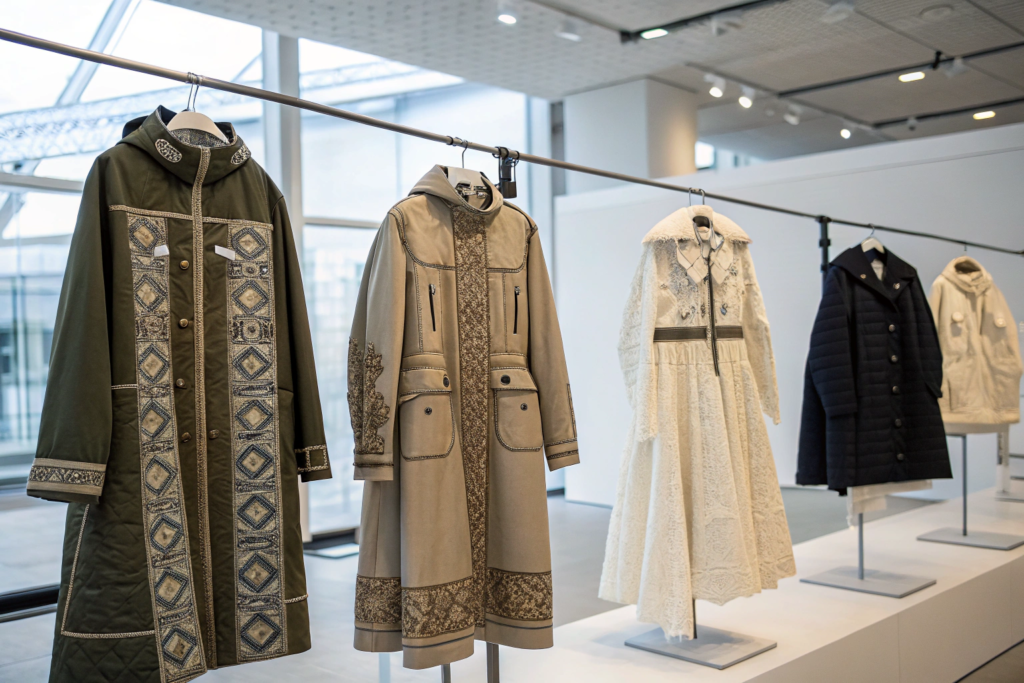
Simple tees are one thing, but what about complex technical outerwear or detailed dresses made from OCS fabrics? The strength of an integrated system is its ability to handle complexity through coordination. Our five lines operate not as silos, but as a single, communicative unit managed under one roof.
For complex items, we run Pilot Production Runs. Before bulk production begins, a small batch moves sequentially through all five lines. This "dry run" identifies potential friction points: perhaps a particular fused collar on an OCS shirt doesn’t react well to the standard press temperature, or a waterproof seam tape on an OCS anorak needs a specific sewing foot. These issues are resolved before they can scale, ensuring the bulk run proceeds smoothly.
How Do We Manage Multi-Component OCS Orders?
A typical OCS garment order isn’t just one fabric. A jacket might have an OCS cotton shell, a recycled polyester lining, and non-organic elastic in the cuffs. Managing this complexity is a logistics challenge.
Our system excels here through Component Kitting. In our cutting line (Line 1), all pieces for one complete garment—shell, lining, interfacing, tabs—are cut, bundled, and tagged together as a "kit." This kit then travels through production as one unit. This eliminates the risk of component mismatch, speeds up the sewing line’s assembly, and simplifies tracking. It’s a method borrowed from advanced manufacturing, and you can read about its principles in articles on lean manufacturing in apparel production. For a UK brand’s OCS canvas field jacket with multiple pockets and trim, this kitting method reduced assembly errors by 40%.
What’s The Real Timeline Advantage for Brands?
The ultimate test is speed to market. A fragmented supply chain has inherent delays: shipping between factories, miscommunication, and blame-shifting when problems arise. Our integrated 5-line system collapses these timelines.
Here’s a comparative snapshot:
| Stage | Traditional Multi-Vendor Model | Fumao’s 5-Line Integrated System |
|---|---|---|
| Fabric to Cutting | 3-5 days (transport, queue at cutter) | <1 day (direct transfer) |
| Cutting to Sewing | 2-3 days (pack, ship, unpack) | Same day (bundles moved internally) |
| Problem Solving | Days of emails/calls between vendors | Hours (walk to the previous line) |
| Total Lead Time (excl. fabric) | Often 45-60 days | Consistently 30-35 days |
This 30%+ timeline reduction is not an estimate; it’s our standard. A German minimalist fashion brand switched to us for their core OCS cotton range and consistently now receives goods 18 days faster, allowing them to operate with lower inventory and react to trends.
Conclusion
Excelling in OCS garment making isn’t about a single miracle machine or a secret technique. It’s about designing a production ecosystem that respects the unique characteristics of organic fabrics at every single touchpoint. From precision cutting that conserves every centimeter, to specialized sewing that creates flawless seams, to finishing and QC that protect both quality and certification, each step must be controlled, coordinated, and optimized.
Shanghai Fumao’s 5-Line System is built on this philosophy of vertical integration and deep specialization. We bridge the gap between certified fabric and perfect garments by removing the fragmentation that causes delays, waste, and quality drops. For brands that view their OCS commitment as a core promise to their customers, this end-to-end control is not a luxury; it’s a necessity.
If your current supply chain feels like a relay race with too many handoffs, talk to us. Let our five lines run as one for your next OCS collection. Contact our Business Director, Elaine, to discuss your specific garment needs. See the difference an integrated system makes. Email: elaine@fumaoclothing.com.