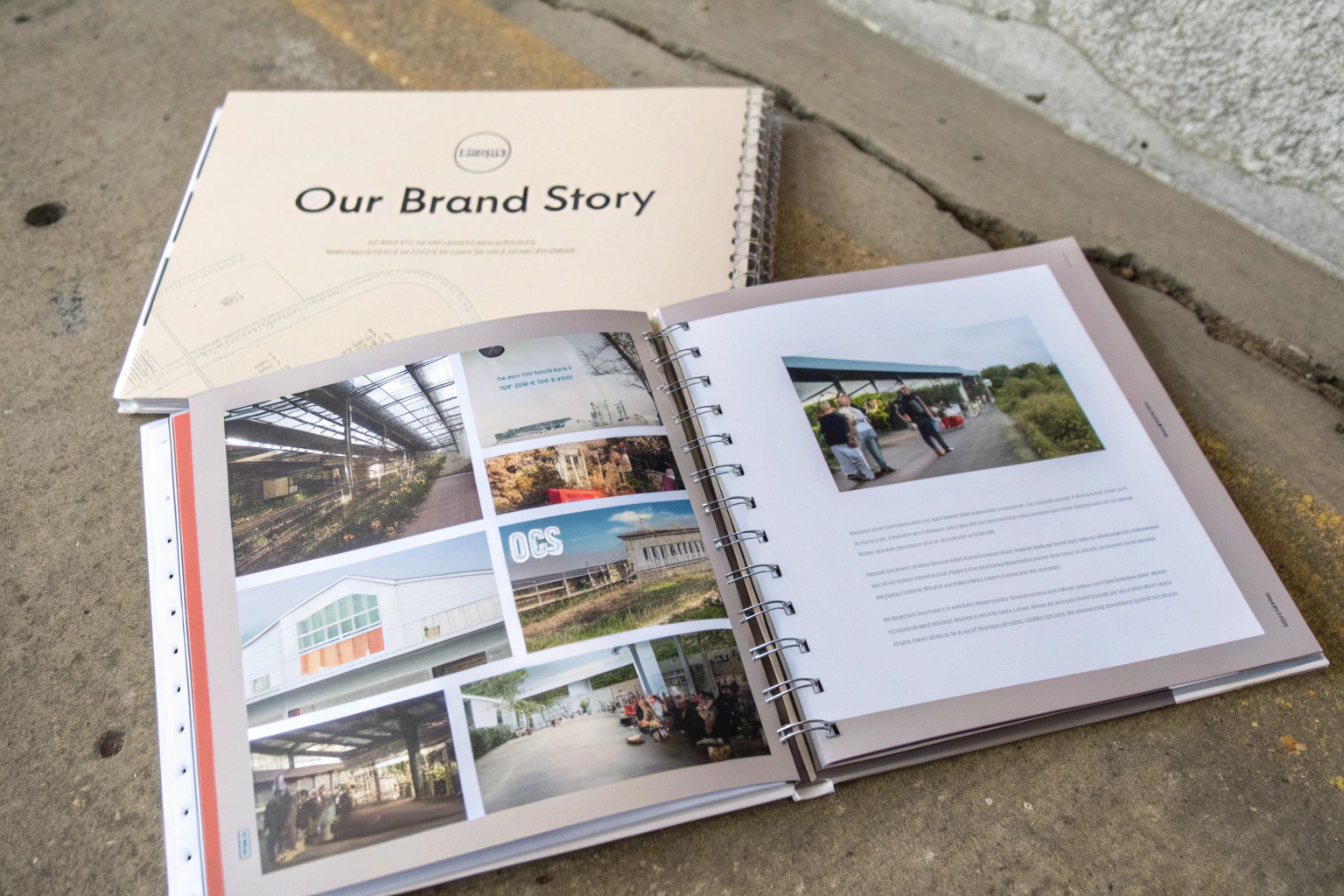
Every brand has a story. But in 2024, a story without proof is just a fairy tale—and consumers have stopped believing in fairy tales. They’ve been burned by hollow "sustainable" claims and glossy purpose-washing. Your brand story isn’t what you say on your ‘About Us’ page; it’s what you can prove in your supply chain. This is where OCS (Organic Content Standard) certification transforms from a compliance document into the most powerful character in your brand’s narrative. It doesn’t just support your story; it becomes the irrefutable evidence that makes your story believable, defensible, and deeply resonant in a skeptical market.
OCS certification supports your brand story by providing a third-party verified, data-rich backbone for your sustainability and quality claims. It allows you to move from abstract adjectives ("eco-friendly," "pure," "responsible") to concrete nouns and verbs—traceable farms, audited mills, quantified water savings, and documented transactions. It turns your ethos into evidence, building a narrative of transparency that builds trust, commands premium pricing, and creates fierce customer loyalty.
Let’s deconstruct exactly how this certification weaves itself into every chapter of a modern brand’s story, from the founding philosophy to the unboxing experience.
Chapter 1: The Origin Story – From Myth to Map
Every great brand starts with a "why." Perhaps yours is about reconnecting with nature, protecting children’s health, or honoring craftsmanship. OCS certification gives that "why" a geographic and scientific origin point. Instead of saying "we use natural materials," you can say: "Our journey begins on certified organic farms in [Region], where cotton is grown without synthetic pesticides, protecting soil health and farmer wellbeing. This is verified by our OCS certification, license #XYZ."
This transforms your origin from a vague sentiment into a mappable, visitable (in theory), and auditable reality. You’re not just telling a story; you’re providing the coordinates.

How does OCS provide narrative depth?
It allows you to talk about characters and processes:
- The Protagonists: The farmers and spinners in your supply chain become part of your story. You can talk about the impact of organic practices on their lives (with their consent), moving beyond faceless "sourcing."
- The Conflict & Resolution: The "conflict" is conventional agriculture’s environmental harm. The "resolution" is the certified organic system you’ve chosen. OCS is the plot device that proves the resolution is real.
- The Timeline: You can show the chronological journey of a fiber from planting to garment, with OCS TCs marking each checkpoint. This creates a narrative of care and attention over time.
A skincare brand we work with doesn’t just say "clean ingredients." They trace each oil to its organic farm. A clothing brand can do the same with cotton. The narrative structure is identical and equally powerful.
Can you build a brand solely on this transparency?
Absolutely. Brands like Everlane (with its "Radical Transparency" on cost) paved the way. OCS allows for "Radical Material Transparency." Your brand’s unique selling proposition becomes: "We will show you exactly where every material comes from and prove its claims." This is a powerful, defensible position in a crowded market. It attracts a consumer who does their research and values honesty above hype.
Chapter 2: The Craftsmanship Chapter – Quality with a Receipt
Your story likely includes commitments to quality, durability, and thoughtful design. OCS certification reinforces this chapter not by talking about better sewing (it doesn’t), but by guaranteeing the purity and pedigree of the primary raw material.
Think of it this way: a master chef can’t create a Michelin-star dish with spoiled ingredients. A master garment maker cannot achieve ultimate softness, durability, and color vibrancy with low-grade, chemically-laden cotton. OCS ensures the ingredient—the fiber—is of a certain clean, high-potential standard.

How does OCS certification translate to a quality narrative?
You can communicate this chain of cause and effect:
- OCS Organic Cotton → Grown without harsh chemicals → Fibers remain long and undamaged.
- Long, Undamaged Fibers → Can be spun into stronger, smoother yarn.
- Strong, Smooth Yarn → Weaves into more durable, softer, pill-resistant fabric.
- Superior Fabric → Provides the perfect canvas for our precise construction and ensures your garment lasts for seasons.
This is a technical story that appeals to the informed consumer. It says, "Our quality isn’t an accident; it’s engineered from the seed up." You can supplement this with your own fabric test reports (for shrinkage, pilling, etc.), using the OCS certification as the foundational reason why those tests perform well.
What about the emotional quality of "purity" and "safety"?
For categories like children’s wear, intimates, or loungewear, the OCS story is directly emotional. "Purity" moves from a feeling to a fact. You can say:
"This onesie touches your baby’s skin 24 hours a day. We ensure that contact is with nothing but pure, OCS-certified organic cotton, free from pesticide residues. Here is the certificate for this batch."
This is a profound safety and care narrative that OCS uniquely enables. It directly addresses a parent’s deepest concerns with evidence, not just reassurance.
Chapter 3: The Trust & Community Chapter – Building Belonging Through Proof
Today’s consumers, especially younger generations, don’t just buy products; they buy into belief systems. They seek brands that are allies in their values. However, they are inherently distrustful. OCS certification acts as a trust bridge. It’s an independent, expert voice saying, "This brand’s claims check out."
This allows you to build a community not on shared taste alone, but on shared values verified by shared facts. Your customers become co-advocates because they are armed with the same proof you are.

How to use OCS in customer-facing communication?
Be bold and educational:
- Website: Have a dedicated "Our Materials / Our Proof" page. Display redacted TCs. Explain what OCS is and why you chose it.
- Product Pages: List the OCS-certified fabric as a feature. Consider a dynamic QR code on the hangtag that links to the specific TC for that garment’s batch.
- Social Media & Content: Create "Transparency Tuesdays" or deep-dive posts. "Let’s read an OCS TC together. Here’s what each line means for you." This educates your audience and turns complex certification into accessible storytelling.
- Customer Service: Train your team to talk about OCS. When a customer asks, "Is this really organic?" the answer isn’t "Yes!" It’s "Yes, and here’s how you can verify it yourself."
This open-book policy does something magical: it disarms skepticism. It says, "We have nothing to hide." Resources like the Textile Exchange’s consumer guide to certifications can be shared to educate your community, positioning your brand as a guide.
Does this transparency create competitive armor?
Yes. When your story is built on verifiable certification, it is hard to copy. A competitor can mimic your design or price point, but they cannot instantly replicate a transparent, OCS-certified supply chain and the authentic narrative that comes with it. This builds a moat of credibility that is more valuable than any patent on a stitch.
Chapter 4: The Growth & Legacy Chapter – Scaling with Integrity
As your brand grows, the pressure to cut corners increases. The OCS framework provides a governance structure for scaling. It answers the critical question: "How do we get bigger without betraying what made us special?"
The certification mandates that as you order more volume, the chain of custody remains intact, the audits continue, and the documentation scales. It builds growth planning into your operations, ensuring your story doesn’t dilute as your market share expands.

How does OCS future-proof against regulation?
Laws like the EU’s Empowering Consumers Directive and CSDDD are coming. They will punish vague claims and require due diligence. Brands using OCS are already pre-compliant. Your story evolves from "we are sustainable" to "we are sustainable in a way that meets the world’s toughest coming regulations." This is a powerful narrative for investors, retailers, and partners. It shows foresight and operational maturity.
Can OCS be part of a larger sustainability ecosystem?
It’s the perfect entry point. Your story can be:
"We start with OCS to ensure material purity. We combine it with [OEKO-TEX dyes for chemical safety], [recycled packaging], and [1% for the Planet donations]. OCS is our foundational commitment, the first chapter in our ongoing mission."
This shows that certification is part of a journey, not a destination. It keeps your story dynamic and growing.
Conclusion
OCS certification does not just support your brand story; it elevates it from a marketing narrative to a documented chronicle. It provides the characters (farmers, auditors), the plot (the journey of a fiber), the conflict (conventional vs. organic), and the proof of resolution (the TC). In an age of distrust, this proof is the most valuable currency a brand can possess.
It allows you to build a brand that is respected not just for what it makes, but for how it makes it—and for its courage to show its work. This is the foundation of lasting brands in the 21st century.
If you are ready to write a brand story that is not only beautiful but bulletproof, it begins with a supply chain partner who understands narrative integrity. At Shanghai Fumao, we provide the OCS-certified fabric and transparent systems that become the proven chapters of your brand’s legacy. Contact our Business Director, Elaine, to start writing your story with us: elaine@fumaoclothing.com. Let’s build a story worth believing in.