
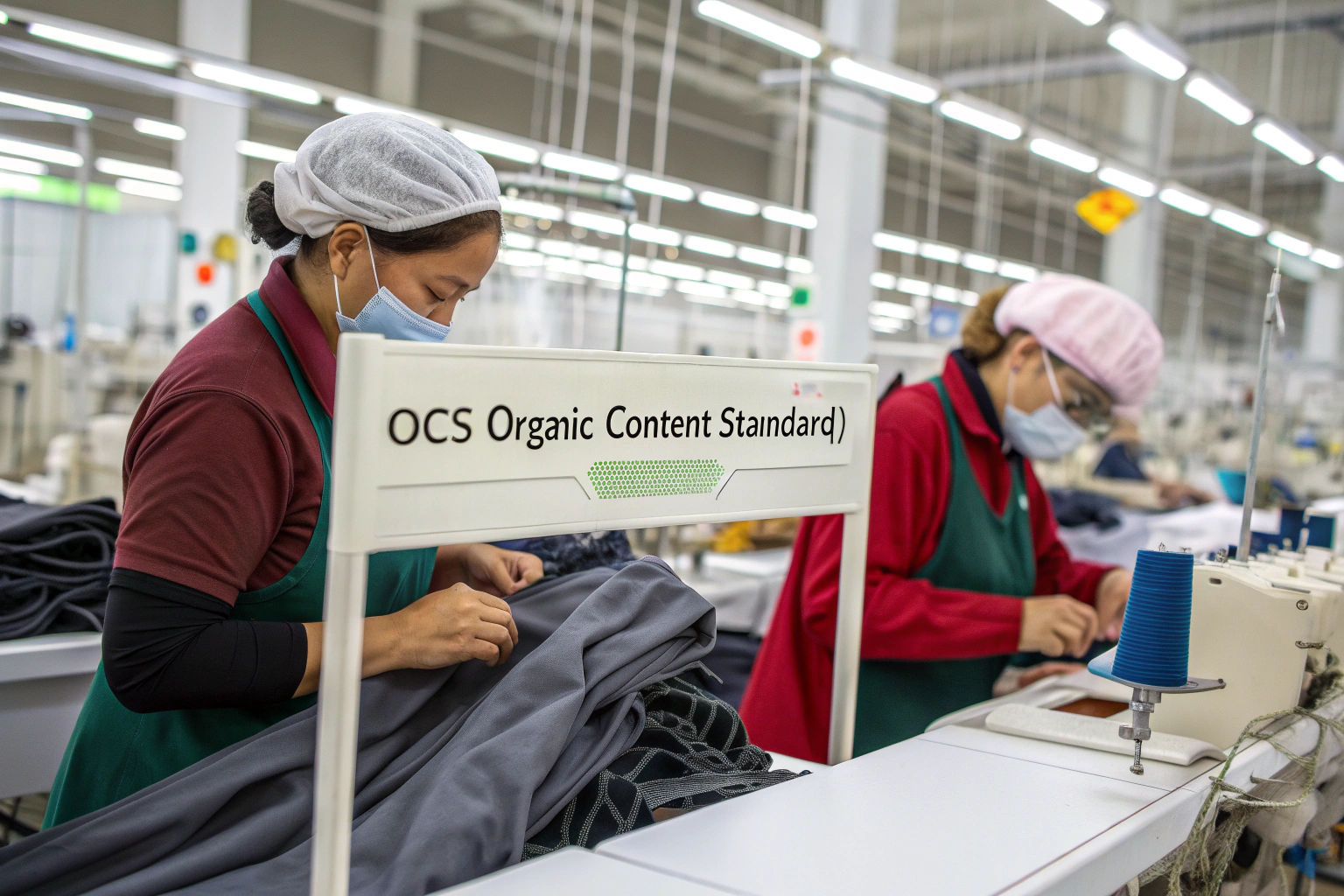
If you’re sourcing organic cotton and relying solely on supplier promises, you might be risking your brand’s credibility without even knowing it. I’ve seen manufacturers lose major contracts because their "organic" cotton couldn’t be verified when retailers demanded proof.
The OCS (Organic Content Standard) is an international, voluntary standard that sets requirements for third-party certification of organically grown content in textile products. For clothing manufacturers, OCS provides the verification system to track organic raw materials from source to final product, ensuring the organic cotton you’re paying for is actually in the garments you’re producing. It’s not about farming practices—it’s about supply chain integrity and giving you the documentation to prove your organic claims are legitimate.
Let me break down exactly how OCS works for manufacturers and why it’s becoming essential for anyone serious about organic apparel production.
How Does OCS Certification Work in Manufacturing?
OCS certification operates on a chain-of-custody model that tracks organic content through every stage of production—from ginning and spinning to weaving, dyeing, and garment manufacturing. This creates an auditable trail that verifies organic integrity.
The certification process begins with your raw material suppliers providing transaction certificates for their OCS-certified materials. As these materials move through your manufacturing process, you maintain detailed records of inputs and outputs, following strict segregation protocols to prevent mixing with conventional materials. Annual third-party audits verify your compliance with documentation requirements, material handling procedures, and labeling standards.

What are the key requirements for OCS certification?
Manufacturers must implement several critical systems:
- Material segregation to prevent contamination with non-organic materials
- Documentation tracking for all organic material inputs and outputs
- Mass balance calculations to verify organic content percentages
- Labeling controls ensuring accurate organic claims
- Staff training on OCS requirements and procedures
When we helped a Vietnamese garment factory achieve OCS certification in 2023, they discovered that 15% of their "organic" cotton inventory lacked proper documentation—a finding that prevented a potentially costly compliance failure with their European clients. Understanding Textile Exchange’s OCS standard requirements provides the complete framework for implementation. Additionally, learning about common organic certification pitfalls in manufacturing reveals why systematic approaches matter.
How does the mass balance system work?
The mass balance approach allows some flexibility while maintaining integrity:
- Input tracking of all OCS-certified materials received
- Production monitoring to ensure proper handling and segregation
- Output calculation determining the organic content percentage
- Transaction certificates issued for certified shipments
- Annual reconciliation verifying overall system accuracy
This system means you can produce both organic and conventional products in the same facility, provided you maintain proper segregation and documentation throughout the process.
What Are the Different OCS Certification Levels?
OCS offers two distinct certification levels that provide flexibility for manufacturers while maintaining clear communication about organic content. Understanding these options helps you choose the right approach for your products and market positioning.
The standard provides for OCS 100 and OCS Blended certifications, each with different requirements and labeling implications. This flexibility allows manufacturers to work with various material availability scenarios while still providing verified organic content claims.
What distinguishes OCS 100 from OCS Blended?
The certification levels differ significantly:
| Aspect | OCS 100 | OCS Blended |
|---|---|---|
| Minimum Organic Content | 95% organic material | 5% organic material |
| Labeling Requirements | "100% organic" or "95-100% organic" | "X% organic" with specific percentage |
| Material Flexibility | Very limited blending allowed | Flexible material combinations |
| Market Positioning | Premium organic positioning | Mainstream sustainability |
| Cost Implications | Higher due to material constraints | More cost-effective |
A sportswear manufacturer we worked with successfully implemented both systems—using OCS 100 for their premium organic line and OCS Blended for their more accessible sustainable collection, maximizing their market reach. Exploring organic content labeling regulations provides additional context for proper claim management.
How do you determine the right certification level?
Choosing between OCS 100 and Blended depends on:
- Your target market and their expectations for organic content
- Material availability and cost considerations
- Production capabilities for maintaining segregation
- Marketing strategy and brand positioning
- Customer requirements and compliance needs
Most manufacturers start with OCS Blended to build experience with the certification system before progressing to OCS 100 for specific product lines.
What Are the Implementation Challenges for Manufacturers?
While OCS certification provides significant benefits, manufacturers face several implementation challenges that require careful planning and resource allocation. Understanding these hurdles helps you prepare effectively for certification.
The transition to OCS certification involves costs, system changes, staff training, and supply chain coordination that many manufacturers underestimate. Successful implementation requires treating certification as an operational transformation rather than a simple paperwork exercise.

What are the primary cost considerations?
OCS implementation involves multiple cost factors:
- Certification fees for initial audit and annual surveillance
- System development costs for documentation and tracking
- Staff training expenses for proper procedure implementation
- Material testing costs to verify organic content
- Potential production efficiency impacts during transition
Our analysis shows that manufacturers typically achieve return on investment within 18-24 months through premium pricing, increased orders, and reduced compliance issues. Learning about textile certification cost analysis provides valuable financial planning insights.
What operational changes are required?
Key operational modifications include:
- Inventory management systems for organic material segregation
- Production scheduling to minimize changeover between organic and conventional
- Quality control procedures specific to organic material handling
- Documentation systems for mass balance calculations
- Supplier verification processes for incoming materials
Manufacturers who plan these changes systematically typically complete OCS implementation in 3-6 months, while those taking an ad-hoc approach often require 9-12 months.
How Does OCS Compare to GOTS Certification?
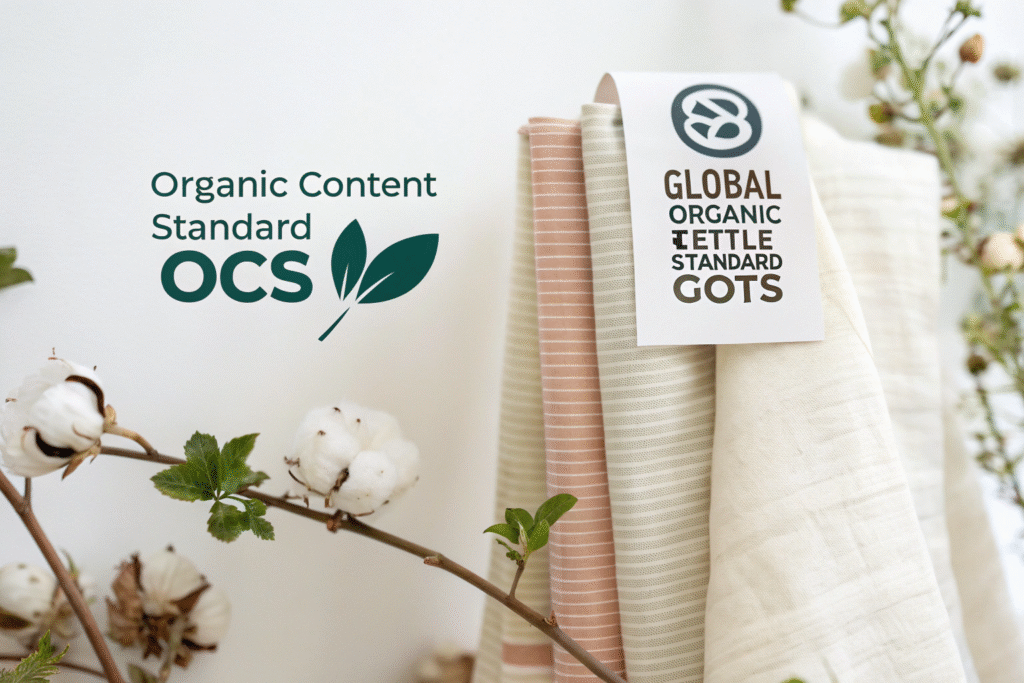
Many manufacturers confuse OCS with GOTS (Global Organic Textile Standard), but understanding the differences is crucial for choosing the right certification for your products and capabilities.
While both standards involve organic cotton verification, they serve different purposes and market needs. OCS focuses exclusively on organic content verification, while GOTS encompasses broader environmental and social criteria throughout production.
What are the key differences between OCS and GOTS?
The standards differ significantly in scope and requirements:
| Criteria | OCS | GOTS |
|---|---|---|
| Focus | Organic content verification | Comprehensive organic processing |
| Environmental Criteria | Limited to chemical restrictions | Comprehensive environmental management |
| Social Criteria | None | Strict social compliance requirements |
| Chemical Inputs | Basic restrictions | Comprehensive positive list |
| Processing Requirements | No specific requirements | Strict environmental criteria |
| Certification Cost | Lower | Higher |
A Portuguese textile mill we advised chose OCS specifically because their dyeing and finishing processes couldn’t meet GOTS chemical requirements, allowing them to still offer verified organic content to their clients. Understanding GOTS certification requirements helps clarify the differences between the standards.
When should manufacturers choose OCS over GOTS?
OCS is often the better choice when:
- Clients only require organic content verification
- Manufacturing processes cannot meet GOTS environmental standards
- Budget constraints limit certification options
- Supply chain lacks full GOTS certification
- Market needs focus on content claims rather than processing
The choice ultimately depends on your capabilities, market requirements, and strategic positioning.
What Business Benefits Does OCS Certification Deliver?
Beyond compliance, OCS certification provides tangible business advantages that justify the implementation investment and ongoing maintenance efforts. These benefits extend across commercial, operational, and strategic dimensions.
Manufacturers implementing OCS typically experience multiple positive impacts that strengthen their market position and improve their operational resilience. Understanding these benefits helps build the business case for certification investment.

What commercial advantages does OCS provide?
OCS certification delivers significant commercial benefits:
- Price premiums of 10-25% for certified organic products
- Access to new markets and retail channels requiring verification
- Competitive differentiation in crowded manufacturing landscapes
- Client retention through demonstrated commitment to sustainability
- Reduced compliance costs with streamlined verification processes
Our client data shows that OCS-certified manufacturers typically increase their order values by 18-30% and improve their client retention rates by 25-40% compared to non-certified competitors. Exploring market trends in organic textiles reveals the growing commercial importance of organic verification.
How does OCS improve operational performance?
The certification process enhances operations through:
- Better inventory management systems and procedures
- Improved documentation practices with wider applications
- Enhanced quality control from systematic approaches
- Stronger supplier relationships through verification requirements
- Continuous improvement culture from audit feedback
These operational improvements often deliver efficiency gains that partially or completely offset certification costs, making OCS certification financially neutral or positive even before considering commercial benefits.
Conclusion
The OCS Organic Cotton certification provides clothing manufacturers with a robust system for verifying and tracking organic content through their production processes. While it requires significant implementation effort and ongoing maintenance, the commercial advantages, market access benefits, and operational improvements typically deliver strong returns on investment.
For manufacturers serious about organic apparel production, OCS certification has evolved from a nice-to-have option to a business necessity in many markets. The standard provides the verification framework that brands and retailers increasingly demand while delivering tangible business benefits that extend far beyond basic compliance. If you’re ready to explore how OCS certification can strengthen your manufacturing business, contact our Business Director, Elaine. She can guide you through the implementation process and business case development: elaine@fumaoclothing.com.









One Response
Se liga, a Brazino777app tá com um app show de bola pra quem curte jogar no celular! Tem slot, cassino ao vivo, e a interface é super intuitiva. Baixem lá e aproveitem: brazino777app.