
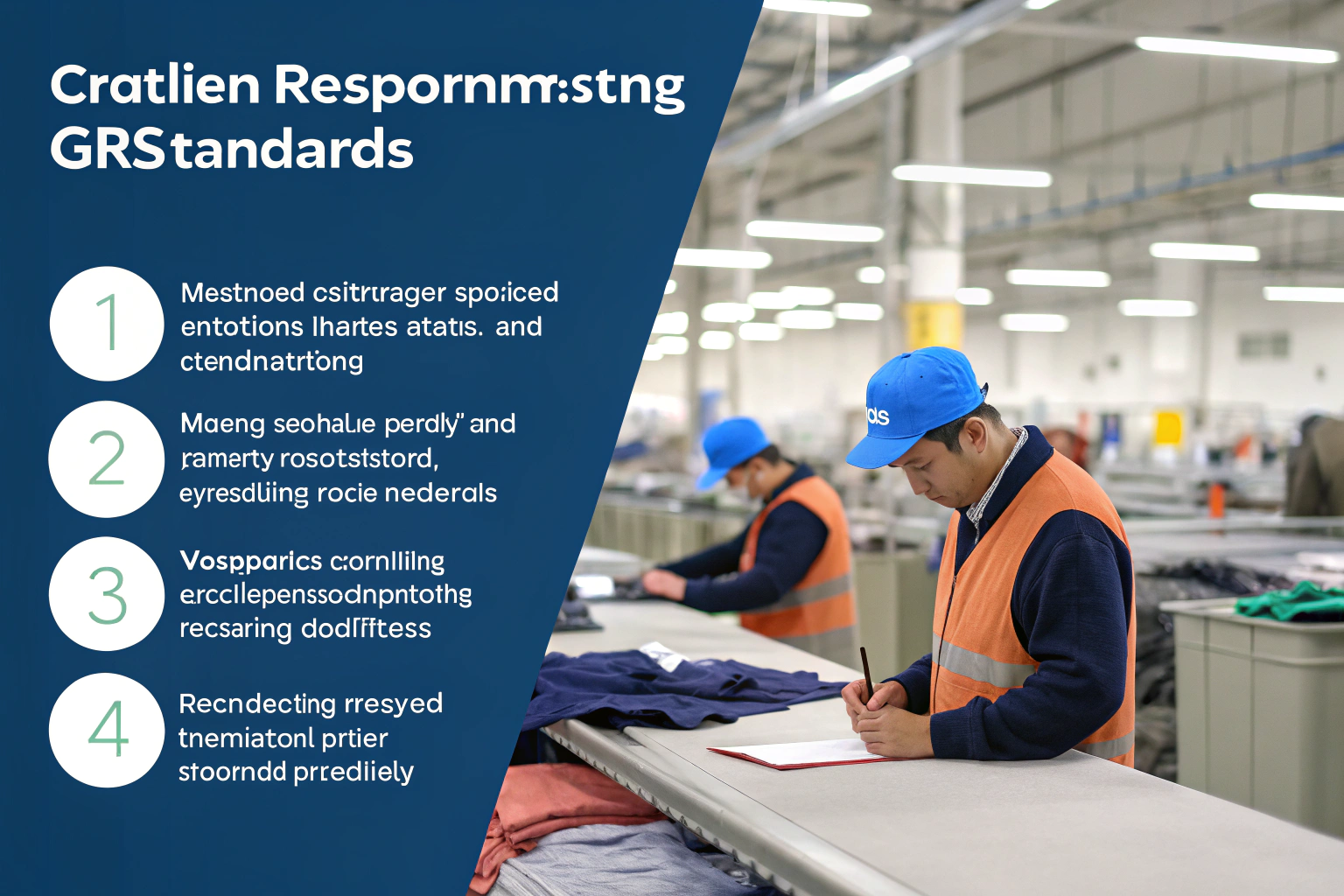
You’ve decided to pursue GRS certification for your clothing line, but the implementation process seems overwhelming. The documentation requirements, supply chain coordination, and operational changes feel like a mountain to climb. Many brands struggle with where to start and how to ensure their manufacturer can actually deliver genuine GRS compliance, not just paperwork.
Fumao Clothing implements GRS standards through a comprehensive system encompassing supply chain mapping, documentation protocols, material tracking, production segregation, and continuous improvement processes that ensure genuine compliance beyond certification paperwork. Our implementation spans eight key areas that transform how we manage materials, production, and relationships to deliver verified recycled content with full traceability.
Having guided over 50 brands through GRS certification in the past three years, we’ve developed a systematic approach that makes implementation manageable and effective. Let me walk you through exactly how we make GRS work in practice, not just in theory.
How Do We Establish GRS Management Systems?
The foundation of successful GRS implementation lies in creating robust management systems that embed certification requirements into daily operations rather than treating them as an add-on compliance activity.
We establish GRS management systems through dedicated organizational structure, documented procedures, staff training, and internal auditing that create a framework for ongoing compliance. This systematic approach ensures that GRS requirements become part of our operational DNA rather than a periodic compliance exercise.

What organizational structure supports GRS implementation?
We’ve built a dedicated GRS management team with clear responsibilities: a GRS Management Representative with authority across departments, departmental coordinators for production, quality, and sourcing, trained internal auditors conducting regular compliance checks, and a technical team handling mass balance calculations. This structure ensures accountability and expertise throughout our organization. The management representative reports directly to senior leadership, demonstrating the importance we place on GRS compliance. This isn’t a side responsibility for someone – it’s a dedicated function with resources and authority.
How do we document GRS procedures?
Documentation forms the backbone of our GRS system, with procedures covering: material receiving and identification protocols, production segregation and tracking methods, mass balance calculation procedures, chemical management and restriction systems, and supplier approval and monitoring processes. Each procedure includes forms, checklists, and records that create an auditable trail. Our documentation system has evolved through three major revisions based on audit findings and operational experience, creating increasingly practical and effective processes. The key is creating documentation that works for operations, not just for auditors.
How Do We Manage GRS Material Tracking?
Material tracking represents the core technical challenge of GRS implementation – without accurate mass balance calculations and chain of custody documentation, the certification lacks credibility.
We manage GRS material tracking through barcode systems, segregated storage, detailed documentation, and mathematical verification that collectively ensure recycled content claims are accurate and verifiable. This systematic approach transforms abstract sustainability claims into mathematically proven facts.

What mass balance system do we use?
Our mass balance system operates on a simple but rigorous principle: GRS Material In = GRS Product Out + GRS Material in Process + Documented Losses. We track this equation through: barcoded material lots from receipt through production, weekly reconciliation of inputs and outputs, quarterly mass balance verification audits, and digital tracking reducing human error. The system caught a 3.2% discrepancy in our first year that revealed unmeasured cutting waste – a valuable insight that drove process improvements beyond certification requirements. This mathematical rigor ensures that when we claim a product contains 85% recycled content, every percentage point is documented and verifiable.
How do we maintain chain of custody?
Chain of custody maintenance requires both physical and documentary controls: color-coded storage areas and containers for GRS materials, dedicated production lines during GRS runs, transaction certificates for all material movements, and trained operators understanding segregation requirements. We’ve implemented a digital tracking system for recycled material movement through production stages that creates real-time visibility and prevents mixing errors. The physical controls are as important as the paperwork – without proper segregation, the documentation lacks credibility.
How Do We Handle GRS Supply Chain Management?
GRS certification requires compliance throughout the supply chain, not just at the final manufacturing stage. Managing this extended responsibility represents one of the most challenging aspects of implementation.
We handle GRS supply chain management through rigorous supplier qualification, ongoing monitoring, documentation verification, and collaborative improvement that extends GRS compliance to our entire supply network. This approach ensures that GRS integrity begins with raw materials, not just when materials reach our facility.

How do we qualify GRS suppliers?
Supplier qualification follows a systematic process: verification of valid GRS certificates from certification bodies, assessment of their mass balance and tracking systems, evaluation of their chemical management procedures, and review of their social compliance programs. We maintain an approved supplier list with expiration dates and require certificate updates before material purchases. This process eliminated three fabric suppliers during our initial implementation when their GRS systems proved inadequate despite having certificates. Having the certificate isn’t enough – the systems behind it must be robust.
What ongoing supplier monitoring do we conduct?
Supplier relationships don’t end with qualification: we conduct annual supplier audits reviewing their GRS compliance, test incoming materials to verify composition claims, review their mass balance calculations for accuracy, and address non-conformities through corrective action plans. This ongoing engagement has actually strengthened our supplier relationships, creating collaborations focused on mutual improvement rather than transactional purchasing. The trust built through this process has delivered benefits beyond GRS compliance.
How Do We Implement GRS Production Controls?
Production represents where GRS compliance meets operational reality. Without effective production controls, the best documentation and supply chain management can be undermined by operational errors.
We implement GRS production controls through segregated workflows, trained operators, documented procedures, and quality checks that maintain GRS integrity throughout manufacturing. These controls ensure that GRS requirements are operationalized rather than just documented.

What segregation systems do we use?
Physical segregation prevents GRS and conventional material mixing: dedicated storage areas with clear signage, color-coded containers and tools for GRS materials, separate production lines or timed campaigns for GRS products, and identified quarantine areas for non-conforming materials. The visual management aspects make compliance intuitive for operators. We learned the importance of this early when a mixing incident required costly separation and rework – since then, our segregation systems have prevented any similar occurrences.
How do we train production staff?
Staff training ensures everyone understands their GRS responsibilities: initial GRS awareness training for all employees, role-specific training for affected positions, regular refresher training addressing audit findings, and visual work instructions at key process points. Training occurs in local languages with practical demonstrations, not just classroom theory. The most effective training moment came when we showed operators how their work enabled brands to make verified environmental claims – connecting daily tasks to larger sustainability goals increased engagement significantly.
How Do We Manage GRS Chemical Compliance?
Chemical management represents a frequently underestimated aspect of GRS implementation, with requirements that extend beyond material tracking to encompass manufacturing processes and inputs.
We manage GRS chemical compliance through restricted substance lists, approved chemical inventories, supplier documentation, and wastewater testing that ensure manufacturing processes meet GRS environmental requirements. This comprehensive approach addresses the full lifecycle of chemical impacts.

What chemical restrictions do we implement?
Our chemical management system incorporates: the ZDHC Manufacturing Restricted Substances List as our baseline, additional restrictions based on brand requirements and market regulations, pre-approval procedures for all chemicals entering our facility, and regular testing to verify compliance. Implementing these requirements forced us to reformulate several finishing processes and identify alternative chemicals, but the result was reduced environmental impact and improved workplace safety. The chemical compliance aspect demonstrates that GRS is about how products are made, not just what they’re made from.
How do we handle wastewater and environmental management?
GRS requires environmental management beyond chemical restrictions: wastewater treatment meeting local regulations, wastewater testing for key parameters, energy and water consumption monitoring, and waste reduction and recycling programs. These requirements have driven efficiency improvements that delivered cost savings alongside environmental benefits. Our water consumption per unit decreased 18% after we began tracking it for GRS compliance – a saving we might not have identified otherwise.
How Do We Handle GRS Documentation and Certification?
Documentation provides the evidence trail that supports GRS claims, while certification represents the independent verification of compliance. Both require systematic approaches to manage effectively.
We handle GRS documentation and certification through organized record-keeping, internal auditing, management review, and certification body coordination that ensure ongoing compliance and continuous improvement. This systematic approach makes certification maintenance manageable rather than chaotic.

What documentation system do we maintain?
Our documentation system creates an auditable trail: transaction certificates for all GRS material movements, mass balance records for each production lot, training records for all employees, chemical inventory and safety data sheets, and internal audit reports and corrective actions. We’ve developed digital templates that streamline documentation while ensuring consistency. The system is designed for usability, not just compliance – if documentation is too burdensome, people find ways to work around it, undermining the entire system.
How do we prepare for GRS audits?
Audit preparation is an ongoing process, not a periodic scramble: monthly internal audits checking compliance, quarterly management reviews addressing systemic issues, pre-audit documentation reviews and corrections, and staff briefings before audit visits. This continuous preparation means we’re always audit-ready rather than engaging in stressful last-minute preparations. The goal is making GRS compliance part of normal operations, not a special mode we enter for audits.
How Do We Support Client GRS Certification?
Our GRS implementation extends beyond our own certification to supporting our clients through their certification journeys, recognizing that successful GRS products require collaboration throughout the supply chain.
We support client GRS certification through documentation provision, technical guidance, sampling assistance, and compliance verification that helps brands achieve their sustainability goals. This collaborative approach recognizes that GRS certification connects multiple organizations in a chain of responsibility.

What documentation do we provide to clients?
We provide comprehensive GRS documentation: transaction certificates for all GRS materials supplied, mass balance calculations for specific production lots, evidence of our GRS certification status, chemical compliance documentation for relevant processes, and supporting documentation for client audits. This documentation package has helped numerous clients achieve their own GRS certification by providing the supply chain verification they need. The documentation isn’t just paperwork – it’s the evidence that connects our GRS compliance to theirs.
How do we assist with GRS product development?
GRS influences product development decisions: guidance on material selection for GRS compliance, advice on design considerations affecting certification, sampling using GRS-certified materials and processes, and cost analysis of GRS implementation. This early engagement helps clients design for certification rather than trying to retrofit compliance onto existing products. The most successful GRS products are those where certification considerations inform design from the beginning.
Conclusion
GRS implementation at Fumao Clothing represents a comprehensive transformation of how we manage materials, production, and relationships to deliver verified sustainability. The process extends far beyond obtaining a certificate to creating systems that ensure genuine compliance and continuous improvement. The investment has delivered benefits beyond certification itself, including operational efficiencies, stronger supplier relationships, and deeper client collaborations.
The most valuable insight from our GRS journey is that successful implementation requires integrating certification requirements into business operations rather than treating them as a separate compliance activity. When GRS becomes how we work rather than something we do for certification, both compliance and business outcomes improve.
Our GRS implementation continues evolving as we identify improvement opportunities and respond to changing requirements. This commitment to continuous improvement ensures that our GRS certification represents genuine environmental and social responsibility, not just paperwork compliance. If you’re considering GRS certification for your products, contact our Business Director, Elaine, at elaine@fumaoclothing.com to discuss how our implementation experience can support your sustainability goals.







One Response
Mgamebet07… never heard of ’em! But hey, gotta stay open-minded, right? Could be a hidden gem. I’ll have a peek, report back if I find anything worthwhile. mgamebet07