
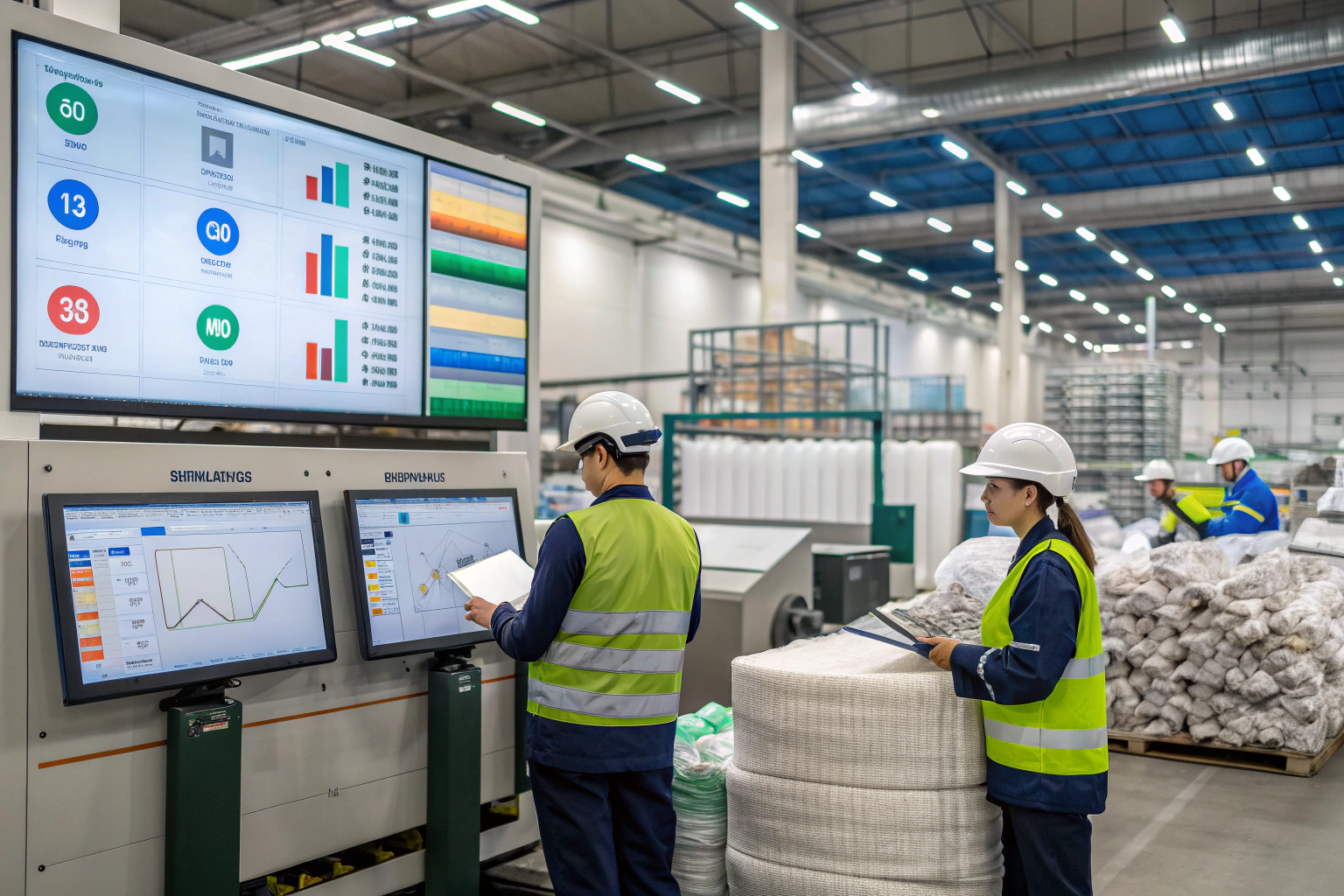
You walk through any garment factory and see the reality – fabric scraps everywhere, cutting waste piling up, imperfect rolls accumulating in corners. The textile industry generates 92 million tons of waste annually, and much of it comes from inefficient fabric utilization. But what if your certification system could actually help reduce this waste while verifying sustainability?
GRS certification controls fabric waste through mandatory waste tracking, reduction requirements, recycling protocols, and mass balance calculations that force manufacturers to account for every centimeter of material. It transforms waste from an invisible cost into a measured, managed, and minimized component of production. The system doesn’t just document waste – it creates economic incentives to reduce it through better planning and efficiency.
At Fumao Fabric, our GRS implementation reduced our fabric waste by 38% in the first year alone. The certification forced us to see waste not as inevitable, but as measurable inefficiency. Let me explain exactly how the GRS framework tackles fabric waste throughout the production cycle.
What Waste Tracking Systems Does GRS Require?
You can’t manage what you don’t measure. GRS understands this fundamental principle and mandates specific tracking systems that make waste visible, measurable, and manageable throughout production.
GRS requires comprehensive waste tracking systems including material input-output records, waste categorization, disposal documentation, and recycling verification that collectively create accountability for fabric utilization. These systems transform waste from an abstract concept into concrete data that drives improvement.

How do mass balance calculations capture waste?
The mass balance equation lies at the heart of GRS waste management: Total Material Input = Usable Product Output + Documented Waste + Process Loss. This mathematical requirement forces factories to account for every kilogram of fabric. When we implemented GRS at our facilities, we discovered that 8.3% of our fabric was disappearing into unmeasured cutting waste – a loss we hadn’t properly quantified before. The system requires documenting fabric utilization rates throughout garment production cycles and explaining any significant deviations from industry standards.
What waste categorization does GRS mandate?
GRS requires factories to categorize and measure different waste types: cutting room scraps and selvage, defective materials and production rejects, sampling and testing waste, and packaging and auxiliary materials. Each category requires separate tracking and documentation. This categorization revealed that our sampling process generated 3.2% waste – knowledge that prompted us to develop digital sampling alternatives that reduced this to 0.8%. The simple act of categorization makes waste reduction opportunities visible.
How Does GRS Drive Fabric Utilization Efficiency?
Tracking waste is only the first step – GRS creates systemic pressure to actually reduce waste through efficiency improvements that benefit both the environment and the bottom line.
GRS drives fabric utilization efficiency through performance benchmarking, continuous improvement requirements, pattern optimization incentives, and production planning enhancements that collectively reduce waste generation. The certification creates a framework where waste reduction becomes an ongoing operational priority.

What efficiency benchmarks does GRS establish?
While GRS doesn’t mandate specific utilization rates, it requires factories to track and explain their performance against industry norms. Our certification process revealed that our woven fabric utilization averaged 78% compared to industry best practices of 85-90%. This gap identification prompted investments in advanced marker making software for optimal fabric utilization that increased our utilization to 86% within nine months. The transparency created by benchmarking drives competitive improvement.
How does GRS influence pattern and marker making?
The economic incentives created by GRS certification directly impact technical design decisions: pattern engineers optimize layouts for minimal waste, marker makers prioritize fabric utilization over speed, designers consider waste implications during development, and production planners batch similar colors to reduce waste. These changes seem small individually, but collectively they transform fabric utilization. One of our sportswear clients reduced their fabric waste by 27% simply by redesigning their pattern layouts to minimize gaps – savings that directly improved their profitability while supporting their sustainability goals.
What Happens to Waste Under GRS Certification?
GRS doesn’t just focus on waste reduction – it also mandates responsible management of the waste that inevitably occurs, creating circular systems that keep materials in use rather than sending them to landfill.
Under GRS certification, fabric waste must be tracked, categorized, and either recycled, reused, or properly disposed of according to environmental standards that prioritize circular solutions over landfill dumping. This transforms waste from a disposal problem into a resource management opportunity.

What recycling protocols does GRS require?
GRS mandates specific handling for different waste types: clean cutting waste must be segregated for recycling, mixed or contaminated waste requires proper documentation, recycling partners must be verified and documented, and waste shipments must be tracked with transaction certificates. When we implemented these protocols, we discovered that 62% of our cutting waste could be recycled into non-woven materials or stuffing, creating a new revenue stream that offset some certification costs. The system creates economic incentives for textile waste recycling in manufacturing facilities that didn’t previously exist.
How does GRS handle production rejects and defects?
Defective materials require special handling under GRS: they must be tracked separately from other waste, their disposition must be documented, any recycling must follow chain of custody requirements, and disposal must meet environmental standards. This careful tracking revealed that our defect rate was higher than industry average, prompting process improvements that reduced defects by 45% over eighteen months. The certification turns quality issues into measurable data that drives operational improvements.
How Does GRS Impact Fabric Selection and Sourcing?
Waste management begins long before cutting – GRS influences fabric selection and sourcing decisions that fundamentally impact waste generation throughout the production process.
GRS impacts fabric selection and sourcing through width optimization requirements, quality specification enhancements, supplier performance tracking, and material testing protocols that collectively reduce waste at the source. This proactive approach addresses waste before it occurs.

How does fabric width optimization reduce waste?
GRS certification creates incentives for width optimization: manufacturers select fabrics matching their pattern requirements, suppliers are evaluated on width consistency, production planning considers width implications, and pattern engineering adapts to available widths. We found that simply switching to optimally-sized fabrics reduced our waste by 11% without any pattern changes. This seems obvious in retrospect, but without the waste-tracking requirements of GRS, we hadn’t properly quantified this relationship.
What quality improvements reduce waste?
GRS drives quality enhancements that prevent waste: fabric inspection protocols identify defects early, quality standards with suppliers reduce incoming defects, testing procedures prevent production issues, and consistency requirements minimize variation. Implementing fabric inspection systems for defect identification and waste reduction reduced our cutting waste by 9% by catching defects before they entered production. The certification creates systems that prevent waste rather than just documenting it.
What Are the Economic Benefits of GRS Waste Reduction?
The environmental benefits of waste reduction are clear, but GRS also delivers significant economic advantages that help justify the certification investment and create sustainable business practices.
The economic benefits of GRS waste reduction include material cost savings, new revenue from waste streams, efficiency improvements, and risk reduction that collectively enhance profitability while supporting sustainability goals. These financial advantages make waste reduction commercially sustainable.

How do material savings impact costs?
Reduced waste directly lowers material costs: better utilization means buying less fabric, fewer defects reduce replacement needs, optimized patterns increase yield, and improved planning minimizes overordering. Our 38% waste reduction translated to approximately $427,000 in annual material savings – a return that far exceeded our certification investment. These savings make environmental responsibility financially viable.
What revenue opportunities does waste creation?
GRS-certified waste has market value: recycling partners pay for clean, segregated waste, downcycled materials find markets in other industries, waste-to-energy options generate revenue, and byproducts find applications elsewhere. We developed relationships with manufacturers using recycled textile waste in non-woven applications that now purchase 75% of our cutting waste. This transformation of waste from cost to revenue fundamentally changes the economics of production.
Conclusion
GRS certification represents a paradigm shift in how the textile industry approaches fabric waste. By making waste visible, measurable, and manageable, the certification creates systems that simultaneously benefit the environment and the bottom line. The requirements transform waste from an accepted cost of doing business into an opportunity for improvement and innovation.
The most significant impact of GRS waste control may be cultural rather than technical – it forces manufacturers to see waste as a solvable problem rather than an inevitable outcome. This mindset shift, combined with the systematic tracking and reduction requirements, creates lasting change that extends beyond certification compliance to fundamental operational improvement.
At Fumao Fabric, our GRS journey transformed our relationship with waste, revealing opportunities we hadn’t previously recognized. The certification provided the framework and motivation to implement changes that benefited both our environmental performance and our financial results. If you’re considering how to better manage fabric waste in your operations, contact our Business Director, Elaine, at elaine@fumaoclothing.com to discuss how GRS certification could support your waste reduction goals.





One Response
Yo, just checked out 32wingame. Pretty slick site, man! Definitely giving it a look. Check it out yourself 32wingame.