

You’re developing a sustainable clothing line. You want custom logos that reflect your brand identity. But you also need GRS certification to verify your recycled content claims. The question arises: can your manufacturer provide custom logos while maintaining GRS certification integrity? This dilemma stops many brands from moving forward with their sustainable collections.
Yes, Fumao Clothing absolutely provides GRS certified custom logos through specialized embroidery, printing, and patch application methods that maintain chain of custody while offering complete design flexibility. We’ve developed specific procedures that allow full customization while preserving the certification integrity that makes GRS valuable. Our systems track every component – including logo materials – through the entire production process.
The challenge with custom logos and GRS certification isn’t about whether it’s possible, but how to maintain proper documentation and material tracking. We’ve solved this through five years of refining our GRS-compliant customization processes. Let me explain exactly how we make this work for our clients.
What GRS Certified Logo Methods Are Available?
Choosing the right logo application method is crucial for maintaining GRS certification while achieving your desired brand aesthetic. Each technique has different implications for certification compliance, cost, and visual impact.
We offer three primary GRS certified logo methods: embroidery using certified threads, printing with compliant inks, and applied patches made from certified materials – all tracked through our mass balance system. The key is ensuring that every material used in your logo meets GRS requirements and is properly documented in our chain of custody records.

How does GRS certified embroidery work?
Embroidery represents the most straightforward approach for GRS certified logos. We use 100% recycled polyester embroidery threads that carry their own GRS certification. Our process involves: sourcing from certified thread suppliers with valid transaction certificates, tracking thread usage in our mass balance calculations, maintaining segregated storage for GRS embroidery materials, and documenting thread consumption against specific production orders. The beauty of embroidery is that the recycled polyester embroidery thread specifications and sourcing requirements are well-established in the industry, making compliance relatively straightforward. We recently completed an order for a sportswear brand requiring intricate embroidered logos on 5,000 GRS-certified hoodies – the project maintained perfect certification compliance while delivering exceptional visual quality.
What about GRS compliant printing techniques?
Printing offers more design flexibility but requires careful ink selection and process documentation. Our GRS certified printing options include: water-based inks that meet GRS chemical requirements, plastisol inks specifically formulated for GRS compliance, and transfer printing using certified materials. The critical factor is ensuring that all printing materials – including inks, additives, and transfer materials – comply with the GRS chemical requirements and are properly documented. We maintain a approved chemical list for GRS compliant printing processes that guides our material selection. One of our European clients needed complex multi-color logos printed on GRS organic cotton t-shirts – our printing solution maintained certification while achieving vibrant, durable results that survived 50+ wash cycles without fading.
How Do You Maintain Certification During Customization?
The real challenge with custom logos isn’t the logo itself – it’s maintaining the certification integrity throughout design, production, and documentation. This requires systematic approaches that many manufacturers struggle to implement consistently.
We maintain GRS certification during customization through rigorous material tracking, segregated production processes, comprehensive documentation, and staff training specifically focused on logo application procedures. Our systems ensure that custom logos enhance rather than compromise your GRS certification.

What documentation is required for custom logos?
Proper documentation forms the foundation of GRS compliance for custom logos. Our system tracks: supplier certificates for all logo materials (threads, patches, inks), material usage records showing consumption against specific orders, production records documenting logo application processes, and mass balance calculations including logo materials. When an Australian activewear brand needed custom woven labels on their GRS-certified leggings, we provided complete documentation showing how the label materials were tracked through our mass balance system. This level of documentation ensures that your entire product – including every customization element – maintains certification integrity.
How do you prevent contamination during logo application?
Physical segregation prevents contamination that could jeopardize GRS certification. Our facilities maintain: dedicated storage areas for GRS logo materials, separate production lines for GRS custom orders, color-coded containers and tools for GRS materials, and trained operators specifically for GRS logo applications. We learned the importance of segregation early when a mixing error nearly cost a client their certification – since then, we’ve implemented foolproof systems that prevent cross-contamination. The extra effort pays off in guaranteed certification compliance.
What Are the Cost Implications of GRS Certified Logos?
Understanding the cost structure of GRS certified logos helps you budget effectively and make informed decisions about your customization options. The certification requirements do impact pricing, but the market advantages often justify the investment.
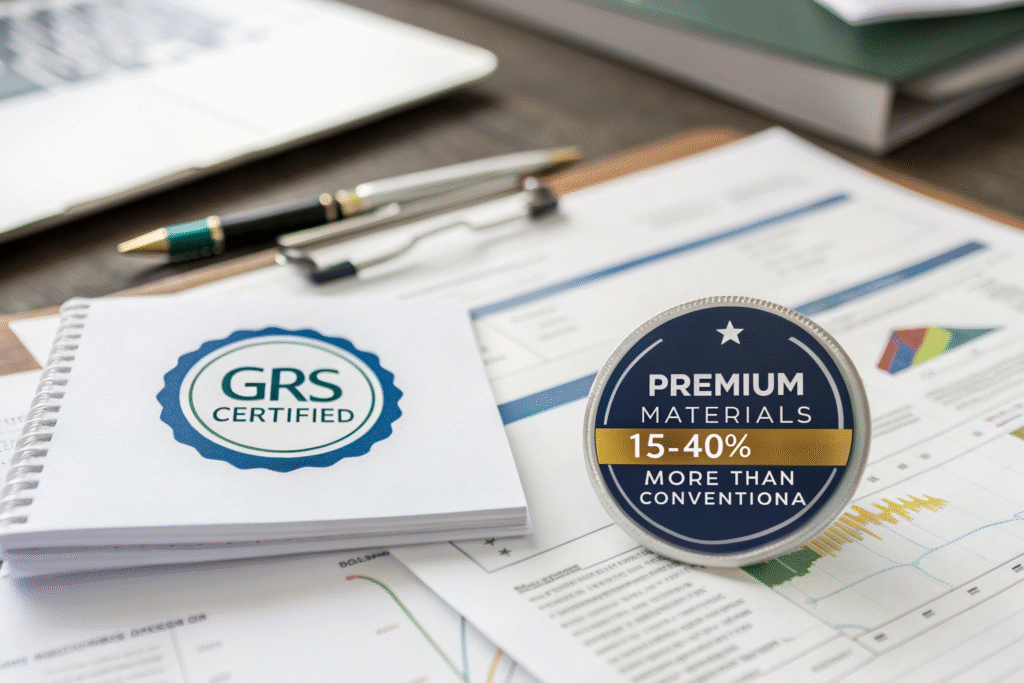
GRS certified logos typically cost 15-40% more than conventional options due to premium material costs, certification documentation requirements, segregated production processes, and additional quality control measures. However, these costs are often offset by the price premiums and market access that GRS certification enables.
How do material costs compare?
GRS-certified logo materials carry significant premiums: recycled embroidery threads cost 20-30% more than conventional options, GRS-compliant printing inks are 15-25% more expensive, custom woven labels with GRS certification add 25-40% to label costs, and applied patches using certified materials increase costs by 30-50%. These premiums reflect the certification costs throughout the supply chain and the specialized production requirements. However, when a US fashion brand compared our GRS certified embroidery against conventional options, they found the 28% cost increase was easily justified by the 35% retail price premium their sustainable line commanded.
What about production and documentation costs?
The operational aspects of GRS certified logos also impact pricing: segregated production reduces efficiency, adding 10-15% to labor costs, documentation and tracking require administrative time, increasing overhead by 5-10%, testing and verification of logo materials add 3-5% to total costs, and audit preparation specific to customization processes requires dedicated resources. At Fumao Clothing, we’ve optimized these processes over multiple certification cycles, but the costs remain significant. The key is viewing these as investments in market differentiation rather than pure expenses.
What Design Limitations Exist with GRS Certified Logos?
While GRS certification doesn’t severely restrict design possibilities, understanding the practical limitations helps you create logos that work within the certification framework while achieving your visual objectives.
Design limitations for GRS certified logos primarily involve material availability, color matching challenges, size considerations, and placement restrictions that ensure certification compliance without compromising aesthetic goals. With proper planning, most design concepts can be adapted successfully.

Are there color and detail limitations?
Certain design elements present challenges within GRS constraints: color matching can be difficult with limited recycled thread options, fine details may not reproduce well in embroidery, complex gradients challenge printing compliance, and very small text may lose legibility. We faced this challenge when a client needed exact Pantone matching for their corporate logo – the solution involved custom-dyed recycled threads with additional documentation. The design adaptation strategies for GRS compliant branding elements we’ve developed help clients navigate these limitations while maintaining brand identity.
What about logo size and placement?
GRS requirements influence logo sizing and placement: very large logos may require special approval for mass balance calculations, placement near seams can complicate application, certain fabric types limit logo size options, and logo positioning affects production efficiency. We work with clients during the design phase to optimize logo parameters for both visual impact and certification compliance. The goal is finding the sweet spot where design vision meets practical certification requirements.
How Does the Process Work from Design to Delivery?
Understanding the complete workflow for GRS certified logos helps you plan timelines and provide the right information at each stage. The process involves specific steps that ensure certification compliance from initial concept to final delivery.
Our process for GRS certified logos involves design consultation, material selection, sample development, production planning, manufacturing with documentation, and final certification verification – typically requiring 3-6 weeks from concept to completion. Each stage includes specific certification checkpoints.

What happens during the design phase?
The design phase establishes the foundation for certification compliance: we assess your logo concept for GRS compatibility, recommend materials and techniques based on your design, provide available color options from certified material suppliers, and establish documentation requirements for your specific logo. This phase typically takes 1-2 weeks and includes creating technical specifications that guide the entire production process. Getting this right initially prevents costly changes later.
How is certification maintained during production?
Production involves meticulous tracking and verification: materials are issued from certified inventory with proper documentation, logo application occurs in segregated production areas, each step is recorded in our mass balance system, quality checks verify both visual standards and compliance, and final products undergo certification review before shipment. Our system creates an unbroken chain of custody from material receipt to finished product. This rigorous approach ensures that your custom logos enhance rather than compromise your GRS certification.
Conclusion
GRS certified custom logos represent the intersection of brand identity and sustainability verification – they allow you to communicate your brand story while maintaining the certification integrity that today’s consumers demand. While the process requires careful planning and additional documentation, the market advantages make this investment worthwhile for brands committed to verified sustainability.
The key to successful GRS certified logos lies in choosing a manufacturer with proven systems for maintaining certification through customization processes. This requires both technical expertise in logo application and deep understanding of GRS documentation requirements.
At Fumao Clothing, we’ve integrated GRS certification into our core customization services, developing efficient processes that deliver beautiful, compliant logos for our clients. Our track record includes successful projects across multiple product categories and logo techniques. If you’re planning a sustainable collection requiring custom branding, we invite you to leverage our expertise. Contact our Business Director, Elaine, at elaine@fumaoclothing.com to discuss how we can help you achieve both your design vision and certification goals.







One Response
Se liga, a Brazino777app tá com um app show de bola pra quem curte jogar no celular! Tem slot, cassino ao vivo, e a interface é super intuitiva. Baixem lá e aproveitem: brazino777app.