

You’ve decided to pursue GRS certification for your garment factory. You understand the benefits – market access, premium pricing, sustainability credentials. But the audit process seems like a black box of uncertainty. How long will it take? What will auditors actually check? What if we fail? These questions keep factory owners awake at night, especially when considering the investment required.
The GRS audit process for garment factories is a comprehensive verification system that examines your recycled material tracking, environmental practices, social compliance, and chemical management through document reviews, facility inspections, and employee interviews. It’s not a one-time event but an ongoing system that requires permanent changes to your operational procedures. The process typically takes 3-6 months from preparation to certification, with costs ranging from $3,000 to $15,000 depending on factory size and complexity.
Having guided numerous factories through GRS certification, I can tell you the process is rigorous but manageable with proper preparation. The key is understanding what auditors actually look for and building systems that can withstand their scrutiny. Let me walk you through the actual steps and requirements based on our experience at Fumao Fabric.
What Are the Key Preparation Steps Before Audit?
Preparation is everything in GRS certification. Rushing into an audit without proper systems in place is like inviting guests to a half-built house – it will end in embarrassment and wasted money. The preparation phase typically takes 2-4 months and involves fundamental changes to your operational documentation and physical processes.
The key preparation steps include developing a GRS management system, training staff, implementing tracking procedures, and conducting internal audits to identify gaps before the official assessment. This phase requires significant internal resources but ultimately determines your audit success. Factories that skip thorough preparation typically face multiple audit failures and additional costs.

How do you establish the GRS management system?
The management system forms the backbone of your GRS compliance. It must document every aspect of your GRS operations. Start by appointing a GRS management representative with authority to implement changes across departments. Develop written procedures for how to establish effective mass balance calculations for recycled materials that track inputs and outputs at every production stage. Create forms for recording GRS material receipts, production usage, and inventory counts. Implement a supplier approval process that verifies their GRS certifications before purchasing. Document your chemical management system referencing the ZDHC MRSL. This paperwork may seem bureaucratic, but it’s what auditors examine first – no documentation means immediate failure.
What staff training is required before audit?
GRS requires evidence that all relevant staff understand their roles in maintaining certification. We learned this the hard way when our first audit revealed that cutting room staff couldn’t explain GRS segregation procedures. Now we implement comprehensive training covering: identification of GRS materials, segregation requirements at all production stages, documentation completion procedures, and basic GRS knowledge for all employees. Maintain signed training records with dates – auditors will randomly select employees and ask about their GRS responsibilities. The training should be conducted in workers’ native languages with visual aids for better understanding. Remember, your systems are only as strong as your least-trained employee’s understanding.
What Happens During the Actual Audit Day?
The audit day feels like final exam season in university – stressful but predictable if you’ve studied properly. Understanding the auditor’s methodology helps demystify the process and reduces anxiety. The actual onsite audit typically lasts 1-3 days depending on factory size and complexity.
During the audit day, certification body representatives conduct opening meetings, facility tours, document reviews, employee interviews, and closing meetings to verify compliance with all GRS requirements. The auditor follows a systematic approach comparing your implemented systems against the GRS standard’s specific criteria. Their goal is to gather objective evidence of compliance – or identify gaps where you fall short.

What documents will auditors examine?
Auditors typically request 3-6 months of historical records to verify your systems are fully implemented and functioning. Key documents include: purchase records for GRS materials with supporting supplier certificates, production records showing mass balance calculations, inventory records demonstrating proper segregation, chemical inventory and SDS documentation, social compliance records including payroll and working hours, and internal audit reports and corrective actions. Having these documents organized and readily available creates a positive impression and speeds the audit process. During our last surveillance audit, the auditor spent 40% of her time reviewing these documents before even touring the facility.
What will auditors look for during facility inspection?
The physical inspection verifies that your actual practices match your documented procedures. Auditors typically follow the production flow from receiving to shipping, checking for: proper labeling and segregation of GRS materials at all stages, cleanliness and organization of production areas, chemical storage and handling practices, social compliance indicators like safety equipment availability, and overall housekeeping standards. They may take photos of potential non-conformities, so ensure your facility presents its best face. We once had an auditor notice recycled polyester chips stored near a open window where contamination could occur – a small but important observation that led to procedural improvements.
How Do Auditors Verify Mass Balance Accuracy?
Mass balance verification is the heart of GRS certification – it’s what separates genuine recycled content claims from greenwashing. Auditors approach this verification with mathematical precision and skepticism, knowing that errors here undermine the entire certification’s credibility.
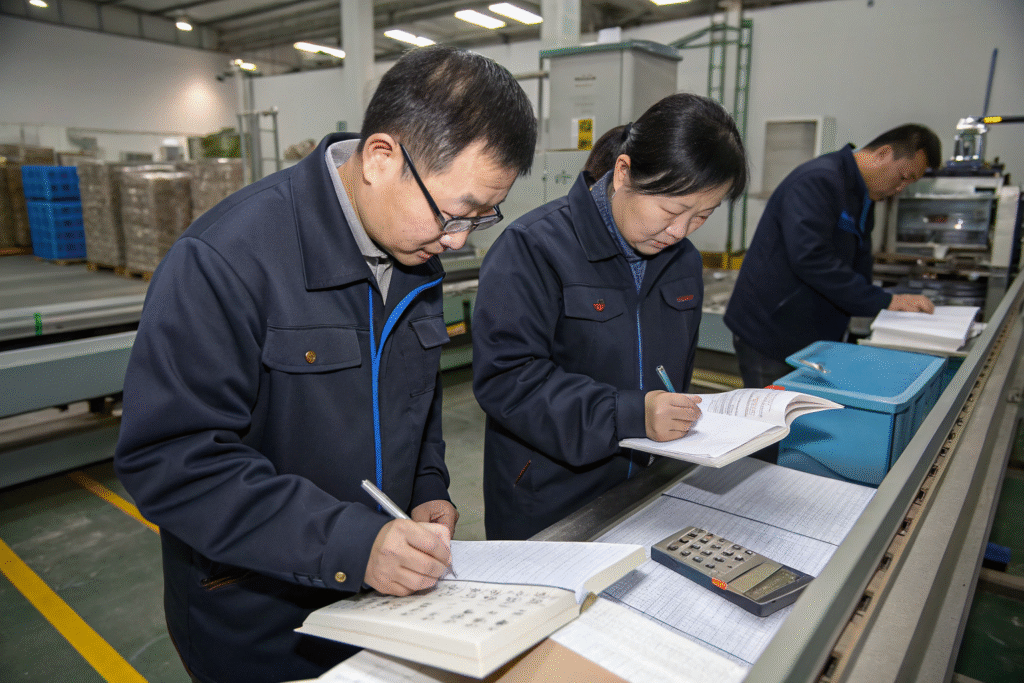
Auditors verify mass balance accuracy by tracing representative product batches backward from finished goods to raw material inputs, checking calculations at each processing stage and reconciling total outputs against certified inputs. They use statistical sampling methods to select specific production lots for detailed investigation, typically examining 3-5 complete product chains during a single audit.
What specific calculations do auditors check?
The mass balance equation forms the core of their verification: GRS Material Input + Non-GRS Material Input = GRS Product Output + Non-GRS Product Output + Process Loss. Auditors will select a specific finished product batch and work backward through your records checking: that GRS material purchases match supplier certificates, that production records show accurate percentage calculations, that inventory records demonstrate proper segregation, and that any material losses are documented and reasonable. They’re particularly alert for mathematical errors and will recalculate several examples manually. One auditor we worked with spent two hours tracing a single jersey fabric batch through six processing stages – the depth of verification surprised us initially but ultimately strengthened our systems.
How do auditors verify chain of custody integrity?
Chain of custody verification ensures that GRS materials remain identifiable and segregated throughout production. Auditors look for: physical separation of GRS and conventional materials, clear labeling at all production stages, documentation that follows materials between departments, and employee understanding of segregation requirements. They may conduct "mock recalls" asking you to trace specific materials through your system. The criteria for maintaining proper identification of recycled content during manufacturing requires robust systems that prevent comingling or misidentification. This aspect often proves challenging for factories with limited space or complex product flows, but creative solutions like color-coded containers and dedicated production runs can effectively address these challenges.
What Are Common Reasons for Audit Failure?
Understanding why factories fail GRS audits is more valuable than knowing why they pass – it helps you avoid costly mistakes and re-audit fees. The certification bodies publish summary data showing that approximately 30% of initial audits result in major non-conformities requiring re-audit.
Common reasons for audit failure include inadequate mass balance documentation, insufficient evidence of supplier compliance, failure to maintain material segregation, incomplete chemical management systems, and social compliance violations. These issues typically stem from underestimating the standard’s requirements or attempting to implement systems too quickly without proper testing.

What documentation gaps cause failures?
Paperwork problems account for nearly half of all audit failures. Specific issues include: missing supplier GRS certificates for purchased materials, incomplete mass balance records with calculation errors, inadequate internal audit records, missing training documentation for employees, and incomplete chemical management system documentation. The most frequent issue we see in factories we consult with is mathematical errors in mass balance calculations – often simple addition errors that undermine the entire system’s credibility. Another common problem is back-dated documentation that auditors can identify through inconsistent signatures, date patterns, or record-keeping practices.
What physical compliance issues lead to rejection?
Physical non-conformities are harder to fix quickly since they often require operational changes. Common problems include: comingling of GRS and conventional materials in storage or production, inadequate labeling of GRS materials throughout the facility, poor chemical management with unlabeled containers or improper storage, and social compliance issues like blocked emergency exits or missing first aid supplies. These issues often reflect deeper operational challenges that can’t be solved with paperwork alone. We worked with one factory that failed their initial audit because recycled materials were stored on wooden pallets that could theoretically contaminate them – an extreme example but indicative of the auditor’s attention to detail.
How Much Does GRS Certification Actually Cost?
The financial investment required for GRS certification surprises many factory owners. While the audit fees themselves represent only part of the total cost, understanding the complete financial picture helps with budgeting and ROI calculations.
GRS certification costs typically range from $3,000 to $15,000 for initial certification plus $2,000 to $8,000 annually for surveillance audits, with additional expenses for system implementation, staff training, and operational changes. The total investment varies significantly based on factory size, complexity, and existing systems. Many factories underestimate the internal staff time required for preparation and maintenance.

What are the direct certification costs?
Direct payments to certification bodies include: application fees ($500-$1,000), audit time ($1,500-$4,000 per audit day), travel expenses for auditors, certificate issuance fees ($300-$600), and annual license fees for logo use. These costs scale with factory size and number of production sites. Additionally, surveillance audits occur annually at approximately 60-70% of the initial audit cost. Some certification bodies offer package deals for multiple sites or combined audits with other standards, which can reduce overall costs.
What are the hidden implementation costs?
The indirect costs often exceed the direct certification fees. These include: staff time for system development and maintenance (200-500 hours initially), physical modifications for material segregation, labeling systems and documentation supplies, training time for employees, premium costs for GRS-certified raw materials, and potential production efficiency losses during implementation. At Fumao Fabric, our total first-year investment approached $45,000 when accounting for all these factors, though costs decreased significantly in subsequent years as systems became routine. The total cost breakdown for implementing recycled material tracking systems should include both direct and indirect expenses for accurate planning.
Conclusion
The GRS audit process represents a significant commitment for any garment factory, but understanding the detailed requirements transforms it from a mysterious ordeal into a manageable project. The key success factors include starting preparation early, implementing robust documentation systems, training all relevant staff, and maintaining rigorous attention to detail in material tracking and segregation.
Factories that approach GRS certification as a compliance exercise often struggle, while those that integrate it into their operational culture typically find the process creates valuable business improvements beyond certification itself. The mass balance systems, chemical management procedures, and supply chain transparency required by GRS often reveal operational inefficiencies and create opportunities for improvement.
If you’re considering GRS certification for your garment factory, our team at Fumao Fabric can share practical insights from our certification journey and ongoing compliance experience. We’ve developed templates, procedures, and training materials that can accelerate your preparation process. Contact our Business Director, Elaine, at elaine@fumaoclothing.com to discuss how we can support your GRS certification goals.









One Response
E aí, pessoal! Entrar no cassino usando Pix no cassinopixbet.org é super fácil e rápido. O login é tranquilo e a interface é bem intuitiva. Já fiz uns depósitos por lá e não tive problema nenhum. Se liga: cassino pix login