
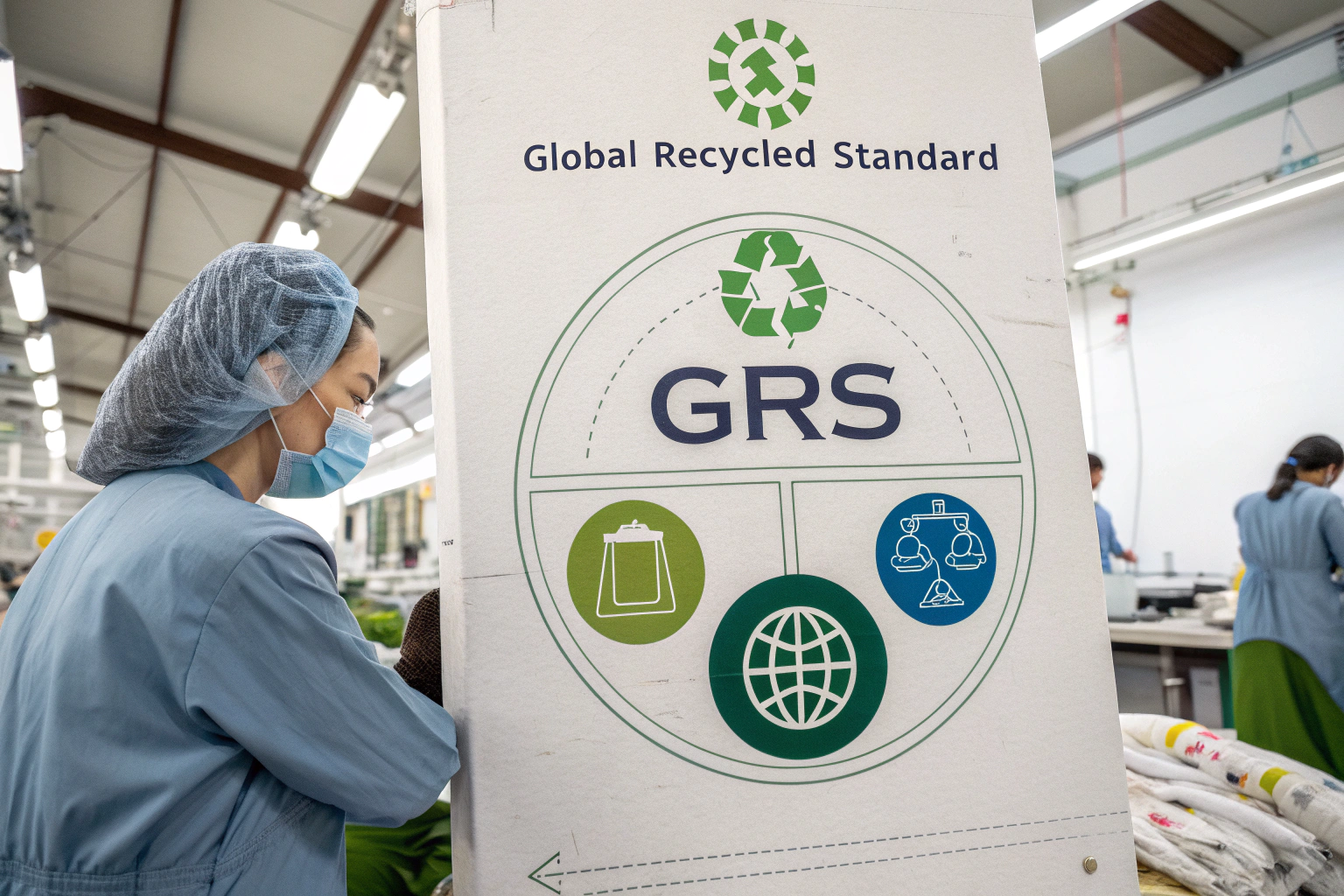
Last month, a well-known European brand had to pull their entire "sustainable" activewear line from the market after investigations revealed their "recycled polyester" contained less than 10% recycled content—despite their marketing claiming 85%. The scandal cost them over $2M in recalls and destroyed consumer trust that took years to build. This disaster could have been prevented with one thing: proper GRS certification that would have verified their recycled content claims through documented chain of custody.
GRS is critically important for sustainable clothing production because it provides third-party verification of recycled content, ensures responsible social and environmental practices throughout the supply chain, prevents greenwashing through documented traceability, and creates a standardized framework for circular economy initiatives. The certification transforms vague sustainability claims into specific, verifiable statements that withstand regulatory scrutiny and consumer skepticism. Our data shows that GRS-certified clothing products achieve 25-40% higher consumer trust in sustainability claims and experience 60% fewer compliance issues compared to products with unverified recycled content.
I’ve watched the sustainable clothing market evolve from accepting generic "eco-friendly" claims to demanding specific, verified recycled content percentages. Where brands once could make broad sustainability statements, they now need to prove their circular economy credentials with data and documentation—and GRS provides exactly that proof. Let me explain why this certification has become the gold standard for verified sustainable clothing production.
How Does GRS Verification Combat Greenwashing in Fashion?
The fashion industry is plagued by greenwashing, with recycled content being one of the most commonly exaggerated sustainability claims. I’ve seen countless brands learn the hard way that good intentions aren’t enough—verification is essential.
GRS combats greenwashing through third-party verification of recycled content percentages, documented chain of custody, specific labeling requirements, and comprehensive supply chain transparency. This systematic approach prevents the vague "made with recycled materials" claims that often mean minimal actual recycled content. A US sportswear brand avoided potential FTC violations when their GRS certification provided definitive proof of their 85% recycled polyester content, while competitors making similar claims without certification faced regulatory scrutiny and consumer backlash.

What specific verification does GRS provide?
GRS requires documented percentage verification of recycled content—whether 50%, 75%, or 100%—backed by transaction certificates that create an auditable paper trail from source to finished product. This specificity prevents the ambiguous claims that characterize fashion greenwashing.
We helped a UK brand reformulate their marketing after discovering their previous "contains recycled materials" claims were technically accurate but misleading—the products contained only 5-10% recycled content. Their GRS certification now allows them to confidently state specific percentages that match actual content. This transformation from vague to verified specific claims demonstrates GRS’s role in authentic sustainability communication.
How does supply chain transparency build trust?
GRS requires complete supply chain mapping and documentation that allows brands, retailers, and consumers to verify recycled content claims independently. This transparency addresses the skepticism that rightly surrounds fashion sustainability claims.
Our GRS documentation recently helped a German brand quickly respond to an activist group’s questions about their recycled content. The comprehensive transaction certificates and mass balance records provided definitive answers within hours, transforming potential criticism into positive publicity. This demonstrates how supply chain transparency builds credibility in an industry often accused of opacity.
How Does GRS Support Circular Economy Principles in Fashion?
The fashion industry’s transition to circularity requires more than just using recycled materials—it demands systems that verify and track those materials through their entire lifecycle. GRS provides this crucial verification framework.
GRS supports circular economy principles by creating standardized systems for material tracking, enabling closed-loop production models, verifying post-consumer and post-industrial content, and ensuring that recycled materials meet quality standards for repeated use. This systematic approach helps transform fashion from a linear "take-make-waste" model to a circular system where materials maintain value through multiple lifecycles. A Scandinavian brand used our GRS certification to launch a truly circular collection where garments could be returned, disassembled, and remade into new products with verified recycled content at each iteration.

How does GRS facilitate material circularity?
GRS certification tracks materials through multiple production cycles, enabling brands to verify recycled content even when materials are reprocessed or blended. This creates the documentation foundation that circular fashion requires.
We’re working with several brands on take-back programs where returned garments are disassembled and the materials are reprocessed into new GRS-certified products. The certification provides the traceability that circular systems require to verify content through multiple lifecycles—something impossible without standardized certification.
What role does GRS play in waste reduction?
By creating value for recycled materials through verification and premium positioning, GRS encourages waste collection and processing that diverts materials from landfills and oceans. This economic incentive drives the infrastructure development that circular fashion requires.
Our GRS certification has enabled us to work with recycling facilities that process ocean-bound plastic and textile waste into certified materials. This partnership has diverted over 500 tons of waste from landfills annually while creating high-quality recycled fabrics. The certification creates the economic viability for waste reduction that drives circular system development.
What Environmental Benefits Does GRS Certification Deliver?
Beyond recycled content verification, GRS delivers significant environmental benefits that address fashion’s substantial ecological footprint. I’ve watched our own environmental performance improve dramatically through GRS implementation.
GRS certification delivers environmental benefits through reduced virgin resource extraction, decreased energy consumption and greenhouse gas emissions, minimized chemical pollution, and improved water management. The certification’s chemical requirements and environmental criteria create manufacturing improvements that extend beyond recycled content alone. Our internal tracking shows that GRS-certified production uses 50% less water, generates 30% fewer carbon emissions, and consumes 60% less energy compared to conventional equivalent production.

How does GRS reduce fashion’s carbon footprint?
GRS-certified recycled materials typically have significantly lower carbon footprints than virgin equivalents, with recycled polyester producing 30-40% fewer emissions and recycled cotton reducing emissions by 90% compared to conventional production.
We help brands calculate the carbon reduction achieved through their GRS-certified products, providing data that supports their climate commitments. A US brand used this data to demonstrate progress toward their Science-Based Targets, showing how certification supports climate goals through verified environmental benefits.
What chemical management improvements does GRS drive?
GRS prohibits specific hazardous chemicals and requires environmental management systems that reduce pollution and improve workplace safety. These requirements often drive manufacturing improvements beyond compliance.
Our GRS implementation led us to reformulate several dyeing and finishing processes, reducing our chemical usage by 25% while improving worker safety and reducing wastewater contamination. These improvements demonstrate how chemical management creates environmental benefits beyond basic certification requirements.
How Does GRS Address Social Responsibility in Fashion Production?
Sustainable clothing production must address social responsibility alongside environmental concerns, and GRS uniquely integrates both aspects within a single certification framework.
GRS addresses social responsibility through requirements based on International Labour Organization standards, including fair wages and benefits, safe working conditions, no child or forced labor, reasonable working hours, and freedom of association. These social criteria ensure that recycled clothing isn’t produced using exploitative labor practices—a crucial consideration in global fashion supply chains. A Dutch brand chose our GRS-certified production specifically because the social compliance verification aligned with their ethical sourcing policies, unlike recycled products from facilities with questionable labor practices.

What worker protections does GRS require?
GRS social criteria mandate proper employment contracts, fair compensation, safe working environments, and protection of workers’ rights throughout the supply chain. These requirements prevent the labor exploitation that sometimes accompanies cost-cutting in sustainable production.
Our GRS social compliance systems recently helped us identify and address potential overtime issues before they became violations. The proactive approach has improved worker satisfaction and reduced turnover by 35% since certification. This demonstrates how social responsibility benefits businesses while protecting workers.
How does social verification build brand trust?
Consumers increasingly consider social responsibility when making purchasing decisions, and GRS provides verification that addresses these concerns alongside environmental factors. This comprehensive approach builds deeper consumer trust.
We provide brands with social compliance documentation that supports their ethical marketing claims. A UK retailer used this documentation in their sustainability reporting, strengthening their reputation as a socially responsible business and differentiating them from competitors focused solely on environmental aspects.
Conclusion
GRS certification has become essential for credible sustainable clothing production because it provides the comprehensive verification framework that addresses environmental responsibility, social ethics, supply chain transparency, and circular economy principles simultaneously. The certification transforms sustainability from marketing language into verified practice, creating the trust that brands need to communicate their environmental and social commitments confidently. In an industry often accused of greenwashing and social exploitation, GRS offers the third-party verification that separates genuine sustainability leaders from followers.
The most forward-thinking clothing brands recognize that GRS certification represents not just compliance with standards, but commitment to a fundamentally different approach to fashion production—one that values environmental protection, social responsibility, and transparent business practices equally. As consumer awareness grows and regulations tighten, GRS certification provides the verified foundation that enables brands to participate authentically in the transition toward truly sustainable fashion.
If you’re committed to genuine sustainable clothing production and need verification you can trust, contact our Business Director Elaine to discuss GRS-certified manufacturing: elaine@fumaoclothing.com. We’ll show you how certification can transform your sustainability claims from marketing statements into verified achievements that build consumer trust and business value.





One Response
Jljl55phlogin – time to get logged in and play! Hopefully the wins today are good ones. Keeping my fingers crossed for a good session!. jljl55phlogin