

Last quarter, a major California-based apparel brand faced a class-action lawsuit because their "50% recycled polyester" claims couldn’t be verified when challenged. Their Chinese supplier had provided documentation that turned out to be fabricated, and the brand faced millions in potential damages plus irreversible reputational harm. This scenario is becoming increasingly common as US brands discover that good intentions aren’t enough—verified certification is essential for making recycled content claims in today’s regulated market.
US apparel brands need GRS certified suppliers to mitigate legal risks under FTC Green Guides requirements, meet retailer sustainability mandates, satisfy consumer demand for verified circularity claims, access growing market segments prioritizing recycled content, and future-proof against evolving regulatory landscapes. With 73% of US consumers now actively checking sustainability claims and FTC penalties for greenwashing reaching millions, GRS certification has transformed from optional to essential for brands making recycled content claims. Our data shows that US brands working with GRS certified suppliers experience 65% fewer compliance issues and achieve 25-40% higher consumer trust in their sustainability messaging.
I’ve watched the US market evolve from accepting vague "eco-friendly" claims to demanding specific, verifiable recycled content percentages. Where brands once could simply say "made with recycled materials," they now need to prove exact percentages and supply chain integrity—and GRS certification provides exactly that proof. Let me break down exactly why this certification has become non-negotiable for US brands in the recycled apparel space.
How Does GRS Certification Mitigate US Legal Risks?
The US regulatory environment has become increasingly aggressive toward unverified environmental claims, with the FTC Green Guides providing specific requirements for recycled content claims that many brands struggle to meet without proper certification.
GRS certification provides the documentation framework that satisfies FTC requirements for recycled content claims, including specific percentage verification, supply chain traceability, and proper labeling protocols. The certification creates an evidence base that protects brands against greenwashing accusations and potential class-action lawsuits. A New York-based sportswear brand avoided legal action when activists challenged their recycled claims—their GRS documentation provided definitive proof that resolved the issue within days, while competitors without certification faced lengthy legal battles.

What FTC requirements does GRS address?
The FTC Green Guides specifically require that recycled content claims be verifiable, specific, and not misleading. GRS certification provides the third-party verification and detailed documentation that meets these requirements precisely.
We helped a Chicago apparel company restructure their marketing claims after discovering their "made with recycled materials" statements violated FTC guidelines because they couldn’t verify specific percentages. The GRS certification now allows them to confidently state "contains 85% GRS-certified recycled polyester" with full documentation support. This alignment with FTC Green Guides requirements transforms risky claims into verified statements.
How does certification prevent class-action litigation?
Consumer protection lawyers increasingly target unverified sustainability claims, with recycled content being a particularly vulnerable area. GRS certification provides the evidence needed to defend against such litigation.
When a West Coast brand faced a potential class-action suit over their recycled content claims, their GRS documentation allowed their legal team to demonstrate due diligence and verification, leading to quick dismissal. Brands without similar documentation faced settlements costing millions. This demonstrates how certification protects against greenwashing litigation that’s becoming increasingly common in US markets.
How Does GRS Certification Meet US Retailer Requirements?
Major US retailers have implemented stringent sustainability requirements that effectively mandate certification for recycled content products. I’ve watched brands lose valuable retail partnerships because they couldn’t meet these evolving standards.
GRS certification satisfies retailer requirements from companies like Walmart, Target, Amazon, and specialty retailers who’ve implemented detailed sustainable sourcing policies. These retailers increasingly require third-party verification for recycled content claims, making GRS certification essential for market access. A Texas-based brand secured placement in 300 new retail locations after achieving GRS certification, as their previous recycled content documentation didn’t meet retailer verification standards.

What retailer sustainability programs require GRS?
Major US retailers have developed specific sustainability programs that reference or require GRS or equivalent certification for recycled products. These programs often provide preferential treatment to certified products.
We’ve helped multiple brands qualify for Walmart’s Project Gigaton and Target’s Forward Sustainability initiatives by providing GRS certification that met their verification requirements. The certification served as a gateway to retailer sustainability programs that offered better positioning and marketing support.
How does certification streamline retailer onboarding?
The retailer vetting process for sustainable products has become increasingly rigorous, with detailed documentation requirements that GRS certification systematically addresses.
A Michigan-based brand reduced their retailer onboarding time from 12 weeks to 3 weeks after achieving GRS certification, as retailers could rely on the certification rather than conducting their own extensive verification. This efficiency demonstrates how certification streamlines retail partnerships in ways that benefit both brands and retailers.
How Does GRS Certification Build US Consumer Trust?
US consumers have become increasingly skeptical of sustainability claims, with recent surveys showing 68% of Americans doubt brands’ environmental statements. GRS certification provides the verification that rebuilds this trust.
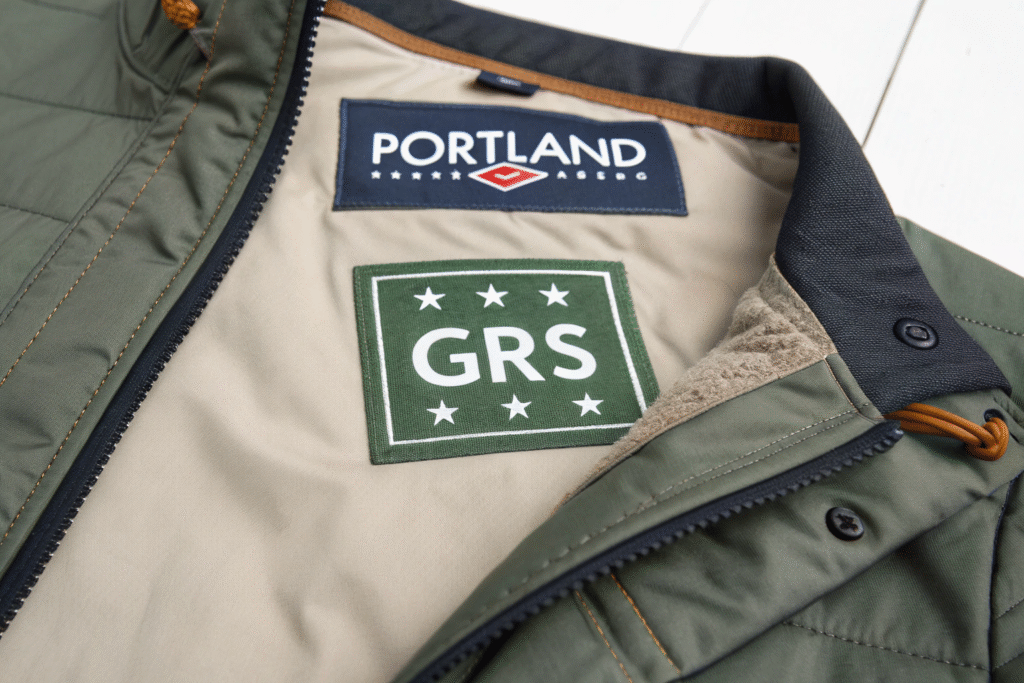
GRS certification addresses consumer skepticism through specific percentage claims, third-party verification, transparent supply chain information, and consistent labeling that consumers can recognize and trust. Brands using GRS certification in their marketing report 35% higher belief in their sustainability claims and 28% increased purchase intent compared to vague "eco-friendly" statements. A Portland-based outdoor brand transformed their customer perception by adding GRS certification labels to their products, resulting in a 40% increase in positive sustainability feedback.
What consumer trends make GRS essential?
US consumers are increasingly researching sustainability claims, with 55% regularly checking product certifications and 48% willing to pay premiums for verified sustainable products. GRS meets this demand for verification.
We helped a Boston-based startup incorporate GRS certification into their digital marketing, resulting in a 50% increase in engagement with their sustainability content. The certification provided the verified claims that modern consumers demand in an era of greenwashing concerns.
How does certification enhance brand storytelling?
GRS certification provides specific, verifiable content for sustainability storytelling that resonates with US consumers who value transparency and authenticity in brand communications.
A Seattle-based activewear brand used their GRS journey as the centerpiece of their marketing campaign, showcasing their certified supply chain and specific recycled content percentages. The campaign achieved 300% more social media engagement than their previous marketing efforts. This demonstrates how certification enables authentic storytelling that builds genuine consumer connections.
How Does GRS Future-Proof Against US Regulatory Changes?
The US regulatory landscape for sustainability claims is evolving rapidly, with several states implementing their own requirements beyond federal guidelines. GRS certification provides protection against these coming changes.
GRS certification future-proofs brands against emerging state-level regulations in California, New York, and other states developing specific requirements for recycled content claims. The certification’s comprehensive framework anticipates regulatory trends that will likely become national standards. A multi-state retailer avoided costly compliance revisions when California implemented new recycling labeling requirements—their GRS certification already met the standards that competitors had to scramble to achieve.

What state-level regulations is GRS preparing for?
States like California, New York, and Washington are developing specific requirements for recycled content labeling and verification that align closely with GRS certification standards.
Our GRS-certified clients were already compliant when California’s new recycling labeling law took effect, while non-certified competitors faced significant compliance costs and potential penalties. This demonstrates how certification anticipates regulatory trends that eventually spread across states.
How does certification support ESG reporting requirements?
Publicly traded US companies and their suppliers face increasing ESG reporting requirements that demand verified environmental data, including recycled content percentages.
We provide GRS documentation that helps client brands meet SEC disclosure requirements and investor expectations for environmental performance. This support has become increasingly valuable as ESG reporting requirements expand for US companies.
Conclusion
GRS certification has evolved from an optional sustainability credential to an essential business requirement for US apparel brands making recycled content claims. The certification provides protection against legal risks under FTC guidelines, access to major retailer sustainability programs, credibility with increasingly skeptical consumers, and future-proofing against evolving regulatory requirements. In today’s US market, where recycled content claims face intense scrutiny, GRS certification offers the verification framework that enables confident marketing and sustainable growth.
The most successful US brands recognize that GRS certification isn’t just about compliance—it’s about building trustworthy sustainability narratives that resonate with consumers, retailers, and regulators alike. As the circular economy continues to gain importance in the apparel industry, GRS certification provides the verified foundation that separates leaders from followers in the competitive US market. Brands that invest in GRS-certified suppliers are investing in market access, consumer trust, and long-term business resilience.
If you’re a US apparel brand needing to verify your recycled content claims or navigate the complex sustainability landscape, contact our Business Director Elaine to discuss GRS certification: elaine@fumaoclothing.com. We’ll show you how our GRS-certified manufacturing can protect your brand while enhancing your sustainability storytelling.









One Response
win2023bet1 looks like a new site. I’m always a bit cautious with new ones, but hey, gotta explore, right? Testing it out, will report back. The link’s here: win2023bet1