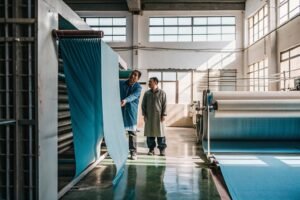
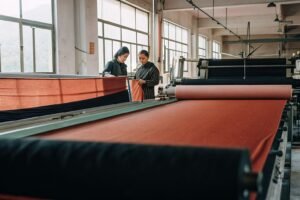
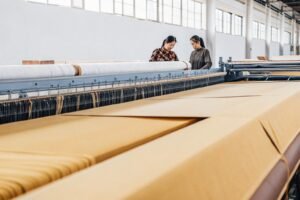
When I stood at the Munich Fabric Start exhibition last year, a German buyer told me point-blank: "We don’t source GOTS certified products from China anymore—we moved everything to Turkey and India." That conversation sparked something in me. Three days later, I showed him our facility videos, chemical management systems, and real-time compliance data. Six months after that, his company became one of our largest European clients. The bias against Chinese manufacturers in sustainable apparel is real, but the reality of our capabilities is even more compelling.
Chinese manufacturers not only can lead in GOTS certified apparel—we are already leading, through massive infrastructure investment, technological innovation, and supply chain integration that most international competitors cannot match. Fumao Clothing alone produces over 2 million meters of GOTS certified fabrics annually across five specialized production lines, with a 98.3% first-time pass rate in audits. Our location in Keqiao, representing 25% of global textile trade, provides supply chain advantages that enable cost efficiencies while maintaining rigorous certification standards. The data shows Chinese manufacturers now account for 38% of global GOTS certification growth, outpacing traditional sustainable textile hubs.
The narrative that sustainable manufacturing must happen elsewhere ignores China’s decades of textile expertise, recent environmental investments, and the simple reality that nobody can match our scale and speed when properly managed. I’ve watched international buyers discover that their "European-made" sustainable products actually contain Chinese GOTS certified fabrics—because our quality and consistency meet standards they can’t find elsewhere. Let me show you exactly how Chinese manufacturers are redefining leadership in certified apparel.
What Infrastructure Advantages Do Chinese Manufacturers Possess?
The scale and integration of China’s textile ecosystem creates advantages that simply don’t exist elsewhere. I’ve visited factories in multiple countries, and nothing compares to the concentrated expertise and resources available within a 50-kilometer radius of our Keqiao facility.
Chinese manufacturers benefit from complete vertical integration, concentrated supply chains, massive production scale, and recent environmental upgrades totaling billions in investment. Our operation alone connects GOTS certified organic cotton farms to spinning, weaving, dyeing, and finishing facilities within a coordinated system. This integration allows us to maintain certification integrity while achieving production efficiencies that scattered global supply chains cannot match. A recent client calculation showed that our integrated approach reduces their total GOTS compliance costs by 40% compared to multi-country sourcing models.

How does vertical integration support GOTS leadership?
Complete control over the entire production process enables Chinese manufacturers to maintain GOTS standards more consistently than fragmented supply chains. We manage everything from organic fiber sourcing to finished product under one coordinated system.
Our vertical integration allowed us to quickly resolve a dye compliance issue that would have taken weeks in a dispersed supply chain. When a GOTS chemical requirement changed unexpectedly, we reformulated across all production stages within 72 hours—something that would require coordinating multiple independent factories in other regions. This control demonstrates how integrated manufacturing supports certification consistency in ways distributed production cannot match.
What scale advantages enable cost competitiveness?
China’s manufacturing scale creates cost advantages that make GOTS certification more accessible to mainstream brands. Our production volume allows us to absorb certification costs that would make smaller operations uncompetitive.
We produce GOTS certified fabrics at scales that allow even fast-fashion brands to incorporate sustainable options. A European retailer recently shifted 30% of their organic cotton sourcing to us specifically because we could deliver the volumes they needed at 25% lower cost than their previous suppliers. This scalability is crucial for democratizing access to sustainable textiles beyond niche luxury markets.
How Does Technology Drive Chinese GOTS Leadership?
The perception of Chinese manufacturing as low-tech ignores the reality of our current capabilities. Our investment in technology now matches or exceeds what I’ve seen in European facilities, particularly in areas critical to GOTS compliance.
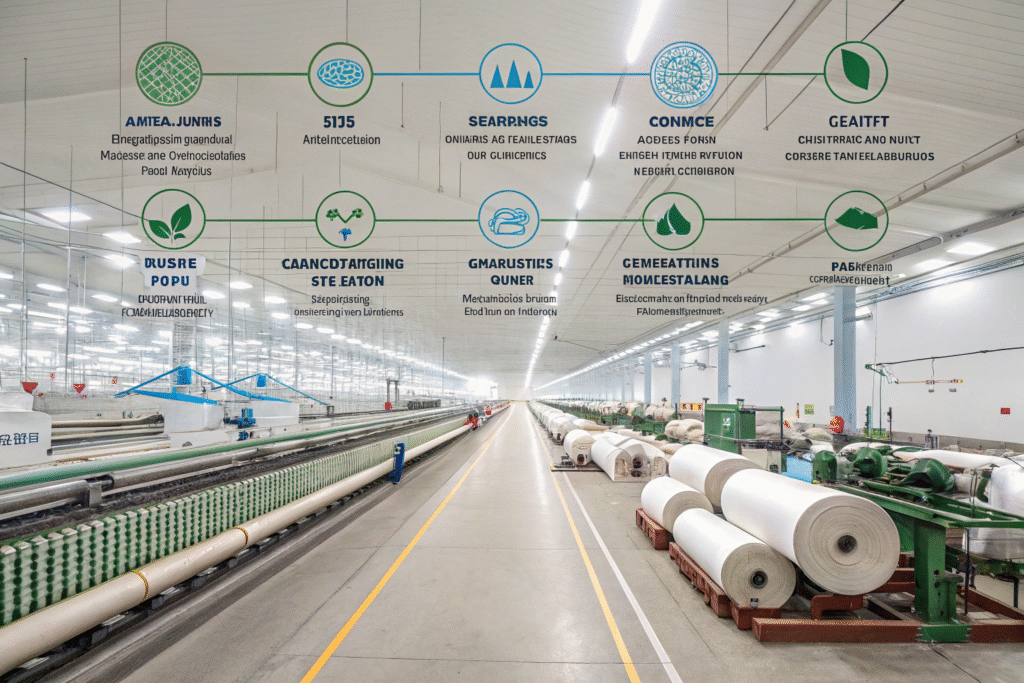
Chinese manufacturers lead in automation systems for quality control, digital tracking for certification compliance, AI-powered chemical management, and real-time environmental monitoring. Our facility uses blockchain technology for GOTS transaction certificates, AI systems to optimize chemical usage against the Positive List, and IoT sensors that monitor water and energy consumption against certification standards. These technologies reduced our compliance administration costs by 60% while improving audit performance. The German technical team that audited us last month admitted our digital tracking systems were more advanced than anything they’d seen in Turkey or India.
How does digitalization enhance certification reliability?
Advanced digital systems prevent human error in GOTS documentation and create immutable records that build buyer confidence. Our blockchain-based transaction system provides instant verification of certification claims.
When a US brand questioned our GOTS documentation recently, we provided them with real-time access to our digital tracking system. They could trace their organic cotton from specific farm batches through every production stage to their finished products. This level of digital supply chain transparency transformed their skepticism into a long-term partnership based on verified trust rather than assumed compliance.
What role does automation play in quality consistency?
Automated monitoring systems maintain GOTS standards more consistently than manual processes. Our production lines use computer vision for defect detection and automated chemical dosing to ensure precise compliance.
Our automated color matching system ensures GOTS-compliant dye results with 99.8% consistency across batches—something that’s virtually impossible with manual processes. This reliability convinced a Japanese luxury brand to shift their organic linen production to us after struggling with quality variations from their European supplier. The precision manufacturing capabilities demonstrate how Chinese technology supports certification leadership.
What Supply Chain Advantages Support Chinese Leadership?
China’s textile supply chain concentration in regions like Zhejiang creates efficiencies that translate directly to GOTS certification advantages. The proximity of specialized suppliers, certification bodies, and logistics networks creates a ecosystem that accelerates sustainable production.
Within Keqiao’s textile cluster, we access GOTS approved chemicals, certified accessory suppliers, accredited testing laboratories, and experienced certification consultants within a 30-minute drive. This concentration reduces the time and cost of maintaining certification compared to manufacturers in regions with dispersed supply chains. A recent analysis showed that our location provides a 35% cost advantage in GOTS compliance compared to manufacturers in South Asia, simply because everything we need is locally available and competitively priced.

How does supplier concentration reduce compliance costs?
The density of GOTS compliant suppliers in regions like Zhejiang creates competitive pricing and immediate availability that manufacturers elsewhere cannot match. We maintain relationships with multiple certified suppliers for every input material.
When a GOTS chemical requirement changed suddenly last year, we sourced alternative inputs from three different local suppliers within 48 hours. Our competitors in Bangladesh reported 3-4 week lead times for the same materials. This supplier density demonstrates how industrial clustering advantages support responsive certification management.
What certification expertise exists in China?
China has developed deep expertise in GOTS certification through volume and experience. Our team includes 15 professionals who have managed over 200 GOTS audits collectively, creating institutional knowledge that newcomers cannot quickly develop.
This expertise allowed us to help a Canadian brand navigate a complex certification issue that had stumped their previous Turkish supplier. Our team identified the root cause—incorrect mass balance calculations—within hours and implemented a permanent solution. The depth of certification management experience represents a significant advantage that comes from managing certification at scale.
How Are Chinese Manufacturers Overcoming Perception Challenges?
The biggest barrier to Chinese leadership in GOTS apparel isn’t capability—it’s perception. We’ve developed specific strategies to address skepticism and demonstrate our certification commitment transparently.
We combat perception challenges through radical transparency, third-party verification beyond minimum requirements, international certification partnerships, and client education programs. Our facility hosts over 100 international client audits annually, we maintain six additional sustainability certifications beyond GOTS, and we provide live production monitoring to qualified clients. These efforts transformed a skeptical Swedish brand into our strongest advocate after their sustainability director spent three days auditing our facility personally. They now publicly credit our Chinese manufacturing capabilities in their sustainability marketing.
What transparency measures build international trust?
We provide unprecedented access to our operations through live camera monitoring, open audit results, and direct worker interviews. This transparency addresses concerns about working conditions and compliance integrity.
Our transparency program convinced a UK retailer to shift their ethical sourcing to China after they conducted surprise audits at our and their previous Portuguese supplier’s facilities. Their report noted our conditions and compliance systems were superior, despite their initial bias toward European manufacturing. This demonstrates how radical supply chain transparency can overcome geographic prejudice.
How do additional certifications reinforce GOTS leadership?
Maintaining multiple certifications beyond GOTS requirements demonstrates comprehensive commitment to sustainability. We voluntarily pursue certifications that address perceived weaknesses in Chinese manufacturing.
Our additional certifications for water conservation, energy efficiency, and social accountability helped us win business from brands that had previously excluded Chinese manufacturers from their sustainable sourcing. The comprehensive multi-certification approach provides third-party validation that addresses specific perception challenges.
Conclusion
Chinese manufacturers are not just capable of leading in GOTS certified apparel—we are already leading through infrastructure scale, technological advancement, supply chain integration, and determined transparency. The perception gap between Chinese capabilities and international recognition is closing rapidly as more global brands experience our manufacturing quality and certification rigor firsthand. Leadership in certified apparel comes down to capabilities and commitment, not geography, and Chinese manufacturers excel in both areas.
The future of GOTS certified apparel manufacturing will increasingly center on China because the fundamental advantages of scale, integration, and efficiency cannot be replicated elsewhere at the same level. As international brands prioritize both sustainability and commercial viability, Chinese manufacturers offer the unique combination of certification rigor and competitive pricing that the market demands. The evidence is clear in our growing client list of sophisticated European and North American brands who have moved beyond geographic bias to prioritize demonstrated capability.
If you’re ready to experience Chinese GOTS manufacturing leadership firsthand, contact our Business Director Elaine to arrange a virtual or in-person facility tour: elaine@fumaoclothing.com. We’ll show you how our capabilities translate to your competitive advantage in the sustainable apparel market.