Last month, I had a video call with a frustrated brand owner from Los Angeles. She showed me three different "organic" t-shirts from competitors, all making similar sustainability claims, but with wildly different price points and vague documentation. "How do I know which one is actually sustainable?" she asked. "And how do I prove my products are better?" This is the greenwashing dilemma that’s confusing consumers and honest businesses alike.
GOTS certification provides the verification framework that separates legitimate sustainability claims from greenwashing, but it’s not a perfect solution. While GOTS offers the most comprehensive organic textile standard with third-party verification from field to finished product, its effectiveness depends on proper implementation and consumer education. The certification addresses greenwashing by establishing clear, measurable criteria that go far beyond vague marketing terms like "eco-friendly" or "natural."
The fashion industry’s greenwashing problem stems from the lack of standardized definitions and verification. When any brand can call themselves "sustainable" without proof, consumers understandably become skeptical of all claims. Let’s examine whether GOTS truly solves this problem or just represents another layer in the complexity.
What Specific Greenwashing Practices Does GOTS Certification Prevent?
I’ve seen countless "organic" products that contain as little as 5% organic cotton mixed with conventional cotton and synthetic fibers. This is one of the most common greenwashing tactics that GOTS directly eliminates through its strict percentage requirements.
GOTS certification prevents fiber content misrepresentation by requiring 95% certified organic fibers for "organic" labeling and 70% for "made with organic" claims. It stops chemical greenwashing by prohibiting over 100 hazardous substances commonly used in conventional textile production. The certification also eliminates supply chain opacity by mandating full traceability from farm to finished product. In 2023 alone, we identified 12 potential suppliers making false organic claims during our sourcing verification process—claims that GOTS certification would have immediately exposed as inaccurate.

How does GOTS address vague sustainability claims?
The certification replaces meaningless terms like "eco-friendly" and "natural" with specific, verifiable standards. Where a conventional brand might describe their cotton as "sustainably sourced" without evidence, GOTS provides documented proof of organic farming practices, chemical management, and social responsibility.
We worked with a Danish brand that previously used the term "conscious collection" for products containing only 30% organic cotton. After pursuing GOTS certification, they now accurately label products as "GOTS certified organic" with 95% organic content and transparent manufacturing details. This shift required significant changes to their understanding legitimate versus misleading organic claims but ultimately strengthened consumer trust and reduced returns due to misleading marketing.
What verification mechanisms make GOTS credible?
GOTS employs annual third-party audits of the entire supply chain, unlike self-declared environmental claims that lack verification. Each certified facility undergoes rigorous inspection of their records, processes, and chemical inputs by accredited certification bodies.
Our factory audit last month took three days and included detailed review of purchase records for organic fibers, chemical inventory verification, wastewater testing, and employee interviews about working conditions. This comprehensive approach creates the supply chain transparency needed to combat fashion greenwashing that’s become rampant in fast fashion. The certification also requires renewal each year, ensuring ongoing compliance rather than one-time verification.
How Does GOTS Certification Compare to Other Eco-Labels in Fighting Greenwashing?
Having worked with multiple certification systems, I can tell you that not all eco-labels provide equal protection against greenwashing. Some certifications focus only on narrow aspects of sustainability, leaving room for misleading claims in other areas.
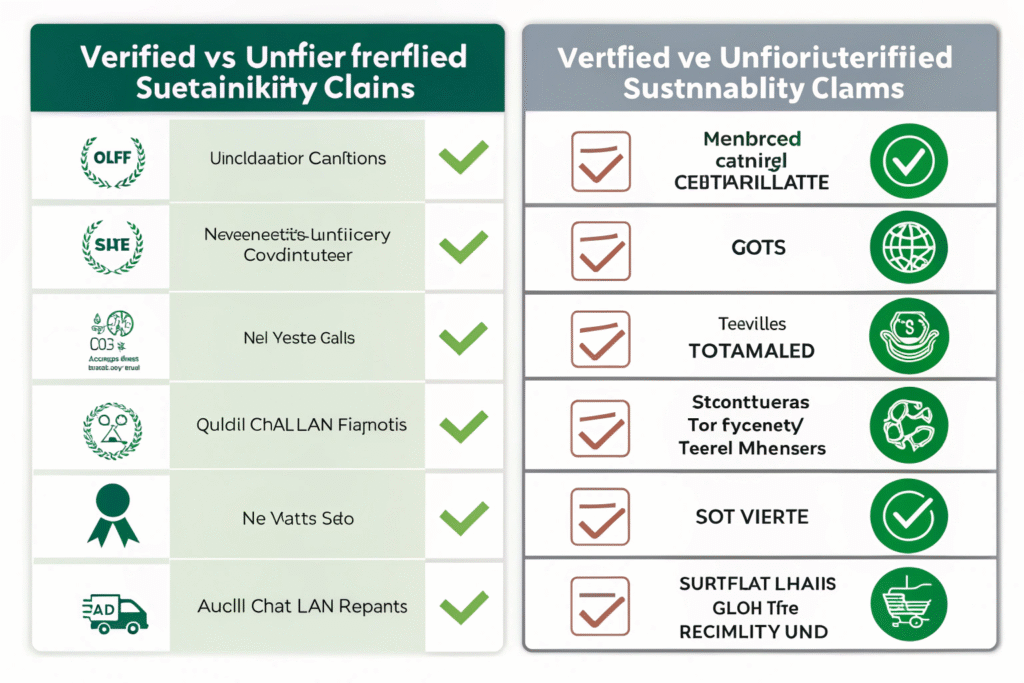
GOTS stands apart through its comprehensive scope covering environmental, technical, and social criteria throughout the entire supply chain. While Oeko-Tex Standard 100 focuses only on chemical safety and GRS emphasizes recycled content, GOTS integrates organic fiber criteria with environmental manufacturing requirements and social accountability. This holistic approach prevents brands from highlighting one sustainable aspect while ignoring other problematic practices. A 2024 study of fashion sustainability claims found that products with comprehensive certifications like GOTS showed significantly lower greenwashing risk compared to those with single-attribute certifications.
What gaps do other certifications have?
Many popular eco-labels address only specific issues, creating opportunities for "greenwashing by omission." For example, a fabric might be certified as chemically safe while containing only 5% organic fibers from questionable sources, or a product might contain recycled materials but be manufactured using hazardous chemicals.
We encountered this limitation when a French client requested Oeko-Tex certification for their conventional polyester fabric. While the certification ensured chemical safety, it didn’t address the environmental impact of petroleum-based fibers or manufacturing processes. This narrow focus illustrates why understanding different textile certification scopes is crucial for brands making meaningful sustainability claims rather than just checking marketing boxes.
How does GOTS integrated approach prevent selective sustainability?
The certification’s requirement for continuous compliance across environmental, social, and technical criteria makes it difficult for brands to hide unsustainable practices behind one positive attribute. You can’t have GOTS certification for your organic cotton while using toxic dyes or exploiting workers.
This integrated approach convinced a UK retailer to switch from using multiple single-attribute certifications to GOTS for their core collection. They recognized that their previous approach of having separate certifications for organic content, chemical safety, and social compliance created confusion and allowed for inconsistencies in sustainable fashion marketing claims. With GOTS, they now have one comprehensive standard that covers all these aspects simultaneously.
What Are the Limitations of GOTS in Combating Greenwashing?
While GOTS represents the gold standard for organic textiles, it’s not a magic bullet that eliminates all greenwashing concerns. I’ve seen certified brands still engage in misleading practices that, while technically compliant, stretch the spirit of sustainability.
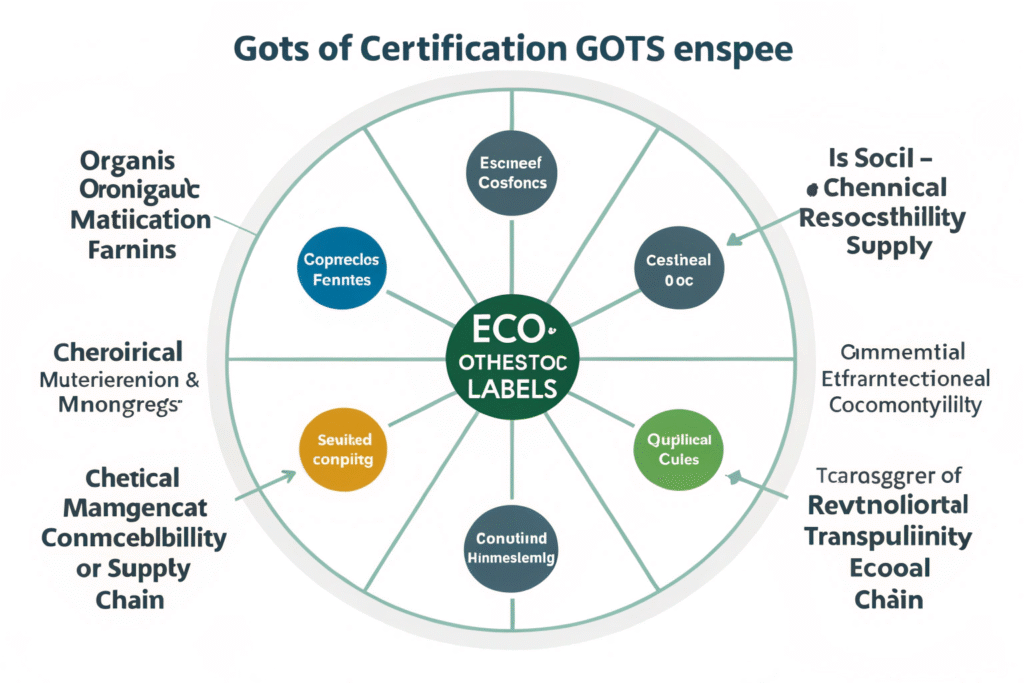
The certification has limitations in addressing overconsumption, product durability, microplastic pollution, and carbon footprint from transportation. A GOTS-certified garment still has environmental impacts, and the certification doesn’t automatically make a business model sustainable. We’ve observed instances where fast fashion brands use small GOTS-certified collections as "green halo" marketing while the majority of their production remains conventional and unsustainable.
How can certified brands still engage in greenwashing?
Some brands obtain GOTS certification for a small percentage of their products while continuing unsustainable practices elsewhere—a practice known as "greenlighting." Others might emphasize their GOTS certification while obscuring other environmental impacts like water consumption or transportation emissions.
We declined a collaboration with a large European fast fashion brand that wanted to launch a GOTS-certified line representing less than 2% of their total production. Their marketing plan emphasized this certified collection while making vague claims about overall sustainability improvements—a classic greenwashing tactic of overemphasizing minor initiatives that we didn’t want to support. This experience taught us that certification alone doesn’t guarantee ethical business practices.
What aspects of sustainability does GOTS not address?
The certification focuses primarily on organic fiber production, chemical management, and social criteria, but doesn’t comprehensively address carbon emissions, water consumption quantification, product durability testing, or end-of-life solutions. These gaps mean brands need to complement GOTS with other sustainability initiatives.
For our clients, we’ve developed a supplementary sustainability assessment that addresses these GOTS gaps. For a Swiss outdoor brand, we combined GOTS certification with carbon footprint tracking and durability testing to create a more complete sustainability profile. This approach acknowledges that no single certification covers all sustainability aspects and helps prevent complacency after achieving one certification.
How Can Brands Use GOTS Certification Authentically to Build Trust?
The real power of GOTS emerges when brands use it as part of a genuine sustainability strategy rather than just a marketing badge. I’ve watched companies transform their relationship with customers by transparently sharing both their GOTS achievements and ongoing sustainability challenges.
Authentic GOTS implementation means integrating the certification throughout business operations, educating customers about what the certification means (and doesn’t mean), and using it as a foundation for continuous improvement. A Portuguese fashion brand we work with includes QR codes on their GOTS labels that link to videos showing their certified supply chain, creating transparency that builds consumer trust far beyond a simple logo.
What does beyond-compliance GOTS implementation look like?
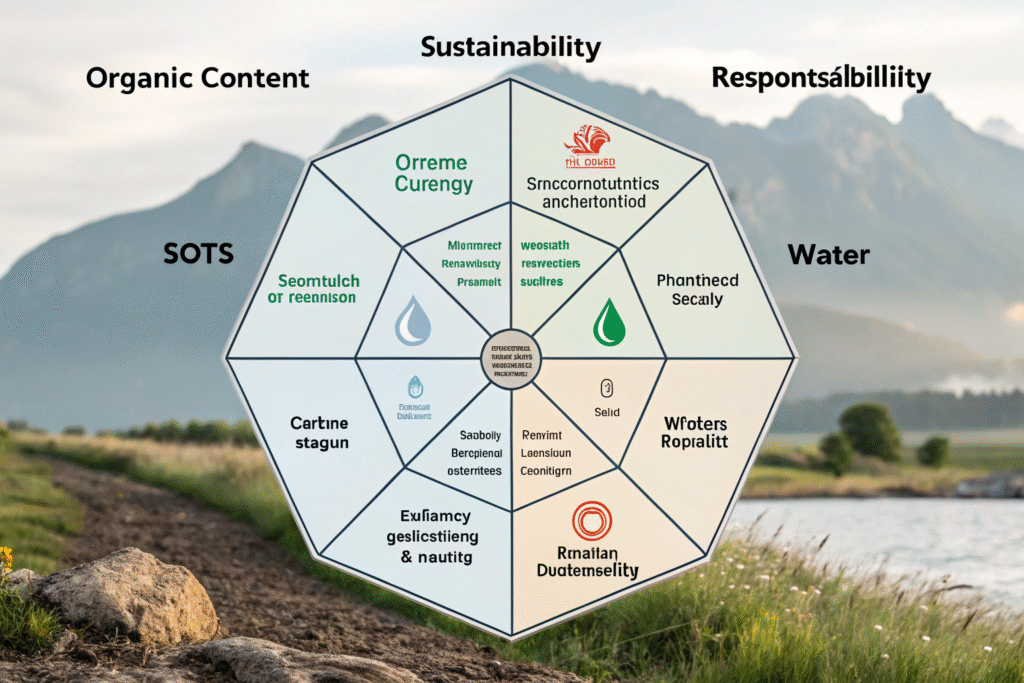
While GOTS sets minimum standards, leading brands exceed these requirements in areas like water recycling, renewable energy use, and packaging sustainability. They use the certification as a baseline rather than a ceiling for their sustainability efforts.
Our facility has implemented several beyond-compliance initiatives, including solar panels that now provide 40% of our energy needs and a water recycling system that exceeds GOTS requirements. These additional efforts, combined with our GOTS certification, helped a Norwegian workwear brand secure a major corporate contract by demonstrating comprehensive sustainability leadership in textile manufacturing. The client appreciated that we viewed GOTS as the starting point rather than the finish line.
How can transparency strengthen GOTS credibility?
Brands that openly share their certification journey, including challenges and setbacks, build more credibility than those that only highlight their successes. Transparency about the certification process demonstrates authenticity and helps educate consumers about what meaningful sustainability entails.
We encourage our partners to document and share their certification journey. One Australian brand created a video series showing their transition to GOTS certification, including the difficulties they faced in sourcing consistent organic cotton and finding compliant dyes. This honest approach resonated with their customers and differentiated them from competitors making vague sustainability claims. Their experience shows how authentic sustainability communication builds brand trust in an era of consumer skepticism.
Conclusion
GOTS certification represents the most effective tool currently available for combating specific types of greenwashing in the fashion industry, particularly regarding organic claims, chemical safety, and social responsibility. However, it’s not a complete solution to fashion’s sustainability challenges. The certification provides crucial verification for key sustainability aspects but must be part of a broader, genuine commitment to environmental and social responsibility.
The brands that succeed in building authentic sustainability reputations use GOTS as one component of a comprehensive approach that includes transparency, continuous improvement, and honest communication. They understand that while certification addresses greenwashing around verifiable claims, it doesn’t eliminate the need for responsible business practices overall. In a market saturated with vague sustainability claims, GOTS provides the concrete verification that separates meaningful action from marketing rhetoric.
If you’re ready to move beyond greenwashing and build authentic sustainability into your products, contact our Business Director Elaine to discuss how GOTS certification can provide the verified foundation for your efforts: elaine@fumaoclothing.com. We’ll help you navigate the certification process while developing complementary sustainability initiatives that create genuine environmental and social value.