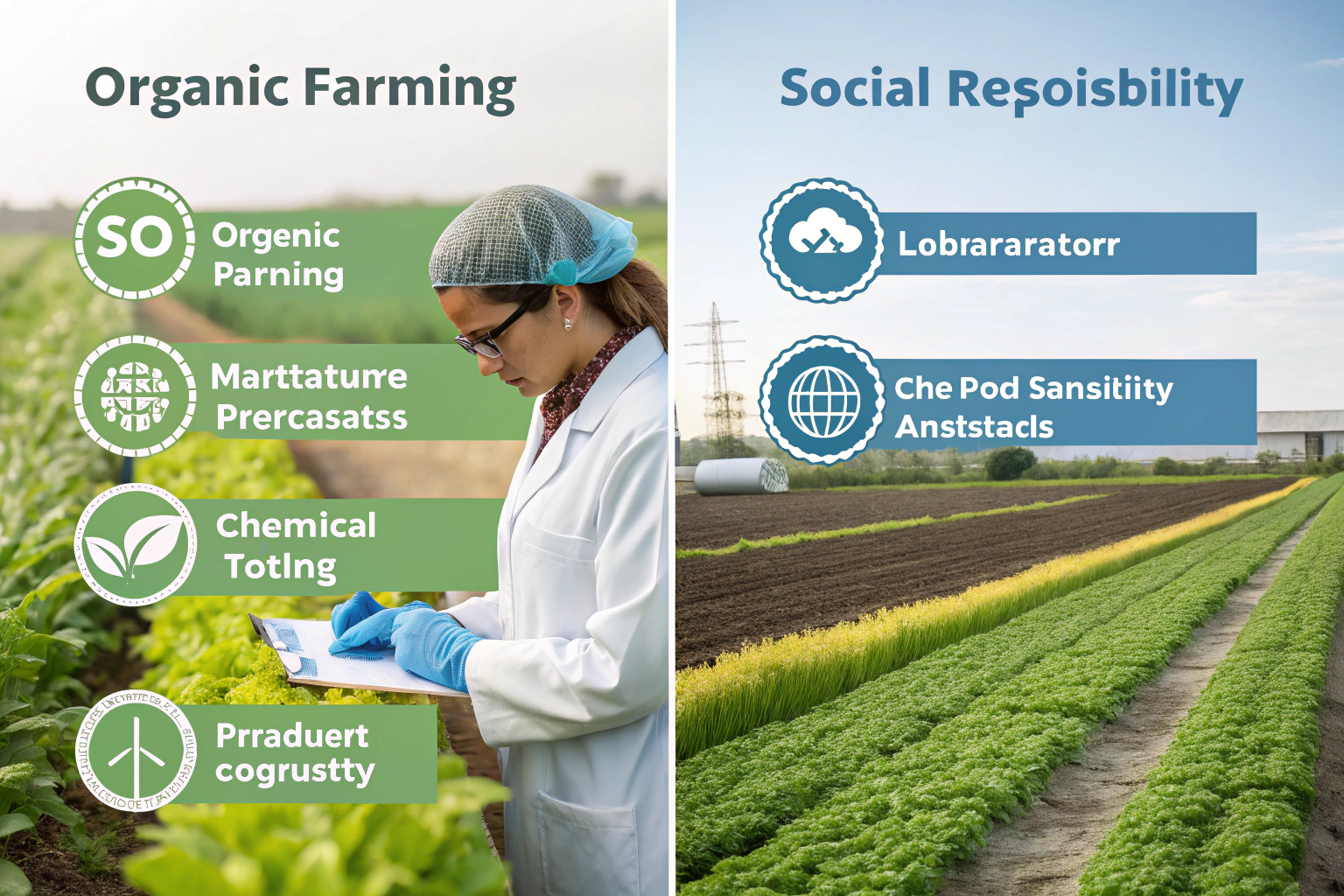
Last month, I had a call with a frustrated brand owner from Chicago who had just failed a major retailer’s compliance audit. "But I’m OEKO-TEX certified!" he kept repeating. The problem? His products contained conventional cotton treated with pesticides, and the retailer required GOTS certification for organic claims. This misunderstanding cost him a $450,000 order and taught me how crucial it is to understand the fundamental differences between these certifications.
So what exactly distinguishes GOTS from OEKO-TEX certification? GOTS (Global Organic Textile Standard) is a comprehensive system covering organic fiber integrity, environmental processing, and social responsibility throughout the supply chain, while OEKO-TEX focuses primarily on testing final products for harmful substances. Think of GOTS as a "how it’s made" certification and OEKO-TEX as a "what’s in it" verification. GOTS certifies processes and systems; OEKO-TEX certifies product safety.
The confusion between these standards costs brands millions annually in failed compliance, rejected shipments, and missed market opportunities. Understanding their distinct purposes, scopes, and applications is essential for making informed certification decisions.
How do the certification scopes and purposes differ?
The fundamental distinction lies in what each certification actually evaluates and verifies. Understanding this core difference prevents the costly mistake of using one certification when you actually need the other.
GOTS looks at the entire production journey, while OEKO-TEX examines the final destination. Both are valuable, but they serve different purposes and answer different questions.

What specific aspects does GOTS certification cover?
GOTS certification encompasses the complete supply chain from field to finished product, including organic fiber verification, environmental processing criteria, social compliance, and labeling requirements. When we help brands achieve GOTS certification, we’re auditing their entire manufacturing process, wastewater treatment systems, chemical management, and worker welfare programs. This comprehensive approach ensures complete supply chain integrity for organic textiles that extends far beyond product testing.
What does OEKO-TEX STANDARD 100 actually verify?
OEKO-TEX STANDARD 100 focuses exclusively on testing final products for harmful substances across various product classes (from babywear to decorative materials). The certification doesn’t concern itself with organic fiber content, environmental impact of production, or social conditions. It simply answers: "Is this final product safe for human use?" This targeted approach provides specific product safety verification through laboratory testing without addressing production processes.
How do certification requirements and processes compare?
The journey to achieving each certification involves dramatically different processes, timelines, and investments. Understanding these practical differences helps brands choose the right certification for their specific needs and resources.
GOTS requires transforming your operations, while OEKO-TEX requires testing your products. One is about how you work, the other is about what you produce.

What is involved in obtaining GOTS certification?
GOTS certification requires facility audits, documentation systems implementation, supply chain mapping, and ongoing compliance monitoring. The process typically takes 3-6 months and involves significant operational changes. For our facility, achieving GOTS certification required investing ¥2.8 million in wastewater treatment upgrades, chemical management systems, and worker training programs. The transformation demonstrates the comprehensive operational requirements for GOTS certification that go beyond simple testing.
How does OEKO-TEX certification work?
OEKO-TEX certification primarily involves laboratory testing of product samples against a list of regulated substances. The process can be completed in 3-6 weeks with minimal operational changes. Brands can certify individual products without certifying their manufacturing processes. This streamlined approach focuses on efficient product safety testing and certification rather than operational transformation.
When should brands choose GOTS versus OEKO-TEX?
The decision between these certifications depends entirely on your brand’s positioning, target market, and sustainability goals. Using the wrong certification for your market needs can be costly and ineffective.
GOTS supports organic claims and comprehensive sustainability storytelling, while OEKO-TEX addresses product safety concerns without making broader environmental or social claims.
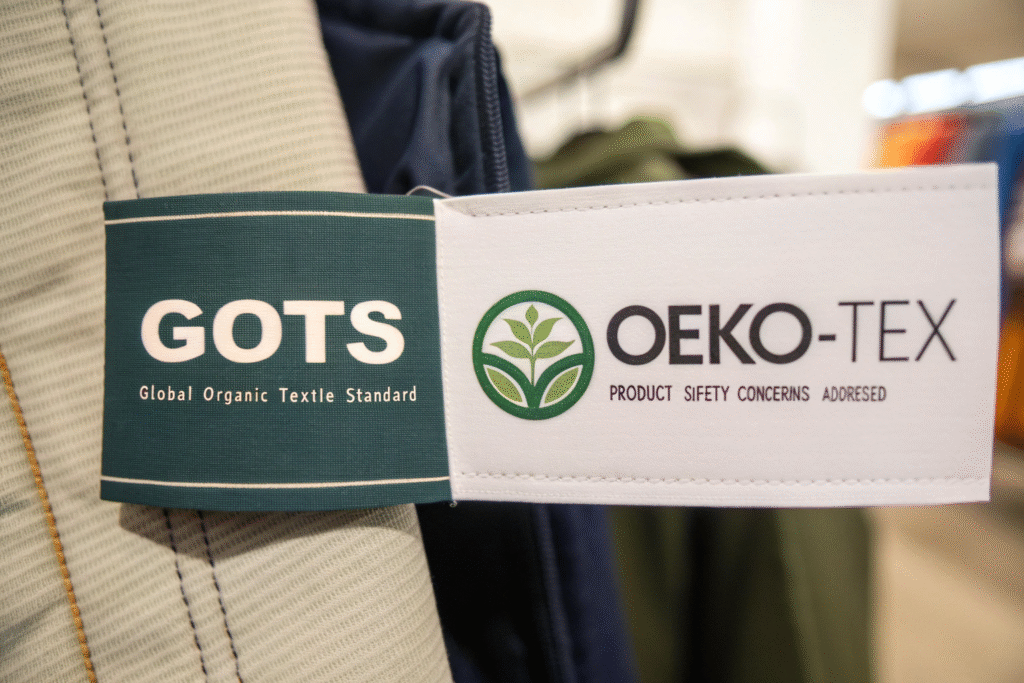
What market signals does each certification send?
GOTS certification communicates a commitment to organic agriculture, environmental protection, and social responsibility throughout your supply chain. OEKO-TEX communicates product safety and consumer health protection. A European babywear brand we work with uses both certifications: GOTS for their organic cotton claims and OEKO-TEX for their product safety assurance. This dual approach leverages the distinct market messages of different sustainability certifications.
How do retailer requirements influence certification choice?
Major retailers have specific certification requirements based on their sustainability strategies. Organic collections typically require GOTS, while product safety programs may accept OEKO-TEX. When Target launched their sustainable baby collection, they mandated GOTS certification for all organic claims but accepted OEKO-TEX for product safety verification. Understanding retailer certification requirements for different product categories is essential for market access.
What are the cost and timeline differences?
The investment required for each certification varies significantly in both financial terms and implementation timelines. These practical considerations often determine which certification makes sense for a brand’s current situation and growth stage.
GOTS represents a strategic investment in sustainable operations, while OEKO-TEX offers a tactical solution for product safety verification.

What are the typical costs for each certification?
GOTS certification involves substantial costs for facility upgrades, system implementation, and annual audits, typically ranging from $5,000 to $50,000+ depending on facility size and complexity. OEKO-TEX certification costs are primarily testing fees, typically $500 to $5,000 per product. These cost structures reflect the different investment levels for process versus product certification.
How do implementation timelines compare?
GOTS implementation typically requires 3-6 months for initial certification, while OEKO-TEX can be completed in 3-6 weeks. The timeline difference reflects the operational transformation required for GOTS versus the product testing focus of OEKO-TEX. A fast-fashion brand needing quick product safety verification might choose OEKO-TEX, while a brand building long-term sustainable credibility would invest in GOTS. These timelines highlight the strategic versus tactical certification decision framework.
Can certifications be used together effectively?
Many successful brands leverage both certifications to address different aspects of sustainability and communicate distinct value propositions to their customers.
The certifications complement rather than compete with each other, each telling a different part of your sustainability story.

How do GOTS and OEKO-TEX complement each other?
GOTS provides the comprehensive sustainability story from farm to fashion, while OEKO-TEX offers specific product safety assurance. A Swedish workwear brand uses GOTS to verify their organic cotton supply chain and OEKO-TEX to certify flame-resistant treatments. This combination delivers both comprehensive sustainability and specific safety benefits.
What are the benefits of dual certification?
Brands using both certifications can make verified claims about organic content, environmental processing, social responsibility, and product safety. This comprehensive approach addresses multiple consumer concerns and retailer requirements simultaneously. The dual certification strategy has helped several of our clients achieve premium positioning and expand their retail distribution. The approach demonstrates the competitive advantages of integrated certification strategies.
Conclusion
GOTS and OEKO-TEX serve fundamentally different purposes in the sustainable apparel ecosystem. GOTS certifies how products are made, focusing on organic integrity, environmental responsibility, and social justice throughout the supply chain. OEKO-TEX verifies what’s in the final product, ensuring safety from harmful substances. The choice isn’t about which is better, but which better serves your specific brand needs, market positioning, and sustainability goals.
At Fumao Textiles, we maintain both GOTS and OEKO-TEX certifications because we understand that our partners need different tools for different challenges. If you’re ready to develop a certification strategy that aligns with your brand’s unique position in the market, contact our Business Director Elaine at elaine@fumaoclothing.com. Let’s determine the right certification mix for your sustainability journey and commercial success.