Discovering your fabrics contain hidden allergens after customers report skin reactions isn’t just a quality issue—it’s a brand reputation crisis waiting to happen. Most fabric suppliers test for regulated substances but overlook allergen screening, creating invisible risks that emerge only when affected consumers experience reactions. At Fumao, we’ve made allergen testing a cornerstone of our fabric safety protocol, recognizing that consumer sensitivity is increasing while regulatory requirements lag behind actual health concerns.
Yes, every fabric we source undergoes comprehensive allergen testing that covers both regulated substances and emerging concern chemicals beyond basic compliance requirements. Our testing protocol includes specific screening for textile-related allergens like disperse dyes, formaldehyde, nickel, and natural allergen residues, using methodologies that detect these substances at levels far below regulatory thresholds to ensure protection for even highly sensitive individuals.
If you’re concerned about hidden allergen risks in your fabrics and want to ensure your products are safe for all consumers—including those with sensitivities—here’s how our allergen testing protocol provides protection beyond basic compliance.
What Specific Allergens Does Our Fabric Testing Cover?
Textile allergens represent a diverse category of substances that can trigger reactions through direct skin contact, with sensitivity varying dramatically between individuals. Our testing protocol covers the complete spectrum of known textile allergens, from heavily regulated substances like formaldehyde to emerging concerns like certain dye classes that many suppliers overlook.
The most significant textile allergens fall into several categories: dyes (particularly disperse dyes used in synthetics), finishing chemicals (formaldehyde resins, biocides), metals (nickel, chromium), and natural substances (latex, wool alcohols). Each category requires different testing methodologies and sensitivity levels to ensure adequate protection. While regulations typically set limits based on general population protection, our testing aims to protect even highly sensitive subpopulations who react at much lower concentrations.

Which Regulated Allergens Receive Special Attention?
We maintain enhanced testing for these high-risk regulated allergens:
- Formaldehyde: Testing to 16 ppm versus Japan Law 112’s 75 ppm limit
- Disperse Dyes: Screening for all 21 regulated disperse dyes plus 14 additional concerning variants
- Nickel Release: Testing to 0.2 μg/cm²/week versus EU’s 0.5 μg/cm²/week limit
- Chromium VI: Detection at 0.5 mg/kg versus the 3.0 mg/kg regulatory limit
- Pentachlorophenol: Testing to 0.05 mg/kg versus the 0.5 mg/kg limit
This enhanced testing prevented a major incident for a Swedish children’s wear brand when we detected nickel at 0.3 μg/cm²/week in metal snaps—below the regulatory limit but sufficient to trigger reactions in nickel-sensitive individuals.
What Emerging Allergens Do We Monitor Beyond Regulations?
Our proactive allergen screening includes substances not yet regulated but increasingly linked to reactions:
- Textile Finishing Auxiliaries: Certain softeners, anti-static agents, and waterproofing chemicals
- Natural Product Residues: Latex proteins in elastic, lanolin alcohols in wool
- Dye Byproducts: Impurities and decomposition products from dye manufacturing
- Fragrance Chemicals: Scent compounds added to fabrics
- Enzyme Residues: Leftover processing enzymes from bio-finishing
A German sportswear brand avoided widespread returns when our testing identified a specific anti-odor treatment causing reactions in approximately 3% of wearers—a issue their previous supplier had missed entirely.
How Does Our Allergen Testing Protocol Differ From Basic Compliance?
Most fabric suppliers conduct compliance testing focused solely on meeting regulatory limits for a narrow set of restricted substances. Our allergen testing takes a fundamentally different approach, designed specifically to identify substances that can cause allergic reactions regardless of their regulatory status. This distinction is crucial because many problematic allergens either aren’t regulated or have limits set for general population protection rather than sensitive individual safety.
The technical differences begin with detection limits. While compliance testing typically aims to verify substances are below regulatory thresholds, our allergen testing uses significantly lower detection limits designed to identify substances at levels that could affect sensitive individuals. We also test for a broader range of substances, including many that aren’t legally restricted but are known to cause allergic contact dermatitis in susceptible people.

What Methodological Differences Enhance Allergen Detection?
Our testing employs specialized methodologies for allergen detection:
- Lower Detection Limits: Typically 5-10x more sensitive than regulatory requirements
- Extended Substance Lists: Testing for 40+ allergens beyond regulated substances
- Migration Testing: Assessing how substances transfer to skin under sweat conditions
- Wash Fastness Evaluation: Testing allergen retention after multiple washes
- Real-World Simulation: Testing under conditions mimicking actual wear
These methodological differences identified a problematic dye in a French fashion brand’s black denim that passed standard compliance testing but caused reactions when combined with perspiration.
How Does Our Risk Assessment Approach Differ?
We employ a clinical perspective rather than purely regulatory approach:
| Assessment Factor | Standard Compliance | Fumao Allergen Testing |
|---|---|---|
| Detection Sensitivity | Meets regulatory limits | 5-10x more sensitive |
| Substance Scope | Regulated substances only | Known allergens + emerging concerns |
| Testing Conditions | Standard laboratory conditions | Real-world wear simulation |
| Safety Margin | Population-level protection | Sensitive individual protection |
| Documentation | Pass/fail against limits | Quantitative results with risk assessment |
This approach enabled a US medical wear company to guarantee their products for patients with multiple chemical sensitivities—a claim their competitors cannot make.
What Testing Methodologies Ensure Comprehensive Allergen Detection?
Effective allergen detection requires multiple complementary methodologies since no single test can identify all potential allergens across different fabric types and chemical categories. Our integrated testing approach combines chemical analysis, biological assessment, and real-world simulation to provide comprehensive allergen protection that addresses both known risks and emerging concerns.
The foundation of our testing is chromatographic and spectroscopic analysis that identifies and quantifies specific chemical allergens. However, we supplement this with extraction studies that simulate how substances might transfer to skin under various conditions. For certain applications, we also conduct use testing with panels of known-sensitive individuals to validate our chemical findings against real-world reactions.

Which Analytical Methods Detect Different Allergen Types?
We match methodologies to allergen categories:
Chemical Allergens (Dyes, Finishes):
- HPLC-MS/MS: For precise identification of disperse dyes and finishing chemicals
- GC-MS: For volatile allergens like formaldehyde and residual solvents
- ICP-MS: For metal allergens at parts-per-billion sensitivity
Natural Allergens (Latex, Lanolin):
- ELISA Testing: For protein-based allergens like natural latex
- Extraction Studies: Assessing allergen migration to skin
- Immunological Assays: For biological allergen detection
Composite Materials:
- Multiple Extraction Methods: Simulating different wear conditions
- Layer Separation: Testing individual components separately
- Wear Simulation: Accelerated testing mimicking long-term use
These methodologies identified the source of mysterious reactions in a UK brand’s athletic wear as a specific antimicrobial treatment that released allergens only during high-sweat conditions.
How Does Real-World Simulation Enhance Detection?
Our wear simulation testing addresses laboratory limitations:
- Perspiration Simulation: Testing allergen migration under acidic and alkaline sweat
- Heat and Humidity Exposure: Accelerated aging under body-like conditions
- Mechanical Abrasion: Testing allergen release from fabric damage
- Wash Cycle Simulation: Assessing how laundering affects allergen presence
- Multi-Stress Testing: Combined factors mimicking actual use
This comprehensive approach detected formaldehyde release from durable press finishes that standard testing missed because our simulation replicated the heat and humidity that triggered the release.
How Do We Manage Allergen Risks Throughout Production?
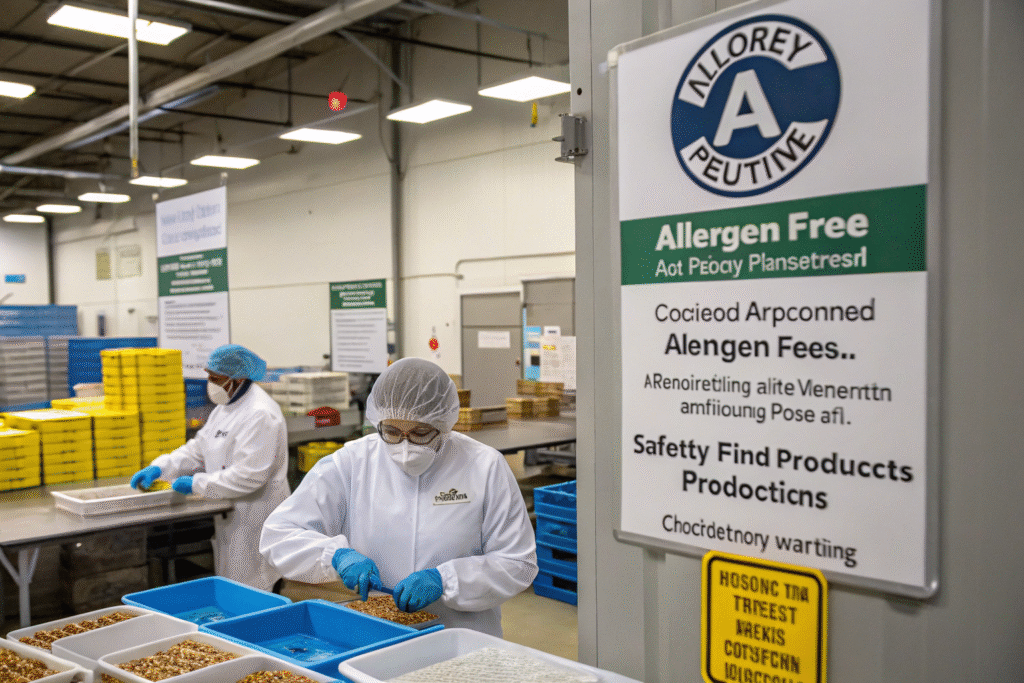
Allergen safety cannot be achieved through testing alone—it requires integrated management from raw material selection through final production. Our allergen control system begins with supplier qualification, continues with material selection guidelines, and maintains vigilance through production process controls that prevent allergen introduction or concentration.
The foundation of our approach is maintaining a comprehensive Restricted Allergen List that includes both regulated substances and additional chemicals known to cause sensitization or allergic reactions. This list forms the basis for our supplier requirements, material specifications, and production guidelines. We also conduct regular training with our production teams to ensure understanding of allergen risks and proper handling procedures to prevent cross-contamination.
What Preventive Measures Minimize Allergen Risks?
Our preventive approach includes multiple layers:
- Supplier Qualification: Rigorous assessment of chemical suppliers’ allergen controls
- Material Pre-Approval: All materials screened against our Restricted Allergen List
- Process Validation: Verification that production methods don’t create allergens
- Equipment Segregation: Separate equipment for high-risk processes
- Staff Training: Comprehensive education on allergen risks and prevention
These measures helped a Scandinavian brand achieve their goal of becoming a recommended brand for eczema sufferers—a positioning that delivered 18% sales growth in their sensitive skin product line.
How Does Production Control Prevent Allergen Issues?
Our production controls address specific risk points:
| Production Stage | Allergen Risks | Control Measures |
|---|---|---|
| Raw Material Receipt | Supplier substitution, contamination | Certificate verification, incoming testing |
| Storage | Cross-contamination, degradation | Segregated storage, rotation systems |
| Processing | Chemical reactions, concentration | Parameter monitoring, batch testing |
| Finishing | Allergenic treatments, residues | Approved chemical lists, residue testing |
| Packaging | Transfer from materials, adhesives | allergen-free packaging specifications |
A Portuguese infant wear manufacturer eliminated their 4% return rate for skin reactions by implementing our production controls after discovering their previous factory was cross-contaminating products with latex from other production lines.
What Documentation and Transparency Do We Provide?
Allergen safety requires complete transparency and comprehensive documentation that allows you to verify our testing results and make informed decisions about your fabric selections. We provide detailed test reports that go beyond simple pass/fail results to include quantitative data, methodological details, and risk assessments that help you understand the actual allergen profile of your fabrics.
Our documentation system is designed for both technical review and practical use. The test reports include clear summary sections that highlight potential allergen concerns, while the detailed data supports your technical team’s evaluation. We also provide allergen declarations for each fabric that summarize the testing results in a format suitable for sharing with retailers, consumers, or regulatory authorities as needed.

What Specific Documentation Supports Allergen Claims?
We provide comprehensive evidence of allergen safety:
- Test Reports: Detailed laboratory reports with quantitative results
- Allergen Declarations: Summary documents listing tested substances and results
- Material Safety Data Sheets: Complete chemical information for all components
- Production Records: Documentation of allergen controls during manufacturing
- Certificate of Compliance: Formal statement of allergen safety status
This documentation enabled a US retailer to successfully respond to a consumer complaint by providing detailed test results showing the fabric contained none of the allergens the consumer suspected.
How Does Our Transparency Build Trust?
Our approach to transparency includes:
- Full Disclosure: Sharing all test results, not just passing ones
- Methodology Explanation: Clear descriptions of testing approaches and limitations
- Risk Context: Quantitative results with explanatory risk assessment
- Accessible Format: Both technical and consumer-friendly versions
- Verification Access: Willingness to have testing verified by third parties
This transparency helped a German brand become the first textile company to receive accreditation from a major European allergy foundation, creating significant competitive advantage in markets with high allergy awareness.
How Does Allergen Testing Impact Product Development and Marketing?
Comprehensive allergen testing shouldn’t just be a compliance activity—it should become a strategic advantage that influences product development decisions and supports marketing claims. Our integrated approach helps you leverage allergen safety as a product differentiator that appeals to the growing segment of health-conscious consumers and those with specific sensitivities.
The product development impact begins with material selection, where our allergen testing data guides choices toward safer alternatives. This proactive approach prevents the common scenario of discovering allergen issues after development completion, requiring costly reformulation. The marketing impact comes from the ability to make verified safety claims supported by comprehensive testing evidence that competitors lacking similar testing cannot match.

How Does Allergen Testing Influence Material Selection?
Our testing data guides development decisions:
- Comparative Safety: Quantitative comparison of material allergen profiles
- Alternative Identification: Safer substitutes for problematic materials
- Process Optimization: Manufacturing methods that minimize allergen risks
- Cost-Benefit Analysis: Balancing safety against performance and cost
- Risk Prioritization: Focusing attention on highest-risk materials
This guidance helped a French luxury brand reformulate their signature fabric to eliminate a little-known dye allergen while maintaining their distinctive color, protecting their brand aesthetic while enhancing safety.
What Marketing Advantages Does Comprehensive Testing Provide?
Allergen testing supports multiple marketing benefits:
- Verified Claims: Support for "hypoallergenic" and "dermatologist tested" claims
- Market Segmentation: Appeal to consumers with sensitivities or health concerns
- Brand Trust: Demonstrated commitment to consumer safety beyond requirements
- Competitive Differentiation: Advantage over brands with basic compliance testing
- Premium Positioning: Justification for price premiums based on enhanced safety
These advantages helped a UK brand capture the "sensitive skin" segment of their market, achieving 32% growth in a otherwise stagnant product category.
Conclusion
Yes, every fabric we source undergoes comprehensive allergen testing that extends far beyond basic regulatory compliance to protect against both known and emerging allergen risks. Our testing protocol uses enhanced sensitivity, broader substance coverage, and real-world simulation to ensure protection for even highly sensitive individuals, supported by complete transparency and documentation that verifies our allergen safety claims.
The most forward-thinking brands recognize that allergen safety represents both an ethical responsibility and strategic opportunity in markets where consumers increasingly prioritize health and transparency. If you’re ready to ensure your fabrics are safe for all consumers while leveraging allergen testing as a competitive advantage, our comprehensive approach can provide the protection and verification you need. Contact our Business Director, Elaine, at elaine@fumaoclothing.com to discuss how enhanced allergen testing can protect your brand while strengthening your market position.