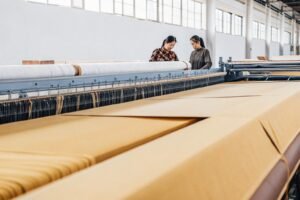
You’re designing high-performance sportswear, and nothing ruins a great top or lining faster than a mesh that snags, pulls, or fails after a few wears. Your customers expect durability that matches the intensity of their workouts, and a single snag can lead to a return or a lost customer. We hear this frustration all the time from brands trying to balance performance, cost, and durability.
Selecting the right snag-resistant mesh involves a multi-layered approach focusing on the fiber type, the knitting construction, and specialized finishing treatments. It’s not just about one single factor; it’s about how the yarn, the machine, and the finishing process work together to create a fabric that can withstand abrasion, pilling, and pulls. The goal is a fabric that maintains its integrity and appearance through repeated use and washing.
Let’s break down the key elements you need to consider, from the molecular level of the polymer to the final fabric finish, to ensure you’re choosing a mesh that will perform for the long haul.
What fiber types best prevent snagging?
The journey to a snag-resistant mesh starts with the raw material: the fiber. Not all polyester or nylon is created equal, and the molecular structure of the filament plays a crucial role in how the final fabric behaves under stress. Think of the fiber as the foundation of a building—if it’s weak, the whole structure is vulnerable.
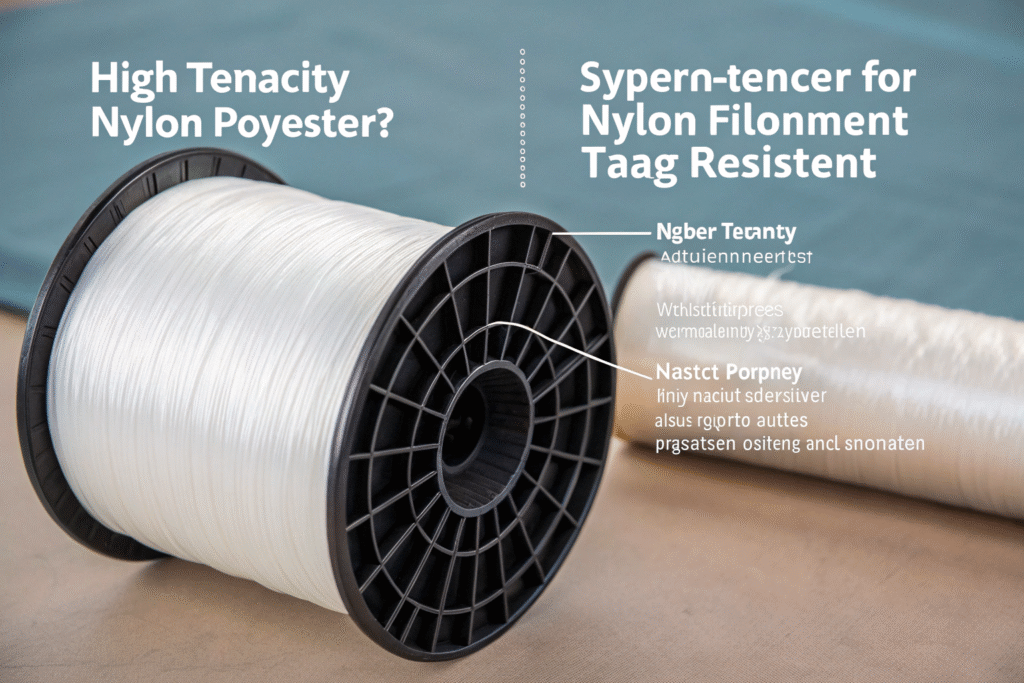
High-tenacity polyester or nylon filaments are your best bet for superior snag resistance. These fibers are engineered to have a higher molecular orientation and crystallinity, which translates to greater tensile strength and abrasion resistance compared to standard fibers. We primarily use a specific type of high-tenacity polyester that undergoes a unique spinning process, resulting in a filament that is both strong and flexible. This is the opposite of what you’d use for a soft, drapey chiffon; here, we need toughness. For instance, a common mistake is using textured yarns, which are great for softness but have loops that are prime for catching and snagging. Instead, opt for smooth, continuous filament yarns.
Why is filament yarn stronger than spun yarn?
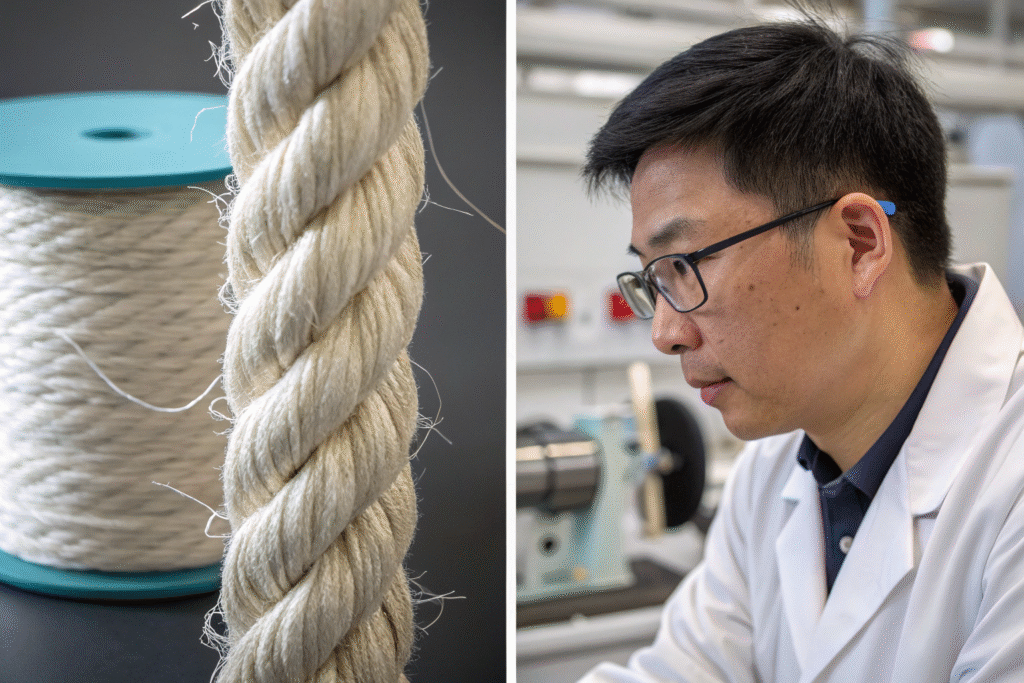
This comes down to structure. Spun yarns, like those made from staple cotton fibers, are composed of many short fibers twisted together. These short ends can easily be pulled out, creating a snag. Imagine a rope made of many short strings versus a single, long, continuous plastic filament. The filament has no loose ends to grab onto. Continuous filament yarns, like the ones we use in our performance meshes, are essentially a single, long, super-strong thread. This provides a much smoother and more uniform surface, significantly reducing the points of failure where a snag can initiate. For brands looking into how to source high-tenacity polyester for athletic wear, focusing on suppliers with technical expertise in synthetic fibers is crucial, as not all mills produce this specialized yarn. We’ve documented the key differences on our technical yarn sourcing guide.
How does yarn texture impact snag potential?
Textured yarns are deliberately crimped and looped to add bulk, stretch, and moisture-wicking properties. However, these very loops are the Achilles’ heel when it comes to snagging. A sharp object like a fingernail, Velcro, or a gym equipment bolt can easily catch one of these loops and pull it. In a high-stress area like the underarm or side of a sports top, this is a common failure point. Our solution is to use a flat, smooth filament yarn and then engineer the porosity and stretch through the knitting construction itself, not through the texturing of the yarn. This was a key learning from a project in late 2023 for a client in Florida; they were experiencing a 15% return rate on their running tops due to snagging from backpack straps. We switched them from a textured yarn mesh to our smooth filament construction, and within two months, the return rate for snagging dropped to near zero.
Which knit construction is most durable?
Once you have the right fiber, the knitting machine is your next line of defense. The way the loops are formed and interlocked determines the fabric’s inherent stability and its ability to resist snags and runs. A well-designed knit can distribute stress and prevent a single broken filament from compromising the entire fabric.
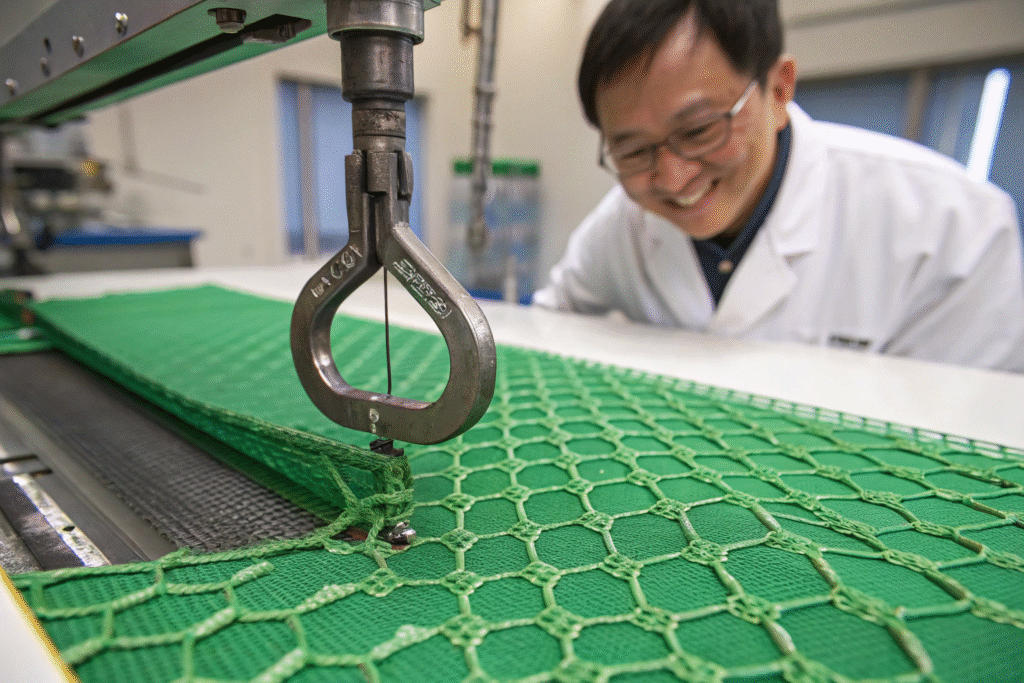
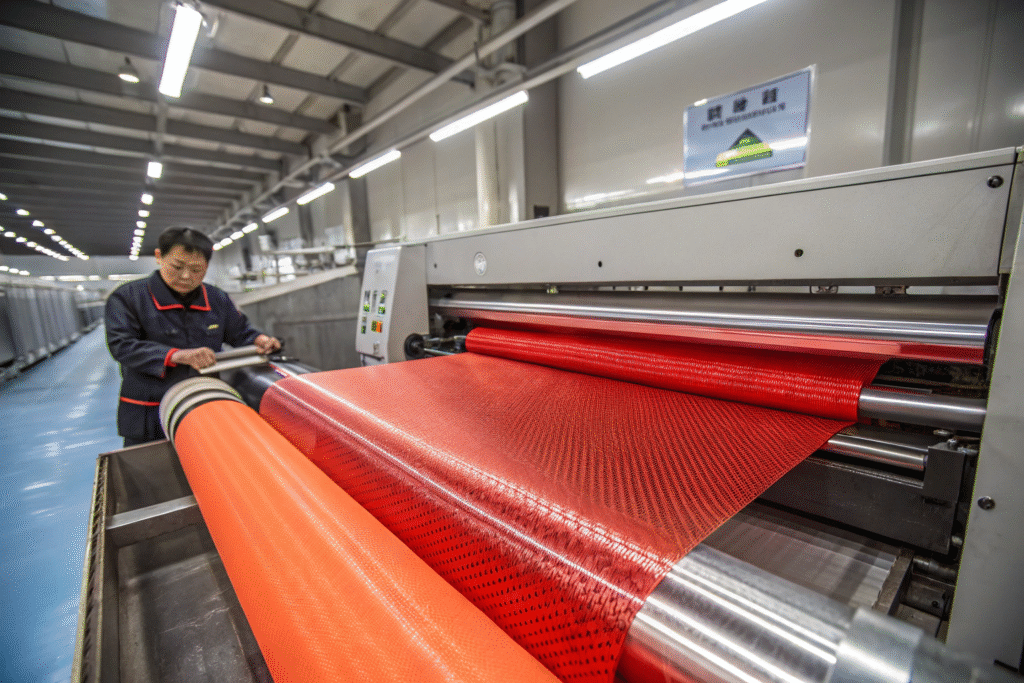
Warp knits, specifically tricot and its variations, are generally far more snag-resistant than weft knits (like jersey). This is due to the fundamental way the loops are oriented. In a weft knit, a single yarn runs horizontally, and if a stitch breaks, it can "run" like a ladder in pantyhose. In a warp knit, each loop is made from its own yarn running vertically, and the loops are interlocked in a way that contains any potential damage. It’s the difference between a chain-link fence (warp knit) and a row of dominoes (weft knit). Our primary workhorse for snag-resistant meshes is a hexagonal mesh structure, often achieved with a Raschel warp knitting machine. This creates a stable, geometric net that is incredibly difficult to distort or snag.
What are the pros and cons of hexagonal mesh?
The hexagonal, or honeycomb, structure is a marvel of natural engineering. In fabric, it creates a fantastic balance of breathability, stretch recovery, and snag resistance.
| Feature | Benefit for Snag Resistance |
|---|---|
| Interlocked Loops | Distributes pulling force across multiple loops, preventing a single point of failure. |
| Stable Structure | The fabric is less likely to stretch out and become loose, which reduces the chance of catching on objects. |
| Smooth Surface | The construction creates a relatively flat surface with fewer protruding loops. |
The potential con is that some hexagonal meshes can be less elastic than a very open weft knit, but this is something we engineer around by using yarns with inherent stretch or by blending with a small percentage of spandex. For those comparing functional fabric construction guides for warp knitting, it’s important to look at the gauge of the machine, as a higher gauge (finer needles per inch) produces a tighter, more snag-resistant mesh.
How can Atlas knit construction be a solution?
Atlas knit, a type of warp knit, is another powerhouse for durability. Its key feature is its ability to lock stitches in place, making it extremely resistant to runs and snags. While it may not have the large, open porosity of a standard hexagonal mesh, it’s our go-to recommendation for linings in bags, sports bras, and areas that will see extreme abrasion. We recently supplied an Atlas knit mesh to a manufacturer of tactical vests in Poland. They needed a lining that wouldn’t snag on the hard plastic components of the vest during repeated donning and doffing. After six months of field testing, their feedback was that the snagging incidents were reduced by over 90% compared to their previous supplier’s fabric. (Here’s a insider tip – our Atlas knit is a beast when it comes to durability.)
What fabric finishes enhance snag resistance?
The final piece of the puzzle happens after the fabric is knitted. Finishing treatments can dramatically upgrade the surface characteristics of a mesh, adding a protective layer or smoothing the fabric to fend off snags. This is where you can take a good fabric and make it great.
Two finishes stand out for snag prevention: heat setting and calendering. Heat setting is non-negotiable. It uses heat to relax the yarns and stabilize the knit structure, "locking" the loops in place and dramatically improving dimensional stability and snag resistance. Calendering is a process where the fabric is passed between heavy, heated rollers under high pressure. This flattens the surface, smoothers any tiny fiber protrusions, and polishes the fabric, making it much more difficult for sharp objects to find a purchase. We run all our performance meshes through a precise heat-setting process, and for our premium lines, we add a light calendering step. It’s like ironing the fabric at an industrial level to perfection.
How does a peach finish affect durability?
This is a great question, as a peach finish (a process that brushes the fabric to create a soft, suede-like hand-feel) seems like it would be counter-intuitive for snag resistance. And you’re right, it can be. The brushing process can raise tiny fiber ends to the surface, which could potentially be caught. Therefore, we are very selective about applying peach finish. We only recommend it for areas where supreme softness is critical and snagging risk is lower. For most sport tops and linings, we advise against it. Instead, we achieve softness through fiber selection and knitting construction, preserving the smooth, snag-resistant surface. For brands exploring durable fabric finishing techniques for activewear, it’s vital to partner with a factory that understands these trade-offs.
Can coatings like PU enhance snag resistance?
Yes, but with a major caveat. A very light, flexible polyurethane (PU) coating can indeed fill in the gaps of the knit and create a tougher, more monolithic surface that is highly snag-resistant. However, a heavy or rigid coating will compromise the very breathability and flexibility that make mesh desirable. We use a proprietary micro-layer PU coating for specific applications where the primary need is extreme abrasion resistance, such as in the shoulder areas of weightlifting tops or for linings in hiking backpacks. It adds a minimal weight increase while providing a protective shield. In early 2024, a Canadian brand was developing a line for trail running and needed a mesh for pockets that wouldn’t snag on branches. Our micro-PU finished hexagonal mesh was the perfect solution, and they reported a 50% reduction in field tears during their product testing phase.
How to verify snag resistance with testing?
You can’t manage what you can’t measure. Relying on supplier promises or a simple hand-feel is a risky strategy. You need objective, quantifiable data to ensure the mesh you select will stand up to real-world use. This is where international testing standards come in, and they are your best friend in mitigating risk.
The most relevant standard for snagging is the Mace Test (ASTM D3939) or the Bean Bag Snag Test (ASTM D5362). These tests simulate snagging by using a multi-spiked cylinder or a weighted bag with spikes that tumbles against the fabric. The fabric is then graded on a visual scale from 1 (severe snagging) to 5 (no snagging). We conduct this test in our CNAS-accredited lab on every batch of snag-resistant mesh we produce. Our internal standard requires a minimum rating of 4 for us to ship the fabric. This data is part of the QR code tracking we provide, so you have real-time access to the test reports for your specific roll of fabric.
What is the difference between pilling and snagging?
It’s critical to distinguish these two common failures. Snagging is a mechanical action where a sharp object pulls a yarn from the fabric structure, creating a loop or pull. Pilling is the formation of small balls of fiber (pills) on the fabric surface, caused by abrasion that breaks short fibers and tangles them together. A fabric can be snag-resistant but still prone to pilling if it’s made from weak staple fibers. Our meshes, made from strong continuous filaments, are highly resistant to both. When evaluating international fabric quality standards for sportswear, look for test reports on both pilling (like Martindale or Random Tumble Pilling Tester) and snagging to get a complete picture of durability.
How can I run a simple snag test before ordering?
While lab tests are the gold standard, you can perform a simple, effective due-diligence test with a sample. Take a standard Velcro hook tape (the rough side). Press it firmly onto the mesh fabric sample and rub it back and forth 10-15 times with moderate pressure. Then, examine the fabric under good light. A poor-quality mesh will show obvious pulled threads and distortion. A high-quality, snag-resistant mesh will show little to no damage. We encourage all our potential clients to do this test and even send them a Velcro strip with our sample pack. A client from California did this exact test, comparing our mesh with three other suppliers. Ours was the only one that passed without a mark, and that visual proof sealed the deal for a long-term partnership.
Conclusion
Selecting the right snag-resistant mesh is a science, not a guessing game. It requires a holistic strategy that combines high-tenacity continuous filament yarns, a stable warp knit construction like hexagonal or Atlas, and strategic finishing processes like heat setting. Most importantly, this selection must be backed by verifiable, international standard testing to give you and your customers complete confidence. By focusing on these core elements—fiber, construction, finish, and proof—you can eliminate snagging as a primary failure point and build a reputation for quality and durability that keeps customers coming back.
Your designs deserve fabrics that can keep up. If you’re tired of dealing with snagged garments and customer complaints, it’s time to partner with a supplier that builds durability into every meter of fabric. Let’s discuss how we can help you produce your next high-performance clothing line. For a direct conversation about your specific needs, please reach out to our Business Director, Elaine, at elaine@fumaoclothing.com. We’re here to make your sourcing efficient and your products exceptional.