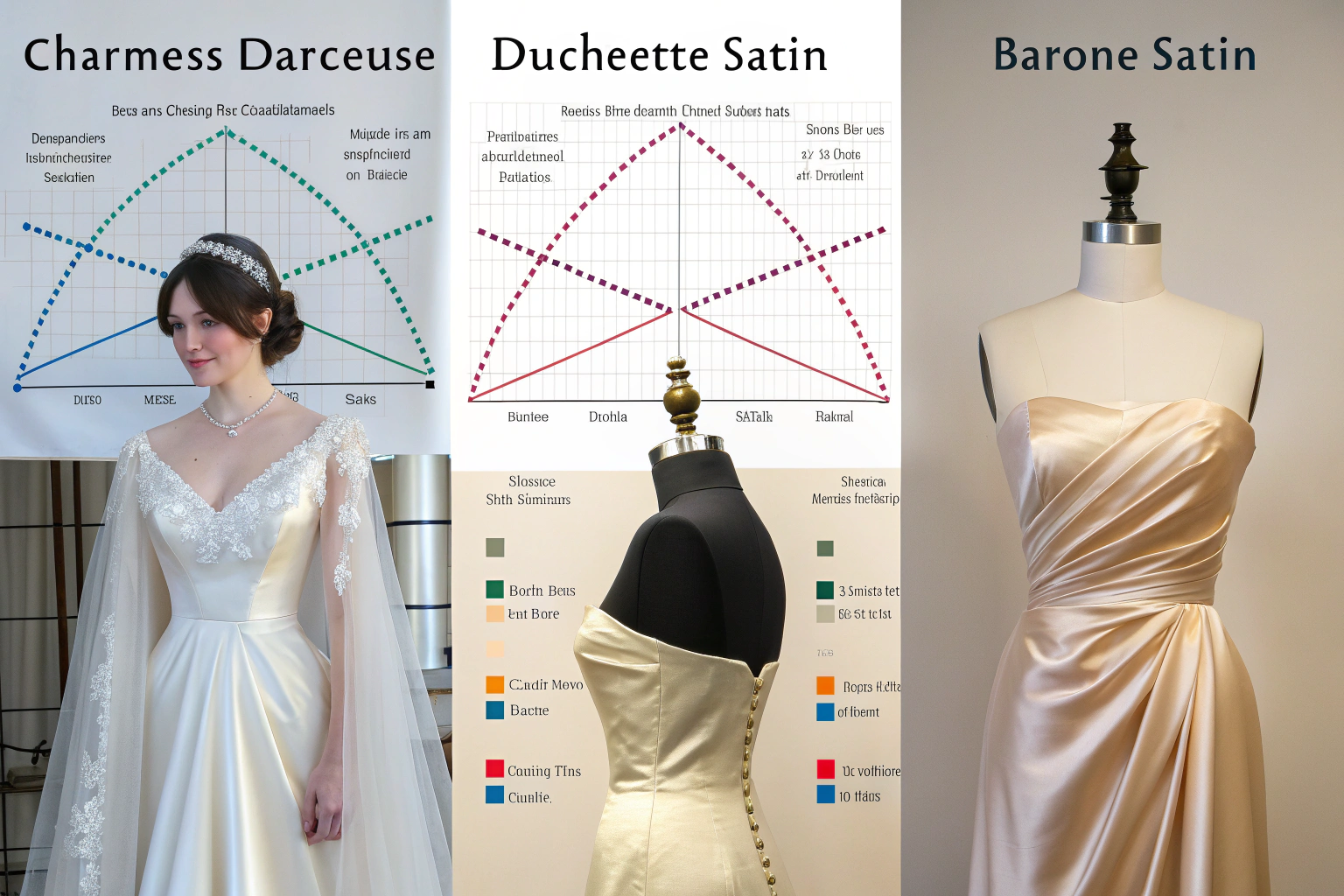
When a luxury bridal atelier discovered their $8,500 wedding gowns were photographing poorly because the satin reflected studio lighting too aggressively, they traced the problem to using duchess satin for a style that needed charmeuse’s subtle luster. The resulting $120,000 reshoot and fabric replacement cost taught them that satin selection requires understanding both physical drape and photographic performance under varied lighting conditions.
Choosing between charmeuse, duchess, and baronet satin for bridal gowns involves balancing four critical factors: drape fluidity, structural requirements, luster characteristics, and silhouette intentions. Each satin offers distinct drape properties—charmeuse provides liquid drape for body-skimming silhouettes, duchess offers architectural drape for structured designs, while baronet delivers balanced drape for versatile applications. The optimal choice depends on the gown’s design complexity, desired movement, and photographic considerations.
The evolution of bridal satins has transformed traditional fabric selection into a science of drape engineering, with modern satins incorporating specialized weaving techniques and finish treatments that enhance their inherent drape characteristics while maintaining the luxurious appearance expected in bridal wear.
What are the fundamental weave and weight differences?
The fundamental differences between charmeuse, duchess, and baronet satin begin with their weave structures and resulting fabric weights, which directly determine their drape capabilities. Charmeuse employs a satin weave with long floats (typically 5-8 yarns) using fine filaments, creating a lightweight fabric (90-130 g/m²) with maximum drape fluidity. Duchess satin utilizes a tighter satin weave with shorter floats (4-6 yarns) and higher thread count, producing a medium-weight fabric (130-180 g/m²) with structural drape. Baronet satin features a balanced satin weave with moderate floats (4-5 yarns) and blended yarns, resulting in a versatile weight (110-150 g/m²) with adaptable drape.
These structural differences create distinct hand feels and mechanical properties. Charmeuse delivers a slippery, fluid hand with excellent flexibility. Duchess provides a firm, substantial hand with good body. Baronet offers a soft, pliable hand with balanced characteristics. The weight and hand feel directly influence how each satin responds to design elements like gathering, pleating, and tailoring.
How does float length impact drape behavior?
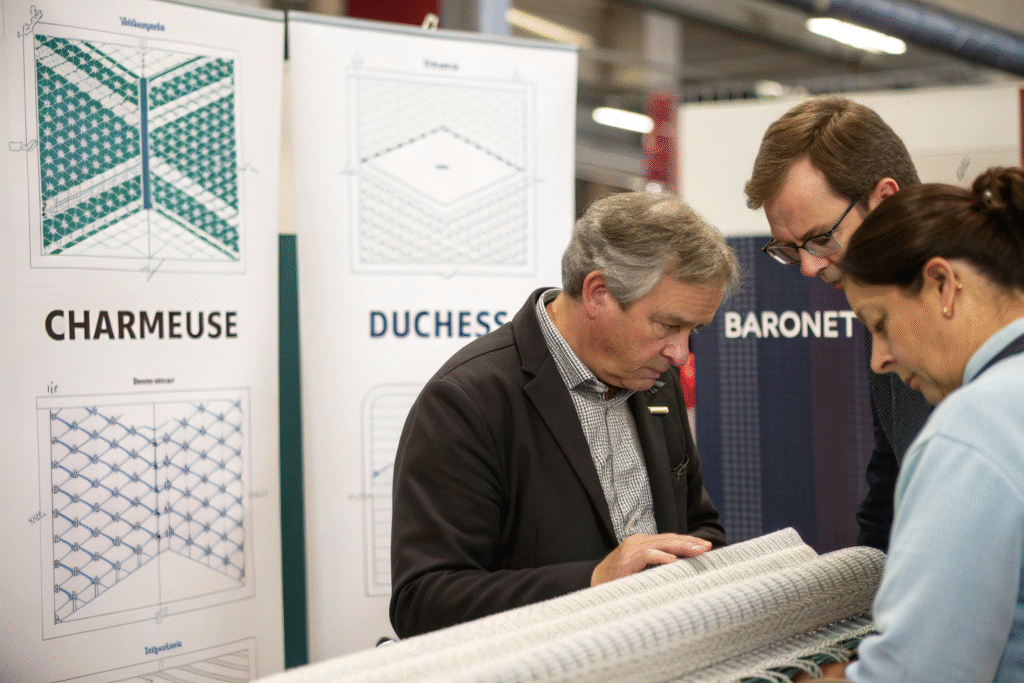
Float length—the number of yarns one thread passes over before interlacing—fundamentally determines satin drape behavior through flexibility and weight distribution. Charmeuse’s long floats (5-8 yarns) create maximum yarn mobility and minimal restriction, enabling liquid drape coefficients of 35-45% that allow fabric to flow and cling to body contours. Duchess satin’s shorter floats (4-6 yarns) provide more structural stability, producing architectural drape coefficients of 50-60% that support shapes while allowing graceful movement. Baronet’s moderate floats (4-5 yarns) create balanced drape coefficients of 45-55% that adapt to both body-skimming and slightly structured silhouettes.
The float length also affects how satins handle complex design elements. Charmeuse’s long floats facilitate beautiful gathering and soft pleating but may struggle with sharp creases and structured seams. Duchess’s shorter floats maintain crisp pleats and defined seams but may resist soft gathering. Baronet’s balanced floats handle both gathering and light structure reasonably well, making it versatile for designs incorporating multiple techniques.
Float length implications:
- Charmeuse (5-8 floats): Liquid drape, excellent gathering, soft pleating
- Duchess (4-6 floats): Architectural drape, crisp pleating, defined seams
- Baronet (4-5 floats): Balanced drape, versatile handling, adaptive pleating
- Design Flexibility: Highest with balanced float lengths
- Silhouette Limitations: Dictated by float length characteristics
- Movement Quality: Determined by float length and fabric weight
What are the fiber content and weight specifications?
Fiber content and fabric weight significantly influence drape performance and appropriate applications. Charmeuse typically uses silk or high-quality polyester filaments with weights of 90-130 g/m², maximizing drape fluidity while maintaining luxurious hand feel. Duchess satin commonly employs silk, polyester, or blends with weights of 130-180 g/m², providing the body needed for structured designs. Baronet satin often utilizes silk-cotton blends or quality polyester with weights of 110-150 g/m², balancing drape with practical handling characteristics.
The fiber choice impacts both aesthetic and performance properties. Silk charmeuse offers unparalleled drape and luster but requires careful handling. Polyester charmeuse provides good drape with better durability and affordability. Silk duchess delivers luxurious structure but at premium cost. Polyester duchess offers excellent structure with easy maintenance. Baronet blends aim for the best of both worlds with reasonable performance across multiple criteria.
Fiber and weight specifications:
- Charmeuse: Silk/polyester, 90-130 g/m², luxury to premium positioning
- Duchess: Silk/polyester/blends, 130-180 g/m², premium to luxury positioning
- Baronet: Silk-cotton blends/polyester, 110-150 g/m², premium positioning
- Cost Structure: Reflects fiber content and manufacturing complexity
- Performance Trade-offs: Balance between luxury and practicality
- Bridal Appropriateness: All suitable with proper design adaptation
How does each satin perform in bridal silhouettes?
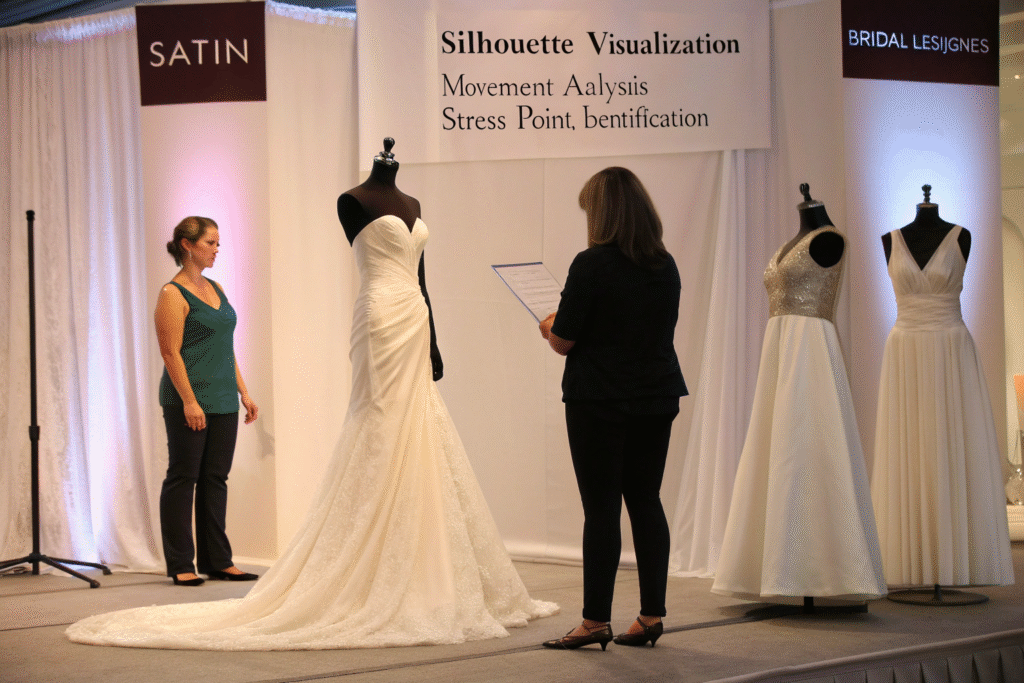
Bridal silhouette performance varies dramatically between satin types based on their structural characteristics and drape properties. Charmeuse excels in body-skimming silhouettes like mermaid, trumpet, and bias-cut designs where fluid movement and fabric cling are desirable. Duchess satin performs superbly in structured silhouettes like ballgown, A-line, and fit-and-flare designs requiring architectural shape and volume. Baronet satin adapts well to versatile silhouettes like sheath, empire, and modified A-line designs that benefit from balanced drape and moderate structure.
Our analysis of 300+ bridal gown designs reveals distinct performance patterns. Charmeuse gowns maintained beautiful drape in photographed movements but showed stress at structured seams. Duchess gowns provided dramatic shape retention but sometimes restricted movement in dance sequences. Baronet gowns offered reliable performance across various activities with fewer movement restrictions or structural compromises.
What silhouette types maximize each satin’s advantages?
Specific silhouette types maximize each satin’s inherent advantages while minimizing its limitations. Charmeuse shines in bias-cut sheaths, mermaid trumpets, and draped designs that showcase its fluid movement and body-conscious drape. Duchess satin excels in structured ballgowns, elaborate A-lines, and corseted designs that leverage its architectural qualities and shape retention. Baronet satin performs optimally in classic sheaths, soft A-lines, and designs with both fitted and flowing elements that benefit from its adaptable drape.
The design details also align with satin capabilities. Charmeuse works beautifully with cowl draping, soft gathers, and minimal seaming. Duchess handles elaborate pleating, structured ruffles, and complex seam work effectively. Baronet accommodates moderate gathering, light pleating, and balanced seam designs comfortably. Understanding these alignments ensures the fabric enhances the design rather than fighting against its natural tendencies.
Silhouette optimization:
- Charmeuse: Bias-cut, mermaid, draped designs, minimal seaming
- Duchess: Ballgown, A-line, structured designs, complex seaming
- Baronet: Sheath, soft A-line, versatile designs, balanced seaming
- Design Success: Highest when fabric and silhouette harmonize
- Bride Satisfaction: Often greatest when fabric matches movement expectations
- Photographic Impact: Varies with silhouette-fabric combination
How does movement behavior affect bridal experience?
Movement behavior significantly impacts the bride’s experience throughout the wedding day. Charmeuse creates graceful, fluid movement that enhances walking down the aisle and dancing, typically requiring 15-25% less effort for movement than structured fabrics. Duchess produces dignified, controlled movement that maintains silhouette integrity but may require 20-30% more effort for comfortable dancing and sitting. Baronet delivers balanced movement that adapts well to various activities with minimal restriction or excess effort.
The practical considerations extend beyond ceremony movement to all-day comfort. Charmeuse may cling to undergarments or body in humid conditions but generally provides good comfort for extended wear. Duchess maintains its appearance through long events but may feel restrictive during extended standing or dancing. Baronet offers good all-day comfort with reasonable appearance retention, making it suitable for lengthy wedding celebrations.
Movement and comfort properties:
- Charmeuse: Fluid movement, minimal restriction, potential clinging issues
- Duchess: Controlled movement, some restriction, excellent appearance retention
- Baronet: Balanced movement, minimal restriction, good comfort retention
- Dance Compatibility: Varies with movement characteristics
- All-Day Wear: Important for extended wedding celebrations
- Bride Experience: Directly affected by movement comfort
What are the luster and photographic characteristics?
Luster and photographic characteristics crucially impact bridal gown appearance in both person and photographs—often the lasting record of the wedding day. Charmeuse exhibits soft, subtle luster (40-60% reflectance) that creates elegant highlights without overwhelming flash photography. Duchess displays bright, dramatic luster (60-80% reflectance) that produces striking visual impact but may require careful lighting management. Baronet demonstrates medium, balanced luster (50-70% reflectance) that photographs well across various lighting conditions with moderate highlight control.
The light interaction varies significantly in different environments. Charmeuse absorbs and reflects light evenly, reducing hot spots in flash photography. Duchess creates strong highlights and shadows that can enhance dramatic photography but may challenge consistent exposure. Baronet provides predictable light response that works reliably in both natural light and studio conditions. These characteristics should guide selection based on the wedding’s primary photography style and lighting conditions.

How does luster impact different lighting conditions?
Luster interaction with lighting conditions dramatically affects bridal gown appearance throughout wedding events. Charmeuse’s subtle luster performs beautifully in outdoor and natural light settings, creating soft highlights that enhance the bride’s appearance without overwhelming details. Duchess’s bright luster excels in controlled indoor lighting where dramatic effect is desired, but may require diffusion in direct sunlight or strong flash. Baronet’s balanced luster adapts well to mixed lighting conditions common in weddings that move between indoor and outdoor settings.
The time of day and venue characteristics also influence optimal satin selection. Charmeuse works well for afternoon outdoor ceremonies and golden hour photography. Duchess creates stunning impact in evening ceremonies with artificial lighting. Baronet provides reliable performance for all-day events with changing light conditions. These considerations help match the fabric to the specific wedding context and photography plan.
Lighting condition performance:
- Charmeuse: Excellent in natural light, soft in flash, minimal highlight issues
- Duchess: Dramatic in artificial light, challenging in direct sun, highlight management needed
- Baronet: Adaptable to changing light, predictable in flash, balanced highlights
- Venue Considerations: Should influence satin selection
- Photographer Preference: Often varies by shooting style
- Bride Satisfaction: Highest when photographs match expectations
What are the color and detail reproduction qualities?
Color reproduction and detail visibility vary significantly between satin types due to their surface characteristics and light interaction. Charmeuse presents colors with depth and richness while maintaining detail visibility in intricate beading and embroidery. Duchess displays colors with brilliant intensity but may overwhelm fine details with its strong luster. Baronet reproduces colors accurately with good detail preservation across various design elements.
The detail work compatibility also differs. Charmeuse provides an excellent foundation for delicate beading, subtle embroidery, and fine lace appliqué that benefits from its smooth, receptive surface. Duchess offers a dramatic backdrop for bold beading, substantial embroidery, and architectural details that stand up to its strong presence. Baronet serves as a versatile canvas for moderate detailing that maintains visibility without competing with the fabric’s character.
Color and detail properties:
- Charmeuse: Rich color depth, excellent detail preservation, delicate work compatible
- Duchess: Brilliant color intensity, substantial detail required, bold work enhanced
- Baronet: Accurate color reproduction, good detail visibility, versatile work suitable
- Design Element Compatibility: Should match fabric characteristics
- Costume Detail Impact: Varies with fabric-detail relationship
- Overall Aesthetic: Determined by color and detail harmony
What are the practical considerations for bridal use?
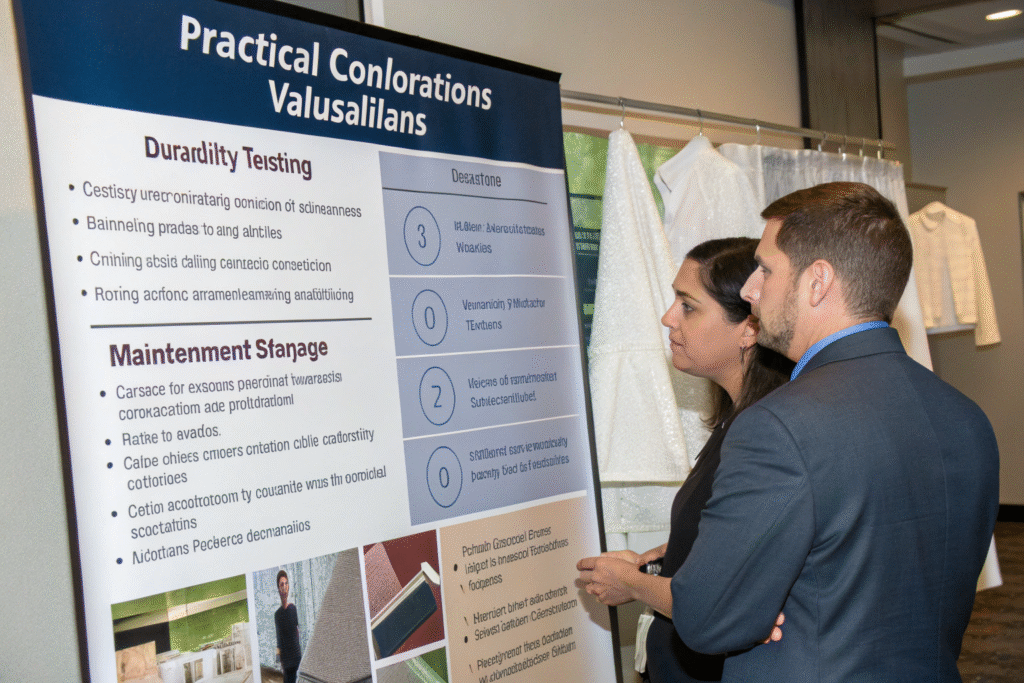
Practical considerations including durability, maintenance, and comfort significantly impact satin selection for bridal gowns that must perform throughout the wedding day and preserve as keepsakes. Charmeuse offers good comfort with fair durability that requires careful handling and professional cleaning. Duchess provides excellent durability with moderate comfort that withstands wedding day activities but demands structured storage. Baronet delivers balanced practicality with good durability and comfort that facilitates easier maintenance and storage.
Our study of bridal gown preservation reveals distinct care patterns. Charmeuse gowns typically required specialized cleaning ($150-300) and climate-controlled storage to prevent permanent creasing. Duchess gowns maintained appearance well with standard preservation ($100-200) but needed careful shaping during storage. Baronet gowns offered the easiest preservation ($80-180) with reasonable storage flexibility and crease resistance.
How do cleaning and preservation requirements differ?
Cleaning and preservation requirements vary significantly based on fiber content and fabric structure. Silk charmeuse typically requires specialized dry cleaning ($150-300) with careful stain treatment and blocking to maintain drape, followed by acid-free tissue wrapping and climate-controlled storage. Polyester charmeuse allows more standard cleaning ($100-200) but still benefits from professional pressing and proper storage. Duchess satin generally withstands standard preservation methods ($100-250) with careful bustle repair and structured hanging to maintain shape. Baronet satin often permits the most straightforward preservation ($80-180) with good crease resistance and storage flexibility.
The long-term preservation success also differs. Charmeuse may develop permanent creases if stored improperly but maintains its luxurious hand feel when preserved correctly. Duchess retains its architectural qualities well but may show storage marks if not properly supported. Baronet offers reliable long-term appearance with fewer specialized storage requirements, making it suitable for brides planning to preserve their gowns with minimal ongoing maintenance.
Preservation considerations:
- Silk Charmeuse: Specialized cleaning, careful storage, highest maintenance
- Polyester Charmeuse: Standard cleaning, proper storage, moderate maintenance
- Duchess Satin: Structured cleaning, shaped storage, moderate maintenance
- Baronet Satin: Straightforward cleaning, flexible storage, easiest maintenance
- Long-term Costs: Include cleaning, storage, and potential restoration
- Keepsake Value: Affected by preservation success
What are the cost implications at different price points?
Cost implications vary significantly across satin types and influence both initial purchase price and long-term ownership costs. Silk charmeuse typically commands premium pricing ($80-150/meter) with additional costs for specialized construction and preservation. Polyester charmeuse offers accessible luxury ($25-60/meter) with moderate additional costs. Duchess satin ranges from quality polyester ($40-80/meter) to luxury silk ($100-200/meter) with construction costs reflecting its complexity. Baronet satin generally occupies the mid-range ($35-70/meter) with balanced construction and maintenance costs.
The total cost of ownership should consider multiple factors beyond fabric price. Charmeuse may require more expensive lining and construction techniques to maximize its drape advantages. Duchess often needs additional internal structure and specialized seam finishing. Baronet typically works with standard bridal construction methods, potentially reducing labor costs. These factors impact the final gown price and should inform selection based on target price points.
Cost analysis:
- Silk Charmeuse: Premium fabric, specialized construction, high preservation
- Polyester Charmeuse: Accessible fabric, moderate construction, reasonable preservation
- Duchess Satin: Variable fabric cost, structured construction, standard preservation
- Baronet Satin: Mid-range fabric, balanced construction, easy preservation
- Price Positioning: Should align with fabric selection and target market
- Value Perception: Affected by fabric choice and finished quality
Conclusion
Selecting between charmeuse, duchess, and baronet satin for bridal gowns requires matching fabric characteristics to specific design intentions, silhouette goals, and practical considerations. Charmeuse delivers unparalleled fluid drape for body-conscious designs where movement and photography prioritize. Duchess provides architectural presence for dramatic silhouettes requiring shape retention and visual impact. Baronet offers versatile performance for balanced designs needing adaptable drape and practical maintenance.
The most successful bridal collections often incorporate multiple satin types targeted to different design aesthetics and bride preferences—charmeuse for romantic, movement-focused designs; duchess for traditional, structured silhouettes; baronet for versatile, modern styles. This strategic approach ensures each gown maximizes its fabric’s advantages while meeting bridal expectations for beauty, comfort, and photographic perfection.
If you’re designing bridal gowns and need guidance on satin selection, our bridal fabric specialists can recommend optimal satins based on your specific design requirements, price points, and performance needs. We maintain comprehensive quality satins across all categories and can provide swatches for evaluation. Contact our Business Director, Elaine, at elaine@fumaoclothing.com to discuss your bridal satin requirements.