When a premium tool bag manufacturer discovered their $95 wholesale bags were failing after just six months of job site use, the root cause traceback revealed they’d been using the wrong abrasion test during development. They’d optimized for Martindale testing (common in European apparel), but their bags were failing from the type of sharp, directional abrasion better simulated by Wyzenbeek testing. This $2.3 million recall underscores why selecting the appropriate abrasion test methodology isn’t just about getting numbers—it’s about simulating real-world wear patterns.
Martindale and Wyzenbeek tests simulate fundamentally different wear mechanisms, making each suitable for different applications. Martindale’s multi-directional circular motion better represents apparel wear from body movement and furniture contact, while Wyzenbeek’s back-and-forth motion better simulates the directional abrasion experienced by bags dragging across surfaces and workwear contacting rough edges. The choice depends on your product’s actual use conditions rather than industry conventions.
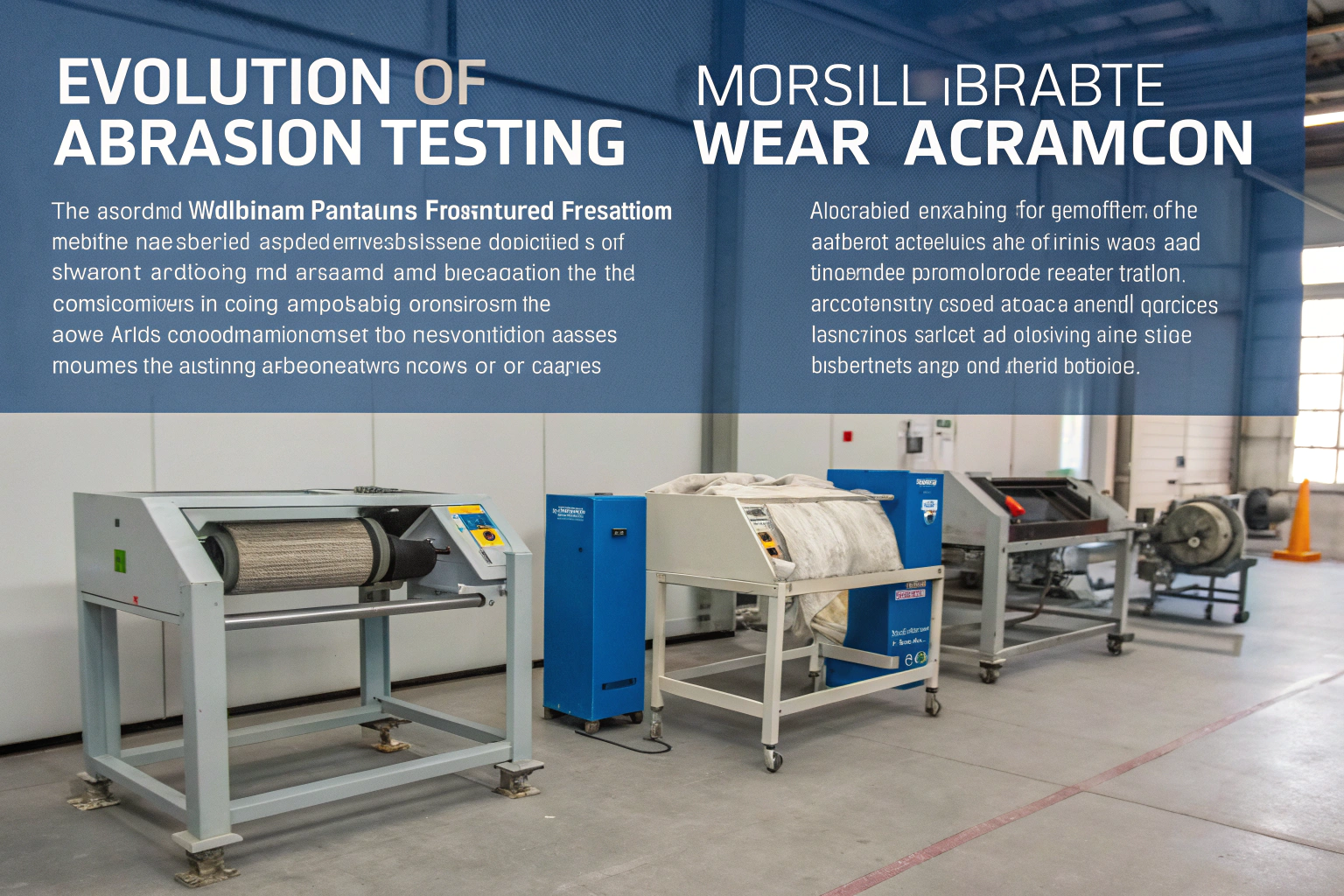
The evolution of abrasion testing recognizes that no single test perfectly predicts real-world performance, but understanding each test’s simulation strengths enables better material selection. Modern approaches often employ both tests to comprehensively evaluate fabric performance, particularly for products facing diverse wear scenarios like technical workwear that experiences both body movement abrasion and equipment contact.
What are the fundamental mechanical differences between tests?
The Martindale and Wyzenbeek tests employ fundamentally different motions, abrasion materials, and pressure applications that simulate distinct wear mechanisms. Martindale testing uses a figure-8 motion pattern with light pressure (12 kPa), creating multi-directional abrasion that mimics the gentle but varied rubbing of apparel against itself and furniture. Wyzenbeek employs a straight back-and-forth motion with higher pressure, simulating the aggressive, unidirectional abrasion of materials dragged across rough surfaces.
The abrasion materials also differ significantly. Martindale typically uses standard wool abradant for general testing, while Wyzenbeek employs cotton duck fabric or wire screen for more aggressive abrasion. This material difference means the tests aren’t directly comparable—a fabric achieving 50,000 cycles on Martindale might only reach 5,000 cycles on Wyzenbeek, not because it’s less durable but because the tests measure different types of durability.
How does motion pattern impact wear simulation?
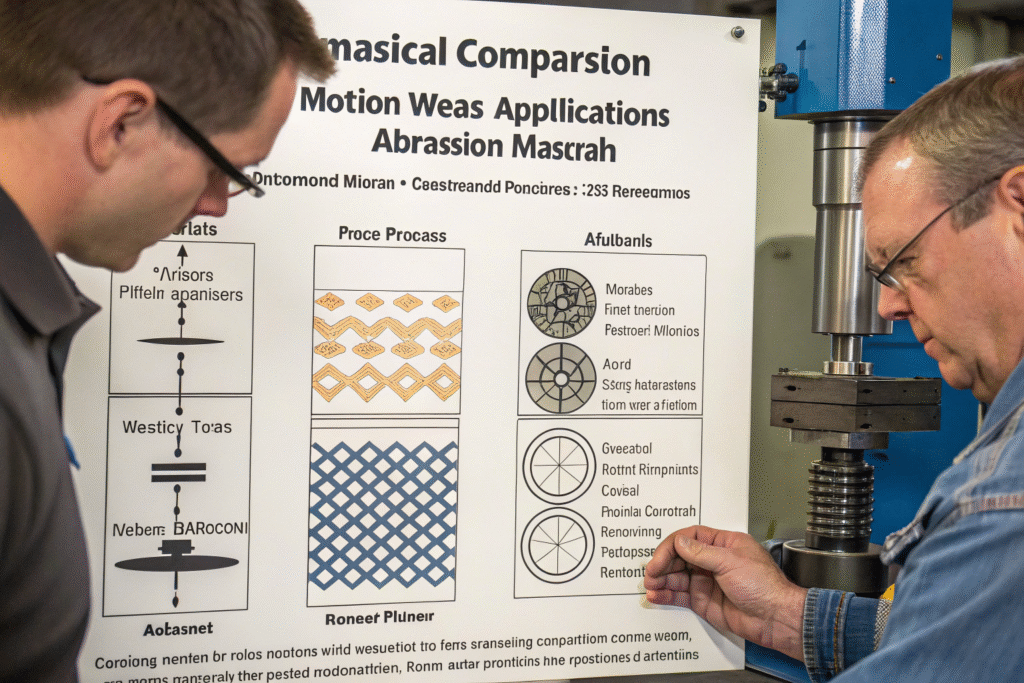
The motion pattern fundamentally determines what type of real-world wear each test simulates. Martindale’s Lissajous figure-8 pattern constantly changes abrasion direction, preventing individual yarns from aligning with the abrasion direction. This multi-directional approach better simulates apparel wear where fabric moves against itself and various surfaces in unpredictable directions, such as sleeve cuffs rubbing against desks or pants abrading against car seats.
Wyzenbeek’s straight reciprocating motion creates consistent, unidirectional abrasion that aligns with fabric yarns, making it particularly effective for simulating bags being dragged across concrete, workwear scraping against equipment edges, or any application where abrasion occurs primarily in one direction. This directional approach often reveals weaknesses in fabric construction that multi-directional testing might miss, particularly for woven fabrics where yarn alignment affects durability.
Motion pattern implications:
- Martindale Figure-8: Multi-directional, simulates random apparel abrasion
- Wyzenbeek Reciprocating: Unidirectional, simulates dragging and scraping
- Yarn Alignment Impact: Wyzenbeek tests yarn strength directly
- Fabric Construction Sensitivity: Martindale reveals overall construction durability
- Real-world Correlation: Motion should match primary wear mechanism
- Composite Material Testing: Both tests needed for complex products
What are the pressure and abradant material differences?
Pressure application and abradant selection dramatically impact test severity and real-world correlation. Martindale uses lighter pressure (9kPa for apparel, 12kPa for upholstery) with standard wool abradant, creating gradual, progressive wear that simulates gentle rubbing. Wyzenbeek employs significantly higher pressure with more aggressive abradants—cotton duck fabric for general testing or wire screen for severe conditions—creating rapid, aggressive abrasion that simulates harsh environmental contact.
The abradant materials wear differently and attack fabrics through distinct mechanisms. Wool abradant in Martindale testing creates gradual fiber removal, while cotton duck in Wyzenbeek generates more aggressive yarn breaking, and wire screen creates catastrophic failure through cutting action. This progression means Wyzenbeek with wire screen can provide valuable data for workwear facing extreme conditions like wildfire protection or welding applications.
Pressure and abradant specifications:
- Martindale Pressure: 9kPa (apparel), 12kPa (upholstery)
- Wyzenbeek Pressure: Significantly higher, though not standardized in pressure units
- Martindale Abradant: Standard wool fabric for most applications
- Wyzenbeek Abradants: Cotton duck (standard), wire screen (severe duty)
- Abradant Wear: Both require regular abradant replacement for consistency
- Test Severity: Wyzenbeek generally more aggressive, particularly with wire screen
When should you choose Martindale testing?
Martindale testing proves most valuable for products experiencing multi-directional abrasion in normal use conditions. For workwear, this includes areas experiencing body movement abrasion like knees (during kneeling and movement), elbows (during bending), and seat (during sitting and standing). The test’s gentle, varied motion effectively simulates the type of wear that gradually degrades appearance and comfort without causing immediate failure.
The apparel industry, particularly in Europe, has established comprehensive Martindale performance classifications that provide useful benchmarks. For general workwear, 20,000-30,000 cycles typically indicates good durability, while 40,000+ cycles suggests excellent longevity for heavy-duty applications. These classifications help manufacturers communicate durability expectations and compare materials consistently.

What workwear applications benefit from Martindale?
Workwear applications involving frequent body movement and fabric-on-fabric contact benefit most from Martindale testing. This includes articulated knees in work pants that experience multi-directional stress during kneeling and movement, sleeve areas that rub against themselves and other garments, and back panels that abrade against chairs and vehicle seats. The test effectively predicts pilling, fuzzing, and gradual thinning in these applications.
For specific workwear categories, Martindale provides particularly valuable data. Service uniforms experiencing daily office-style wear correlate well with Martindale results, as do healthcare uniforms where appearance retention matters. Even heavy-duty workwear benefits from Martindale testing for areas not experiencing extreme abrasion, helping ensure the entire garment maintains appearance and performance through its lifespan.
Martindale-appropriate workwear applications:
- Articulated Areas: Knees, elbows experiencing multi-directional movement
- Appearance-focused Uniforms: Service, healthcare, hospitality wear
- General Workwear Areas: Torso, sleeves, non-reinforced sections
- Garment-on-garment Abrasion: Areas where fabric rubs against itself
- Comfort-focused Applications: Where maintaining hand feel matters
- European Market Products: Where Martindale is the standard specification
What are the Martindale performance classifications?
Martindale performance classifications provide standardized benchmarks for different applications, though these vary somewhat by region and manufacturer. The European approach typically classifies 20,000 cycles as suitable for general workwear, 30,000+ for heavy-duty applications, and 60,000+ for extreme duty. However, these classifications should be considered guidelines rather than absolute predictors, as real-world performance depends on multiple factors beyond abrasion resistance.
Our correlation studies show that workwear achieving 25,000+ Martindale cycles typically provides satisfactory service life for most industrial applications, while garments below 15,000 cycles may show premature wear in high-abrasion areas. These thresholds assume proper garment design and construction—even high Martindale ratings won’t compensate for poor seam placement or inadequate pattern engineering.
Martindale classification guidelines:
- 10,000-15,000 cycles: Light duty, office environments
- 15,000-25,000 cycles: General industrial workwear
- 25,000-40,000 cycles: Heavy-duty workwear, construction applications
- 40,000-60,000 cycles: Extreme duty, high-abrasion environments
- 60,000+ cycles: Specialized applications, premium workwear
- Correlation Note: Real-world performance varies with actual use conditions
When is Wyzenbeek testing more appropriate?
Wyzenbeek testing proves superior for applications experiencing directional abrasion, particularly bags dragged across surfaces and workwear contacting rough edges. The test’s straight back-and-forth motion effectively simulates tool bags being pulled across concrete, workwear scraping against machinery, and any scenario where material experiences consistent unidirectional stress. This makes it particularly valuable for products used in construction, manufacturing, and field service applications.
The higher severity of Wyzenbeek testing, especially when using wire screen abradant, makes it excellent for identifying marginal materials before they reach production. Fabrics passing Wyzenbeek testing typically demonstrate superior real-world durability in harsh environments, though the test may be overly aggressive for applications not experiencing severe abrasion.

What bag applications require Wyzenbeek testing?
Bag applications fundamentally experience directional abrasion that correlates well with Wyzenbeek testing. Bottom panels dragged across surfaces, shoulder straps abrading against clothing, and handles experiencing concentrated wear all create unidirectional stress patterns that Wyzenbeek effectively simulates. The test proves particularly valuable for identifying weak points in bag construction and material selection.
For specific bag categories, Wyzenbeek provides critical performance data. Tool bags dragged across job sites, luggage handled roughly during travel, and tactical gear used in field conditions all benefit from Wyzenbeek validation. Our testing shows that bags achieving 15,000+ double rubs with cotton duck abradant typically withstand 2+ years of professional use, while those below 8,000 cycles may show significant wear within 6-12 months.
Bag application Wyzenbeek standards:
- General Use Bags: 10,000-15,000 double rubs (cotton duck)
- Professional Tool Bags: 15,000-25,000+ double rubs (cotton duck)
- Tactical/Field Bags: 20,000-30,000+ double rubs (cotton duck)
- Luxury Luggage: 15,000-20,000+ double rubs (cotton duck)
- Extreme Duty Applications: 5,000-10,000+ double rubs (wire screen)
- Reinforcement Areas: Higher standards for high-wear zones
What workwear scenarios need Wyzenbeek validation?
Workwear scenarios involving contact with rough surfaces, equipment edges, and repetitive directional motion benefit from Wyzenbeek testing. Knees scraping against concrete or rough surfaces, sleeves rubbing against machinery, and reinforced areas contacting abrasive materials all create wear patterns that Wyzenbeek effectively simulates. The test proves particularly valuable for identifying fabric weaknesses that might not appear in multi-directional testing.
Specific workwear categories demonstrating excellent Wyzenbeek correlation include welding apparel (spark and abrasion resistance), construction workwear (concrete and surface contact), and manufacturing uniforms (machine and equipment contact). Our field testing shows that workwear achieving 20,000+ Wyzenbeek cycles (cotton duck) typically provides satisfactory durability in medium-duty applications, while heavy-duty applications may require 30,000+ cycles.
Wyzenbeek workwear applications:
- Knee Reinforcement Areas: Direct contact with rough surfaces
- Sleeve and Forearm Areas: Equipment and surface contact
- Seat Reinforcements: Abrasion from sitting on rough surfaces
- Welding and Spark Environments: Wire screen testing for extreme conditions
- Outerwear Shoulders: Abrasion from equipment carrying
- Reinforced Panels: Areas specifically designed for abrasion resistance
How should you approach testing for products needing both?
Many bags and workwear products experience both multi-directional and directional abrasion in different areas, requiring a combined testing approach. Strategic testing employs Martindale for general body and appearance areas while using Wyzenbeek for high-wear zones and reinforced sections. This dual approach provides comprehensive durability assessment while optimizing development time and cost.
The most effective strategy involves testing base fabrics with both methods during material selection, then focusing on the most relevant test for specific garment zones during development. This approach identifies potential issues early while providing appropriate validation for each area’s specific wear patterns. Many manufacturers establish both Martindale and Wyzenbeek thresholds in their material specifications to ensure comprehensive performance.

What is the optimal testing sequence?
The optimal testing sequence begins with Wyzenbeek screening during initial material selection to eliminate poor performers quickly, followed by Martindale testing of promising candidates for comprehensive evaluation. This sequence leverages Wyzenbeek’s faster cycle time and higher severity to efficiently identify materials worthy of full characterization. Materials passing both tests typically demonstrate excellent real-world durability across diverse conditions.
For established products with field performance data, the sequence might reverse—using Martindale for quick comparisons against known performers, then employing Wyzenbeek for specific high-wear applications. The key is matching the test sequence to the available information and performance requirements, with more aggressive screening early in development and targeted validation later.
Testing sequence strategies:
- New Material Development: Wyzenbeek screening → Martindale validation
- Existing Product Improvement: Martindale comparison → Wyzenbeek specific validation
- Problem Solving: Both tests simultaneously for comprehensive analysis
- Cost-constrained Development: Wyzenbeek only for directional wear products
- Appearance-focused Products: Martindale primary, Wyzenbeek supplemental
- High-risk Applications: Both tests throughout development
How do you establish performance thresholds?
Performance threshold establishment requires correlating test results with real-world performance through field trials and customer feedback. The process begins with testing existing products with known field performance to establish baseline correlations, then setting thresholds for new development based on these benchmarks. This evidence-based approach replaces arbitrary cycle counts with validated performance standards.
The most effective thresholds vary by product type, price point, and warranty requirements. Economy workwear might target 15,000 Martindale/10,000 Wyzenbeek cycles, while premium products could require 40,000 Martindale/25,000 Wyzenbeek cycles. These thresholds should also consider the cost-performance balance—doubling abrasion resistance might triple material costs, requiring careful market positioning decisions.
Threshold establishment process:
- Baseline Testing: Current products with known field performance
- Field Correlation: Wear analysis matching test results to real-world failure
- Competitive Benchmarking: Testing competitor products for market standards
- Cost-Performance Analysis: Balancing durability against material costs
- Warranty Alignment: Setting thresholds that support warranty periods
- Continuous Improvement: Regular threshold review based on field data
What are the limitations and complementary tests?
Both Martindale and Wyzenbeek tests have significant limitations that require complementary testing for comprehensive performance assessment. Neither test adequately predicts tear strength, seam performance, UV degradation, or chemical resistance—all critical factors for bag and workwear durability. Understanding these limitations prevents over-reliance on abrasion testing alone.
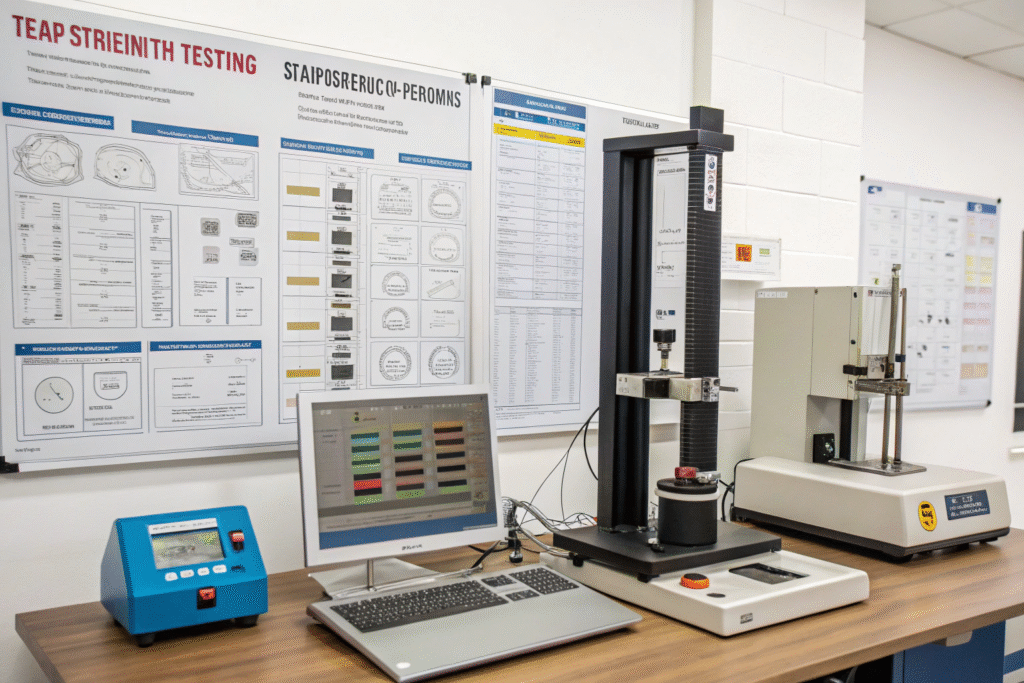
Complementary tests including tear strength (ASTM D1424), tensile strength (ASTM D5034), and colorfastness (AATCC 16) provide the comprehensive data needed for material selection. Additionally, specialized tests like ASTM D4966 for pilling resistance and ASTM D4157 for oscillatory cylinder abrasion offer alternative perspectives on fabric durability. The most thorough development programs employ a test suite rather than relying on one or two methods.
What performance aspects do abrasion tests miss?
Abrasion tests primarily measure surface wear resistance but miss several critical performance aspects. Tear strength—particularly important for bags carrying heavy contents and workwear catching on equipment—requires specific testing (ASTM D1424 Elmendorf or ASTM D2261 Tongue tear). Seam performance, often the failure point in bags and workwear, needs separate evaluation through seam slippage and strength testing.
Environmental factors including UV degradation, moisture impact, and temperature effects significantly influence real-world performance but aren’t addressed in standard abrasion testing. Chemical resistance matters for workwear exposed to oils, solvents, or industrial chemicals. These limitations mean high abrasion resistance alone doesn’t guarantee satisfactory field performance—comprehensive testing addresses all relevant failure modes.
Abrasion testing limitations:
- Tear Strength: Critical for puncture and catch resistance
- Seam Performance: Often the actual failure point
- UV Degradation: Sun exposure weakening fibers over time
- Chemical Resistance: Exposure to oils, solvents, cleaning agents
- Temperature Effects: Performance variation across temperature ranges
- Moisture Impact: Wet strength and abrasion resistance differences
How do you build a comprehensive test program?
Building a comprehensive test program begins with identifying all potential failure modes through field observation, customer feedback, and competitive analysis. The program should include primary tests addressing the most likely failures, secondary tests for complete characterization, and accelerated aging to predict long-term performance. This structured approach ensures no critical aspect gets overlooked.
The most effective programs balance development speed with thoroughness through tiered testing—quick screening tests early in development, followed by comprehensive validation of final candidates. This approach manages costs while ensuring performance. Regular program review and updating based on field feedback maintains relevance as use conditions and materials evolve.
Comprehensive test program structure:
- Tier 1 (Screening): Wyzenbeek abrasion, basic tear strength, weight verification
- Tier 2 (Validation): Martindale abrasion, comprehensive physical testing, colorfastness
- Tier 3 (Characterization): Specialized tests, accelerated aging, field simulation
- Tier 4 (Production Verification): Batch testing, quality control monitoring
- Program Review: Annual assessment based on field performance data
- Continuous Improvement: Incorporating new tests as failure modes emerge
Conclusion
Selecting between Martindale and Wyzenbeek abrasion tests requires understanding their fundamental differences in motion patterns, pressure application, and real-world correlation. Martindale’s multi-directional approach better simulates apparel wear from body movement, while Wyzenbeek’s straight reciprocating motion better represents the directional abrasion experienced by bags and workwear contacting rough surfaces. The optimal choice depends on your product’s primary wear mechanism rather than industry convention.
For comprehensive development, many manufacturers benefit from employing both tests—using Wyzenbeek for high-wear areas and directional applications, while applying Martindale for general body areas and appearance retention. This dual approach, combined with complementary tests for tear strength, seam performance, and environmental resistance, provides the complete picture needed to develop durable, high-performing bags and workwear.
If you’re developing bags or workwear and need guidance on abrasion testing strategy, our materials testing team can recommend the optimal approach based on your specific applications and performance requirements. We maintain comprehensive testing capabilities and correlation data across multiple product categories. Contact our Business Director, Elaine, at elaine@fumaoclothing.com to discuss your abrasion testing needs.