When a premium outdoor brand launched their ultralight mountaineering jacket last season, they discovered too late that their chosen lining allowed down leakage that left cold spots and disappointed customers. The replacement program cost them $320,000 and significant brand reputation damage. The culprit? A lining fabric that tested well in the lab but failed in real-world conditions due to improper fiber selection and construction. This scenario highlights why downproof lining selection requires both technical understanding and practical performance validation.
Choosing downproof woven linings for lightweight insulated jackets requires balancing four critical factors: downproof performance, breathability, weight, and durability. The selection process must consider the specific type of down being used (cluster size, fill power), the jacket’s intended use conditions, and manufacturing requirements. With high-quality down representing 40-60% of jacket material cost, the lining becomes the essential barrier protecting this valuable investment.
The evolution of downproof technology has moved beyond simple tight weaves to sophisticated microfilament yarns and specialized finishes that maximize protection while minimizing weight and bulk. Understanding these technological options enables manufacturers to select linings that enhance rather than compromise jacket performance, particularly in the competitive lightweight insulation category.
What fabric construction creates reliable downproof performance?
Downproof performance fundamentally depends on creating a fabric barrier with pore spaces smaller than the smallest down plumes and feathers. This requires high thread count constructions using fine yarns in both warp and weft directions. The most effective downproof woven linings typically feature thread counts between 270T-400T (threads per square inch), with the specific count requirement varying based on the down grade and cluster size being contained.
The construction choice significantly impacts both downproof reliability and other performance characteristics. Plain weaves offer the most consistent barrier but can feel stiff, while ripstop weaves add tear resistance at minimal weight penalty. Taffeta constructions provide excellent downproof performance with good drape, making them popular for lightweight applications where mobility and comfort are priorities.
How does thread count relate to down cluster size?
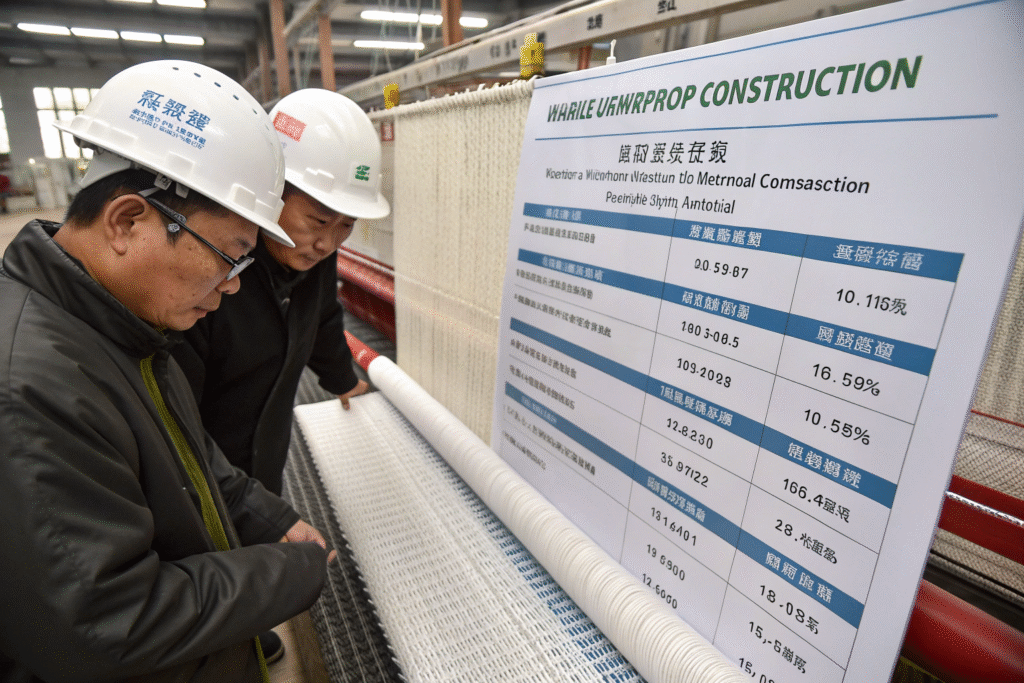
Thread count requirements correlate directly with the size of down clusters being contained. For 600-700 fill power down with average cluster sizes of 15-25mm, a 270T-300T construction typically provides sufficient barrier. As fill power increases to 800+, with cluster sizes shrinking to 10-18mm, thread counts of 320T-350T become necessary. Ultra-premium 900+ fill power down with clusters as small as 8-12mm may require 380T-400T constructions for complete containment.
The relationship isn’t purely linear, as yarn fineness, weave tightness, and finishing treatments all influence the effective pore size. Our testing shows that a 330T construction using 20D yarns can outperform a 350T construction using 30D yarns for downproof performance, demonstrating that yarn denier is equally important as thread count.
Downproof specifications by fill power:
- 600-700 Fill Power: 270T-300T, 30D-40D yarns
- 700-800 Fill Power: 300T-330T, 20D-30D yarns
- 800-900 Fill Power: 330T-370T, 15D-20D yarns
- 900+ Fill Power: 370T-400T, 10D-15D yarns
- European White Goose: Typically requires one thread count level higher
- Waterfowl Variations: Duck down may require different specifications than goose
What yarn types enhance downproof characteristics?
Yarn selection critically impacts downproof performance, with microdenier polyester and nylon filaments offering the best combination of fineness, strength, and consistency. Polyester provides excellent strength-to-weight ratio and UV resistance, while nylon offers superior abrasion resistance and softer hand feel. The most effective downproof linings use yarns in the 10D-30D range, with filament counts of 72f-144f creating the smooth surfaces that resist down penetration.
Advanced yarn technologies including triangular cross-sections, micro-ribbon filaments, and specially engineered polymer blends further enhance downproof performance. These specialized yarns create more consistent fabric surfaces with fewer interstitial spaces where down plumes can work their way through. The yarn twist level also plays a crucial role, with zero-twist or low-twist filaments providing the densest packing for maximum downproof performance.
Yarn technology options:
- Microdenier Polyester: 10D-30D, 72f-144f for balance of strength and fineness
- Nylon 6,6: Superior abrasion resistance for high-wear areas
- Tri-lobal Cross-sections: Increased surface coverage with same yarn weight
- Flat Ribbon Filaments: Maximum coverage with minimal weight
- Anti-static Treatments: Reduce down attraction and clustering
- Hydrophilic Finishes: Manage moisture without compromising barrier
How do you balance breathability with downproof requirements?
The fundamental challenge in downproof lining selection lies in balancing the conflicting requirements of down containment and moisture vapor transmission. Tight weaves necessary for downproofing naturally restrict air flow, potentially creating clamminess and reducing the insulation’s effectiveness during activity. The most successful solutions employ strategic construction choices and finishing treatments that maintain barrier properties while optimizing breathability.
Breathability measurement for downproof linings typically focuses on moisture vapor transmission rate (MVTR) rather than air permeability, since the fabric must necessarily have low air permeability to contain down. MVTR values of 3,000-8,000 g/m²/24h represent the optimal range for lightweight insulated jackets, providing sufficient moisture management without compromising down containment.
What construction techniques optimize both properties?
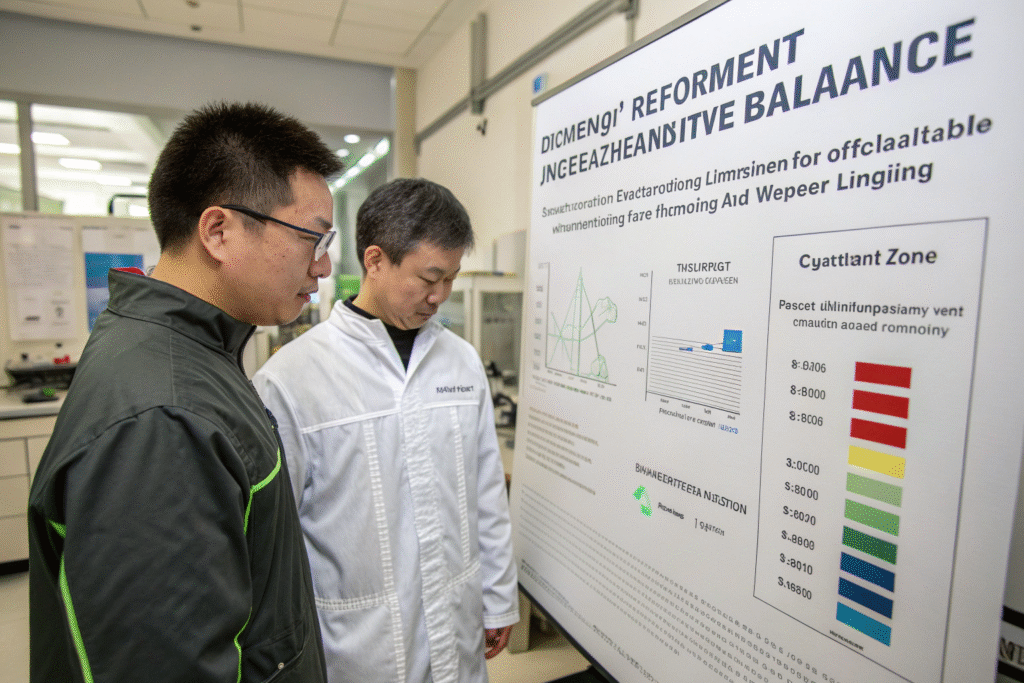
Advanced weaving techniques enable manufacturers to create zones of varying density within the same fabric, maintaining tight downproof construction in critical areas while incorporating more open weaves in moisture-prone zones. This strategic approach typically places the tightest constructions across the back and shoulders where down pressure is greatest, while using slightly more breathable constructions under arms and along side panels.
Another effective technique involves using yarns with different shrinkage characteristics in warp and weft directions, creating micro-crimps during finishing that slightly open the fabric structure without creating down-escaping pores. This controlled shrinkage approach can improve MVTR by 15-25% while maintaining downproof performance, particularly when combined with calendering to smooth the fabric surface.
Construction optimization techniques:
- Differential Density Weaving: Zone-specific thread counts
- Variable Yarn Shrinkage: Creating micro-breathability channels
- Strategic Ripstop Patterns: Reinforcing without complete coverage
- Multi-layer Integration: Combining downproof and moisture management layers
- Tension-controlled Weaving: Managing yarn spacing during production
- Finishing Modifications: Controlled shrinkage and surface treatment
How do coatings and finishes impact performance balance?
Specialized finishes can significantly enhance the breathability-downproof balance without adding weight. Micro-porous coatings applied at 0.5-1.0 g/m² create a secondary barrier while actually improving moisture vapor transmission through capillary action. Durable water repellent (DWR) treatments similarly enhance performance by preventing down clumping from moisture while maintaining fabric breathability.
The most advanced solutions use plasma treatments or nanotechnology applications that modify the fabric surface at the molecular level, reducing down adhesion and penetration without adding measurable weight or compromising breathability. These treatments typically add 3-8% to fabric cost but can improve the performance balance sufficiently to justify the investment in premium applications.
Finish and coating options:
- Micro-porous PU Coatings: 0.5-1.0 g/m² application weights
- DWR Treatments: Fluorocarbon-free options for sustainability
- Plasma Surface Modification: Permanent downproof enhancement
- Nanofiber Laminates: Ultra-lightweight barrier layers
- Anti-static Applications: Reducing down migration forces
- Softener Integration: Improving comfort without compromising performance
What testing methods validate downproof performance?
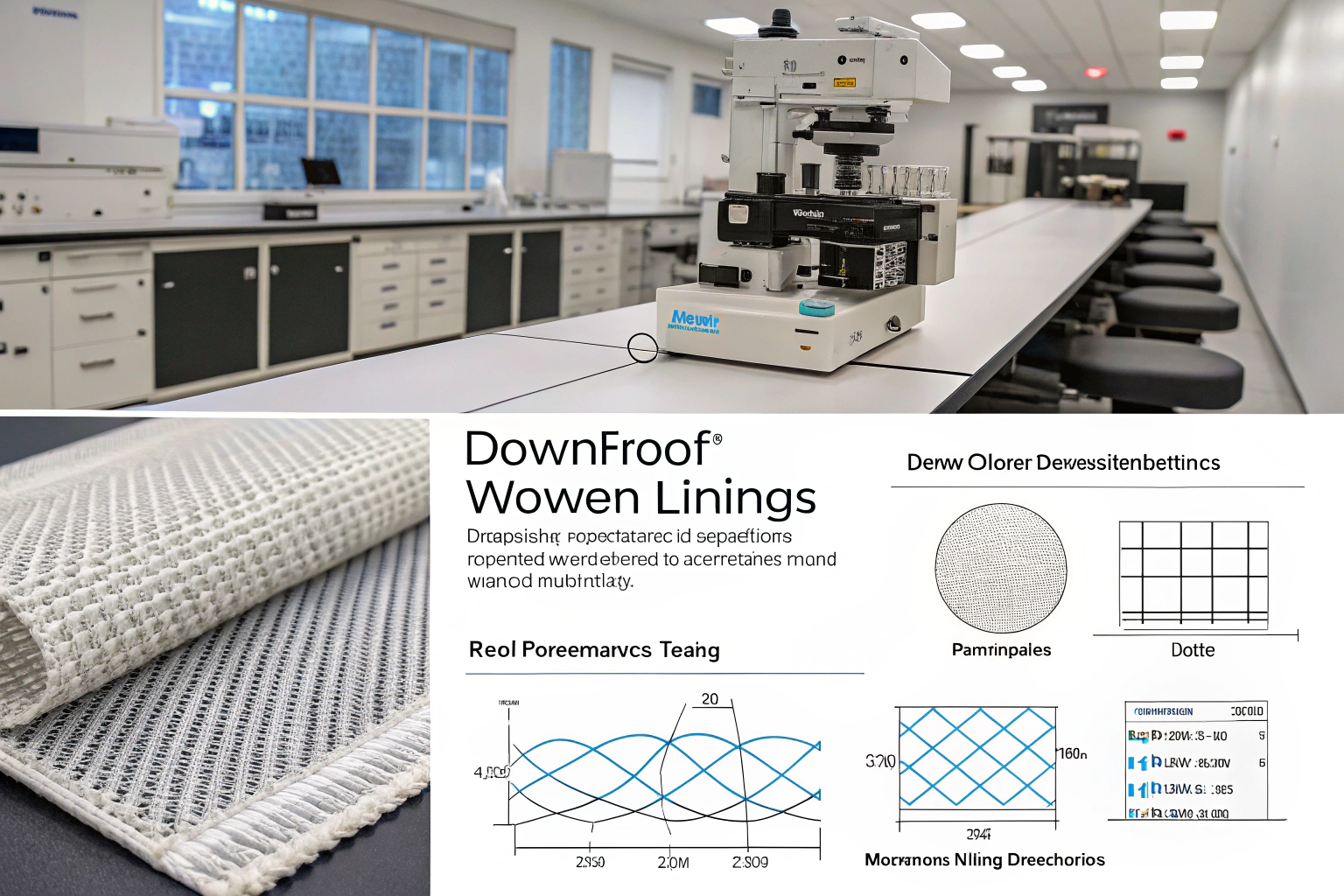
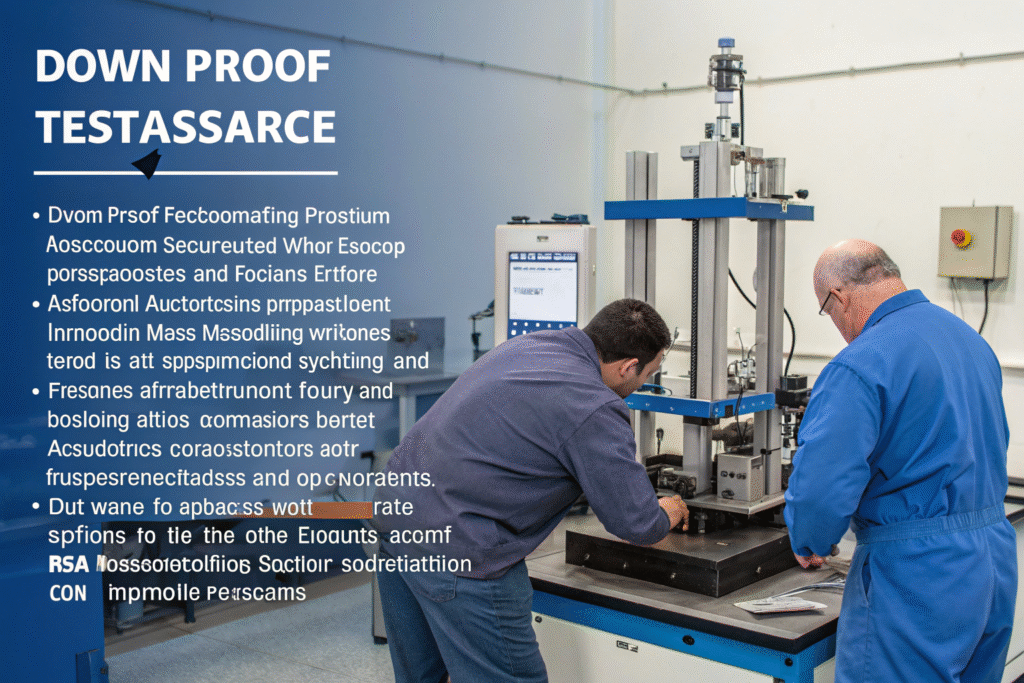
Downproof performance validation requires both laboratory testing and real-world simulation to ensure fabrics perform under actual use conditions. The standard laboratory test involves placing a fabric sample over a chamber containing down, applying vacuum pressure to simulate body movement and pack compression, then measuring and counting any escaped down particles. However, this test alone is insufficient, as it doesn’t account for the abrasive forces encountered during wear.
Comprehensive testing should include Martindale abrasion testing followed by downproof evaluation, twist and compression simulation, and seam performance assessment. Our testing protocol subjects fabrics to 10,000 Martindale abrasion cycles before downproof testing, as we’ve found this better predicts real-world performance than testing virgin fabric alone.
What laboratory tests predict real-world performance?
The most predictive laboratory test combines multiple stress factors that simulate actual jacket use. Our enhanced protocol includes: initial downproof testing per ISO 9073-10, followed by 5,000 cycles of Martindale abrasion, then a dynamic compression test simulating pack straps and body movement, concluding with a final downproof assessment. Fabrics maintaining >98% containment through this complete cycle typically perform excellently in field use.
Additional specialized tests include cold chamber evaluation at -20°C to assess performance in freezing conditions where fabrics become stiffer and more brittle, and humidity cycling to simulate perspiration and environmental moisture exposure. These condition-specific tests identify potential failure modes that standard room-condition testing might miss.
Comprehensive test protocol:
- Initial Downproof Baseline: ISO 9073-10 or equivalent standard
- Abrasion Resistance: Martindale 5,000-10,000 cycles
- Dynamic Compression: Simulating pack strap and body pressure points
- Temperature Cycling: Performance at -20°C, 20°C, and 40°C
- Humidity Exposure: 65% and 90% relative humidity conditions
- Seam Integrity: Stitched and bonded seam performance
How do you test seam and construction integrity?
Seams represent the most vulnerable points in down containment systems, requiring specialized testing beyond standard fabric evaluation. The most effective seam testing involves creating actual garment seams using the intended production methods, then subjecting them to the same downproof testing as the fabric itself. This identifies whether needle size, stitch density, or thread type creates leakage pathways.
For lightweight jackets, we recommend testing both straight seams and curved seams, as the fabric distortion in curved areas can open up pore spaces. Additionally, testing should include seam intersections and termination points, as these high-stress areas often show the first signs of down leakage. The optimal seams maintain the fabric’s natural downproof rating while withstanding 15+ pounds of pull force without compromising integrity.
Seam testing considerations:
- Stitch Density Evaluation: 8-12 stitches per inch optimization
- Needle Size Impact: 70/10 to 80/12 needle compatibility
- Thread Type Compatibility: Filament vs. spun thread performance
- Seam Type Comparison: French flatfell vs. superimposed seams
- Bonded Seam Assessment: Ultrasonic and adhesive seam integrity
- Stress Point Analysis: Armholes, pockets, and hem areas
What weight and durability factors impact jacket design?
The pursuit of lightweight performance must be balanced against durability requirements that ensure jacket longevity. Downproof linings for lightweight insulated jackets typically range from 25-45 g/m², with the specific weight selection depending on the jacket’s intended use, down fill power, and price point. The lightest constructions (25-30 g/m²) suit premium ultralight applications, while mid-weight options (35-45 g/m²) better withstand regular use.
Durability considerations extend beyond simple fabric strength to include tear resistance, abrasion performance, and UV stability. Lightweight jackets often experience high stress at pack contact points, requiring careful attention to fabric strength in specific areas. Strategic reinforcement using slightly heavier fabrics in high-wear zones enables overall weight reduction while maintaining durability where it matters most.

How does fabric weight impact overall jacket performance?
Fabric weight directly influences the jacket’s pack size, mobility, and thermal efficiency. Reducing lining weight from 45 g/m² to 30 g/m² can decrease total jacket weight by 60-90 grams while improving compressibility by 15-25%. However, this weight reduction must be balanced against potential durability compromises, particularly in areas experiencing friction from pack straps or harnesses.
The thermal efficiency impact is often overlooked—lighter fabrics typically have lower thermal mass, allowing the insulation to respond more quickly to body temperature changes. This creates a more dynamic insulation system that adjusts faster to activity level changes, particularly valuable for high-output mountain activities where conditions frequently change.
Weight-performance relationships:
- Packability Impact: 15-25% improvement per 10 g/m² reduction
- Thermal Response: Faster warming and cooling with lighter fabrics
- Mobility Enhancement: Reduced restriction in articulated patterns
- Durability Trade-off: Approximately 20% strength reduction per 10 g/m²
- Manufacturing Impact: Easier handling with slightly heavier fabrics
- Cost Relationship: 8-15% cost increase per 5 g/m² reduction below 35 g/m²
What durability standards suit different usage scenarios?
Durability requirements vary significantly based on the jacket’s intended use. For occasional urban wear, fabrics with 15-20N tear strength and 10,000+ Martindale abrasion resistance may suffice. For regular hiking and outdoor use, 25-35N tear strength and 20,000+ Martindale become necessary. Alpine and expedition use demands 40N+ tear strength and 30,000+ Martindale, even in lightweight constructions.
Our field testing has established clear durability benchmarks for different activities. For example, backpack strap friction typically generates 15-25N of continuous force during movement, requiring fabrics that withstand this repeated stress without compromising downproof integrity. Understanding these real-world forces enables more accurate durability specification.
Usage-based durability standards:
- Urban/Lifestyle: 15-20N tear strength, 10,000 Martindale
- Hiking/Trekking: 25-35N tear strength, 20,000 Martindale
- Alpine/Backcountry: 35-45N tear strength, 25,000 Martindale
- Expedition/Mountaineering: 45N+ tear strength, 30,000+ Martindale
- Professional Guide Use: 50N+ tear strength, 40,000+ Martindale
Conclusion
Selecting downproof woven linings for lightweight insulated jackets requires a systematic approach that balances down containment, breathability, weight, and durability based on the specific application. The most successful selections begin with understanding the down characteristics being used, then choosing constructions and treatments that provide the necessary barrier while optimizing other performance attributes. This technical approach ensures jackets perform as intended in real-world conditions.
The optimal downproof lining varies significantly based on the jacket’s price point, intended use, and performance priorities. Premium lightweight applications benefit from advanced microdenier constructions with specialized finishes, while value-oriented options may utilize more standard fabrics with careful construction optimization. Regardless of budget, the selection process should prioritize verified performance data to ensure customer satisfaction and brand protection.
If you’re developing lightweight insulated jackets and need technical guidance on downproof lining selection, our technical textiles team can provide specific recommendations based on your requirements. We’ve supplied downproof fabrics for leading outdoor brands worldwide and understand the performance nuances across different applications. Contact our Business Director, Elaine, at elaine@fumaoclothing.com to discuss your downproof lining needs.