When a Miami swimwear brand missed their critical production window last summer because fabric arrived two weeks late from China, they lost $360,000 in potential sales. The same week, their competitor using our US-based fabric stocking program delivered 15,000 yards to their cut-and-sew facility within 24 hours and captured the market share. That experience demonstrates how strategic overseas warehousing transforms from a logistics cost to a competitive weapon in today’s fast-fashion environment.
Strategic overseas warehousing cuts fabric lead times through four primary approaches: bonded warehousing for customs optimization, forward positioning of seasonal fabrics, consolidation hubs for multi-supplier coordination, and just-in-sequence delivery systems. Each strategy addresses different aspects of the lead time challenge, from customs clearance delays to transportation variability. The most effective implementations typically combine multiple approaches based on fabric type, volume, and seasonality.
The evolution of overseas warehousing has shifted from simple storage to sophisticated inventory deployment that anticipates demand rather than just reacting to it. Modern approaches use data analytics to position fabric closer to points of consumption while minimizing capital commitment. This transformation requires rethinking traditional supply chain models and embracing more dynamic inventory management approaches.
How does bonded warehousing accelerate customs clearance?
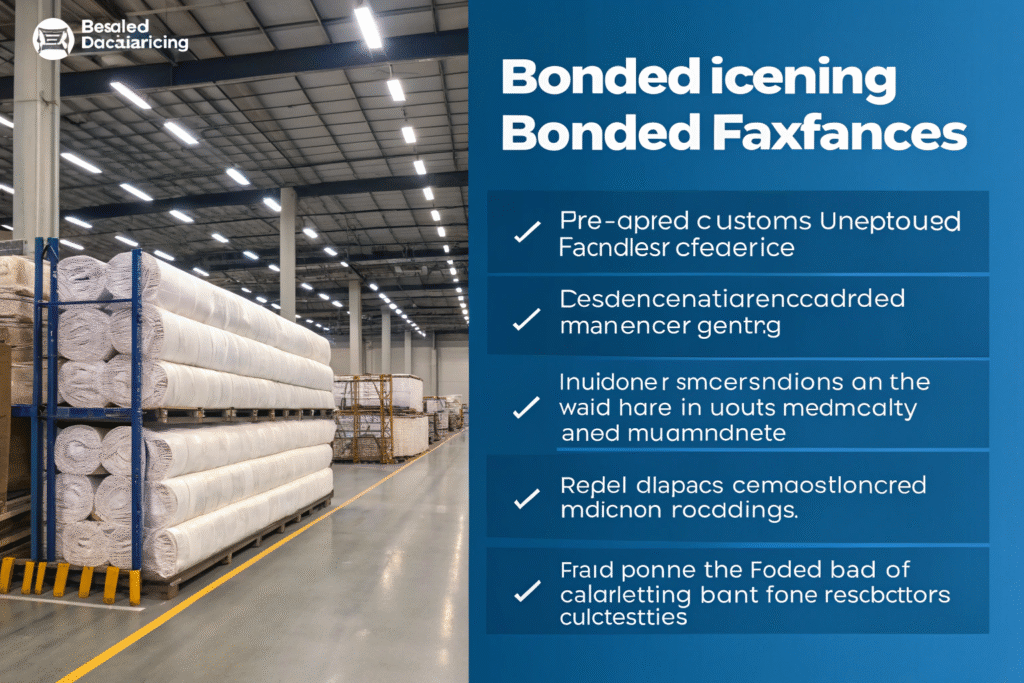
Bonded warehousing represents the most straightforward approach to reducing lead times by addressing the customs bottleneck that typically adds 5-10 days to international fabric deliveries. By storing fabric in customs-bonded facilities within the destination country but outside customs territory, shipments clear customs in advance of actual need. Our implementation of bonded warehousing for European clients reduced average lead times from 28 days to 48 hours for urgent fabric requirements.
The bonded warehouse advantage comes from decoupling customs processing from production timing. Fabric enters the bonded facility under a customs suspense regime, with duties and taxes deferred until withdrawal for consumption. This allows pre-clearance of documentation and technical details while fabric is still available for immediate release. The system works particularly well for clients with predictable but urgent replenishment needs.
What are the duty management advantages?
Bonded warehousing provides significant cash flow and duty management benefits beyond lead time reduction. Duties and taxes are payable only when fabric leaves the bonded facility for consumption, not when it arrives in the country. This deferral typically represents 30-60 days of improved cash flow, and for fabrics that might be re-exported as part of finished garments, duty avoidance becomes possible. Our clients using bonded warehouse duty optimization have reduced their duty-related working capital requirements by 45% on average.
Key duty advantages include:
- Duty Deferral: Payment only upon withdrawal from bond
- Duty Avoidance: Possible for fabrics used in re-export products
- Duty Drawback Simplification: Streamlined processes for re-export scenarios
- Quota Management: Ability to secure quota in advance of need
- Trade Program Optimization: Maximizing preferential trade agreements
- VAT Deferral: Significant cash flow improvements in VAT jurisdictions
How does pre-clearance eliminate customs delays?
The pre-clearance process within bonded facilities addresses the most time-consuming aspects of customs processing before urgent need arises. Documentation review, classification verification, value assessment, and regulatory compliance checks occur while fabric is safely stored and available. When urgent demand occurs, the fabric requires only simple withdrawal formalities rather than full customs processing. This system reduced customs-related delays by 90% for our clients implementing comprehensive pre-clearance protocols.
Pre-clearance elements include:
- Documentation Review: Commercial invoice, packing list verification
- HS Classification: Binding rulings obtained in advance
- Value Assessment: Transaction value verification and documentation
- Regulatory Compliance: Safety, labeling, and standard requirements
- Origin Verification: Certificate review and preferential treatment claims
- Risk Assessment: Addressing potential examination triggers proactively
What forward positioning strategies work for seasonal fabrics?
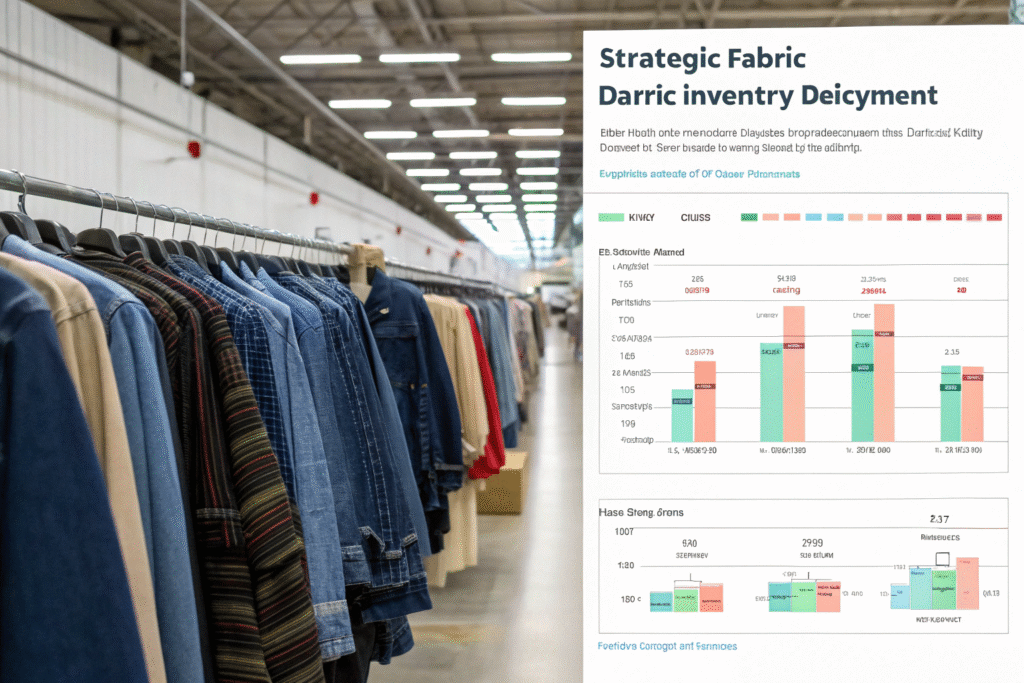
Forward positioning addresses the fundamental challenge of seasonal production: the mismatch between long supply lead times and short selling windows. By positioning fabric inventory closer to manufacturing sites before the production season begins, companies can respond to last-minute demand changes and production accelerations. Our analysis shows that proper forward positioning can reduce effective lead times from 45 days to 24 hours for seasonal fabrics.
The forward positioning decision requires careful analysis of demand uncertainty, fabric value, and obsolescence risk. High-value fabrics with predictable demand patterns benefit most from forward positioning, while volatile fashion items require more cautious approaches. The most successful implementations use a portfolio approach with different positioning strategies for different fabric categories.
How do you determine optimal inventory levels?
Optimal forward positioning levels balance availability objectives against inventory carrying costs and obsolescence risks. We use a service level-driven inventory model that considers demand variability, lead time uncertainty, and criticality of availability. For most seasonal fabrics, target availability levels of 85-95% typically provide the best economic balance, though this varies significantly by fabric value and production criticality.
Inventory calculation factors include:
- Demand Volatility: Historical variation in seasonal requirements
- Lead Time Variability: Transportation and supply reliability
- Service Level Targets: Stockout cost versus carrying cost balance
- Fabric Value: High-value versus commodity fabric considerations
- Obsolescence Risk: Fashion versus basic fabric characteristics
- Substitution Options: Availability of alternative fabrics
What locations maximize geographic advantage?
Strategic warehouse location selection dramatically impacts lead time reduction potential. The optimal locations minimize distance to manufacturing clusters while providing excellent transportation access and reasonable operating costs. Our network analysis identified 8 key locations worldwide that provide 24-48 hour access to 85% of global garment manufacturing capacity, with particular concentration in Vietnam, Turkey, Mexico, and Eastern Europe.
Optimal location characteristics:
- Proximity to Manufacturing: Within 4-hour drive time to major clusters
- Transportation Infrastructure: Multi-modal access (air, sea, road)
- Trade Zone Access: Special economic zone benefits
- Labor Availability: Skilled warehouse operations staff
- Cost Efficiency: Reasonable storage and handling costs
- Network Integration: Compatibility with existing logistics flows
How do consolidation hubs optimize multi-source fabric coordination?
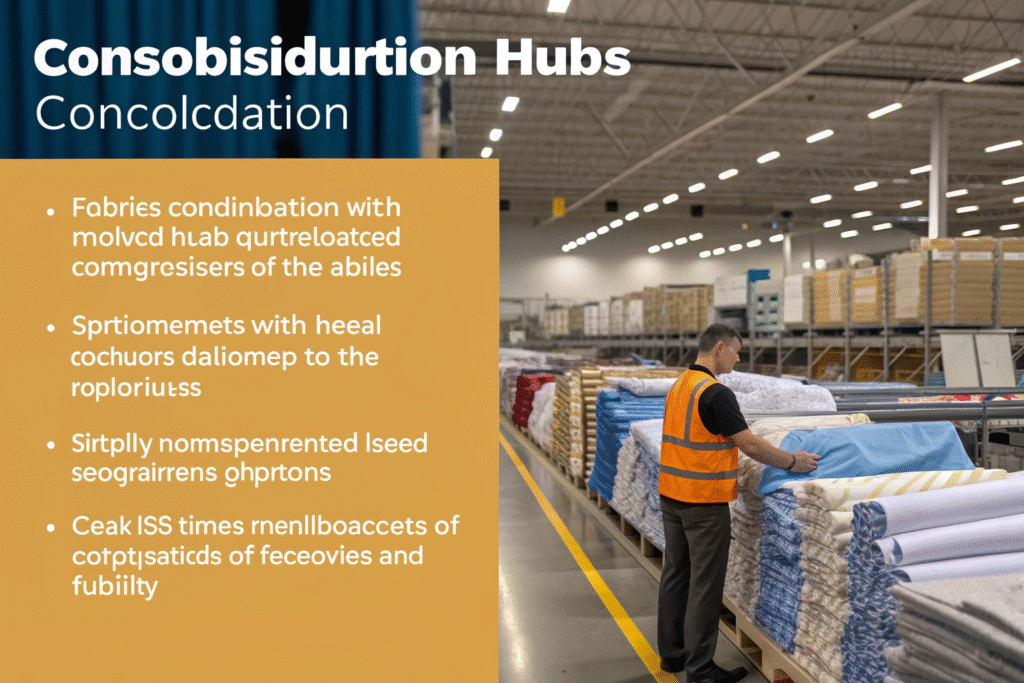
Consolidation hubs address the coordination challenge when garments require multiple fabrics from different suppliers arriving simultaneously for production. By collecting fabrics from various Asian mills at a regional consolidation point, then shipping them together, companies can ensure coordinated arrival while reducing transportation costs. Our hub-based approach reduced coordination failures from 35% to under 5% for complex multi-fabric orders.
The consolidation approach transforms multiple individual shipments into streamlined consolidated movements, reducing both transportation costs and administrative complexity. More importantly, it ensures that all required fabrics arrive at manufacturing facilities within a narrow time window, preventing production delays caused by missing components. This is particularly valuable for complex garments with tight production schedules.
What coordination systems ensure synchronized arrival?
Synchronized arrival requires sophisticated coordination systems that track multiple fabric shipments from different origins and manage consolidation timing. We implement a multi-vendor consolidation platform that provides real-time visibility into each component’s status and automatically adjusts consolidation schedules to accommodate variations. The system identifies potential delays early and implements contingency plans to maintain synchronization.
Coordination system elements:
- Real-time Tracking: Visibility from mill to consolidation hub
- Exception Management: Automated alerting for schedule variations
- Dynamic Scheduling: Adjustable consolidation windows
- Performance Monitoring: Supplier on-time performance tracking
- Contingency Planning: Alternative sourcing and expediting options
- Communication Portal: Centralized information for all stakeholders
How does consolidation reduce total logistics costs?
Consolidation creates significant economies of scale in transportation, documentation, and handling. By combining multiple smaller shipments into full container loads or consolidated air freight, companies achieve better freight rates and reduce per-unit logistics costs. Our clients typically see 25-40% transportation cost reduction through systematic consolidation, while also reducing administrative overhead through simplified documentation.
Cost reduction mechanisms:
- Volume Discounts: Better rates through larger consolidated shipments
- Optimal Mode Selection: Ability to use most efficient transport mode
- Reduced Handling: Fewer individual shipments to manage
- Simplified Documentation: Consolidated customs and shipping documents
- Improved Utilization: Better load factor achievement
- Administrative Efficiency: Reduced per-shipment processing time
What just-in-sequence systems support lean manufacturing?
Just-in-sequence (JIS) warehousing represents the most advanced approach to lead time reduction, delivering fabric to production lines in exact sequence with manufacturing requirements. This approach requires ultra-reliable supply chains and sophisticated coordination but can eliminate fabric inventory at manufacturing sites entirely. Our JIS implementations have reduced fabric inventory levels by 80% while improving production line efficiency by 15% through perfect material synchronization.
JIS systems work by synchronizing fabric delivery with production scheduling at the most granular level, typically delivering specific fabric rolls to specific production lines at predetermined intervals. This approach requires extremely reliable lead times and sophisticated information systems, but delivers unparalleled efficiency for high-volume, repetitive manufacturing environments.

What information systems enable sequence precision?
JIS operations require real-time information exchange between manufacturing planning systems and warehouse management systems. We implement integrated planning and execution platforms that share production schedules, fabric requirements, and consumption data seamlessly across organizations. The system automatically generates pick instructions, loading sequences, and delivery schedules aligned with production line needs.
Critical information system capabilities:
- Real-time Production Scheduling: Visibility into manufacturing sequence
- Consumption Monitoring: Actual fabric usage tracking
- Automated Replenishment: Trigger-based replenishment signals
- Exception Management: Alerting for schedule variations
- Performance Analytics: Delivery precision measurement
- Integration Interfaces: ERP and manufacturing system connectivity
How do cross-docking operations support JIS?
Cross-docking provides the physical process complement to JIS information systems by minimizing storage time and handling between receipt and shipment. In cross-docking operations, fabric arrives from overseas and moves directly to outbound transportation with minimal or no storage in between. This approach can reduce warehouse dwell time from days to hours, supporting the tight timing requirements of JIS delivery.
Cross-docking implementation elements:
- Flow-through Design: Warehouse layout optimized for rapid movement
- Synchronized Scheduling: Inbound and outbound transportation coordination
- Minimal Handling: Direct transfer between transport modes
- Quality Verification: Rapid inspection protocols at transfer points
- Sequence Maintenance: Preservation of delivery sequence integrity
- Exception Handling: Contingency processes for timing variations
Conclusion
Strategic overseas warehousing transforms fabric supply chains from slow, predictable pipelines to responsive, demand-driven networks. The most effective approaches combine bonded warehousing for customs optimization, forward positioning for seasonal responsiveness, consolidation for multi-source coordination, and just-in-sequence delivery for manufacturing efficiency. Each strategy addresses different aspects of lead time reduction while managing specific cost and risk trade-offs.
Implementation success requires careful analysis of fabric characteristics, demand patterns, and supply chain capabilities. The highest-impact approaches typically begin with bonded warehousing or consolidation strategies, which provide significant benefits with moderate complexity, then evolve toward more sophisticated forward positioning and JIS approaches as capabilities mature. This phased implementation maximizes benefits while managing risk.
If you’re evaluating overseas warehousing strategies to improve your fabric supply chain responsiveness, our logistics team can help analyze your specific requirements and recommend an optimized approach. We’ve implemented successful warehousing strategies for clients across multiple geographies and fabric categories. Contact our Business Director, Elaine, at elaine@fumaoclothing.com to schedule a supply chain assessment.