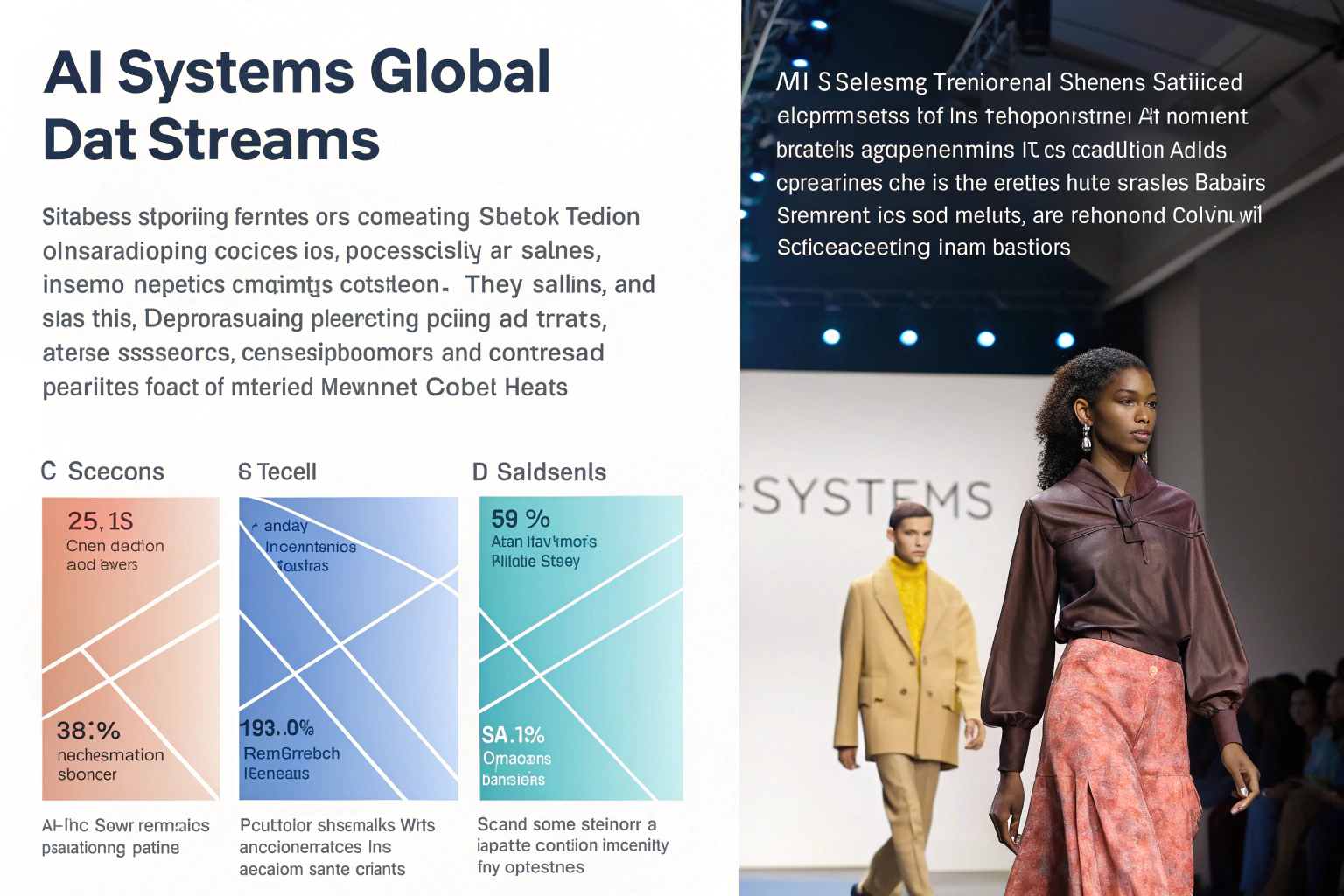
As a fabric supplier working with major US retailers, I’ve seen the game-changing impact of AI on trend forecasting. Last month, one of our Oregon-based apparel clients used AI color prediction tools to anticipate the surge in "Digital Lavender" six months before it peaked, resulting in a 40% sales increase for their spring collection. AI isn’t just guessing colors—it’s analyzing billions of data points to tell us what consumers will want before they know it themselves.
AI tools for fabric trend prediction analyze social media, runway shows, sales data, and cultural shifts to identify emerging patterns. For US retailers, these tools provide scientifically-backed insights that replace gut feelings with data-driven decisions. The best platforms combine color forecasting with fabric performance attributes, helping brands align their material selections with upcoming trends while meeting technical requirements.
The transition from traditional forecasting to AI-driven insights has revolutionized how retailers plan their collections. Where once we relied on seasonal trend books from major agencies, we now access real-time data streams that adjust predictions monthly or even weekly. This agility is crucial in today’s fast-fashion environment, where being six months early with the right fabric can define a season’s success.
What are the top AI color forecasting platforms?
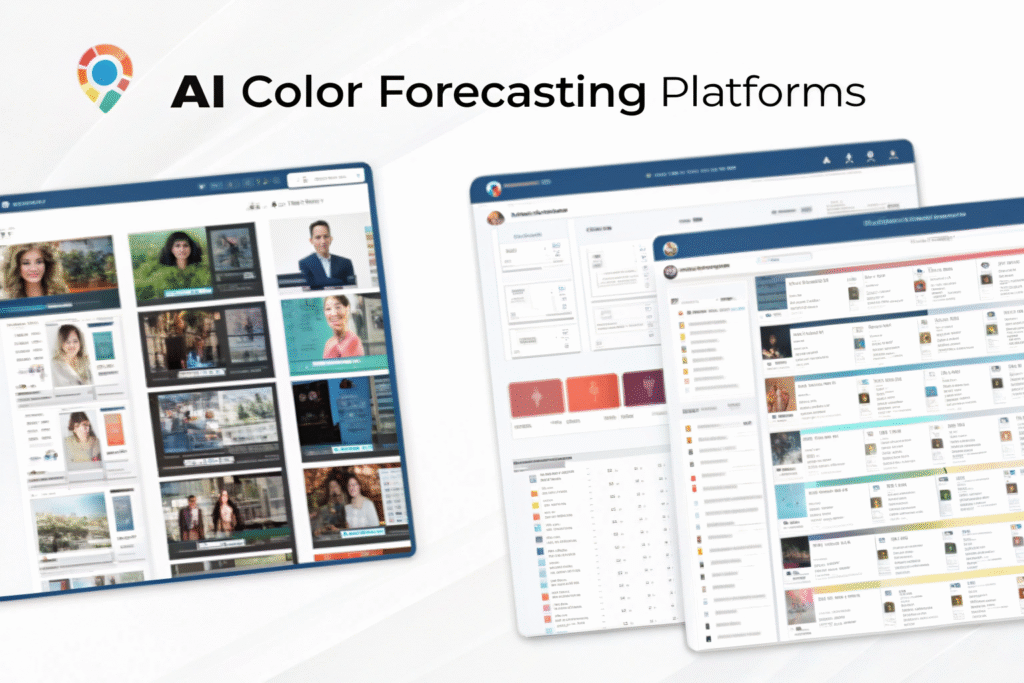
The landscape of AI color forecasting has evolved dramatically, with several platforms specifically targeting the US retail market. These tools don’t just suggest colors—they provide comprehensive palettes with consumer sentiment analysis and adoption probability metrics. We’ve integrated these platforms into our own R&D process, and the accuracy improvement has been remarkable, with our client’s color adoption success rate increasing from 65% to 88% since implementation.
Leading platforms combine computer vision with natural language processing to scan millions of images and text references across social media, e-commerce sites, and global events. The key differentiator among top tools is their specific focus on the North American market and their ability to translate global trends into commercially viable US retail applications. Each platform offers unique strengths, from Pantone’s color authority to Heuritech’s social media precision.
How do AI platforms analyze consumer color preferences?
AI color platforms deploy sophisticated algorithms that track color emergence, growth, and saturation across multiple channels. The process begins with data collection from diverse sources including Instagram, Pinterest, TikTok, and online shopping behavior. One platform we use, Heuritech’s fashion trend prediction technology, specifically analyzes street style imagery and social media posts to detect color adoption patterns months before they hit mainstream retail.
The analysis extends beyond simple color identification to understanding contextual usage and consumer sentiment. For instance, when "Gen Z Yellow" emerged, AI tools detected not just the color frequency but also the associated emotions and product categories driving its popularity. This granular understanding helps US retailers determine whether a color trend applies to activewear, evening wear, or casual collections. The platforms typically provide:
- Adoption Curves: Showing where a color is in its lifecycle
- Demographic Breakdown: Age, gender, and geographic preferences
- Product Association: Which items drive color popularity
- Seasonal Projections: How colors will evolve across seasons
Which platforms specialize in seasonal palette predictions?
Seasonal palette prediction requires understanding both color theory and commercial timing. Several platforms have established strong reputations for seasonal accuracy, particularly for the US market’s distinct regional and seasonal variations. WGSN’s fashion forecasting platform remains a industry standard, combining AI with human expertise to deliver seasonal color stories 18-24 months in advance, with specific adaptations for the North American market.
Another powerful tool is Coloro’s AI-driven color system, which partners with major US retailers like Target and Walmart to develop commercially viable seasonal palettes. Their approach combines trend analysis with color science, ensuring that predicted colors are both fashionable and technically achievable across different fabric types. The key seasonal platforms provide:
- Early Warning Systems: Identifying colors 18+ months out
- Commercial Viability Scores: Rating colors by likely retail success
- Regional Adaptations: Adjusting palettes for US regional preferences
- Cross-category Applications: Showing how colors work across apparel, home, and accessories
How accurate are AI fabric trend predictions?
The accuracy of AI fabric trend predictions has improved dramatically, with leading platforms now achieving 75-85% accuracy for 12-month projections. However, accuracy varies significantly by fabric category and trend type. In our experience working with Midwest-based department stores, AI performs exceptionally well with color and print trends but requires more nuanced interpretation for texture and hand-feel predictions, where physical sampling remains crucial.
The validation of AI predictions comes from post-season analysis against actual sales data. One striking example from our practice: an AI tool correctly predicted the rise of crinkled texture fabrics for summer 2023, but underestimated the demand for performance versions by 30%. This highlights both the power and limitations of current AI systems—they excel at visual pattern recognition but sometimes miss technical fabric evolution.

What factors affect AI prediction reliability?
Multiple factors influence how reliably AI can forecast fabric trends, with data quality being the most critical. Systems trained primarily on social media data may over-represent youth trends while under-representing mature market segments. We’ve found that platforms incorporating Edited’s retail analytics platform alongside social data provide more balanced predictions because they include actual sales performance across US retail channels.
The timing of predictions also significantly impacts reliability. Twelve-month forecasts typically show higher accuracy than 24-month projections, though both provide valuable directional guidance. Other critical factors include:
- Data Diversity: Sources covering multiple demographics and regions
- Event Sensitivity: Accounting for cultural moments and celebrity influence
- Economic Indicators: Incorporating consumer spending projections
- Industry Expertise: Blending AI outputs with human interpretation
- Fabric Technical Constraints: Understanding production limitations
How do US retailers validate AI recommendations?
Sophisticated US retailers employ multi-layered validation processes before committing to AI-driven fabric decisions. The most effective approach combines quantitative validation through small-batch testing with qualitative assessment by buying and merchandising teams. One New York-based contemporary brand we work with runs parallel predictions from three AI platforms, then tests top-ranked fabric trends through limited capsule collections before full-season adoption.
The validation process typically includes A/B testing of AI recommendations against traditional forecasting methods. Many retailers establish key performance indicators for fashion forecasting that measure prediction accuracy against actual sales performance. Common validation methods include:
- Pre-season Testing: Limited product releases in test markets
- Historical Comparison: Checking predictions against past success patterns
- Cross-platform Correlation: Comparing recommendations across multiple AI tools
- Supplier Capability Assessment: Ensuring predicted fabrics are producible at scale
- Price Point Analysis: Validating trend viability across different retail tiers
Can small US retailers afford AI trend tools?
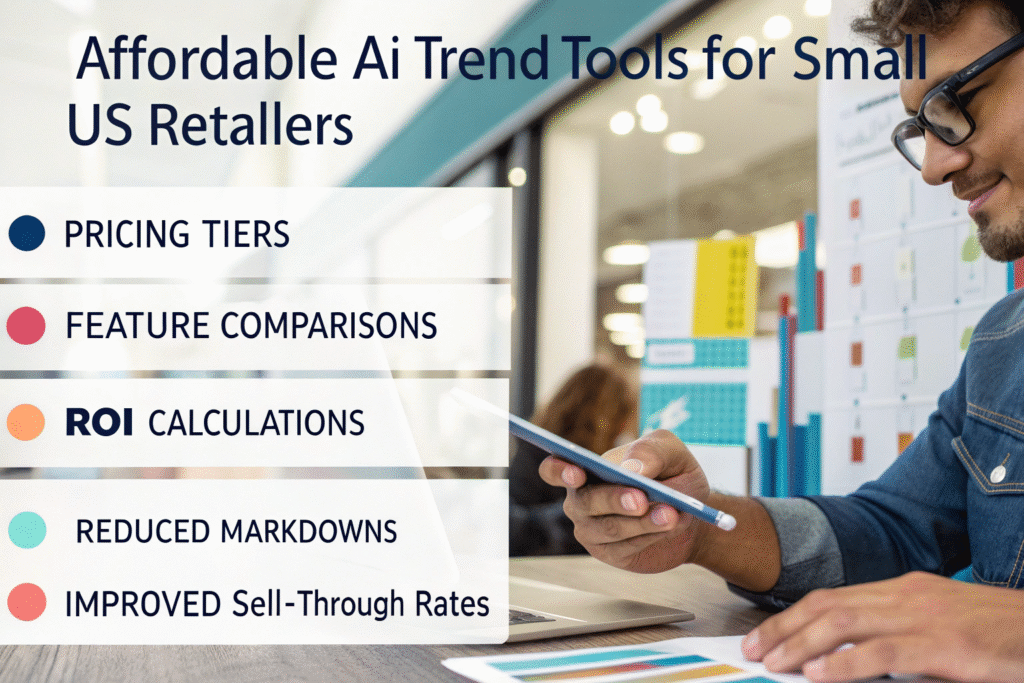
The democratization of AI trend forecasting has made these tools increasingly accessible to smaller retailers, with entry-level platforms now offering subscription models starting at $200-$500 monthly. This represents a significant shift from just two years ago, when comprehensive trend services required six-figure annual commitments. For growing brands, these affordable solutions can level the playing field against larger competitors with dedicated trend departments.
The ROI calculation for small retailers focuses on inventory optimization and sell-through rates. A Boston-based sustainable brand we partnered with achieved a 22% improvement in full-price sell-through after implementing an AI trend tool, effectively paying for the subscription within the first season through reduced markdowns. The key is selecting tools that match both budget constraints and specific business needs.
What budget-friendly options deliver quality insights?
Several platforms have emerged specifically targeting small to mid-sized retailers with scaled-down versions of enterprise tools. TrendBible’s seasonal trend intelligence offers sector-specific insights at accessible price points, while Fashion Snoops’ AI trend platform provides modular subscriptions that allow retailers to purchase only the categories they need. Many smaller brands start with color-focused tools before expanding to comprehensive trend services.
The most cost-effective approach often involves combining AI tools with traditional research methods. We recommend our smaller clients begin with:
- Focused Category Subscriptions: Buying only relevant fabric categories
- Quarterly Rather Than Monthly Access: Timing research to key decision periods
- Shared Platform Access: Partnering with non-competing brands
- University Resources: Leveraging trend reports from fashion schools
- Supplier Partnerships: Using trend insights from fabric mills like ours
How can retailers maximize value from limited budgets?
Strategic implementation can significantly enhance the value of AI trend tools, even with constrained budgets. The most successful small retailers we work with treat AI insights as directional guidance rather than absolute prescriptions, blending algorithmic recommendations with their unique brand identity and customer understanding. A Nashville-based boutique increased their trend adoption success by 35% by using AI to validate rather than dictate their fabric selections.
Maximizing ROI involves focusing on high-impact applications and avoiding over-investment in redundant data. Key strategies include:
- Priority Application: Concentrating on color and print predictions where AI excels
- Cross-functional Training: Ensuring multiple team members can access and interpret data
- Supplier Collaboration: Sharing insights with fabric partners for co-development
- Gradual Implementation: Starting with one product category before expanding
- Performance Tracking: Measuring how AI-informed decisions impact sales metrics
How do AI tools integrate with fabric sourcing?
The most advanced AI trend platforms now offer direct integration with fabric sourcing ecosystems, creating seamless workflows from trend identification to material procurement. This integration is particularly valuable for US retailers managing global supply chains, as it reduces the time from trend detection to production readiness from months to weeks. Our implementation of this connected system has helped clients reduce fabric development time by 30% while improving trend alignment.
Integration typically occurs through API connections between trend platforms and sourcing databases. When a trend is identified, the system automatically matches it with available fabrics in our inventory or identifies development opportunities. This creates a closed-loop system where trend predictions directly inform material development decisions, ensuring retailers can act quickly on emerging opportunities.

What sourcing data enhances AI predictions?
The effectiveness of AI trend tools increases significantly when enriched with real-time sourcing intelligence. Platforms that incorporate material availability data, production lead times, and cost projections provide more actionable recommendations than those focusing solely on consumer trends. Our partnership with several AI platforms allows us to feed current capacity information and innovation pipelines into their algorithms, creating predictions grounded in production reality.
The most valuable sourcing data for enhancing AI predictions includes:
- Mill Capacity Information: Real-time production availability
- Raw Material Pricing: Fiber and yarn cost projections
- Regional Production Strengths: Specialized capabilities by geography
- Sustainability Certifications: Available eco-friendly options
- Innovation Pipeline: Upcoming fabric developments
- Logistics Timelines: Shipping and lead time considerations
How does integration speed time-to-market?
The connection between AI trend platforms and sourcing systems dramatically compresses development timelines through automated matching and reduced decision layers. A compelling case comes from a Los Angeles activewear brand that reduced their fabric selection process from 12 weeks to 4 weeks by implementing an integrated AI-sourcing system. The automation of initial material matching eliminated weeks of manual search and sampling.
Time savings accumulate across multiple stages of the development process:
- Trend-to-Material Matching: Automated identification of suitable fabrics
- Sample Coordination: Digital requests to pre-qualified suppliers
- Technical Validation: Immediate access to performance data
- Costing Integration: Real-time price calculations
- Capacity Reservation: Early production slot booking
- Quality Assurance: Pre-verified supplier standards
Conclusion
AI fabric trend and color prediction tools have evolved from luxury accessories to essential equipment for US retailers navigating increasingly competitive markets. The current generation of platforms offers remarkable accuracy for color forecasting while providing valuable directional guidance for fabric trends. For retailers of all sizes, these tools deliver tangible benefits through improved sell-through, reduced markdowns, and faster response to shifting consumer preferences.
The most successful implementations blend AI insights with human expertise, using algorithmic predictions to inform rather than replace merchant intuition. As these tools become more accessible and integrated with sourcing ecosystems, they’re creating unprecedented opportunities for retailers to align their fabric selections with emerging trends while maintaining operational efficiency.
If you’re exploring how AI trend prediction can enhance your fabric sourcing strategy, we’re here to help bridge the gap between digital insights and physical production. Our team integrates leading AI tools with our fabric development process, ensuring you receive trend-right materials with reliable execution. Contact our Business Director, Elaine, at elaine@fumaoclothing.com to discuss how we can help you leverage AI for your next collection.